San Miniato al Monte
The white-and-green jewel above the city: Romanesque perfection, chanting monks, and Florence's finest sunset terrace.
Romanesque Façade • Gregorian Vespers • Sunset View
Explore → Get Early Access🧭 Why Visit
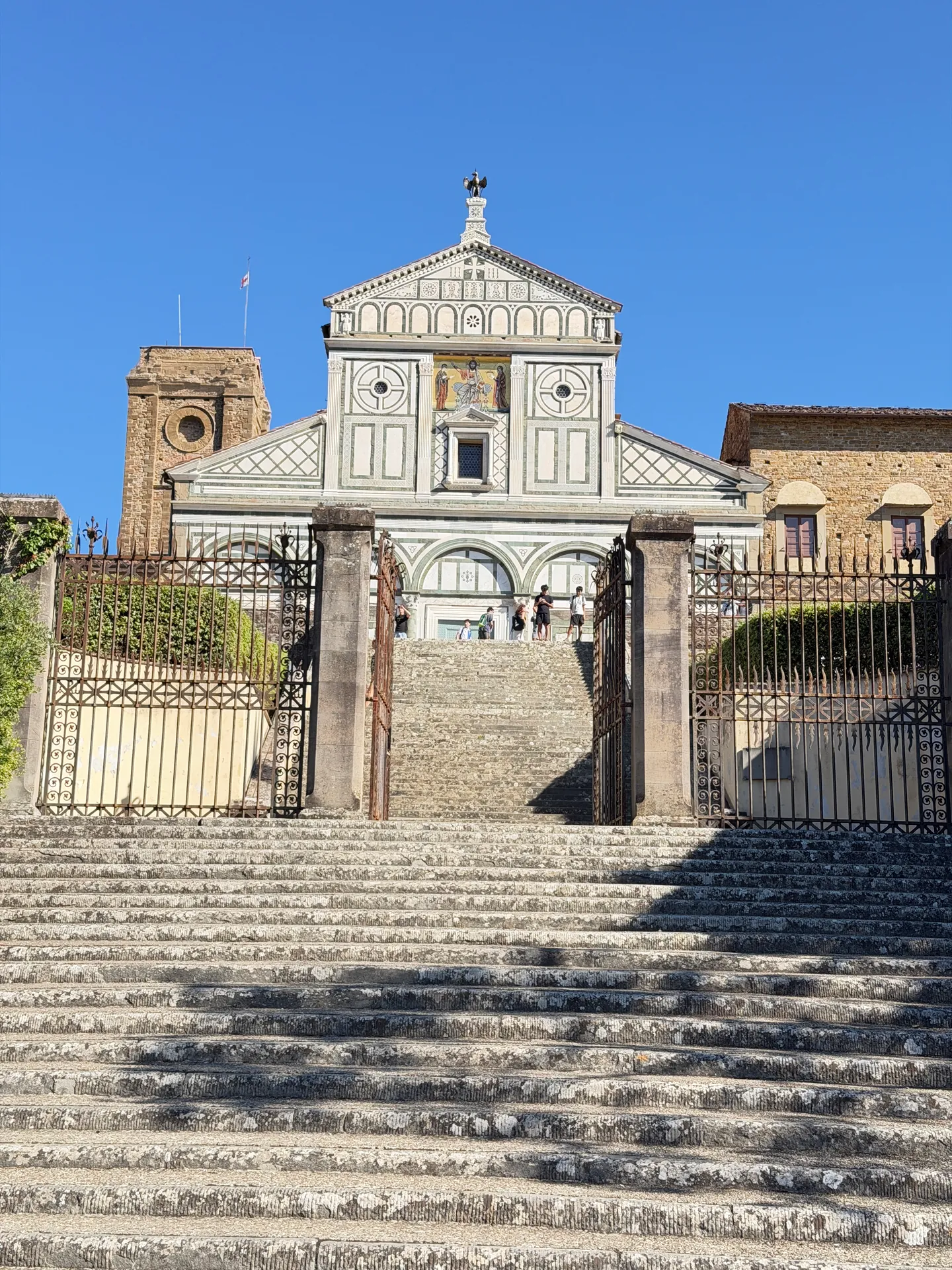
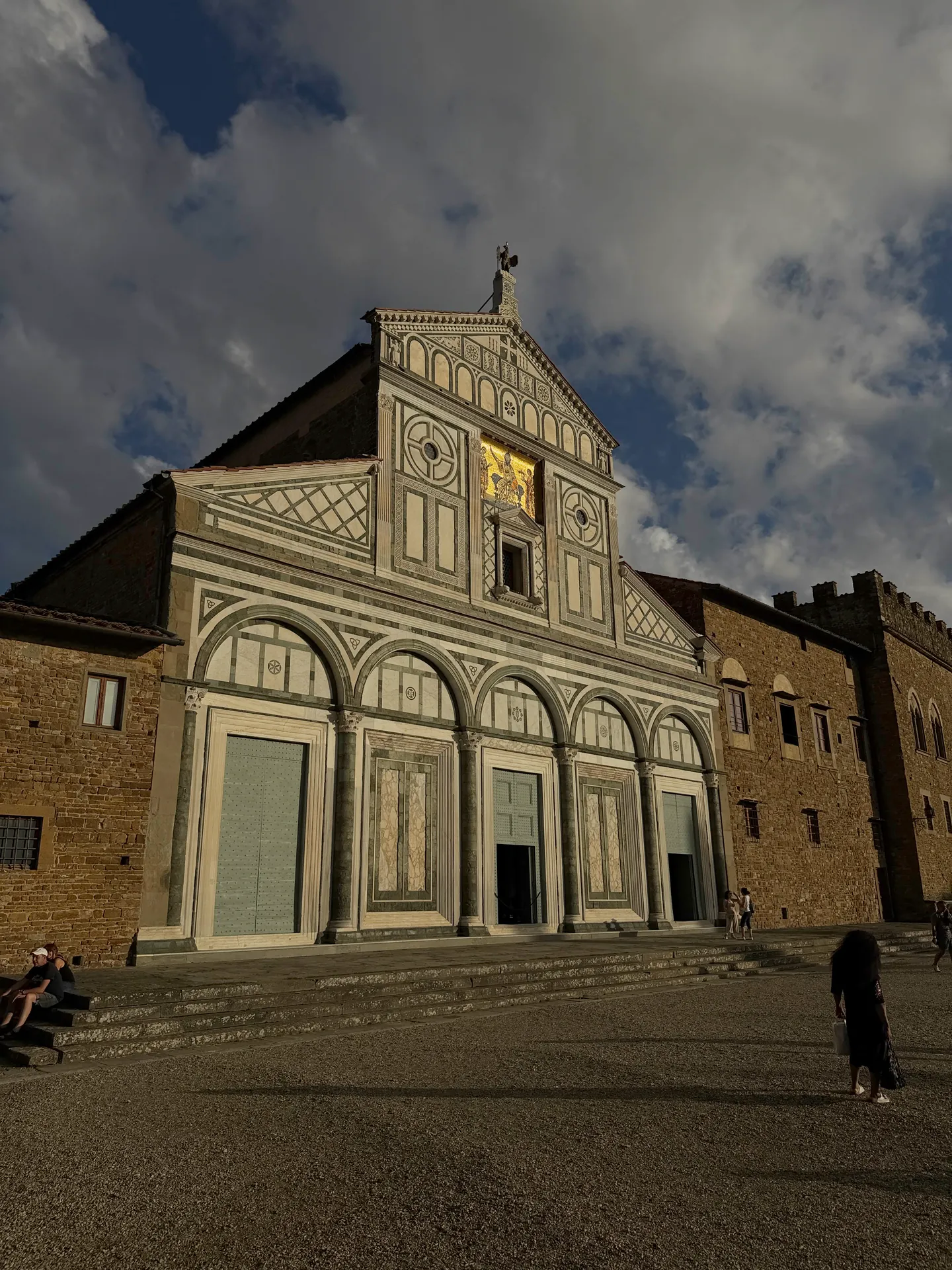
The climb past Piazzale Michelangelo sheds the crowds; the reward is a thousand-year-old basilica whose marble façade catches the last sun like a signal to the whole valley. Time it for late afternoon, stay for the chanting, and walk down in the blue hour.
🏛️ A Little History
Built from 1013 over the grave of Florence's first martyr, who, legend insists, carried his own severed head up this hill. It is the finest Florentine Romanesque anywhere, run for most of a millennium by Benedictine monks who now make honey and liqueurs.
💡 Did You Know?
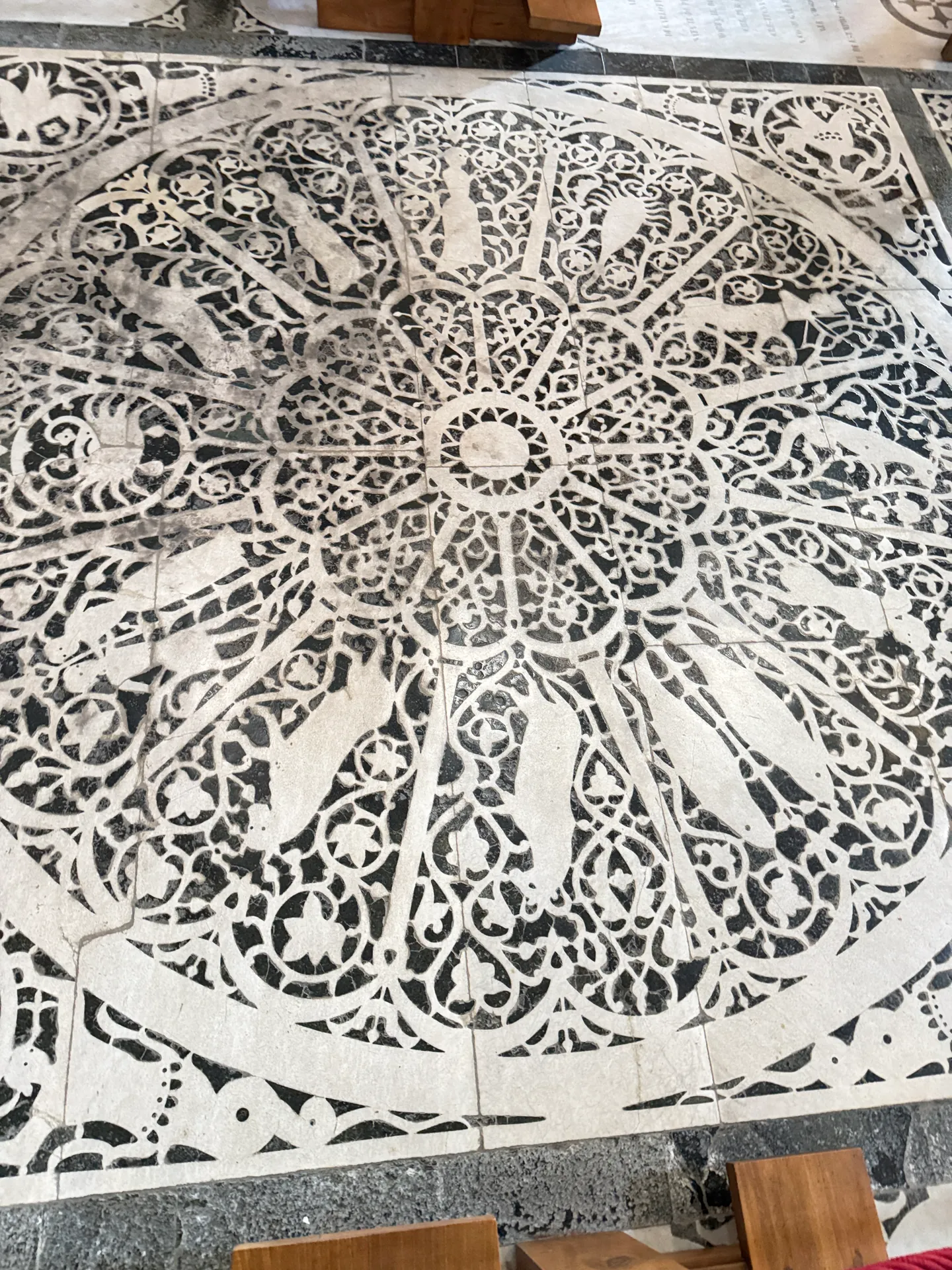
The zodiac inlaid in the nave floor (1207) aligns with a summer-solstice light effect scholars still argue about. Michelangelo fortified this hill in 1530, reputedly hanging mattresses to shield the campanile from cannon fire.
The Approach and the Exterior
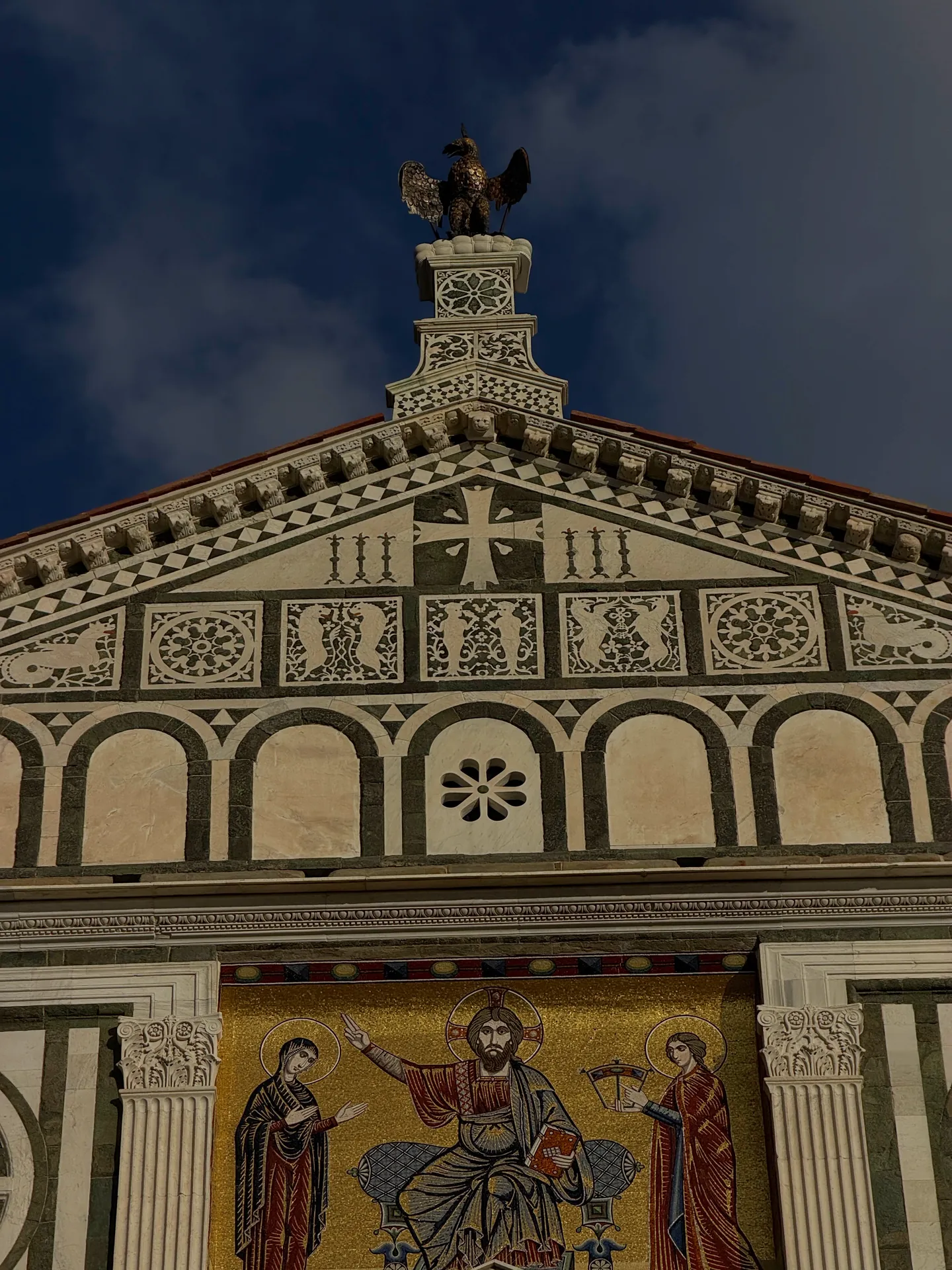
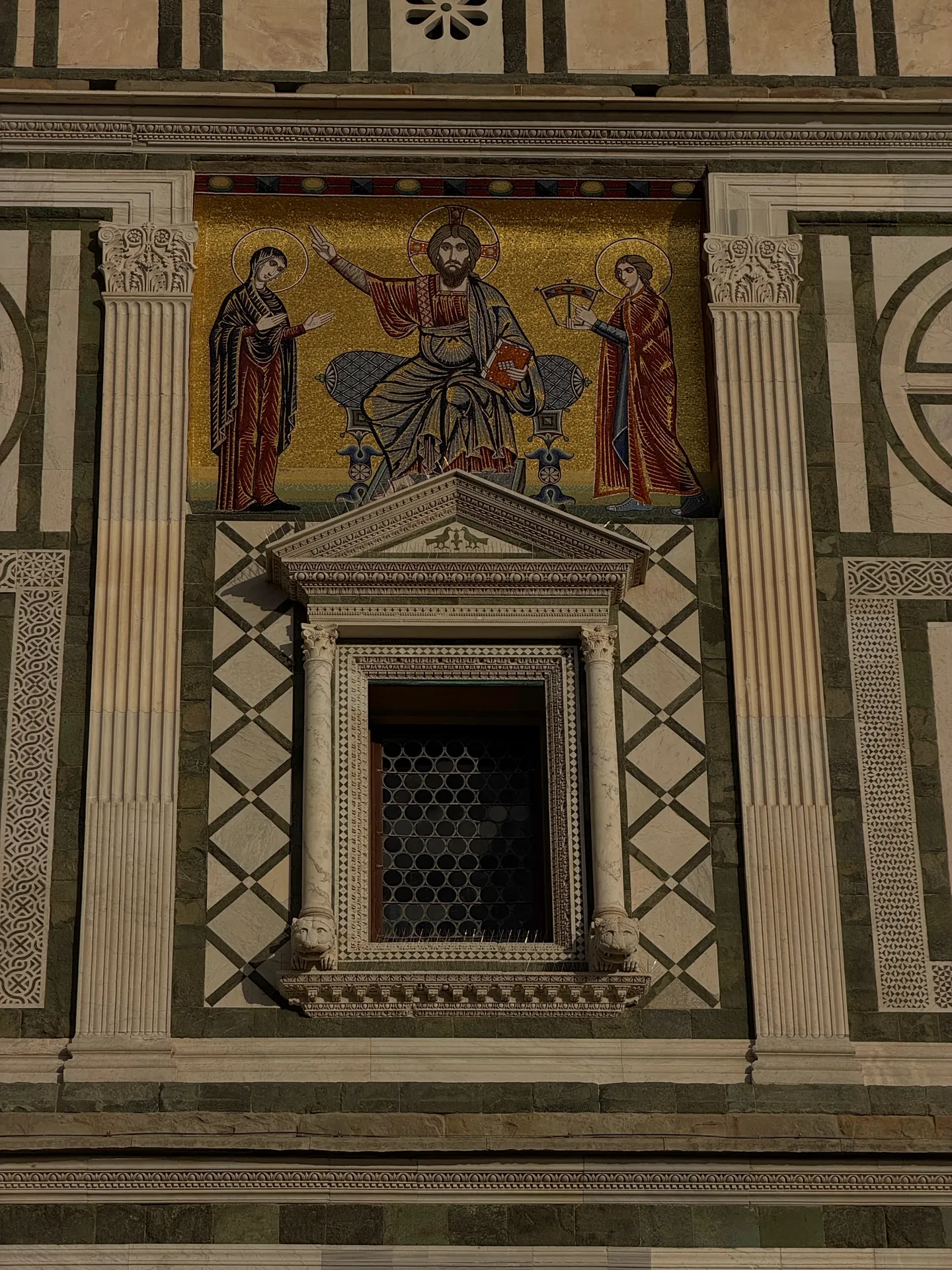
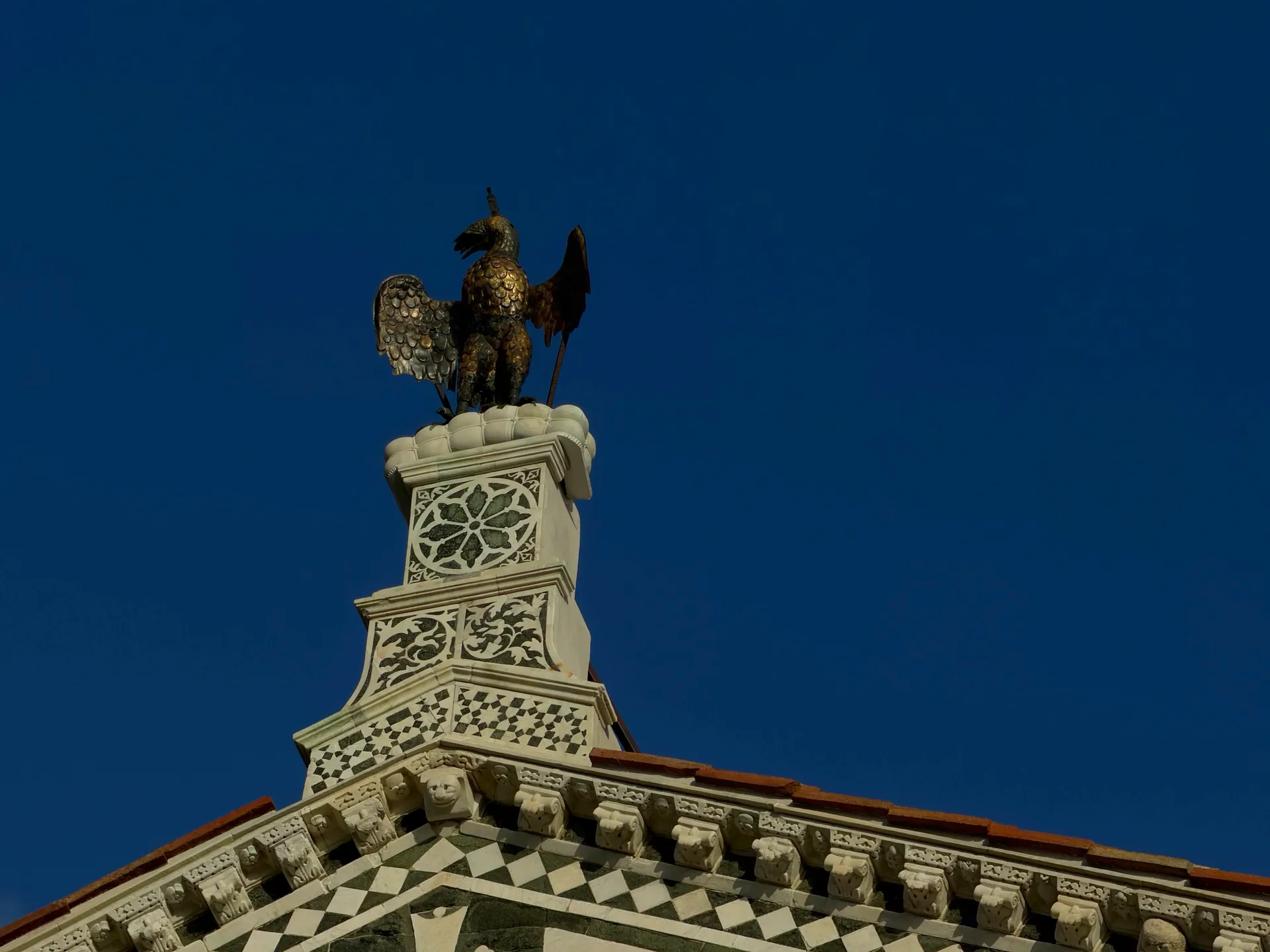
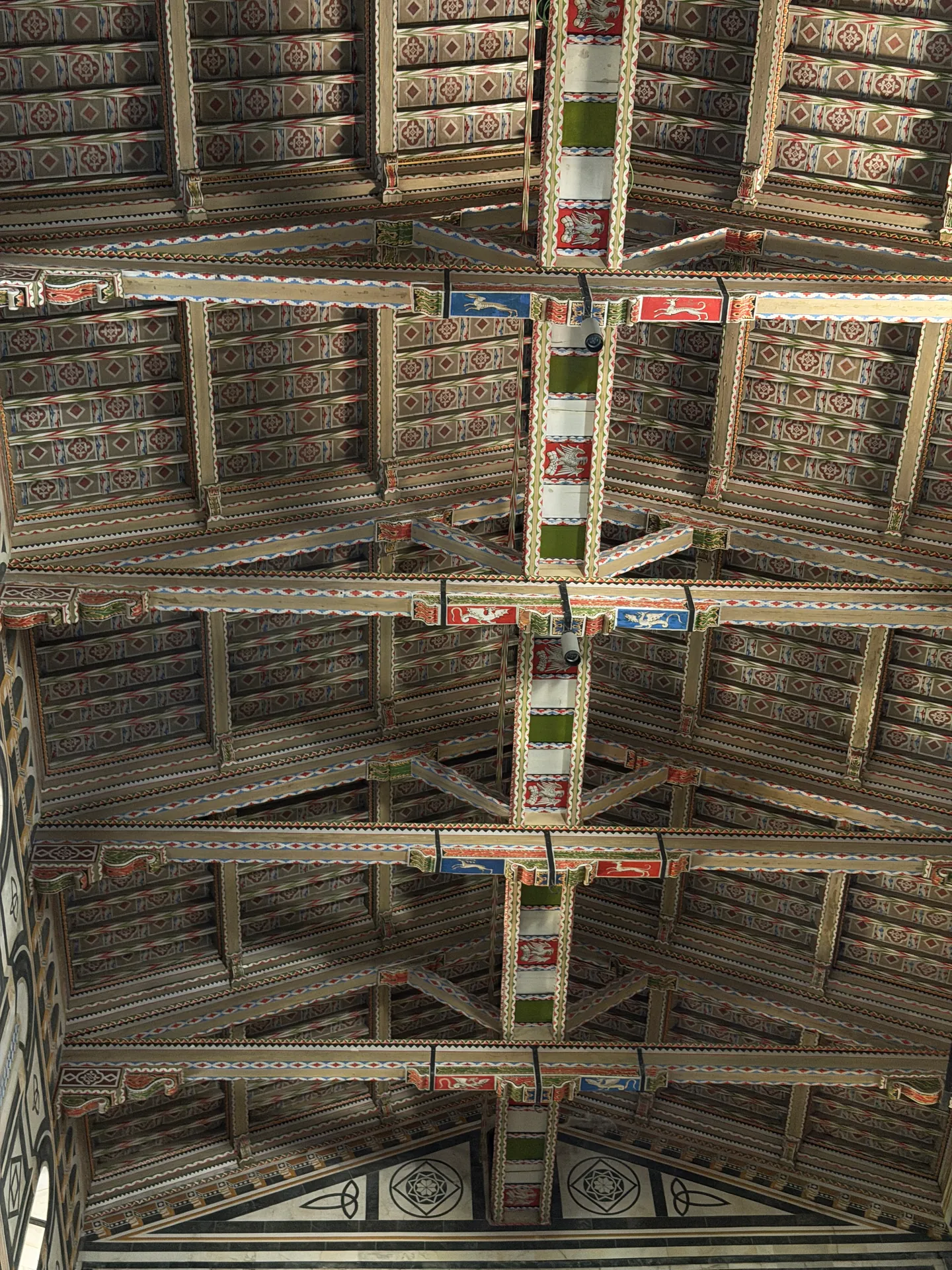
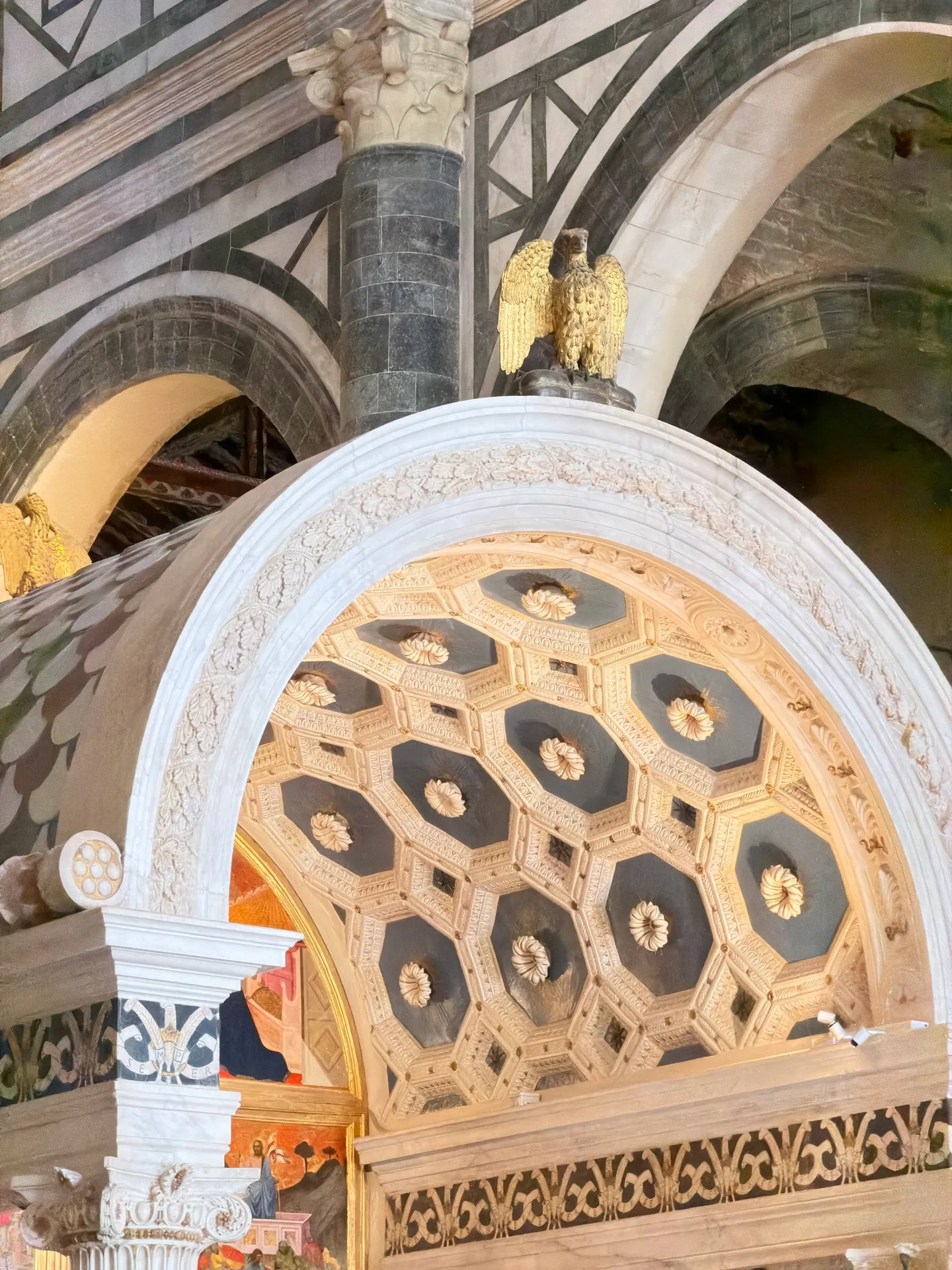
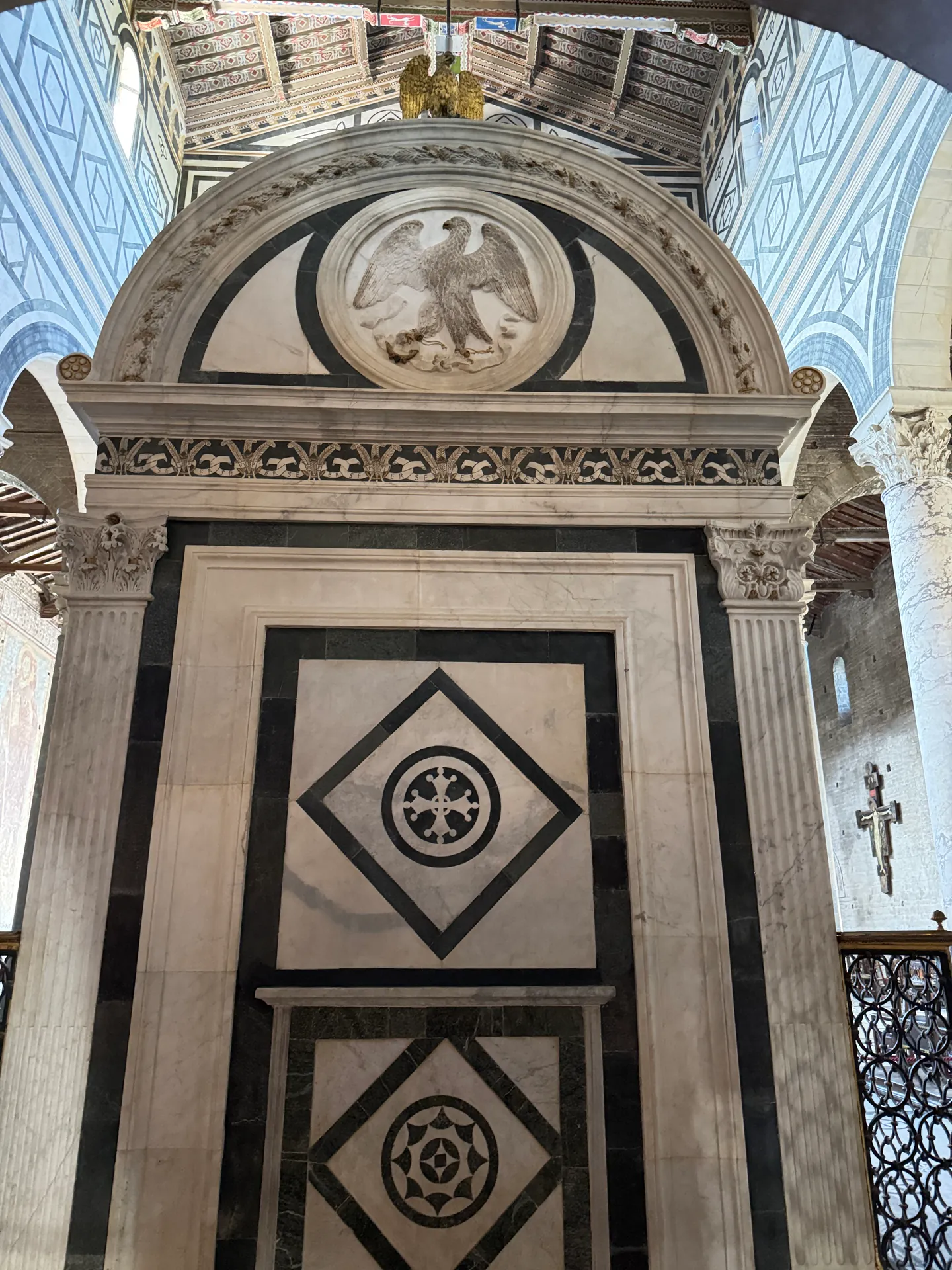
San Miniato was begun in 1018 under Bishop Alibrando, over the grave of the city's first martyr, and the monks kept its millennium in 2018. From 1288 the Arte di Calimala, the cloth merchants' guild, took over the upkeep, which is why their eagle turns up on the roof, in the marble and over the chapel inside.
The Nave and the Pavement
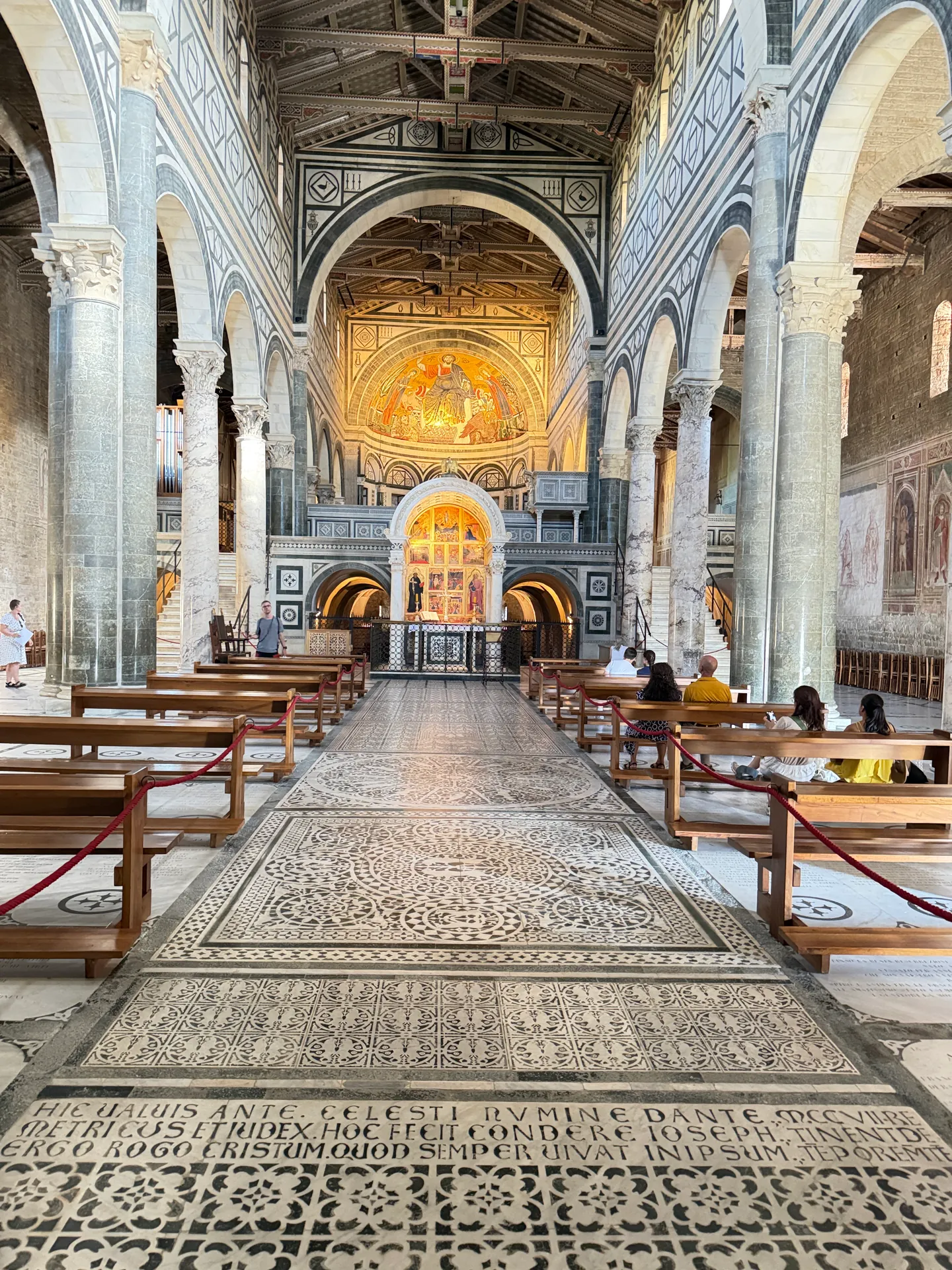
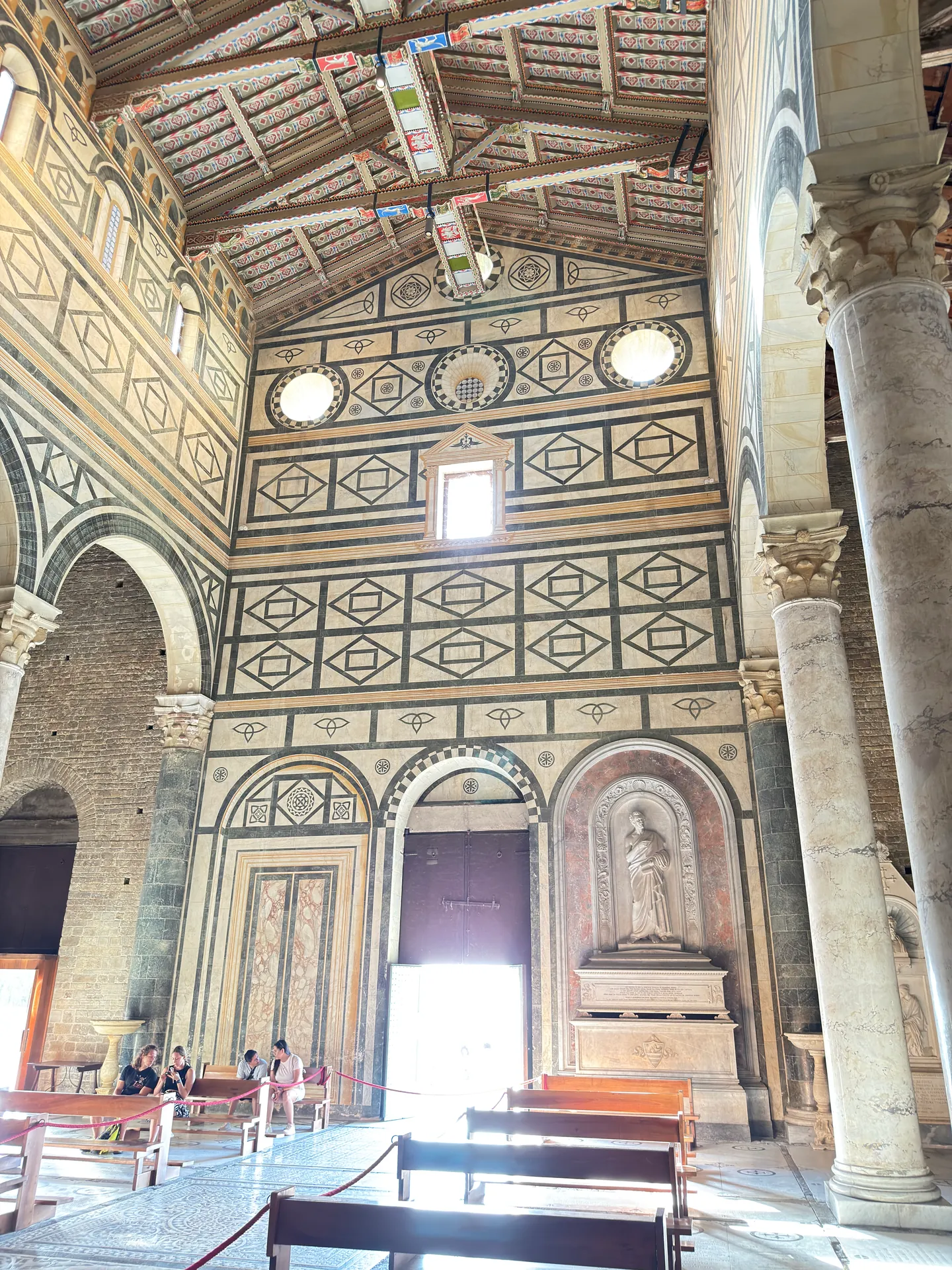
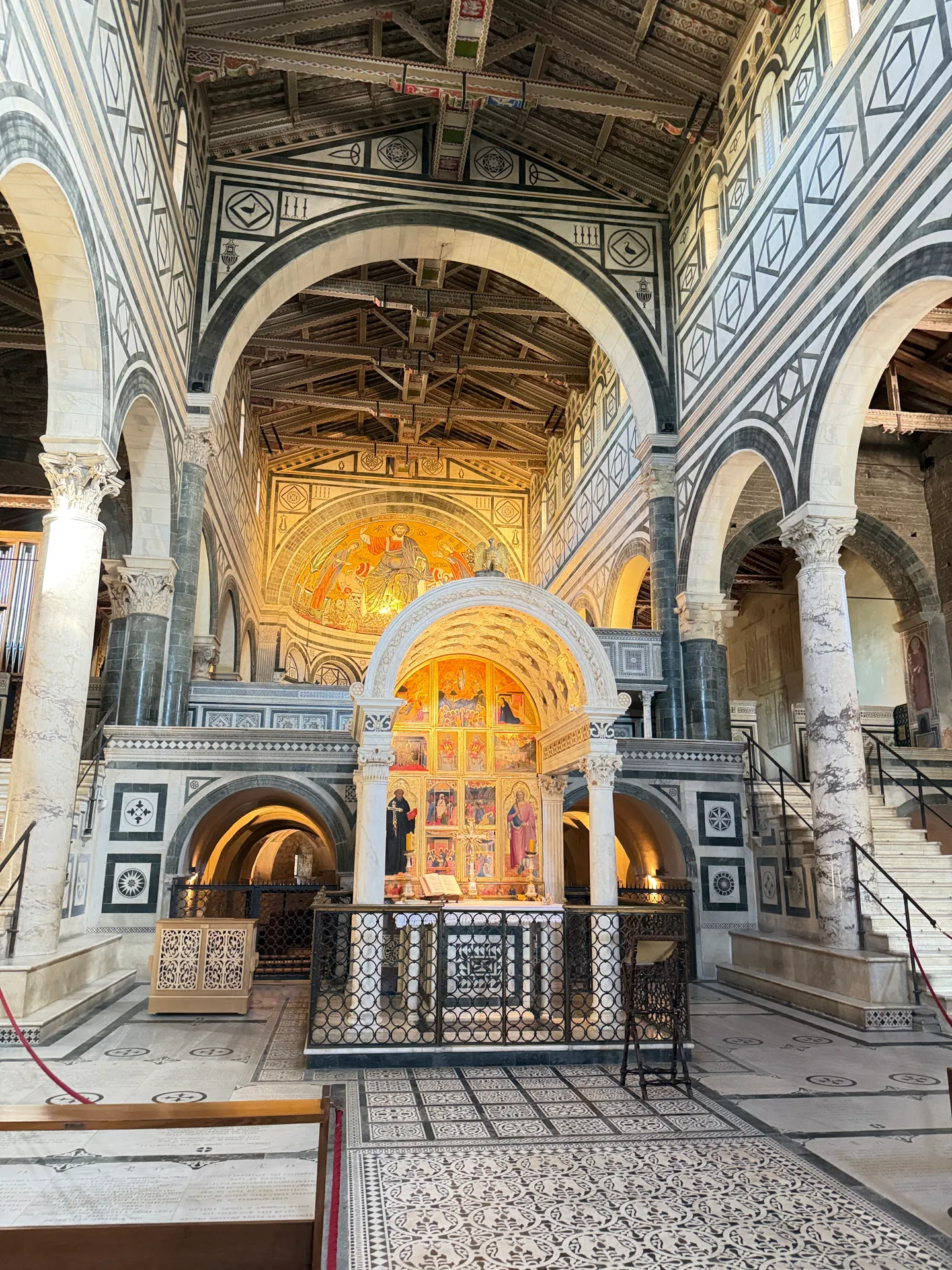
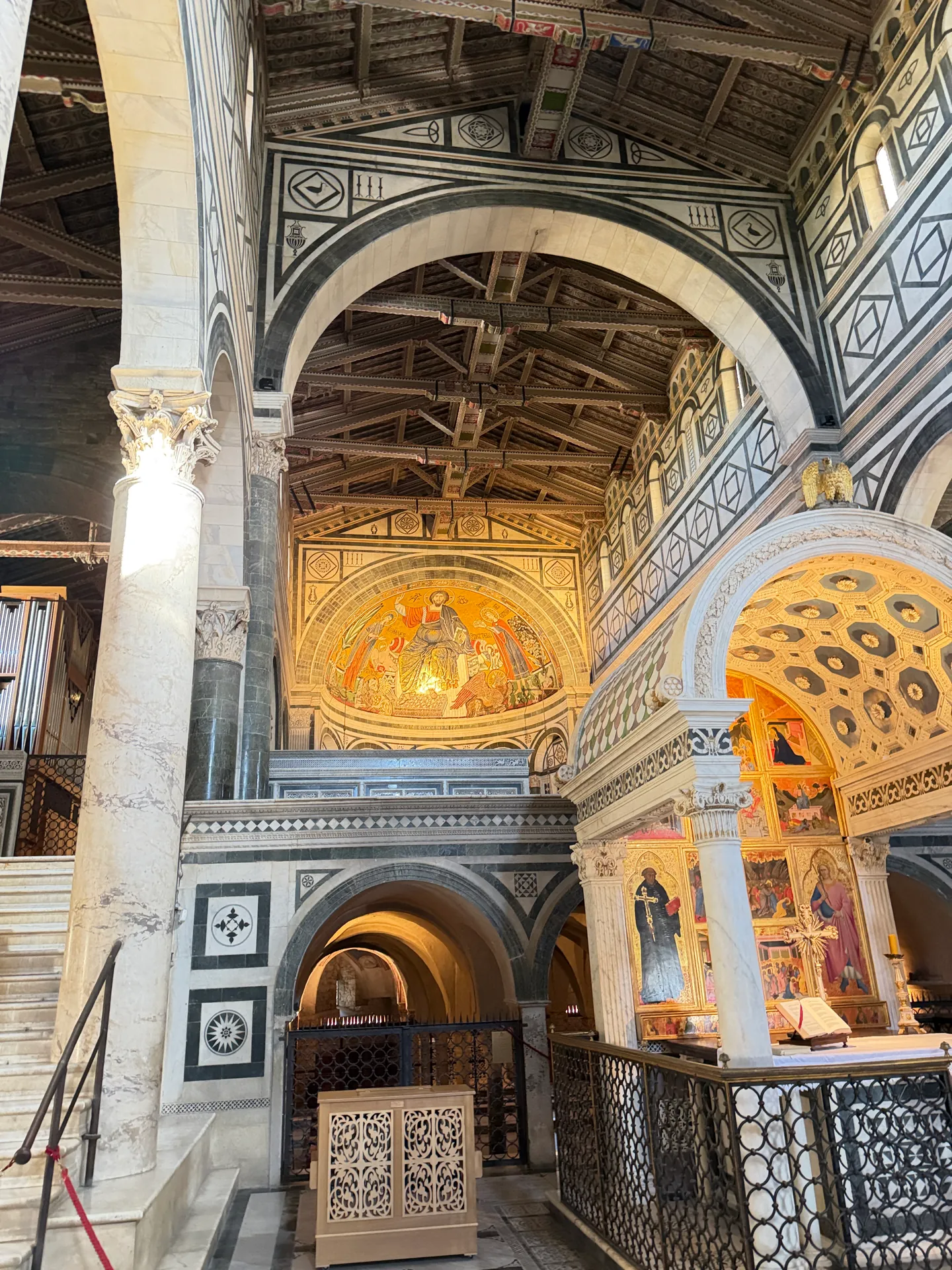
The inside keeps the deal the facade makes. The same green and white marble geometry runs the length of the nave, up the walls of the west end and across the floor, and the church is arranged in three levels: nave, raised choir, and the crypt underneath it.
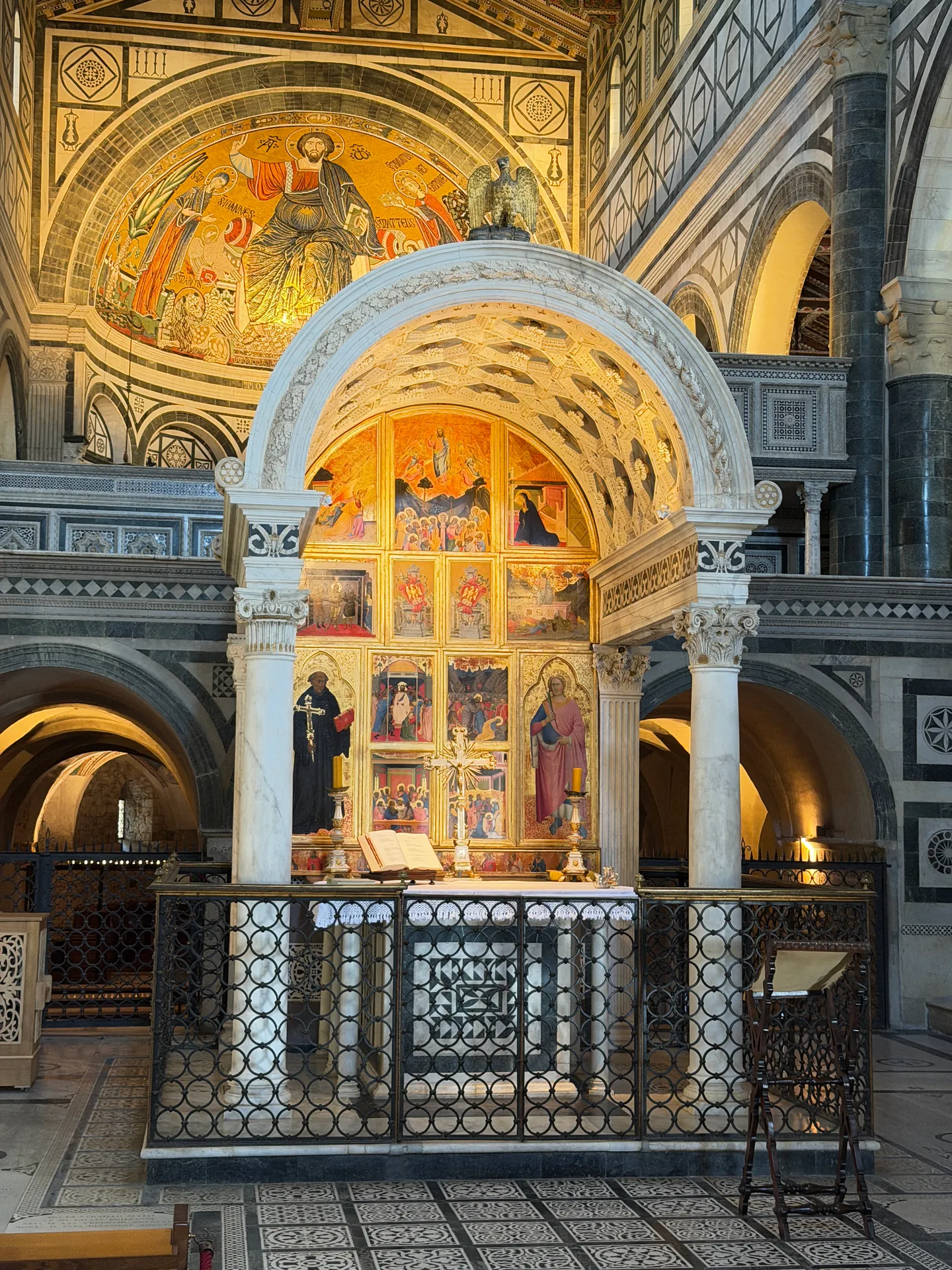
Michelozzo’s Chapel of the Crucifix
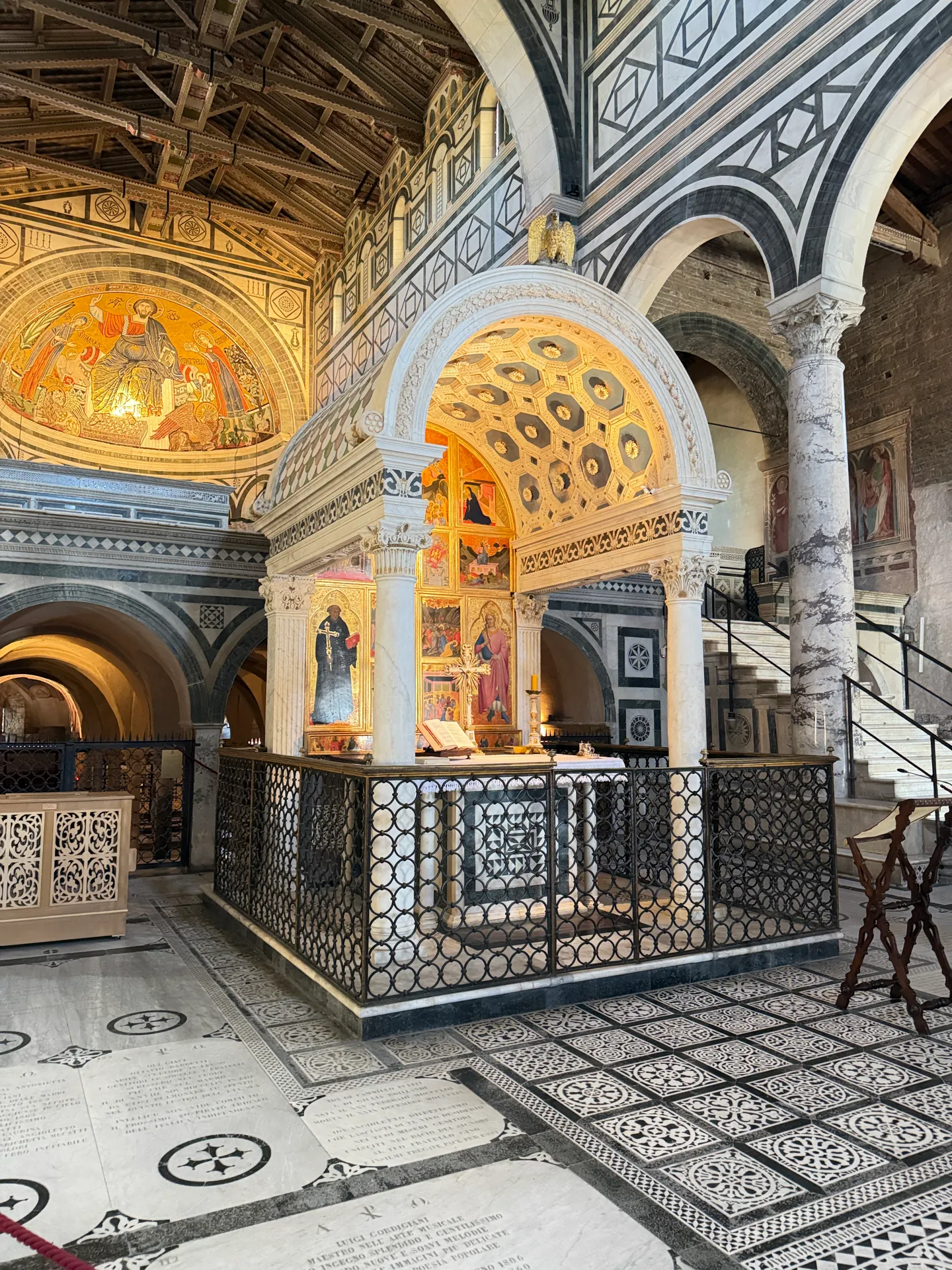
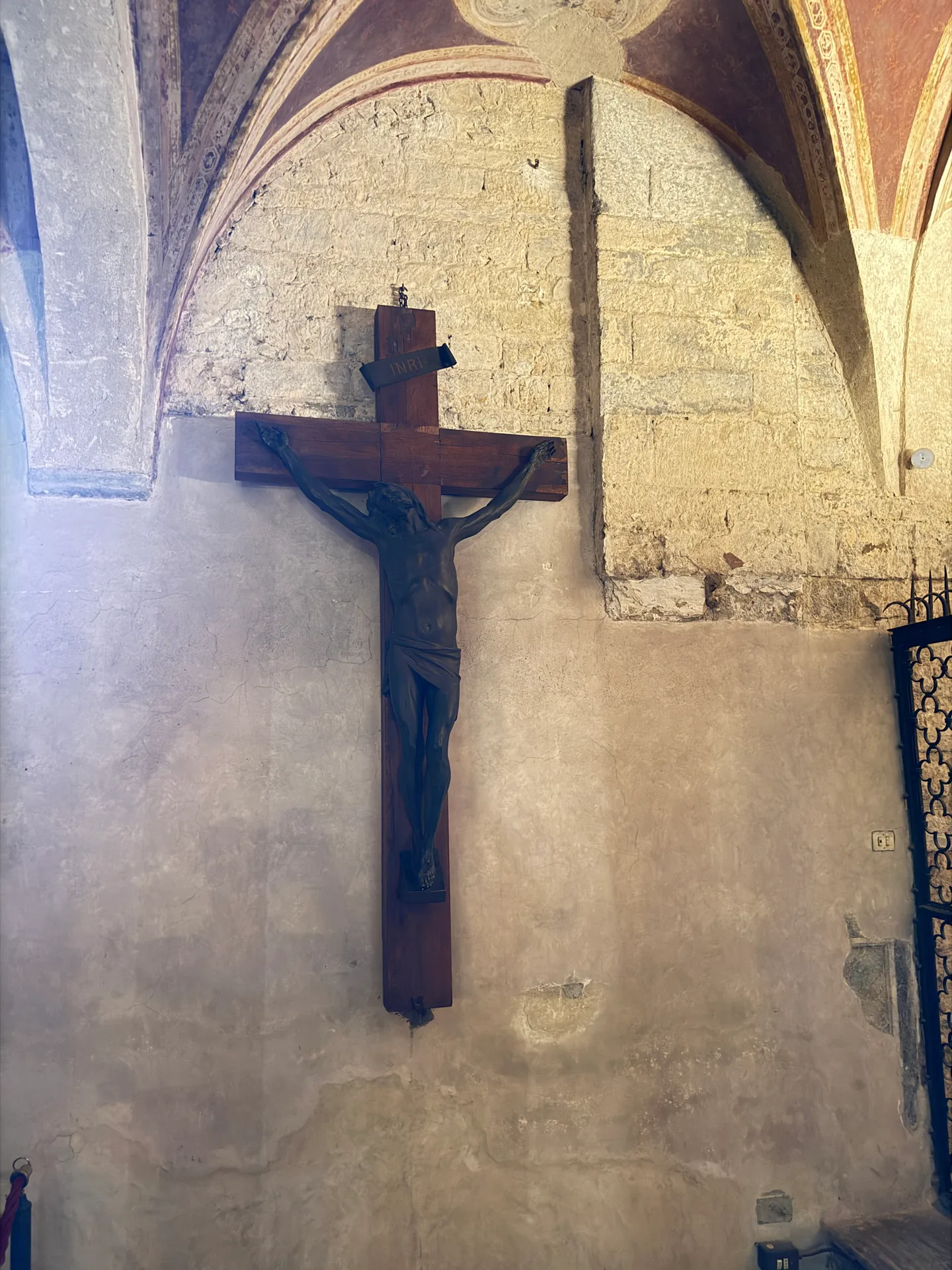
Michelozzo built this free standing marble tabernacle in the middle of the nave, in 1448, to hold the crucifix that spoke to John Gualbert. The crucifix is not here. It went to Santa Trinita in 1671 and never came back, so what you are looking at is a very grand empty box.
The Eagle and the Apse Mosaic
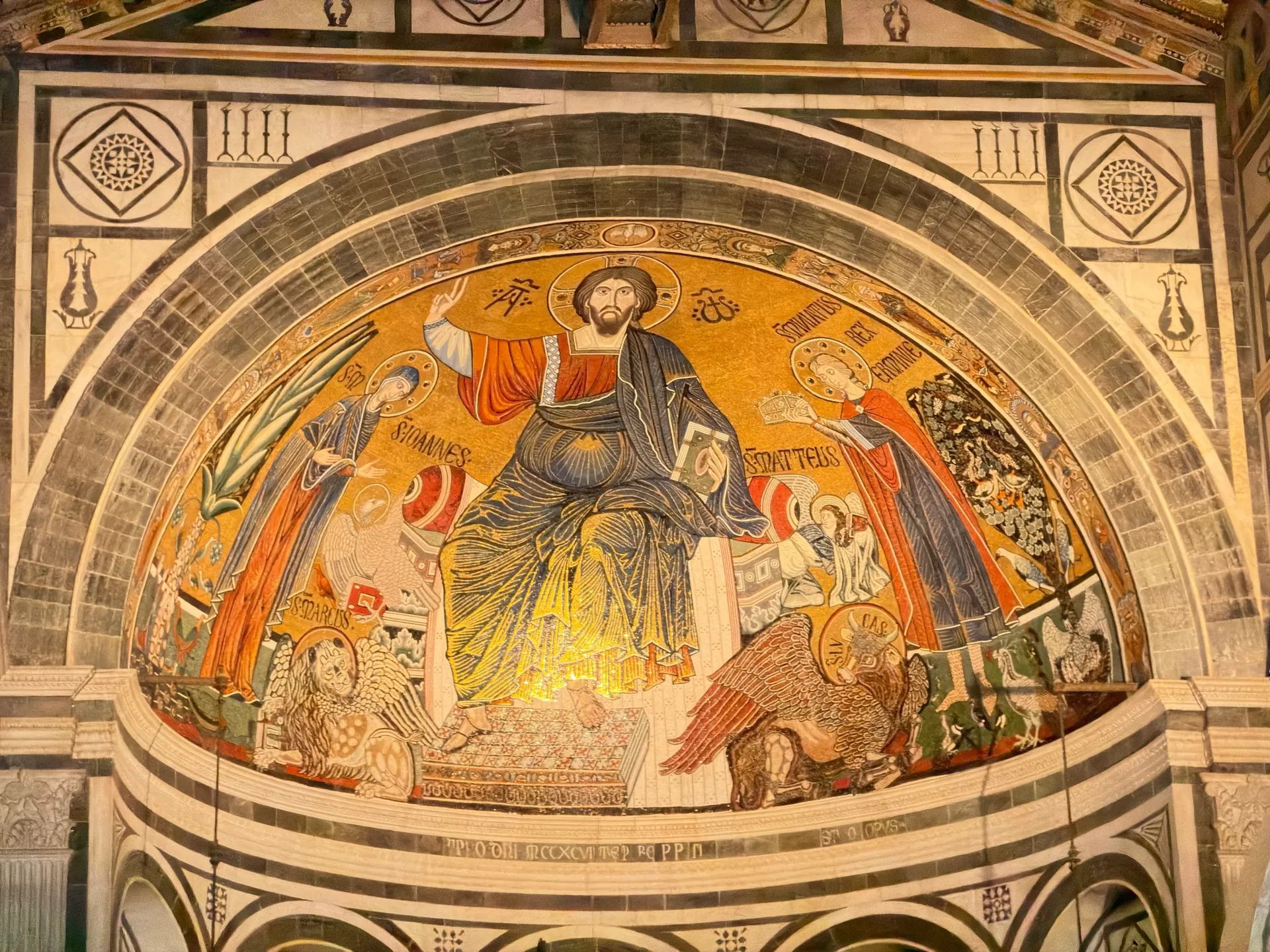
Two things watch over the east end: the guild that paid for the building, and the mosaic it looked after. The apse mosaic came off a full restoration in 2023.
The Crypt
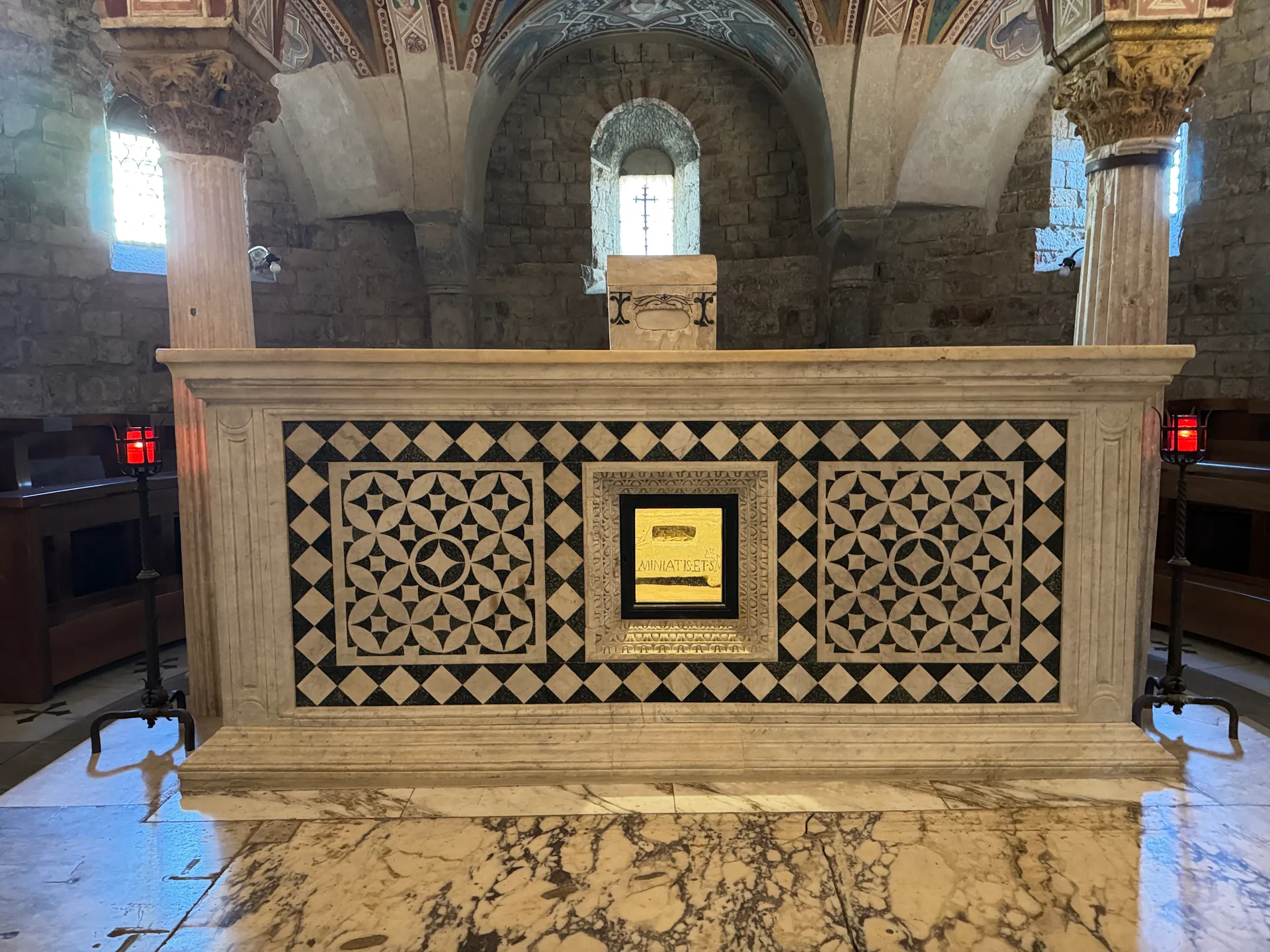
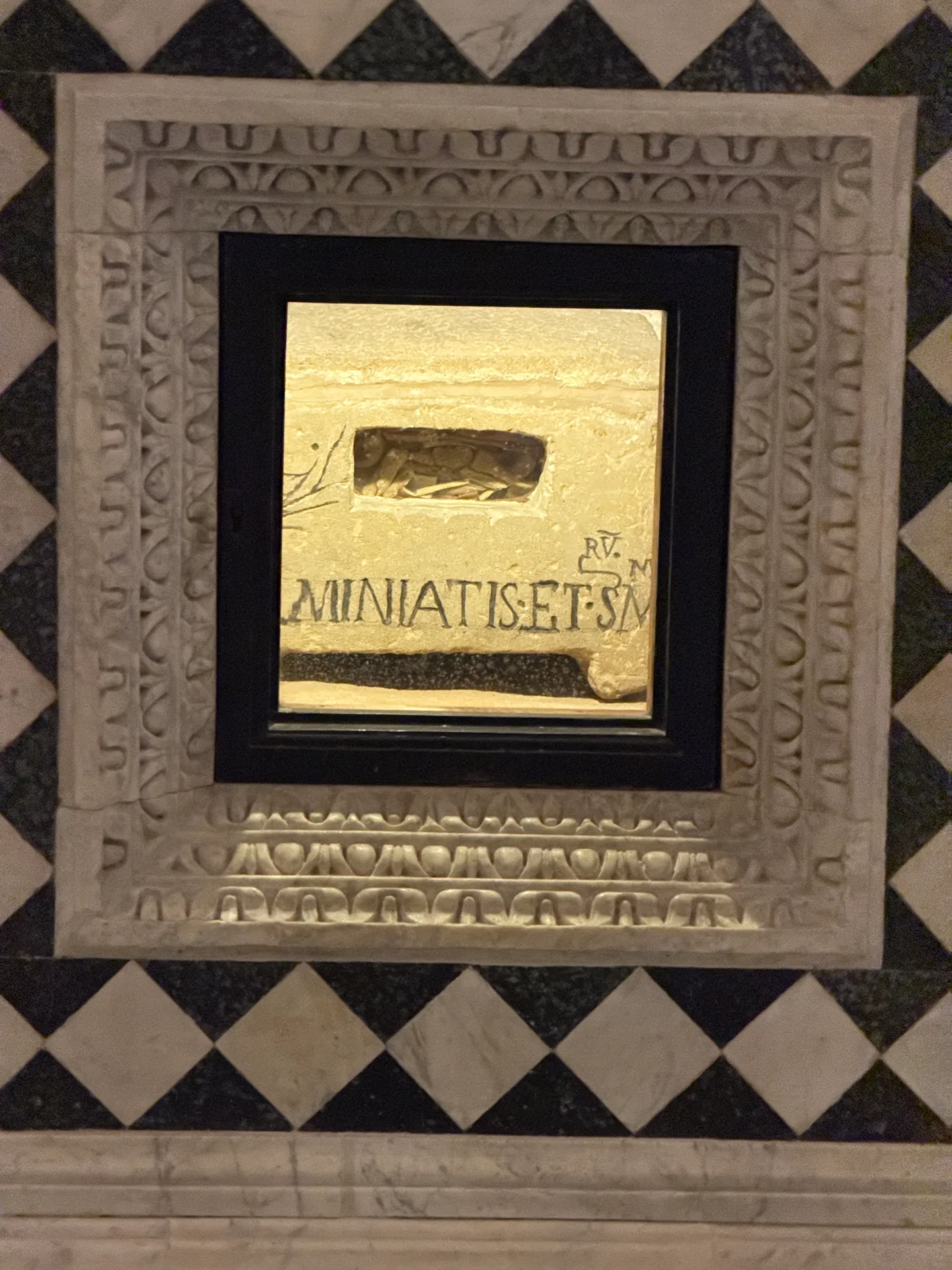
The crypt is the oldest room in the church and it holds the martyr's tomb. Taddeo Gaddi frescoed its vaults in 1341 and 1342 with around fifty busts of saints. This is where the monks sing vespers.
The Chapel of the Cardinal of Portugal
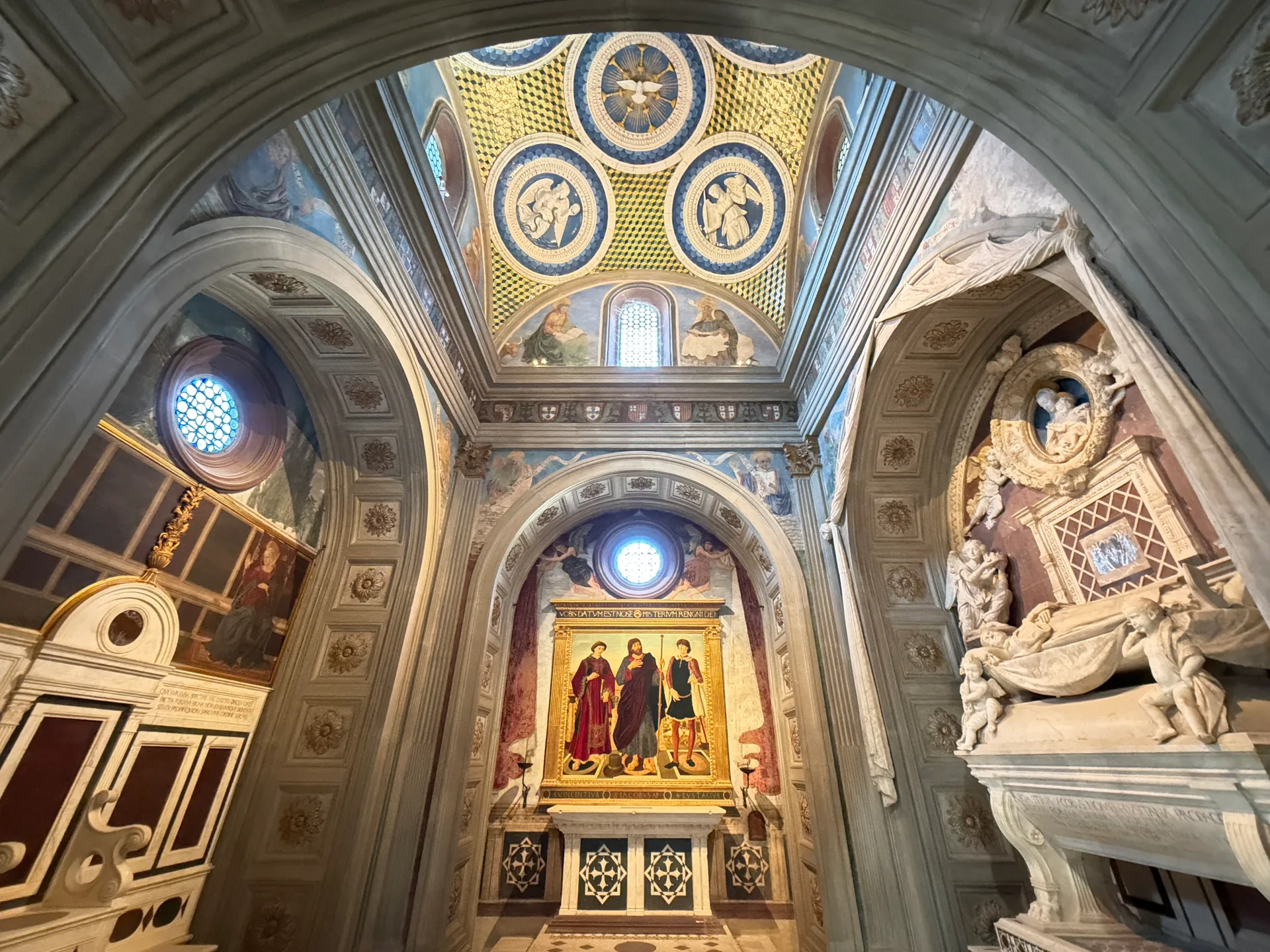
Off the north aisle, a complete fifteenth century interior built for a cardinal who died in Florence at twenty five. Ceiling, tomb, altar wall, floor and throne were designed together, and the room has stayed together, which is rarer than it sounds.
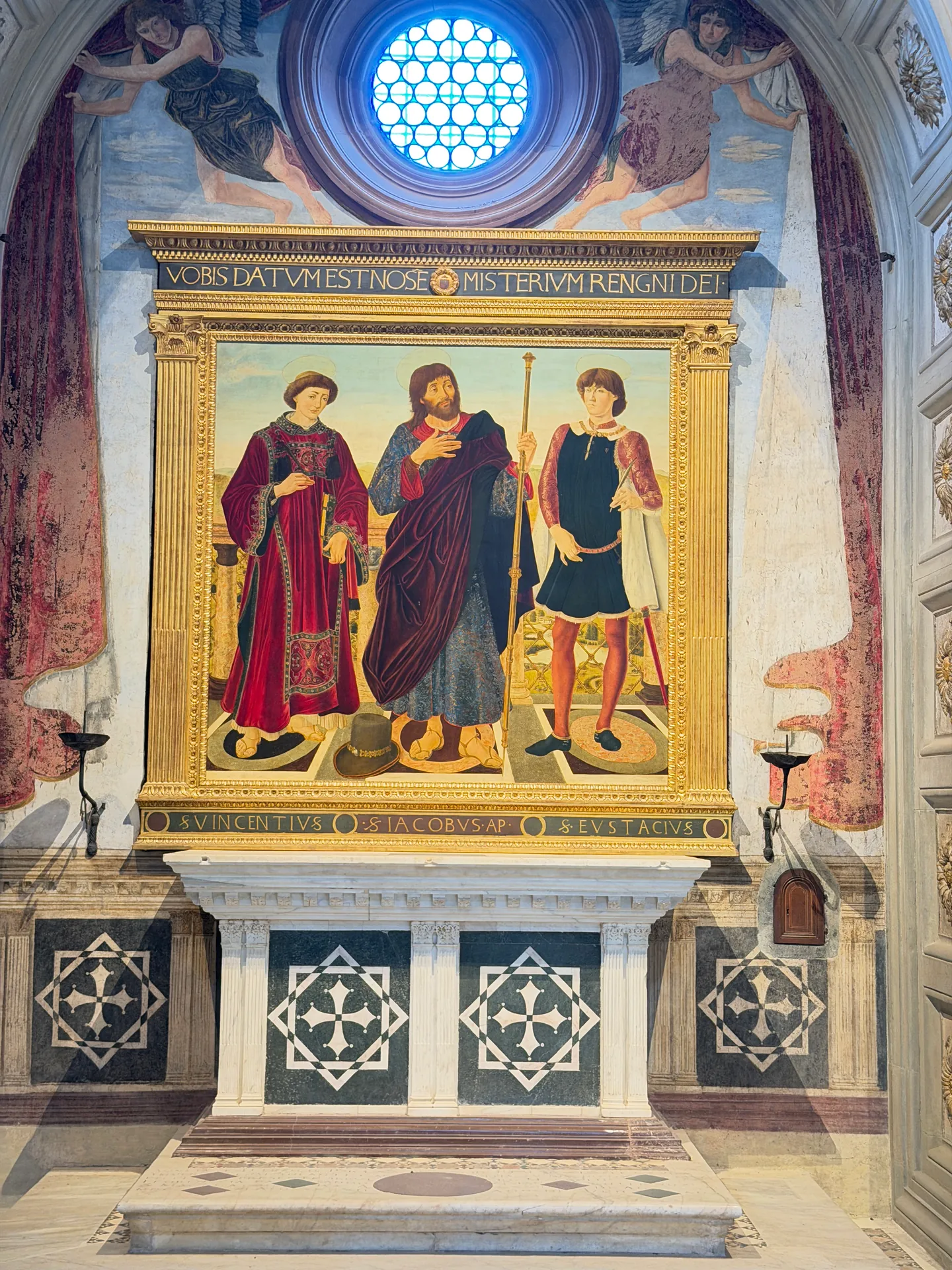
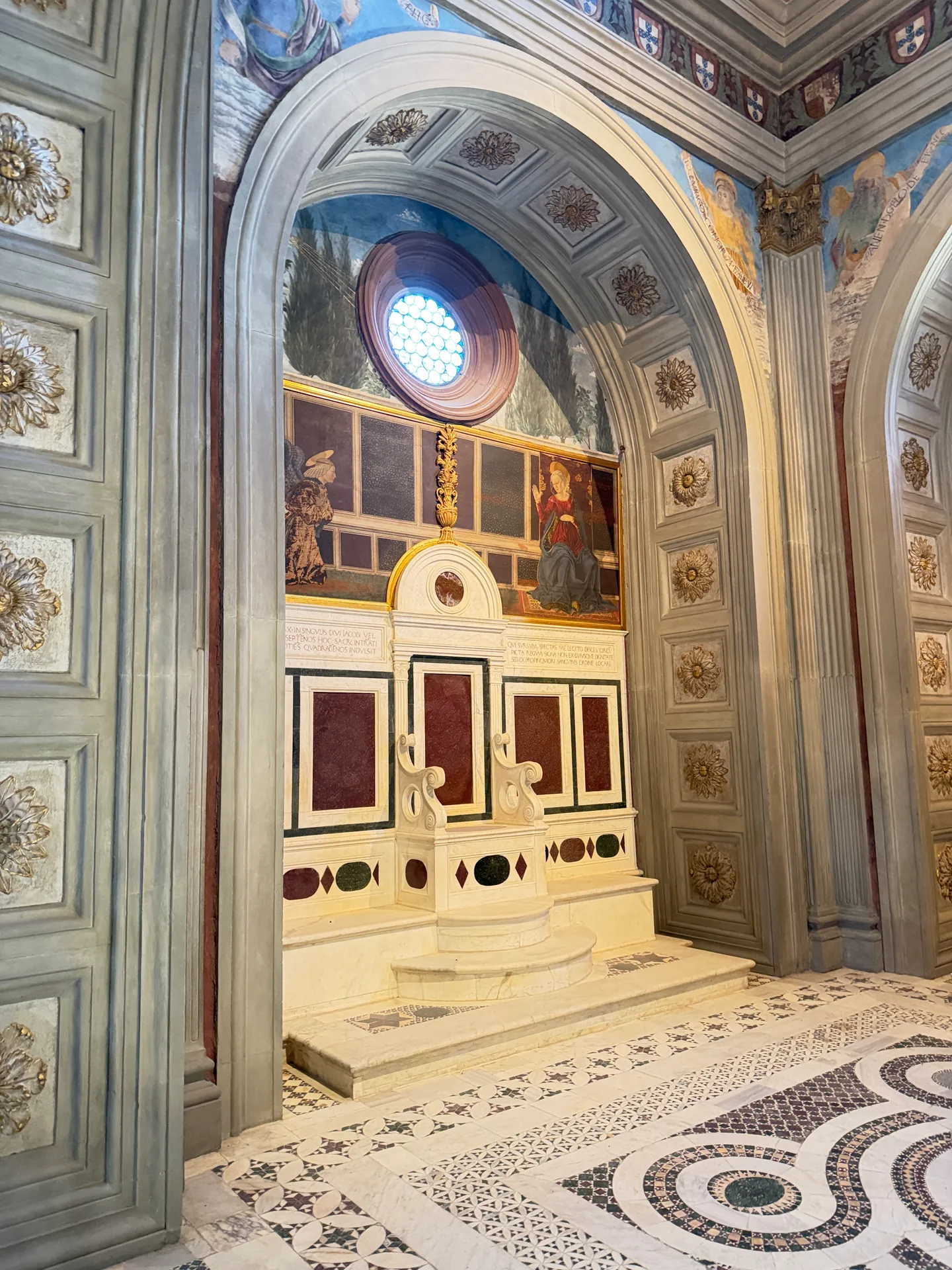
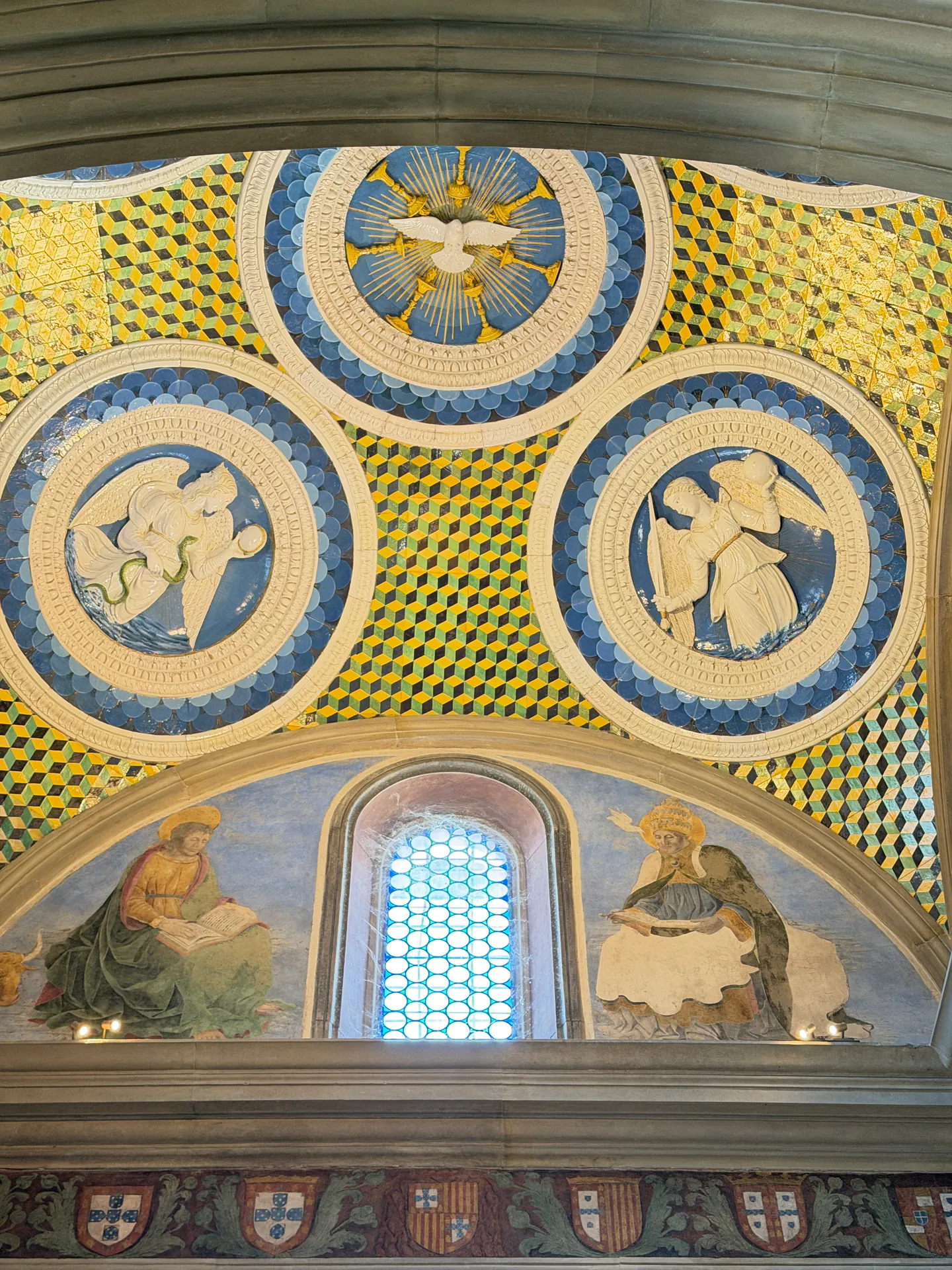
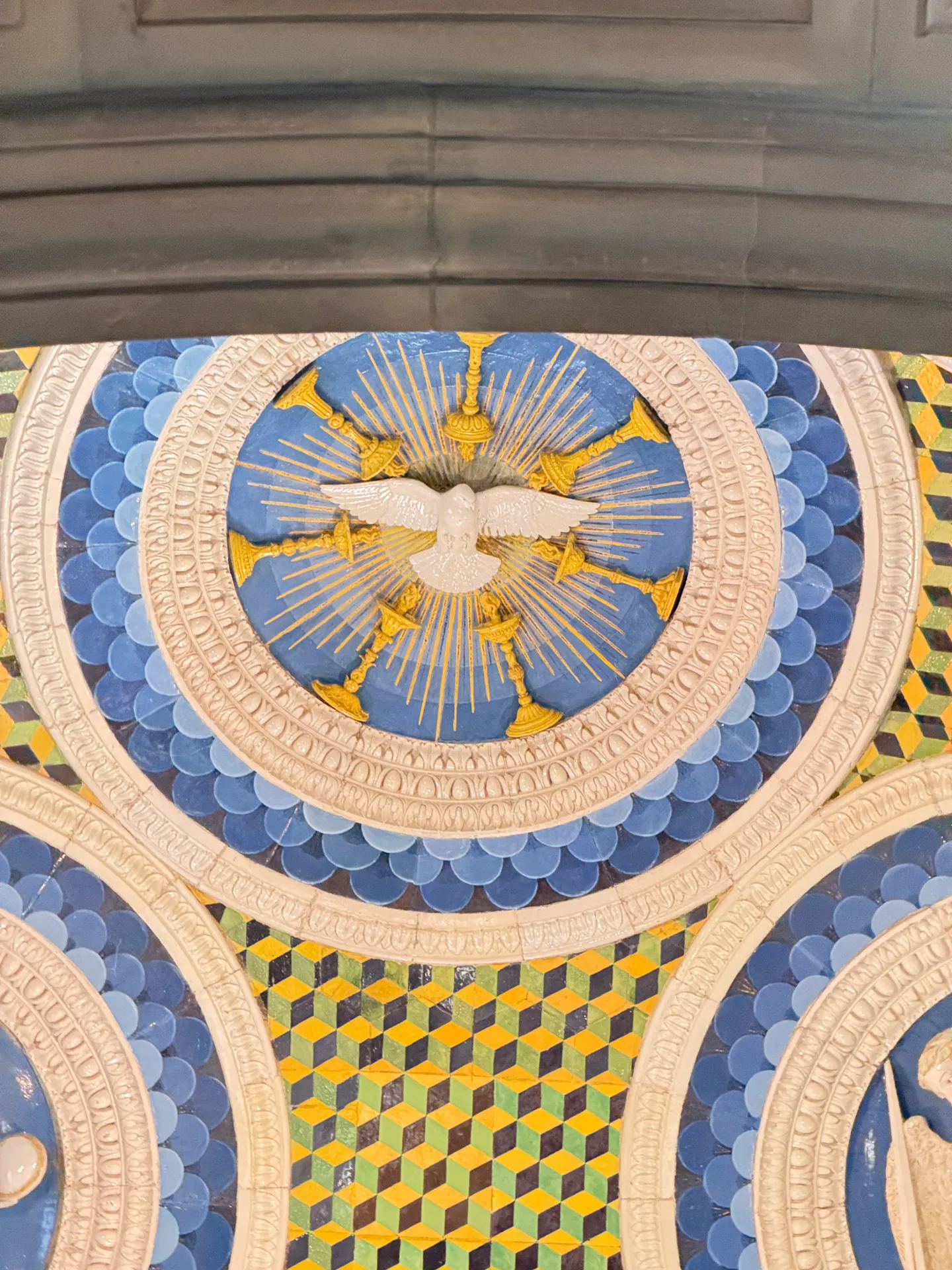
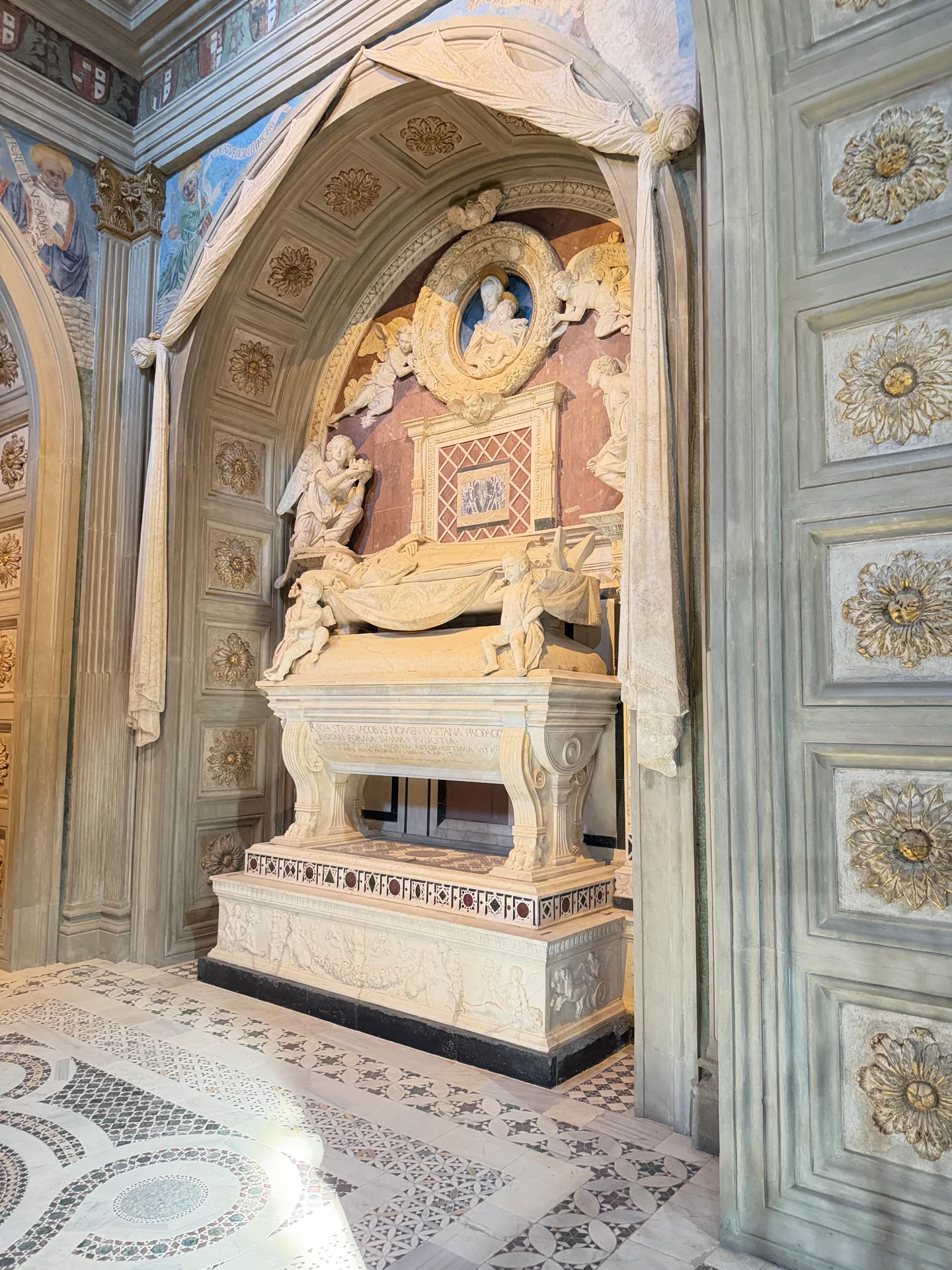
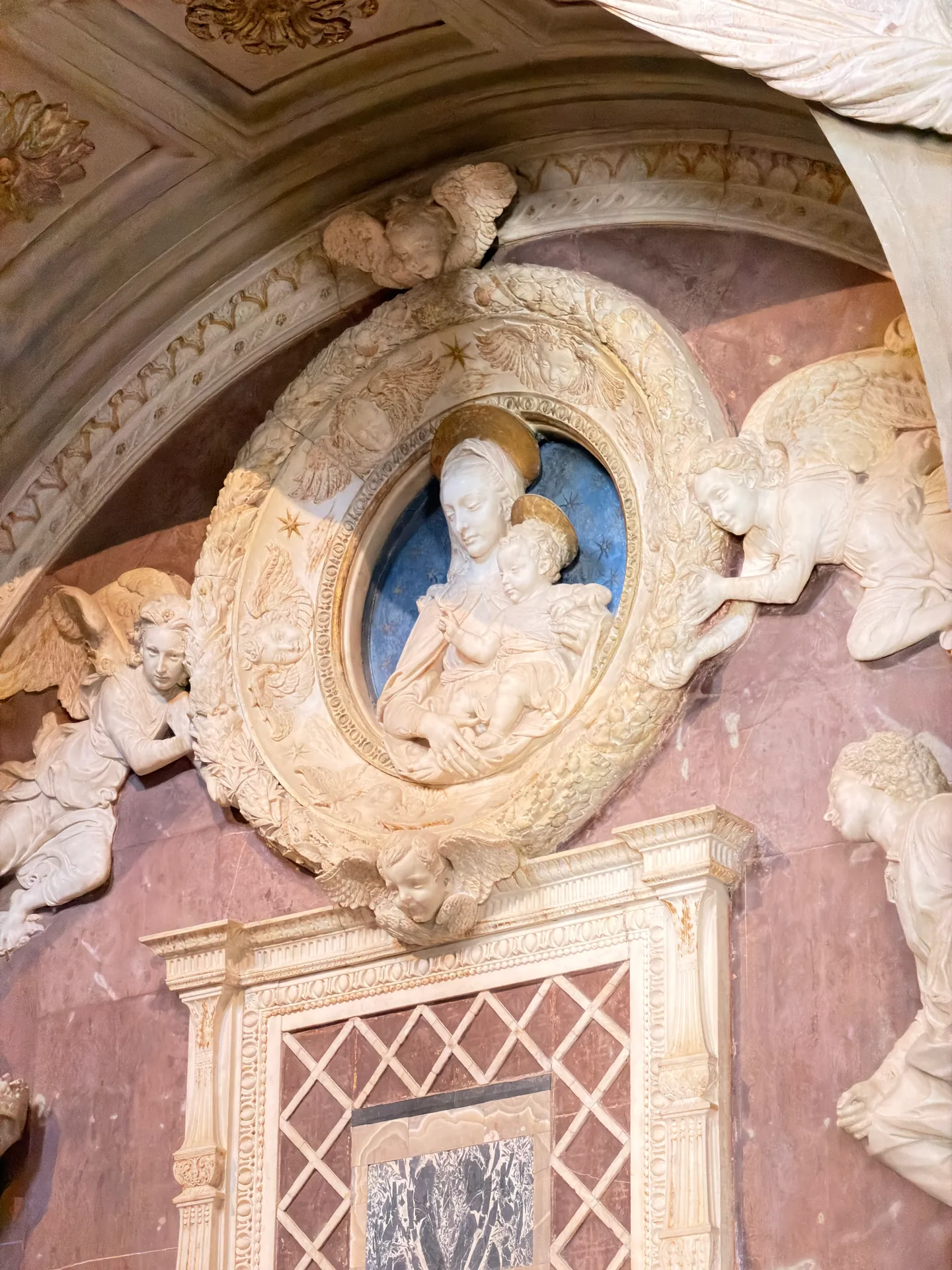
The Frescoes and the Wall Monuments
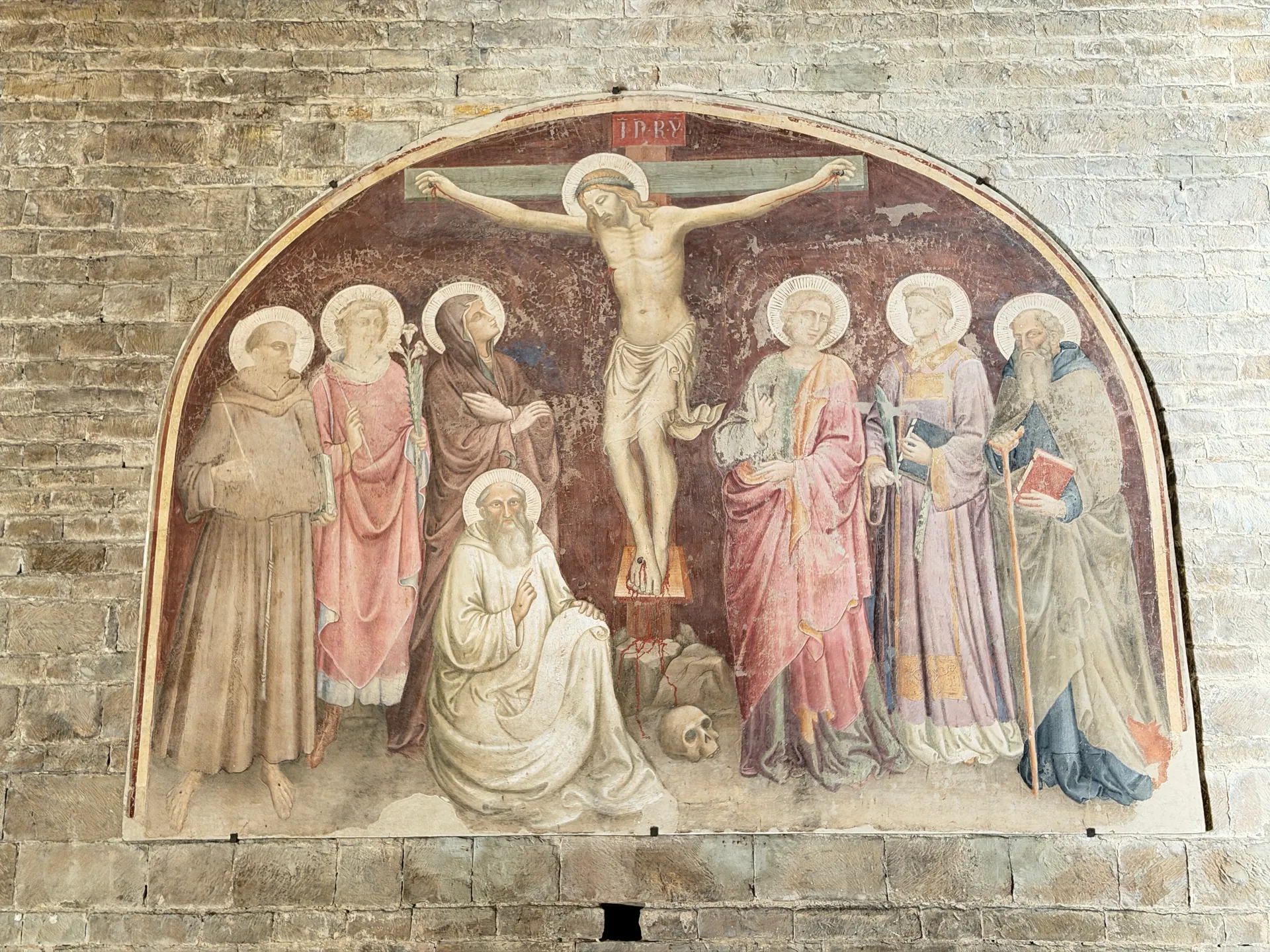
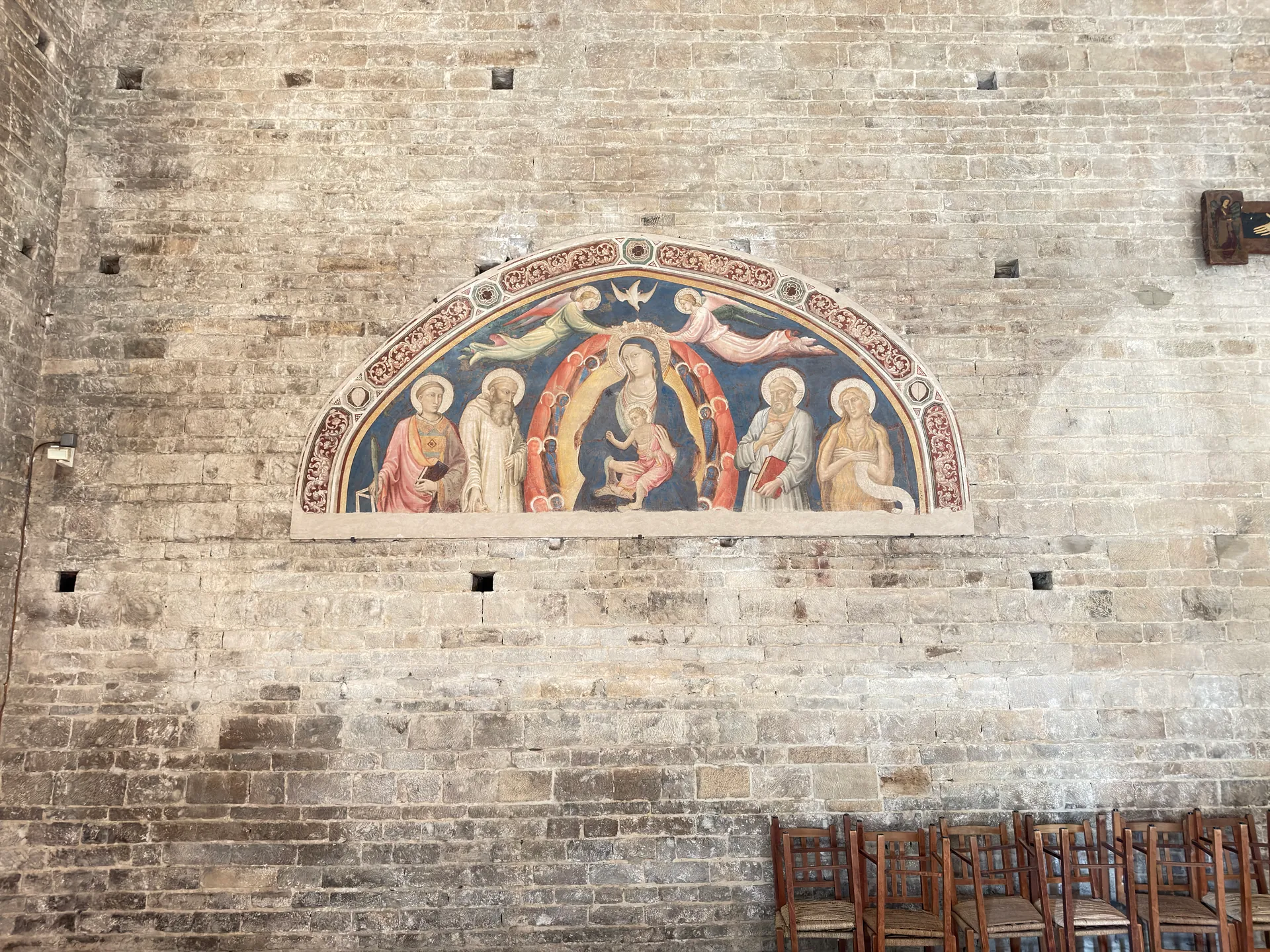
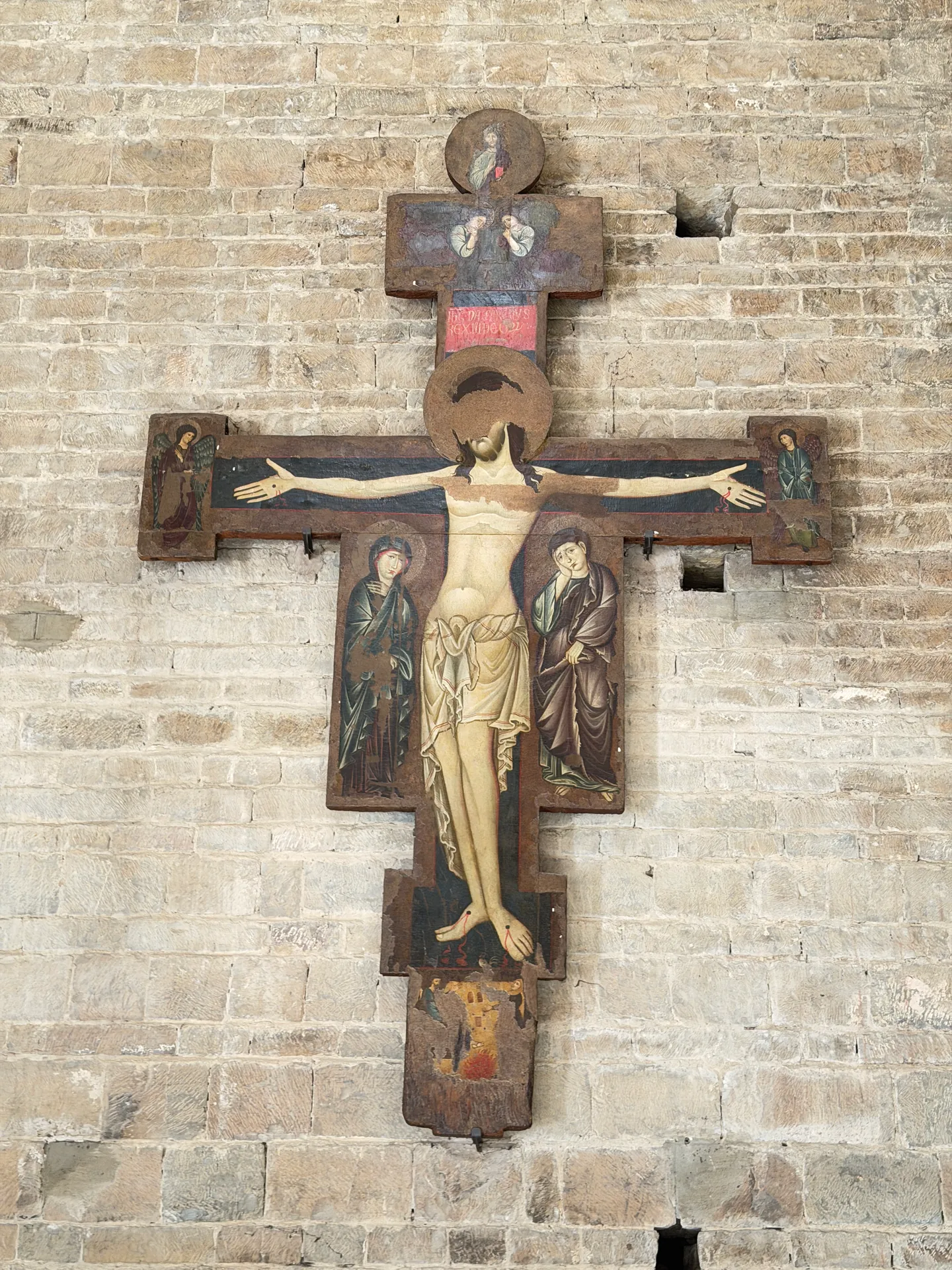
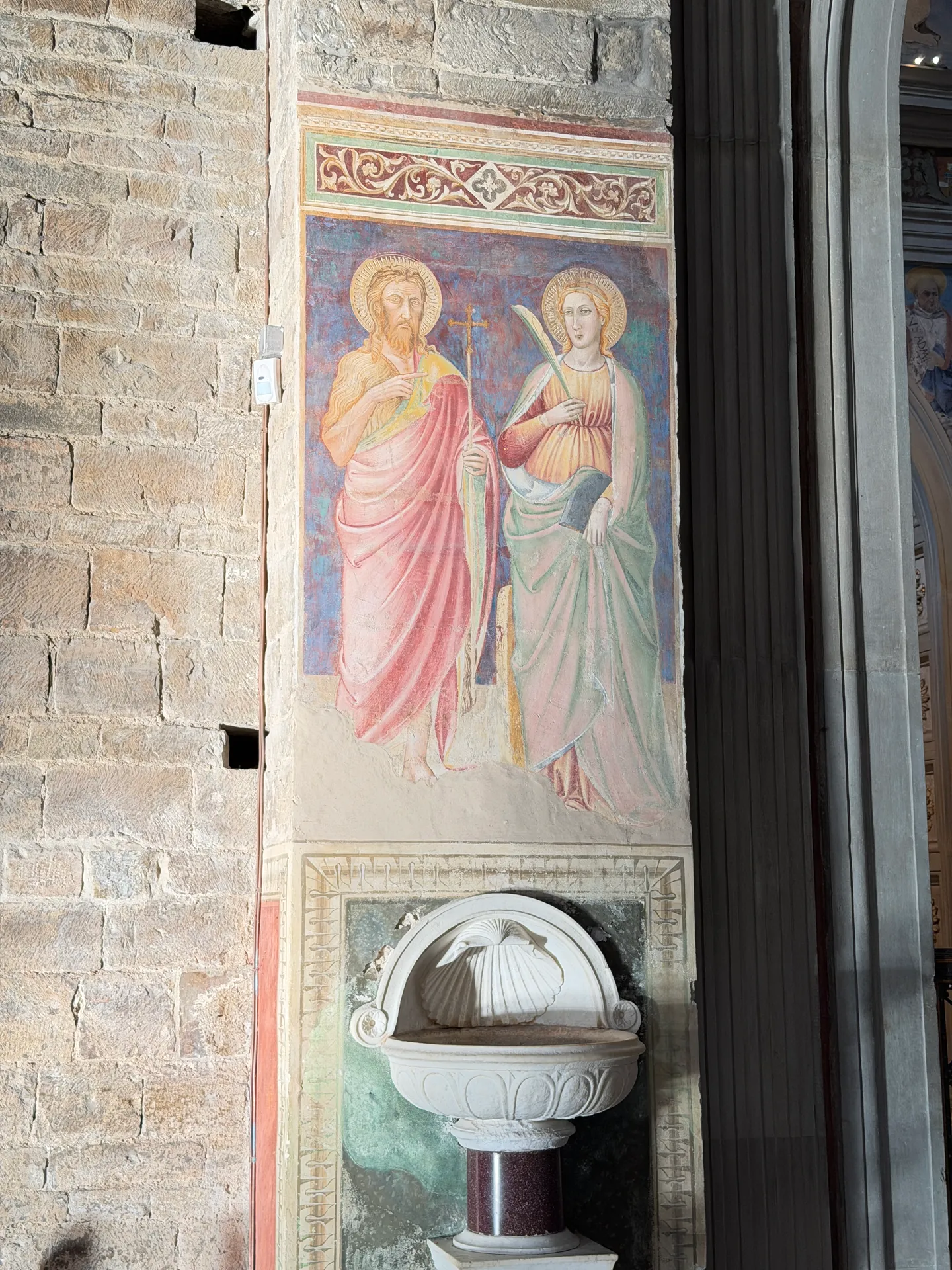
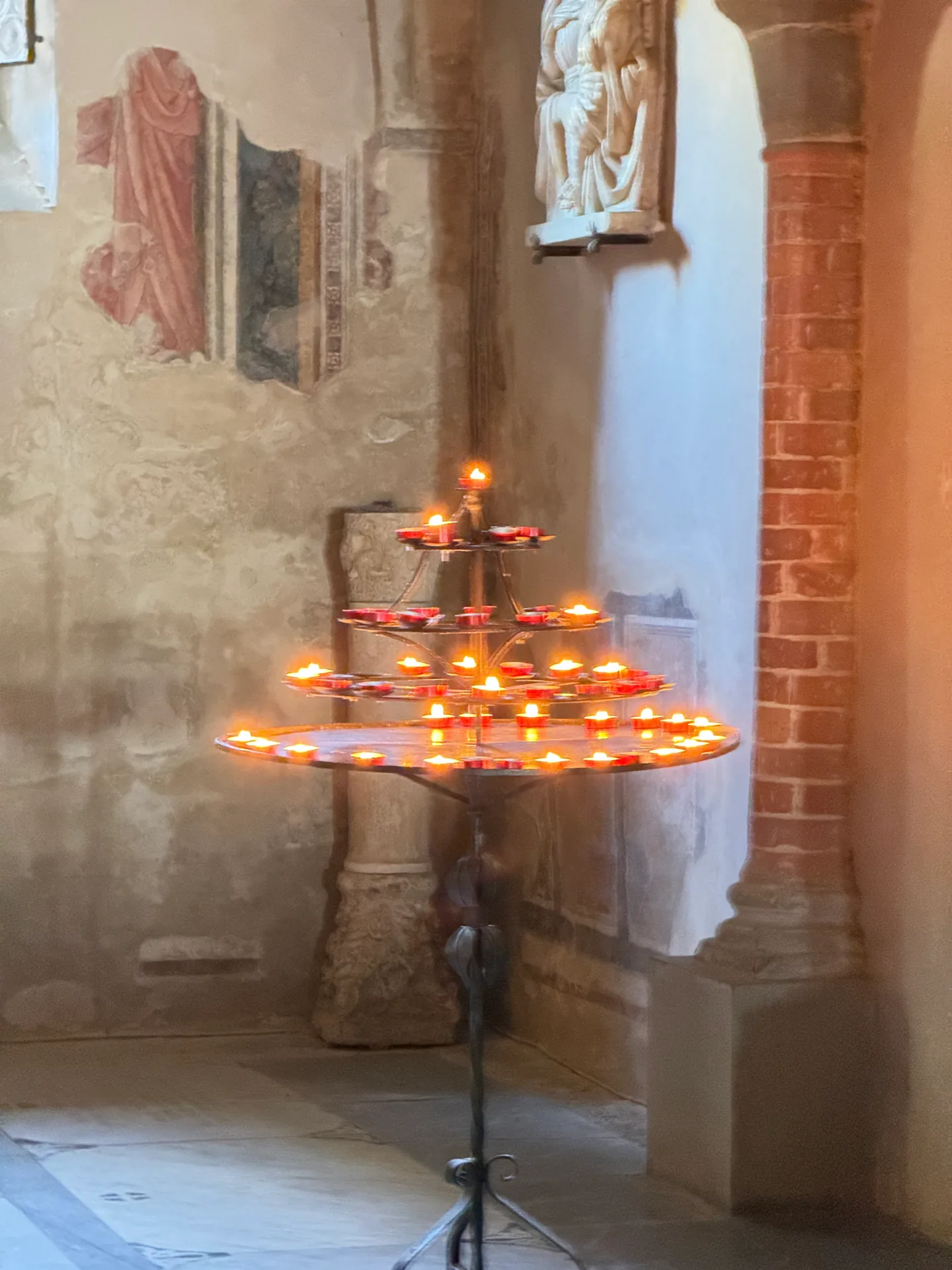
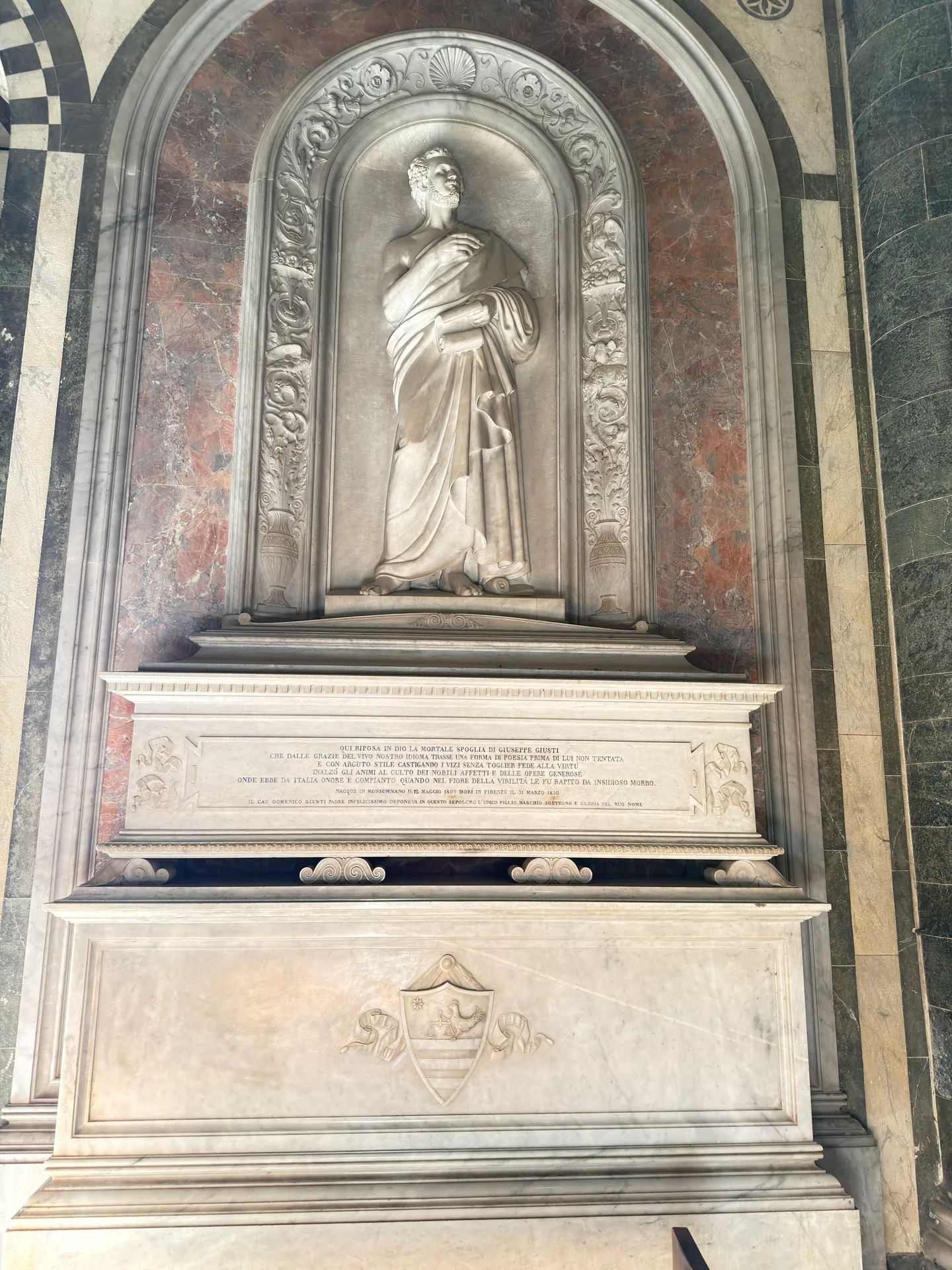
The aisle walls carry centuries of votive painting in various states: whole panels, detached lunettes rehung on bare stone, and in one place only the red underdrawing of a fresco that is gone.
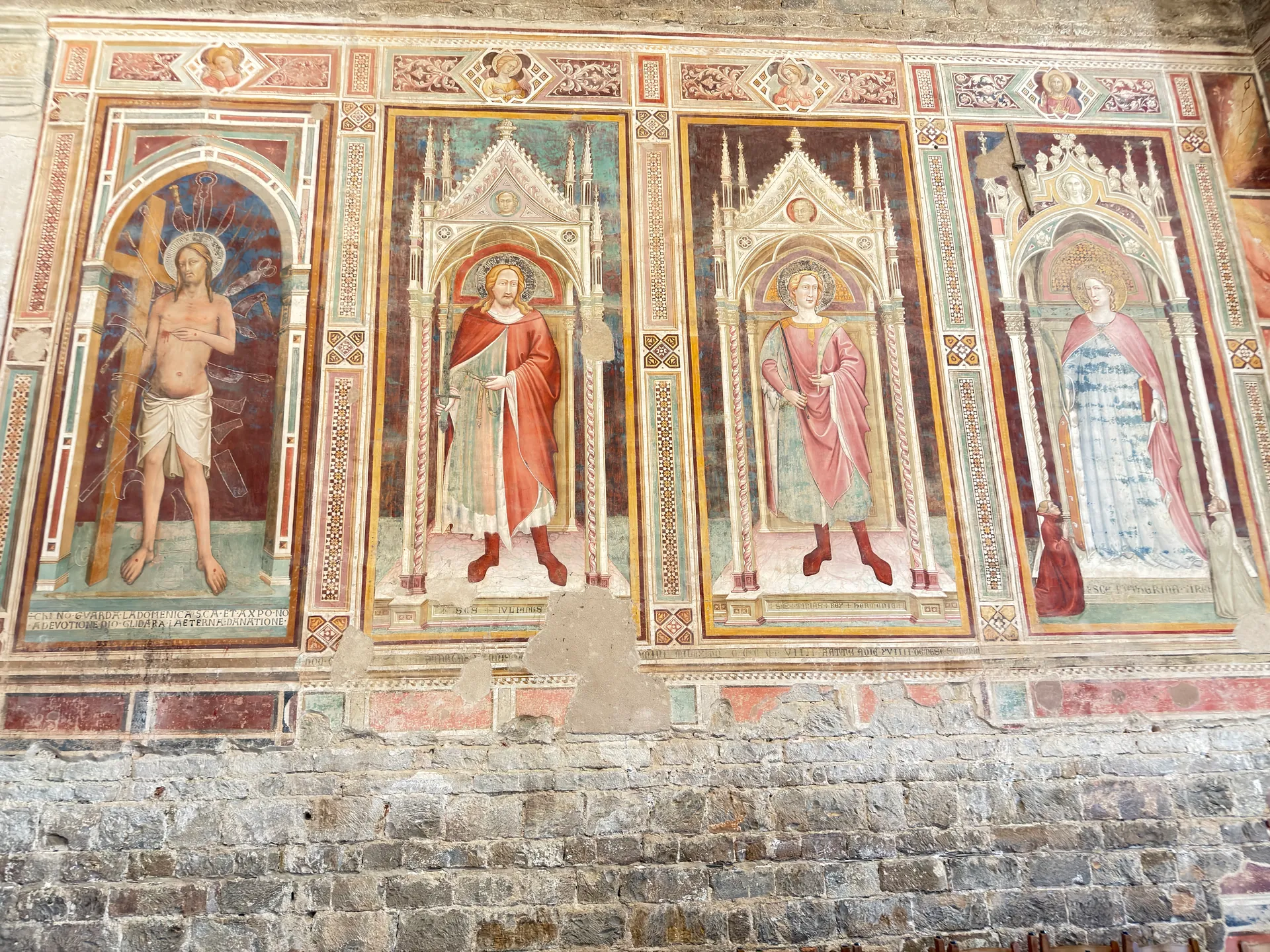
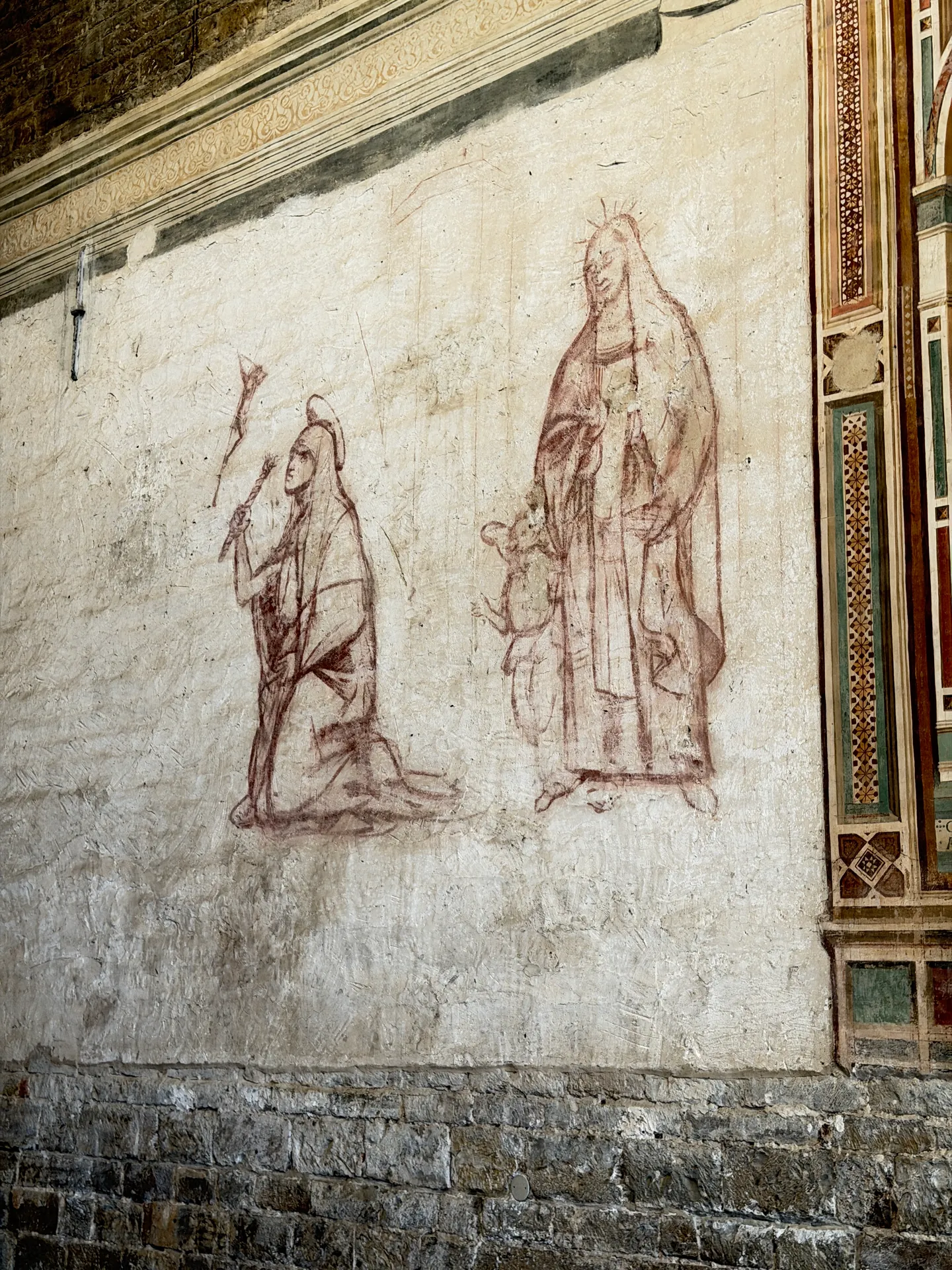
The Terrace and the Porte Sante
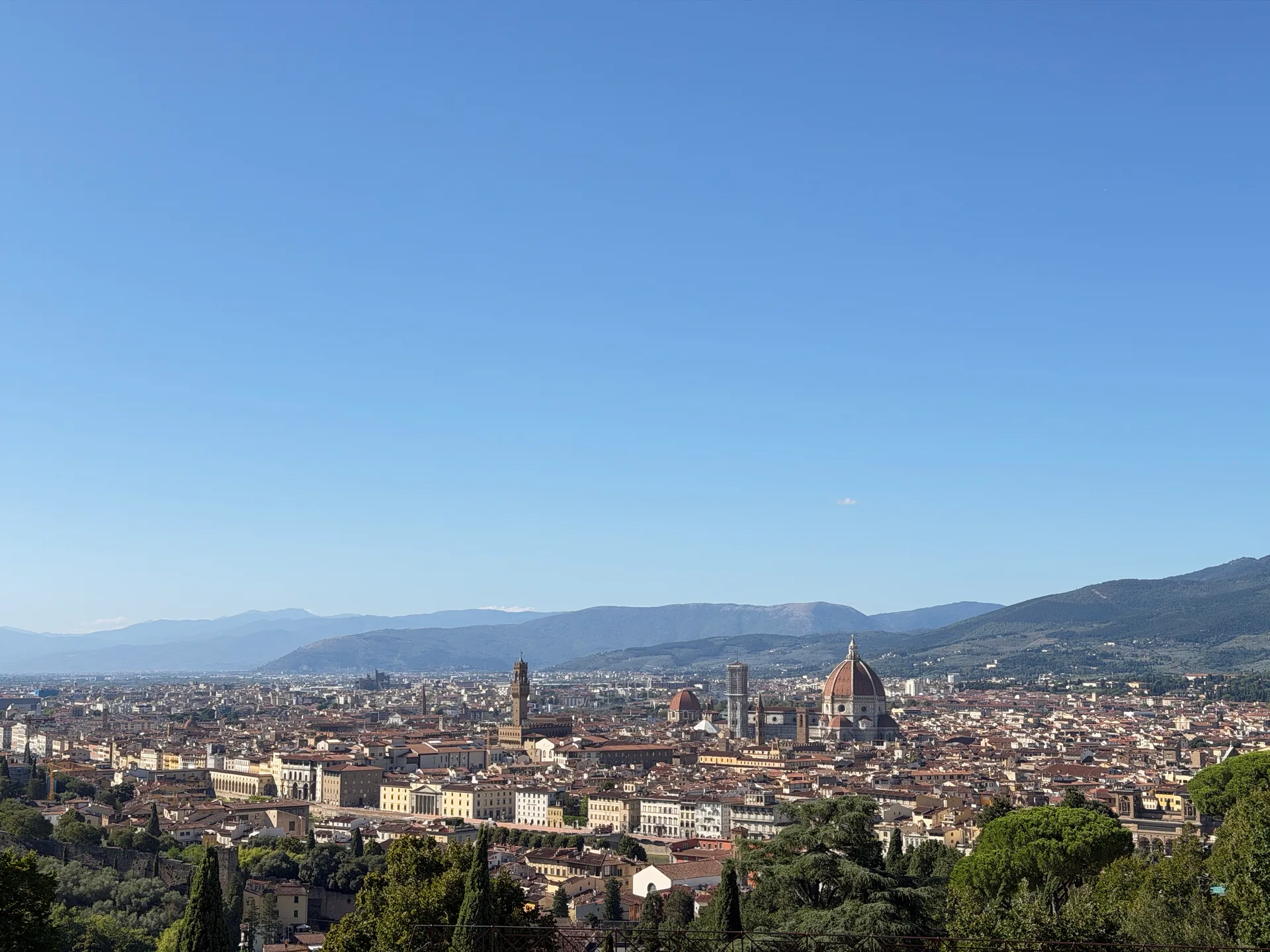
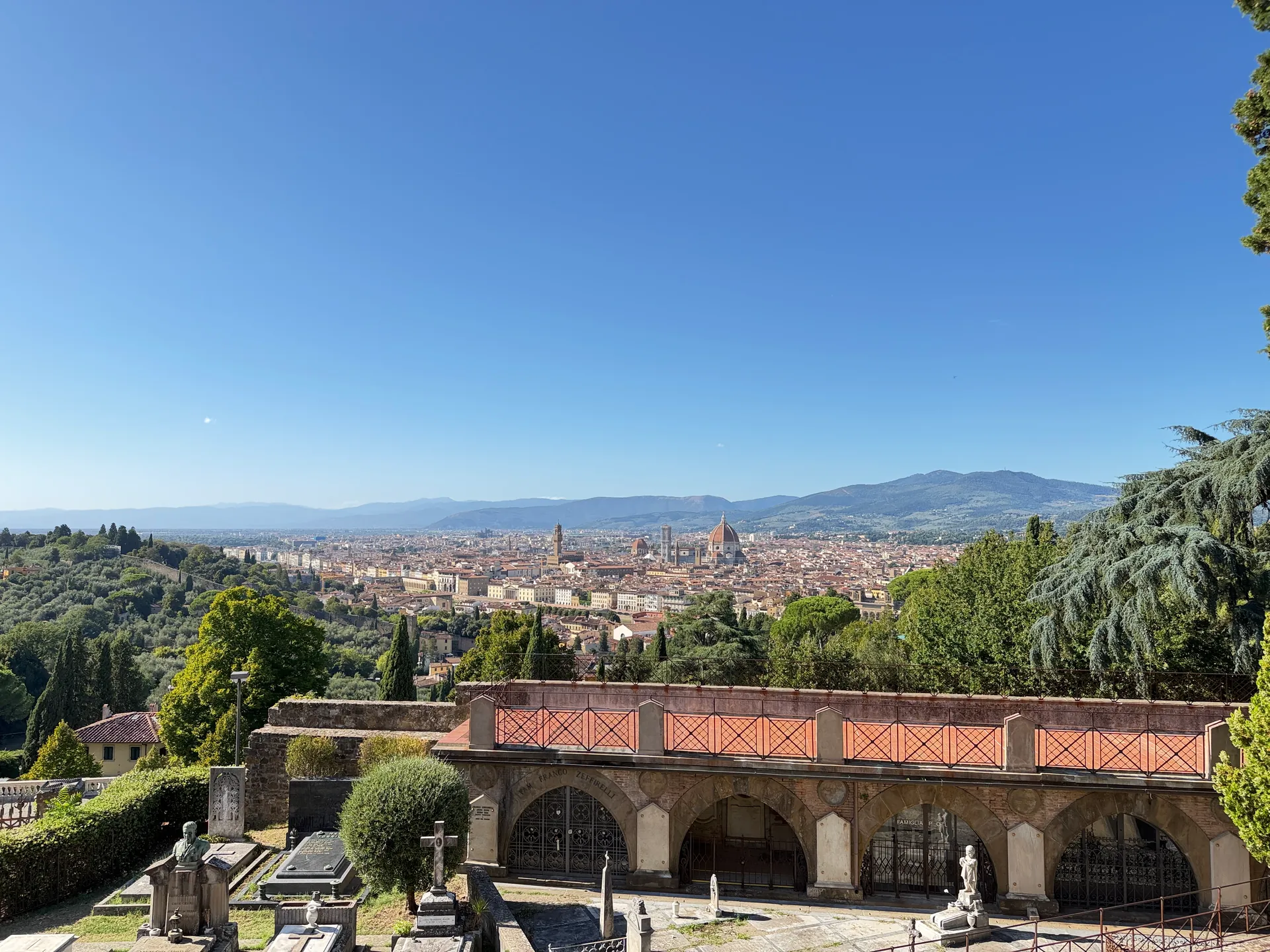
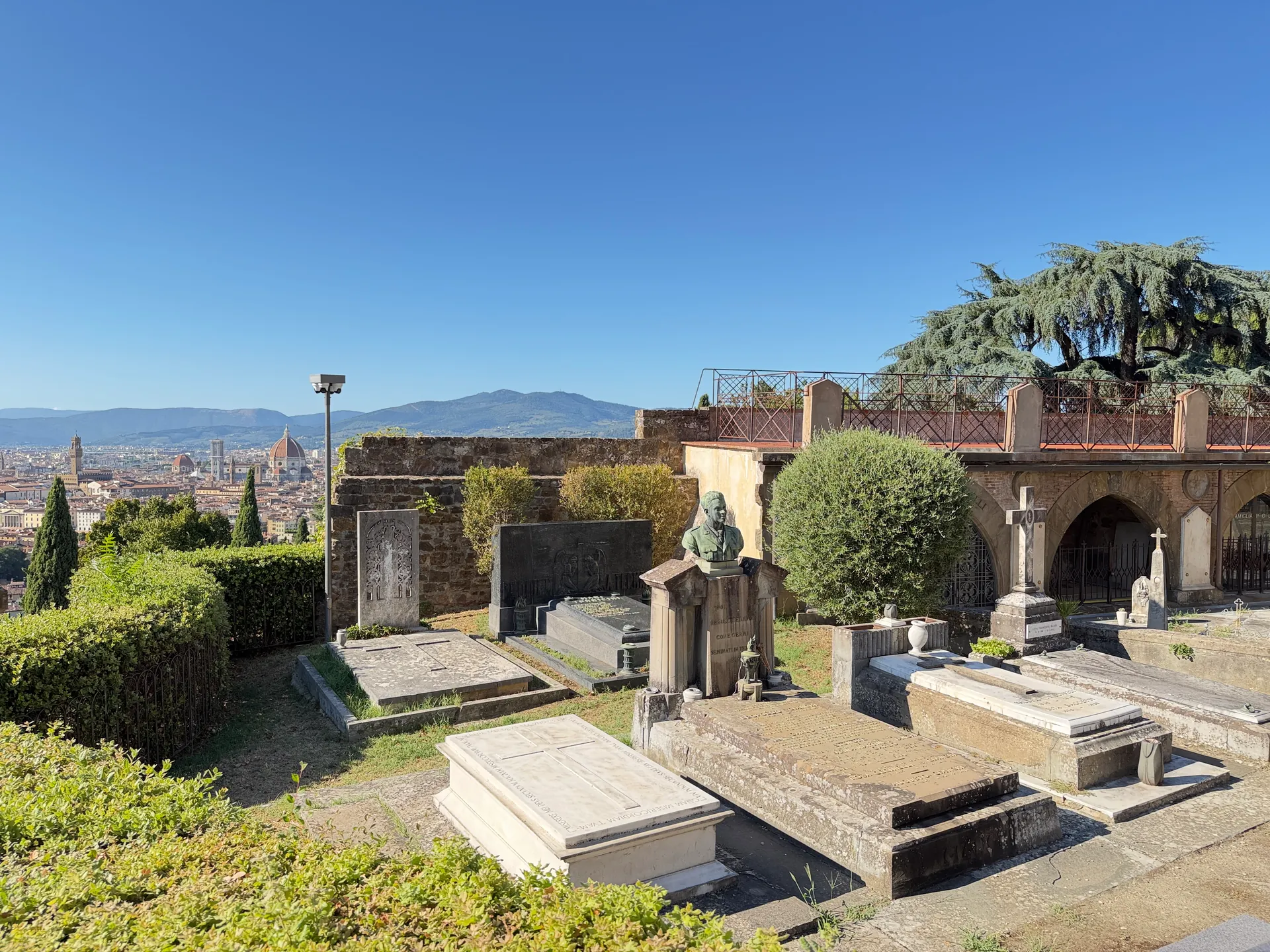
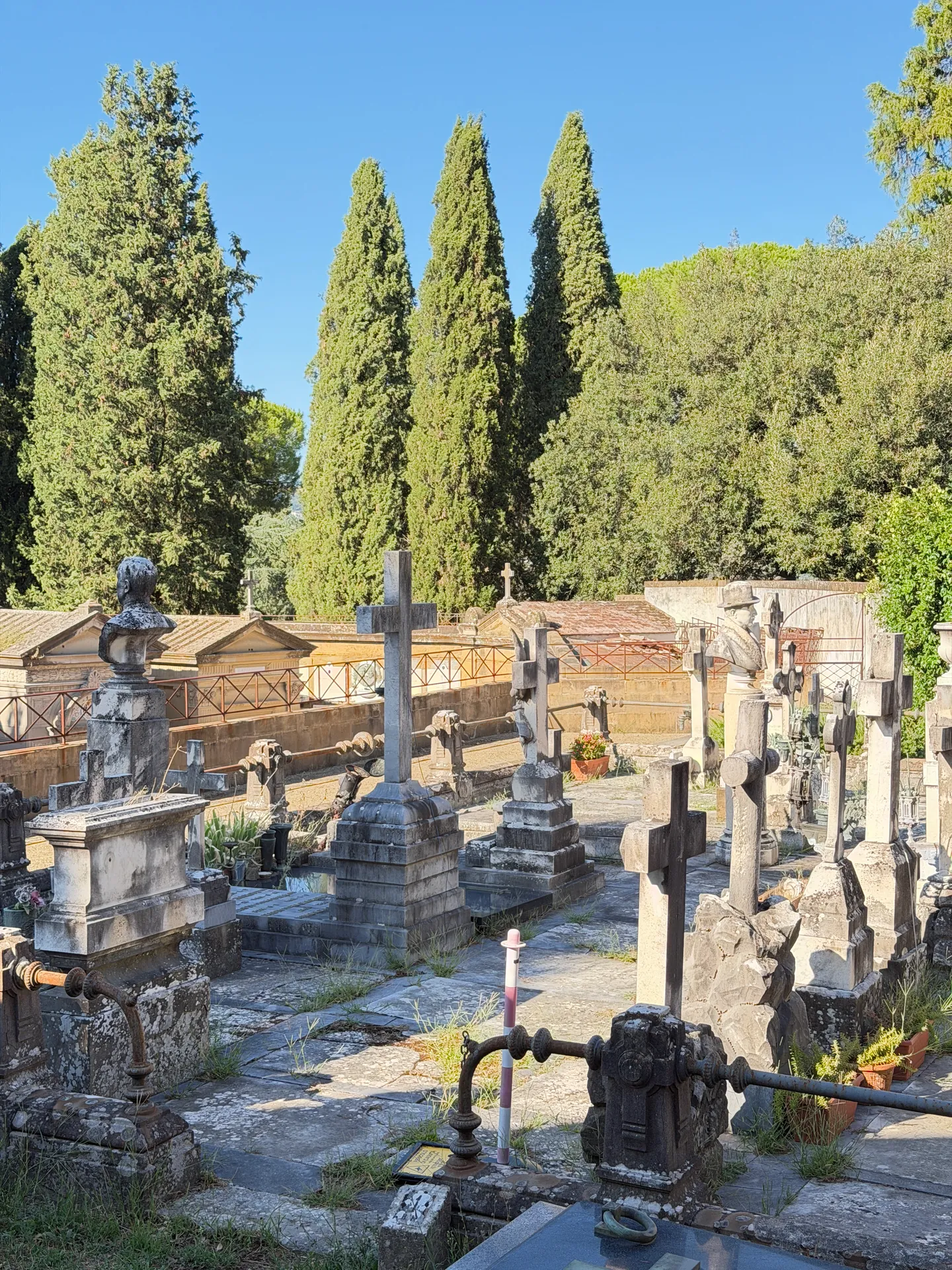
The terrace in front of the church sits higher than Piazzale Michelangelo and is almost always emptier. Behind and below it the Porte Sante cemetery fills the old defensive platform with tombs, cypresses and, at the right hour, the best quiet view in Florence.
Live Prices & Availability
Frequently Asked Questions
Continue Your Italian Journey
Explore more destinations in our Italian travel network
More journeys: 🌺 rHawaii ✈️ rVacation 📷 rPhotography 🍽️ rDining
Some links on this site are affiliate links. If you book through them, we may earn a commission at no additional cost to you. We only recommend tours and stays we would book ourselves.