A medieval fortress whose courtyard once hosted executions now hosts the calmest great museum in Florence. Glazed della Robbia skies, ivories and armor, and masterpieces you can circle without touching a shoulder. It rewards the second hour the way crowded museums punish it.
🏛️ A Little History
Built from 1255 as the city's first seat of government, later the police chief's (bargello's) headquarters and a prison. Executions happened in the courtyard where sculpture now stands. It became Italy's first national museum in 1865.
💡 Did You Know?
The Bargello became Italy's first national museum in 1865. Before that it was the police headquarters and prison whose courtyard wall still shows traces of the chapel where the condemned spent their last night, frescoed, it's said, with a portrait of Dante that helped revive his cult.
A FORTRESS BEFORE IT WAS A MUSEUM
The Palace and the Courtyard
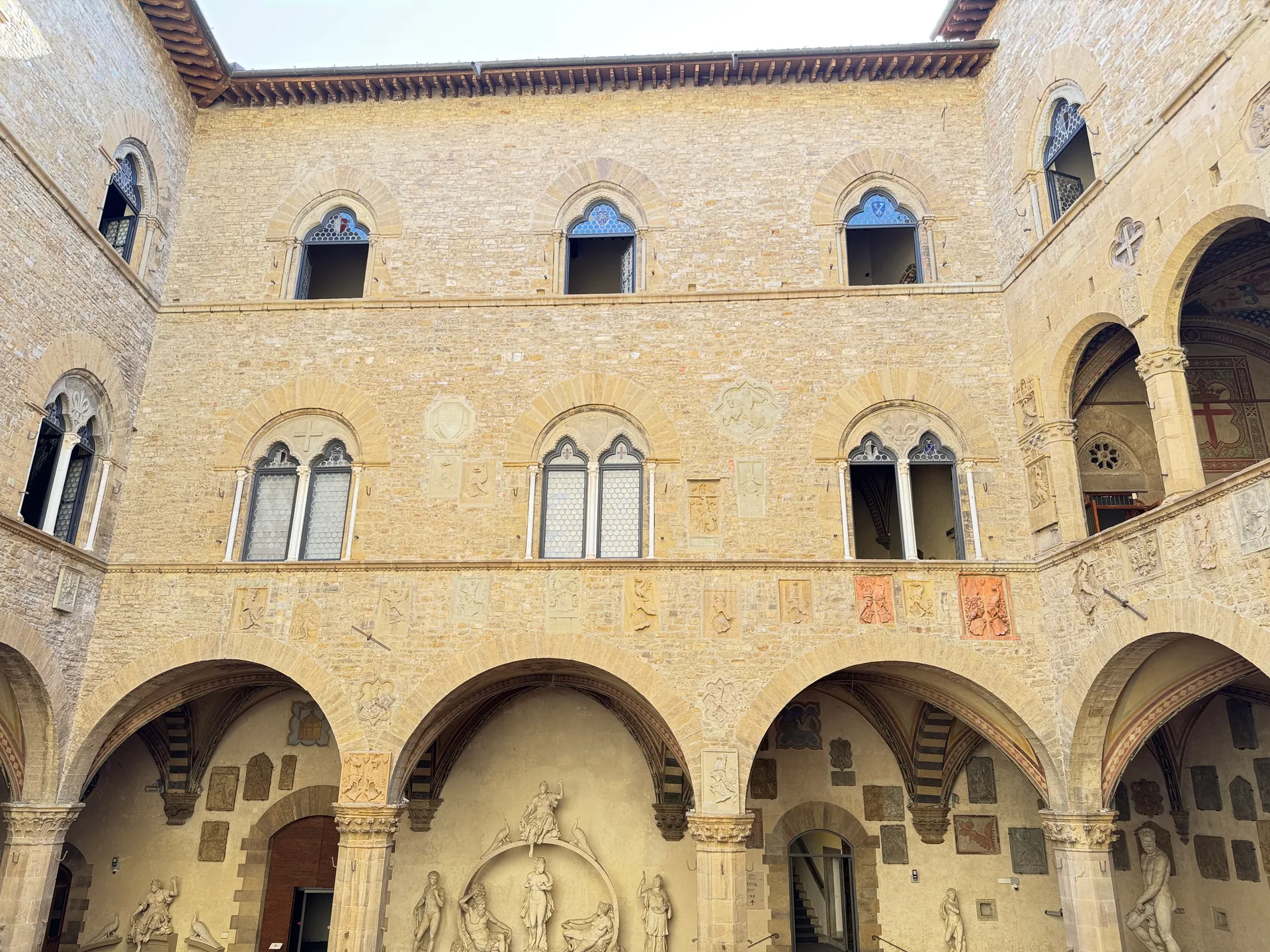
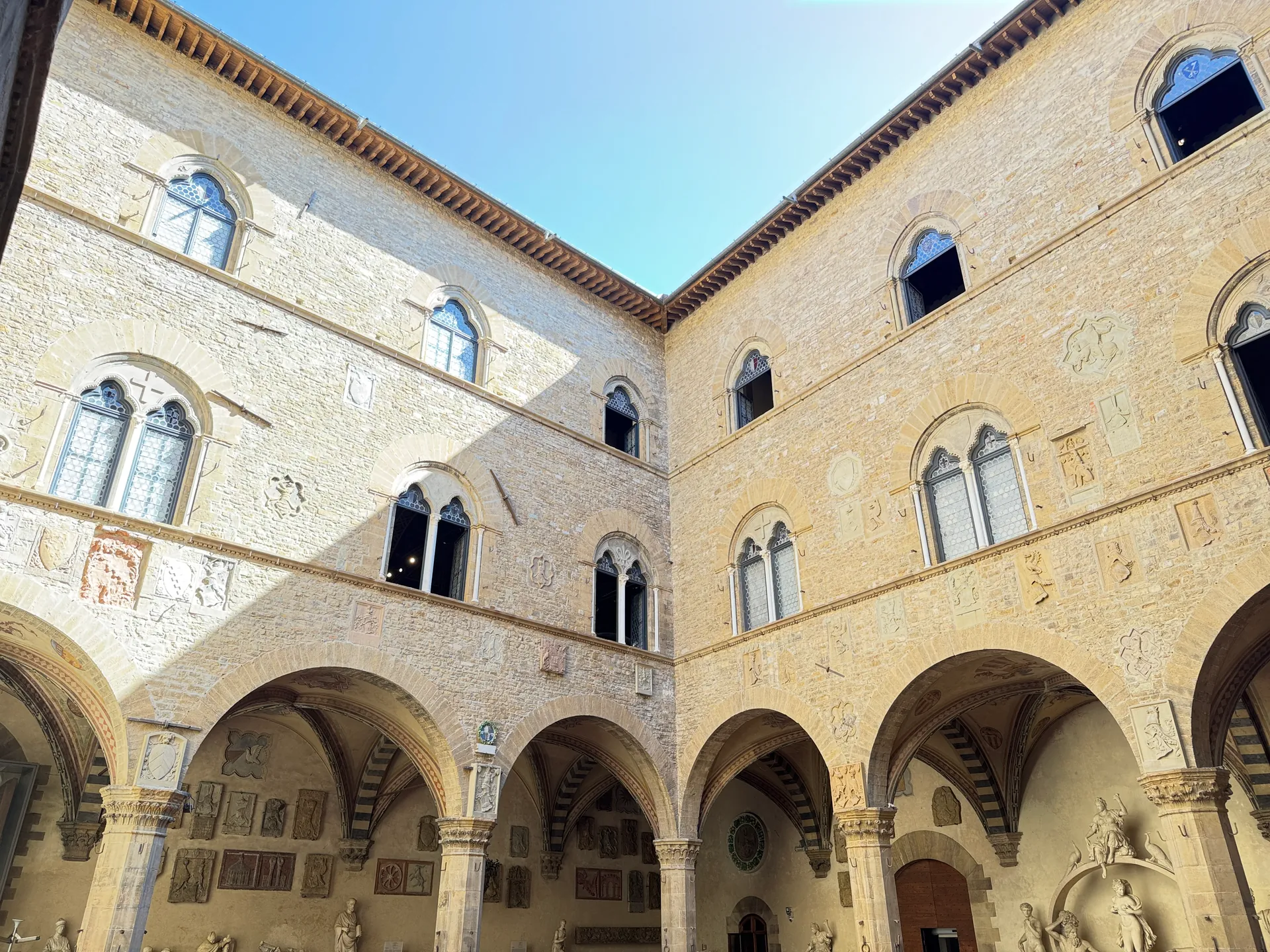
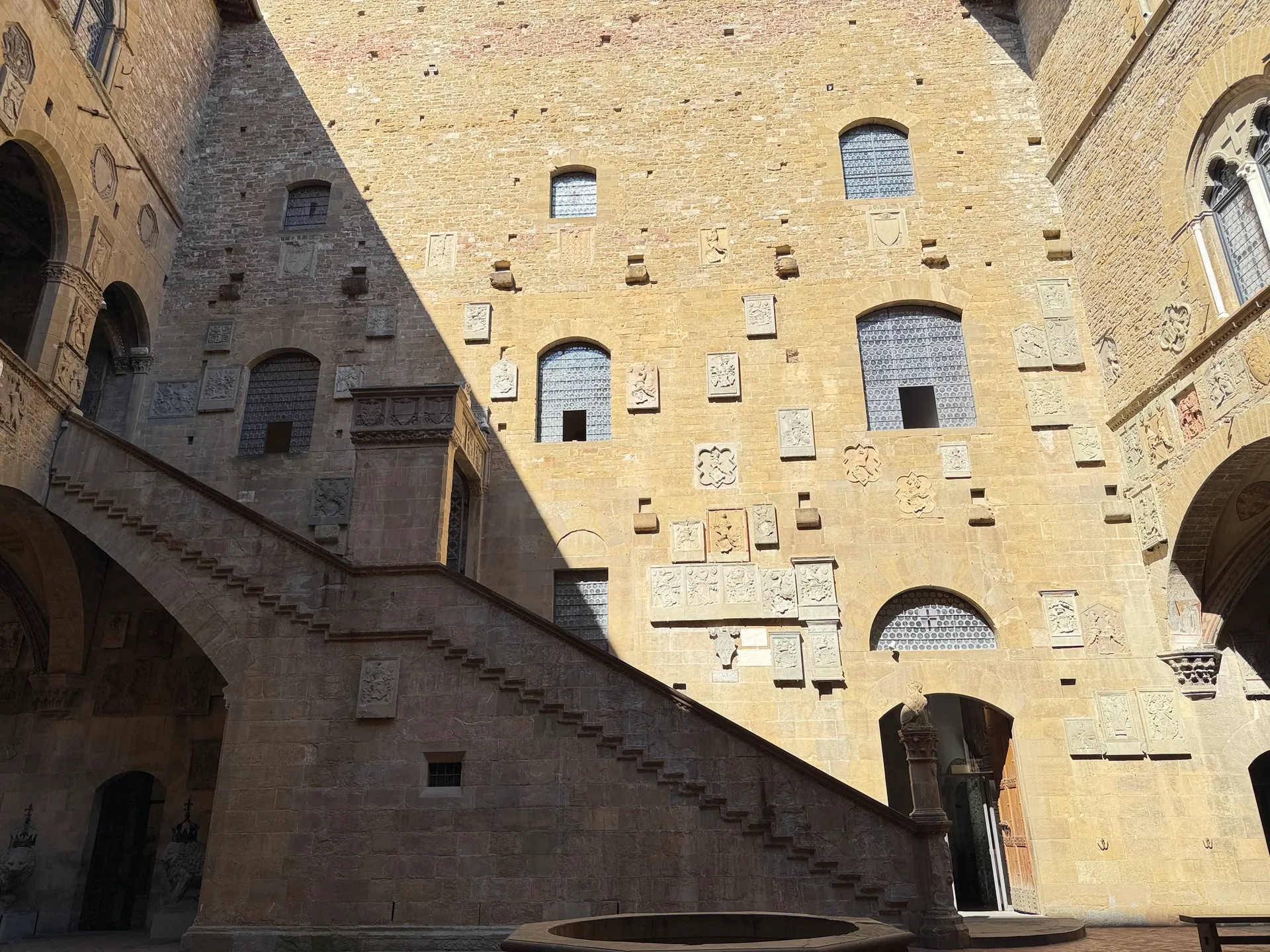
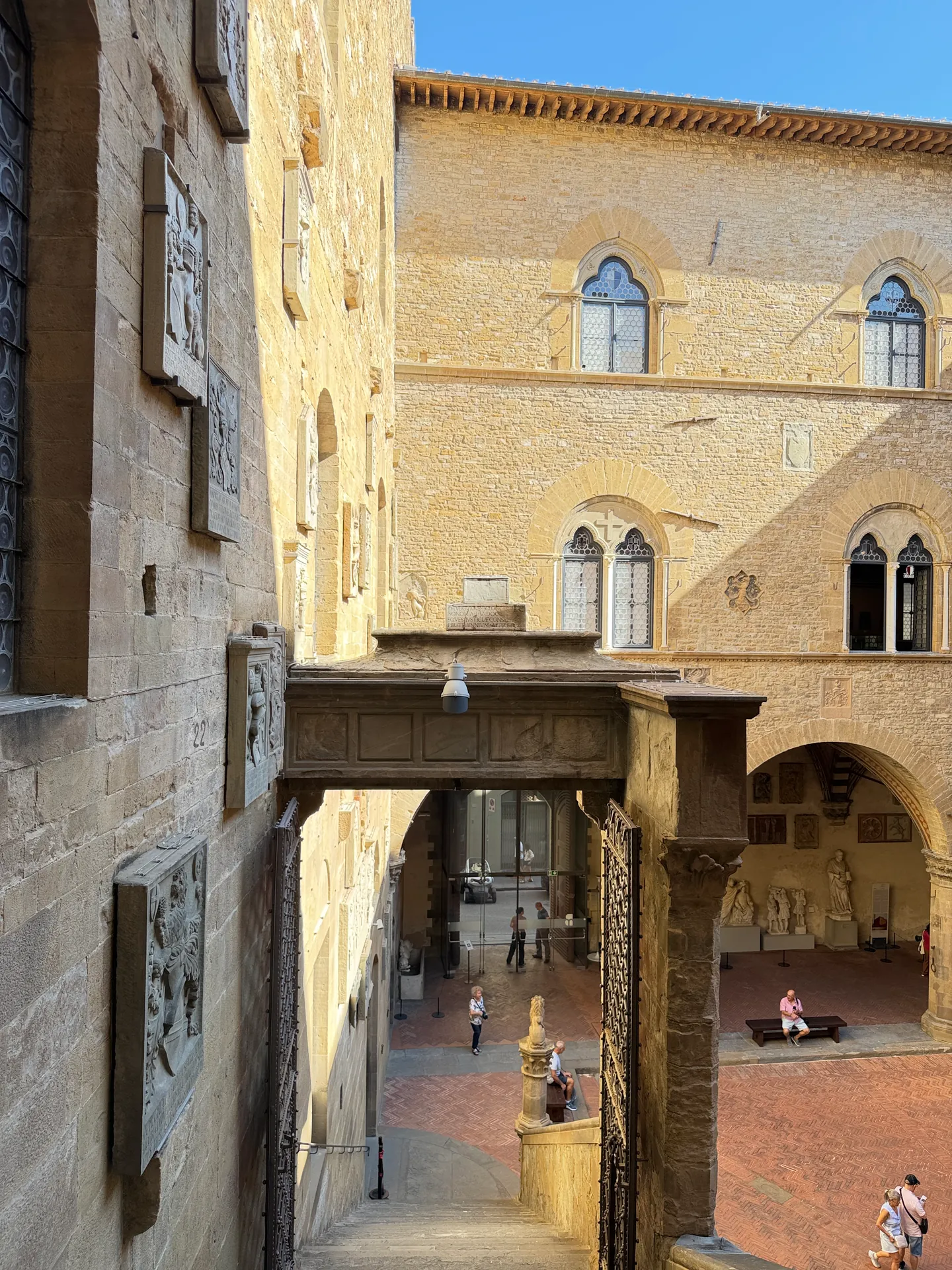
Begun in 1255 for the Capitano del Popolo, this is the oldest public building in Florence and it is older than the Palazzo Vecchio. The courtyard was a prison yard for nearly three centuries before it held sculpture.
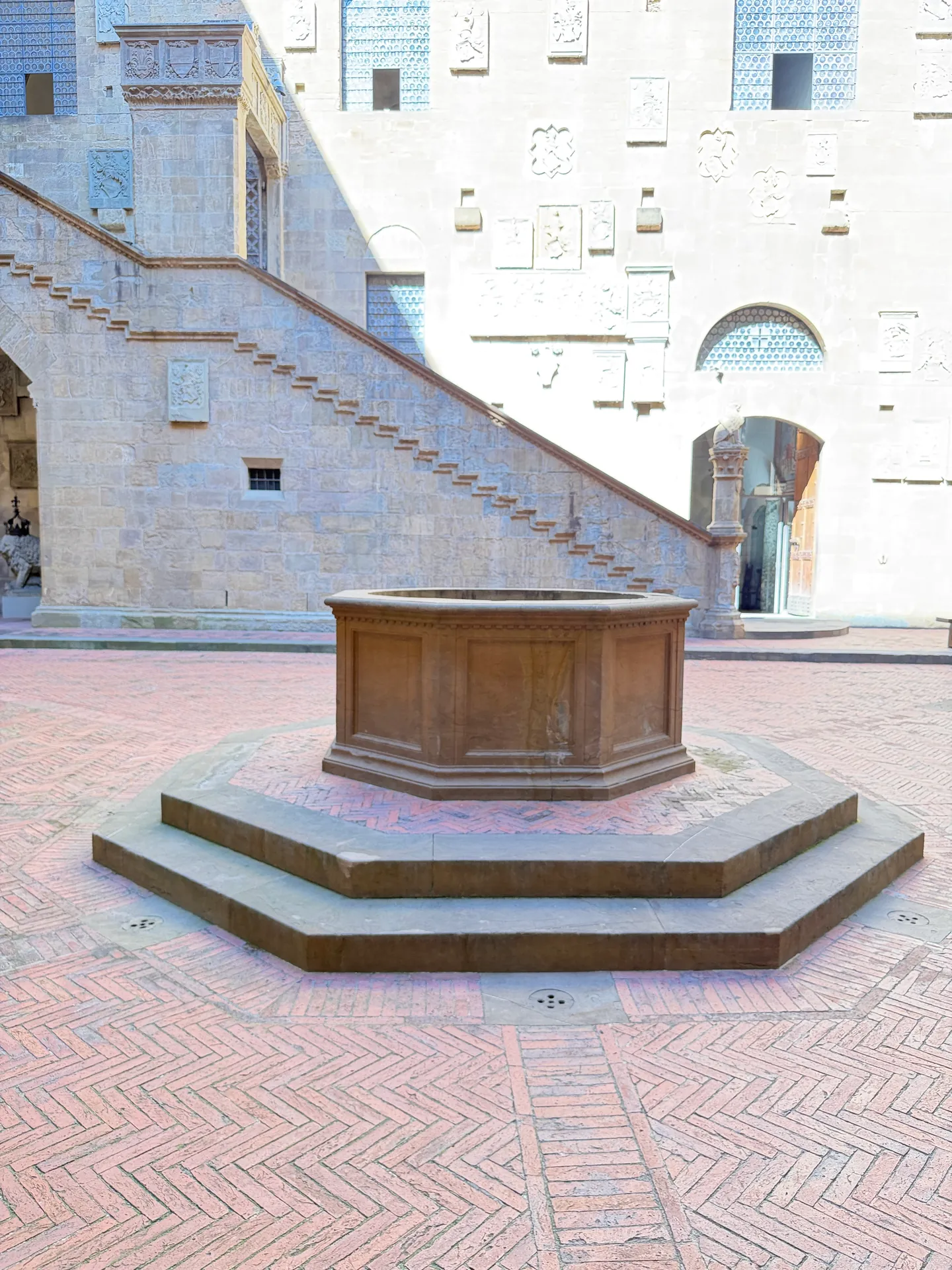
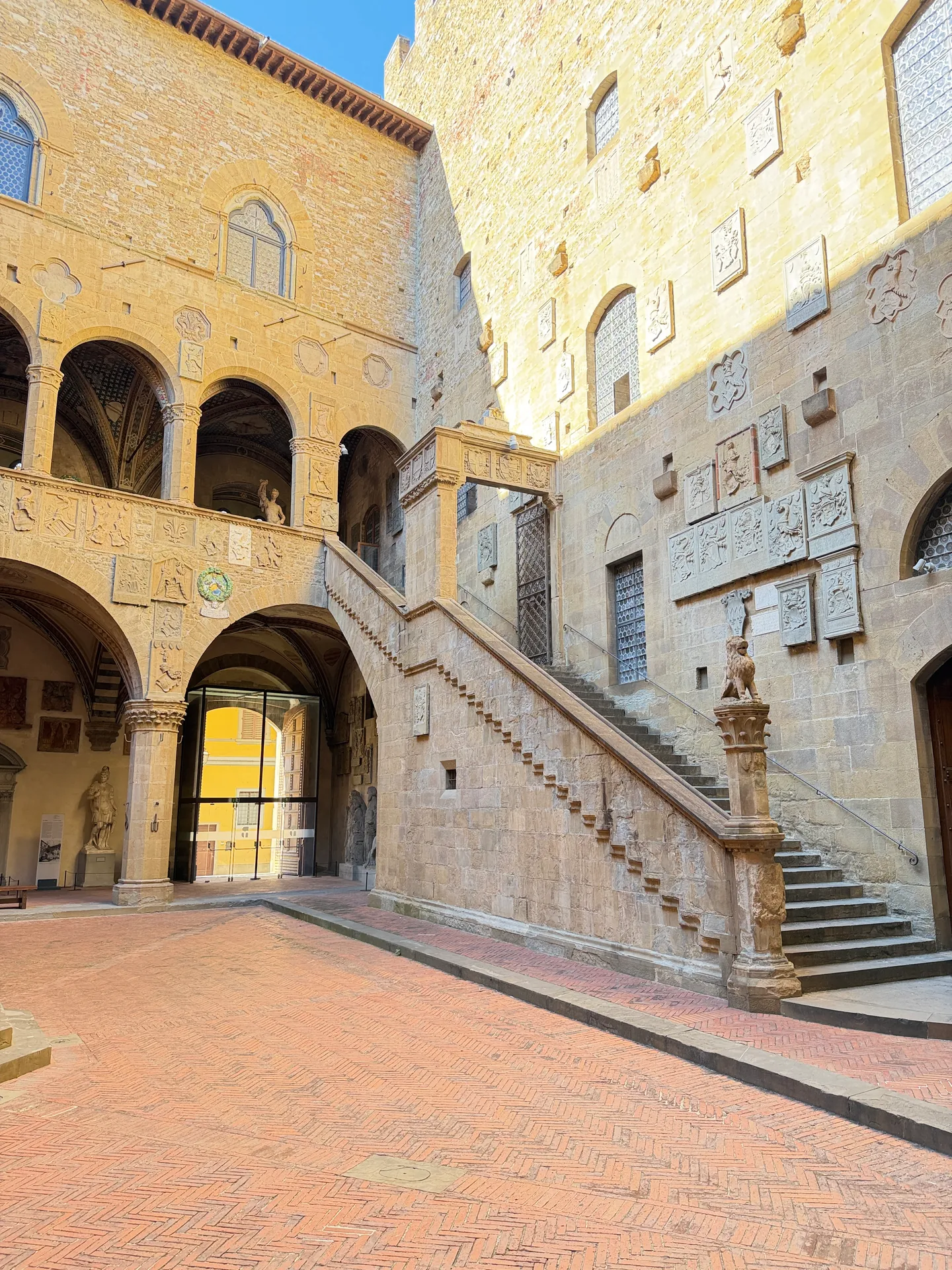
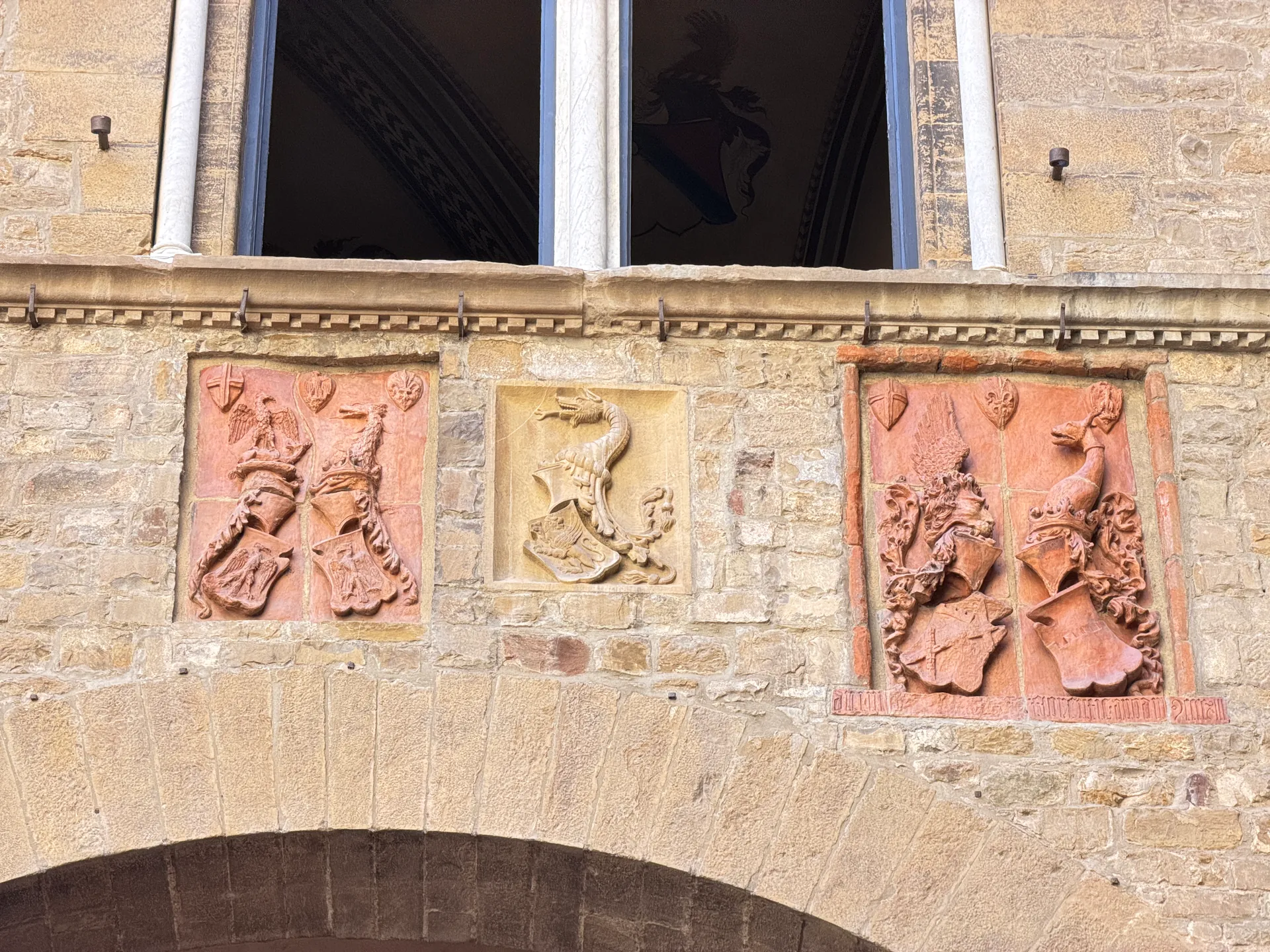
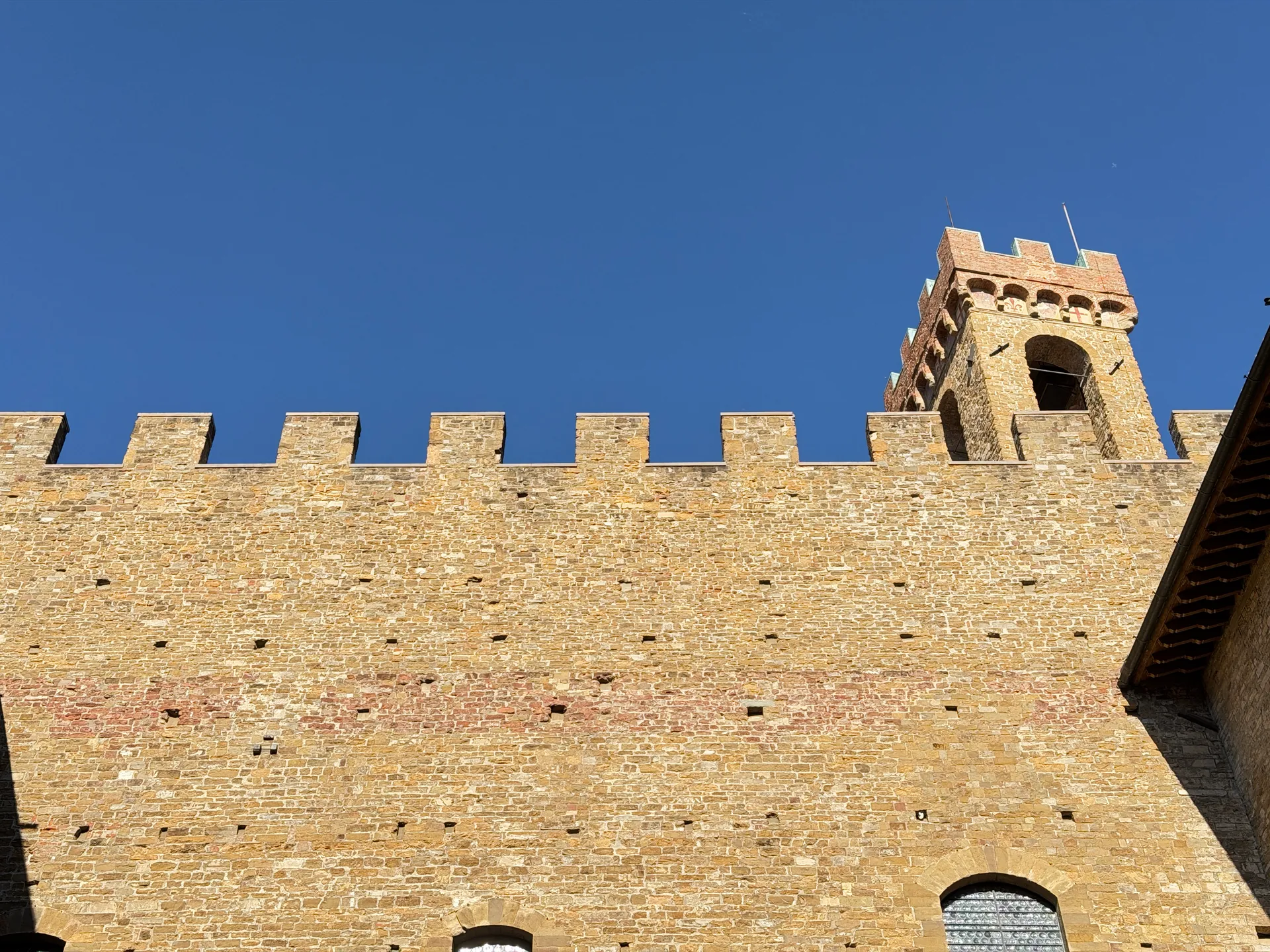
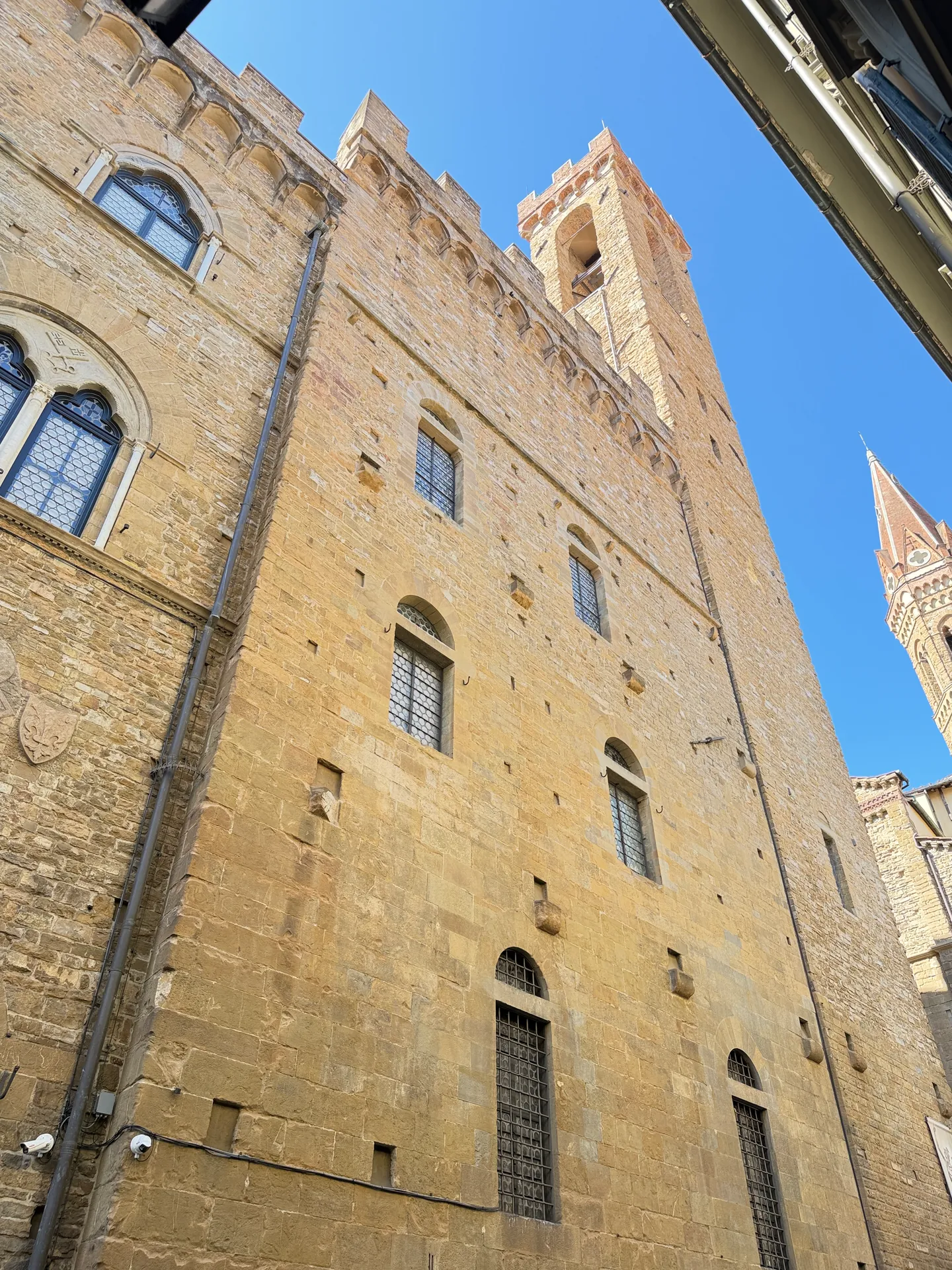
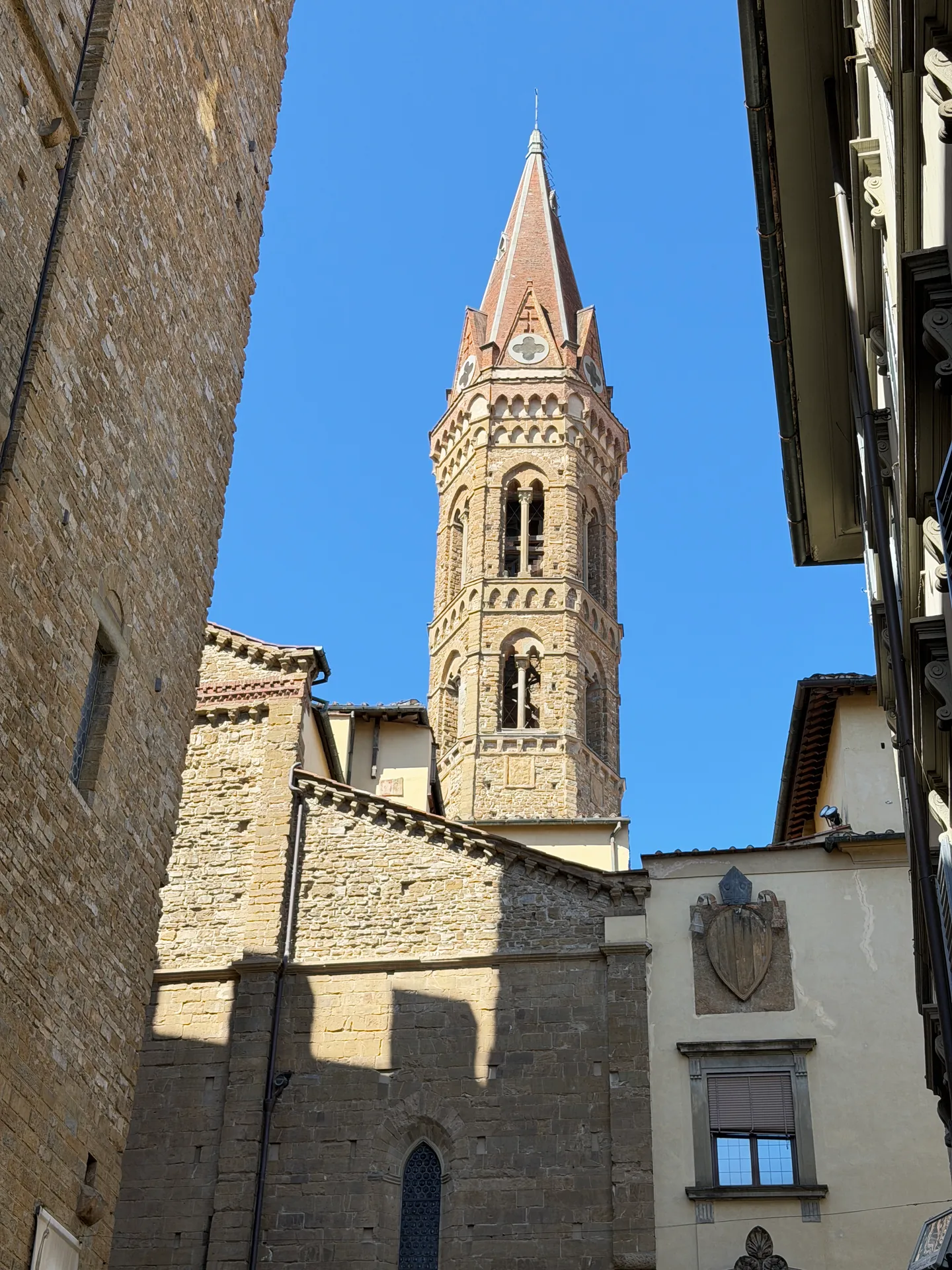
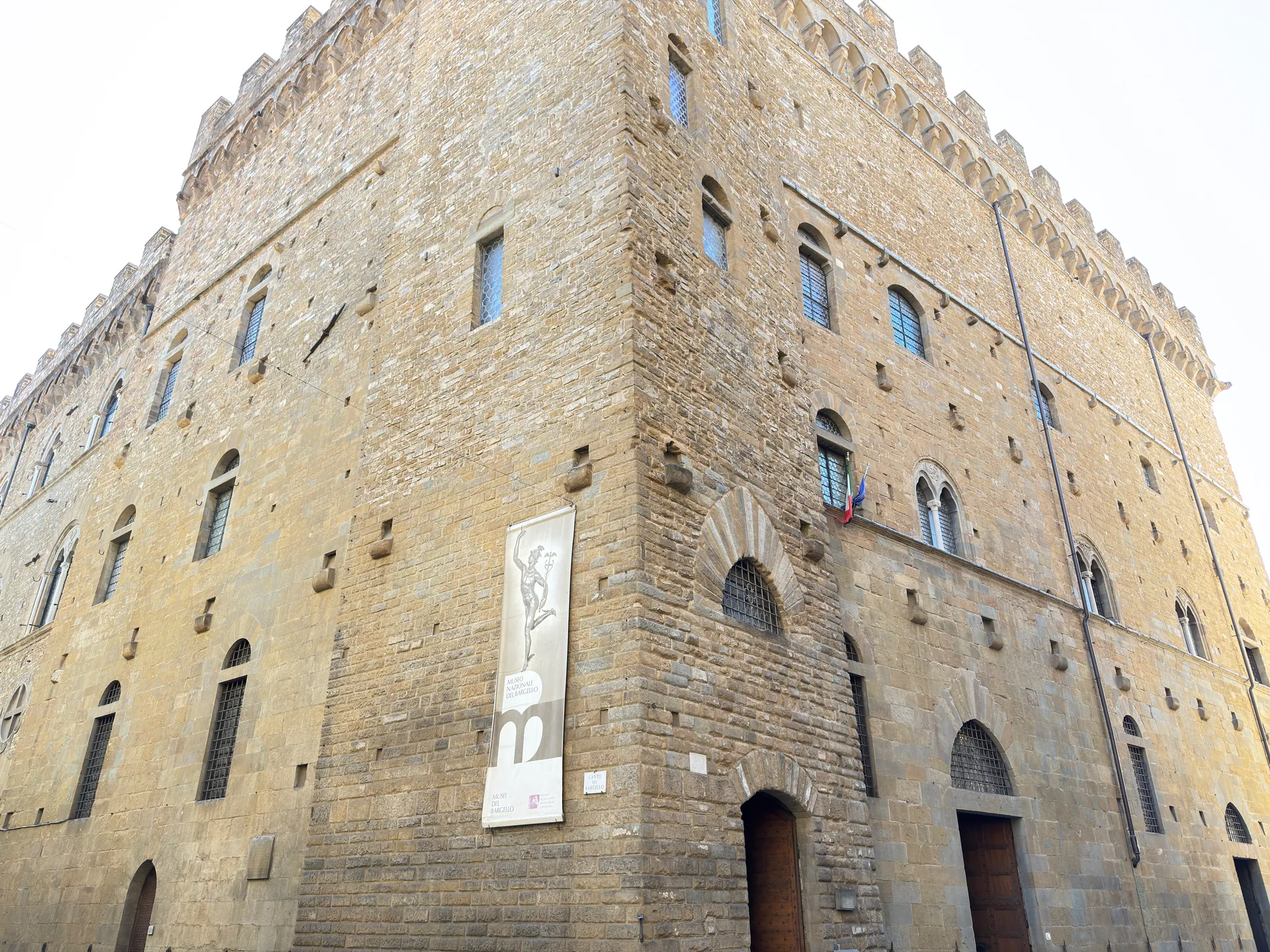
Three sides of arcadeThe ground arcade runs on three sides with the open first floor loggia above it. For most of this building's life the arches were walled up into cells.Where the wings meetTwo arcaded wings and a wedge of sky between them. It is the best picture in the batch and it still will not work as a hero, because the roofline cuts the top band.The well headOctagonal, on a stepped base, at the centre of the courtyard. Do not read it as medieval: the nineteenth century restoration is recorded as having added it.The open stairNeri di Fioravanti built it in the 1360s to reach the first floor loggia. Its covering roof came down in the nineteenth century, which is why it reads so bare now.At the foot of the stairThe carved newel post, with the arcade rising behind it in raking morning light.Arms in raking shadowThe arms of the podesta and the capitani del popolo, cut by the diagonal shadow of the stair. Many have been replaced with copies as the stone decayed.Painted and carved togetherSome of these are sandstone and terracotta, some were frescoed onto the wall during the nineteenth century restoration. The wall carries both.Through to the courtyardThe vaulted entrance passage off via del Proconsolo, looking through to the arcade and the stair beyond.Square merlons, not swallowtailGuelph merlons, which is the politically correct crown for a Florentine public building. The tower rises behind them.The tower from belowFifty seven metres, and older than the palace it belongs to. The Badia's spire enters at the right.The Badia across the streetThe hexagonal bell tower of the Badia Fiorentina stands directly opposite the Bargello on via del Proconsolo.The corner on the streetThe merloned parapet above and the arched entrance below, from the pavement outside.
THE GROUND ARCADE
Around the Courtyard Arcade
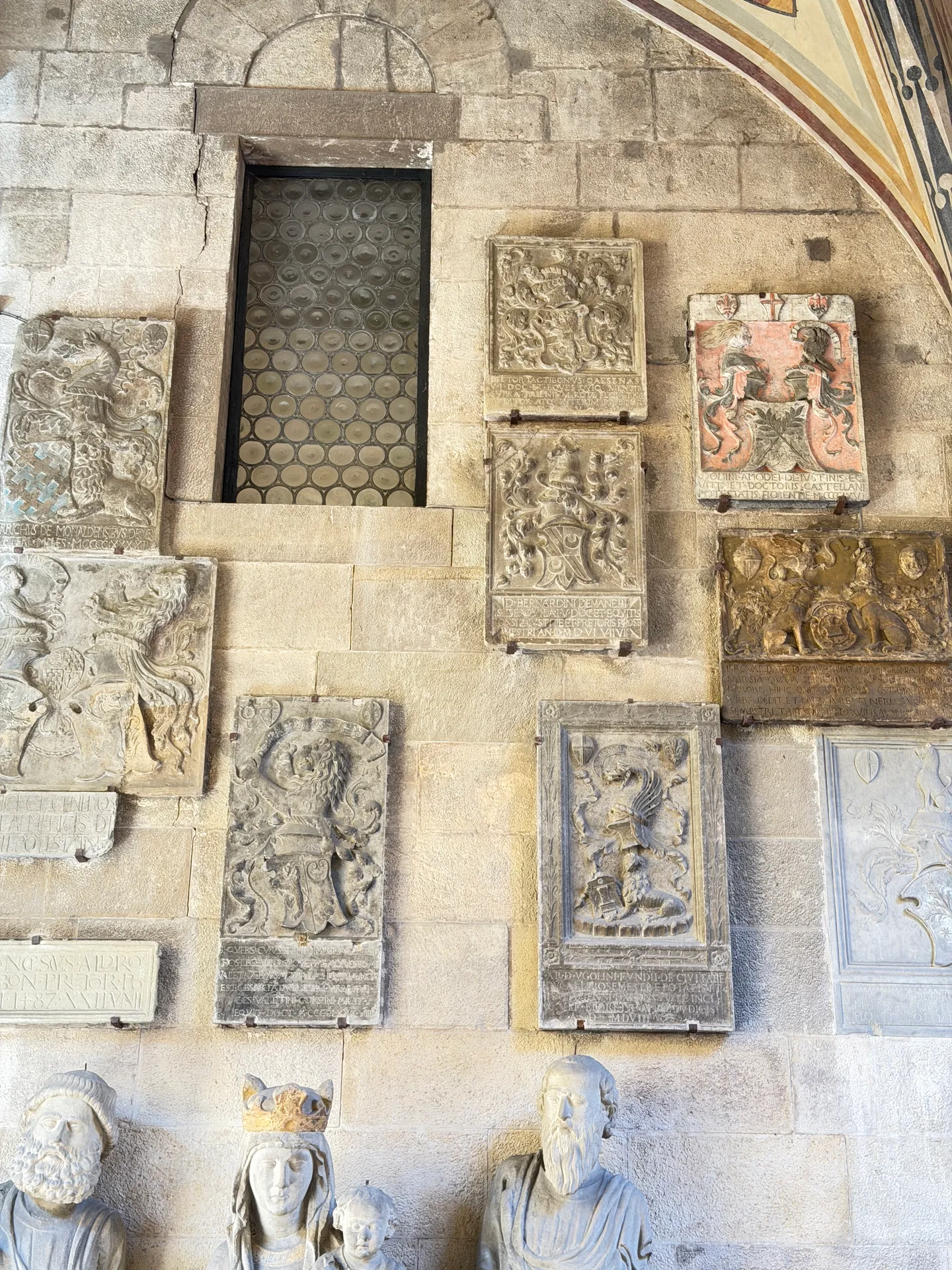
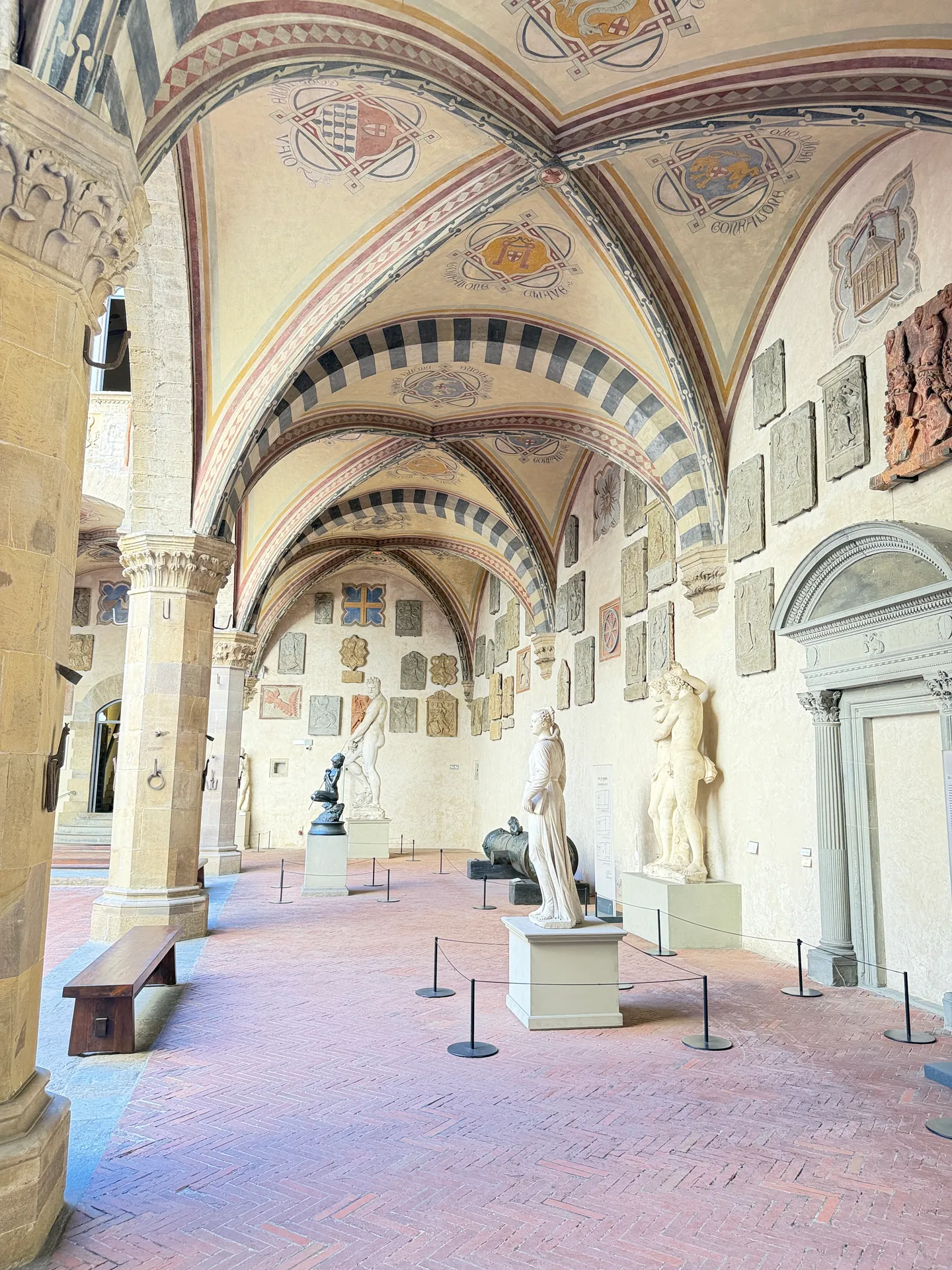
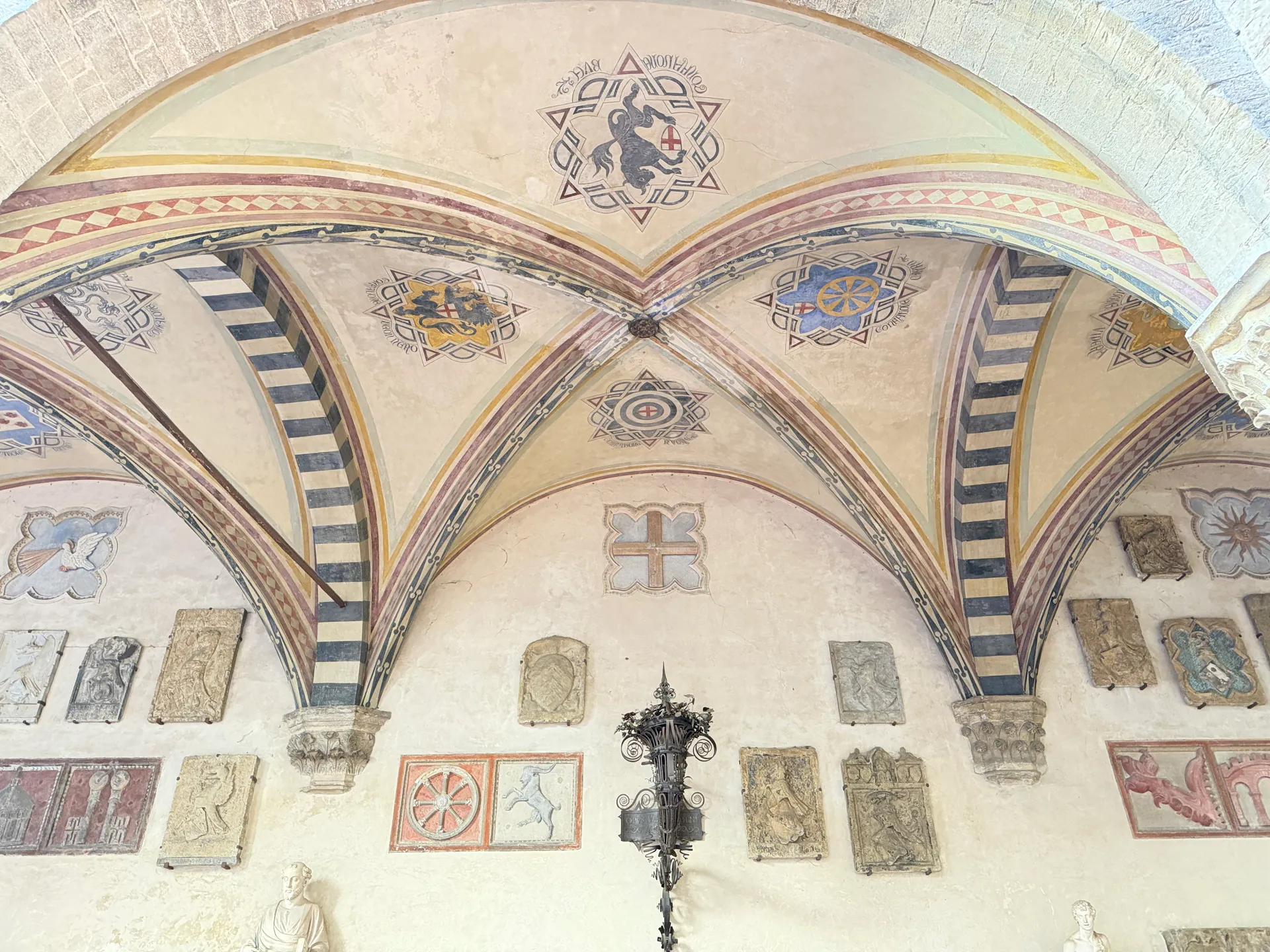
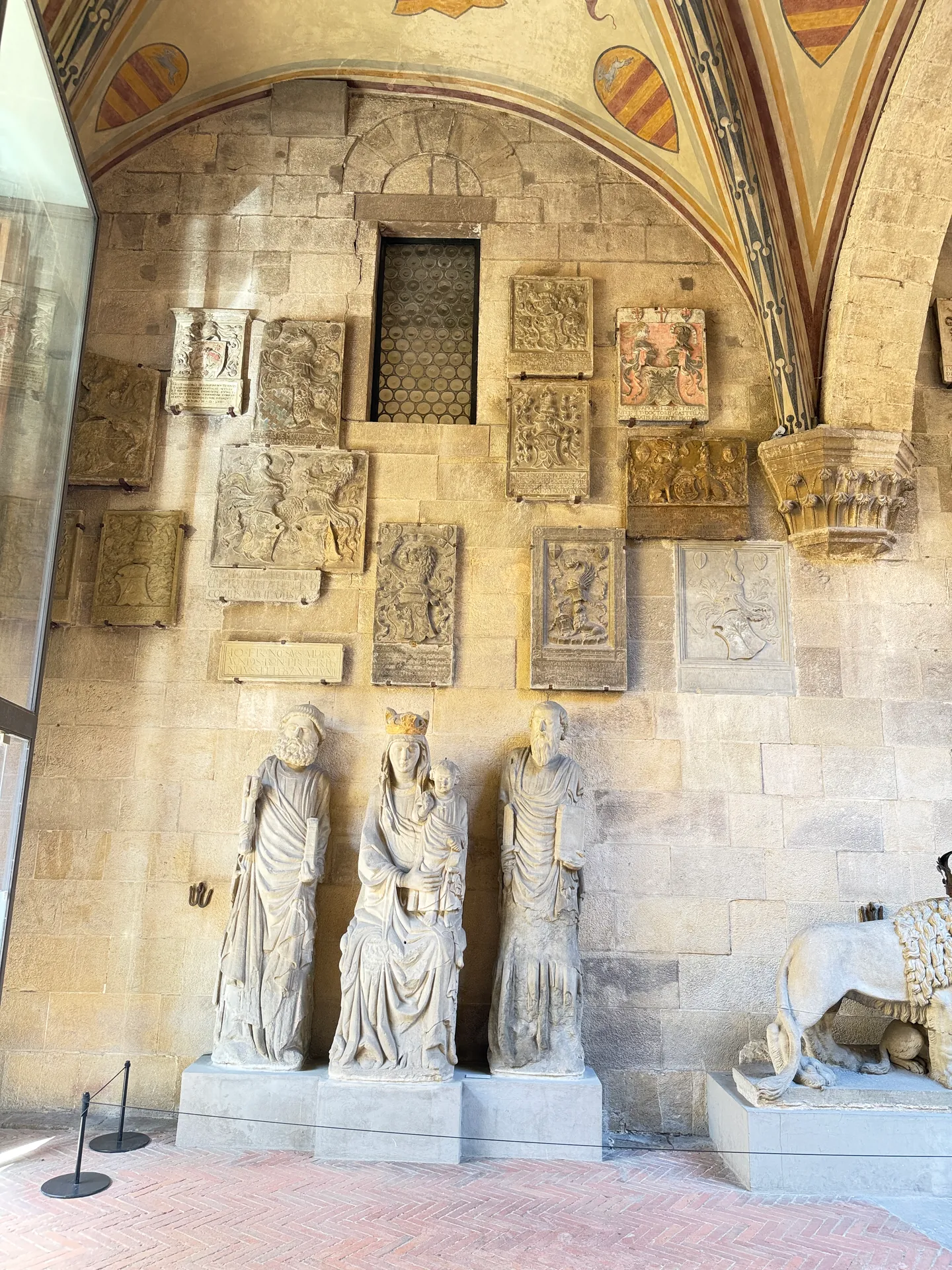
The arcade runs on three sides of the courtyard under painted vaults. Lions, fragments and armorial slabs stand against the wall, and the pieces here are the ones that spent longest outdoors.
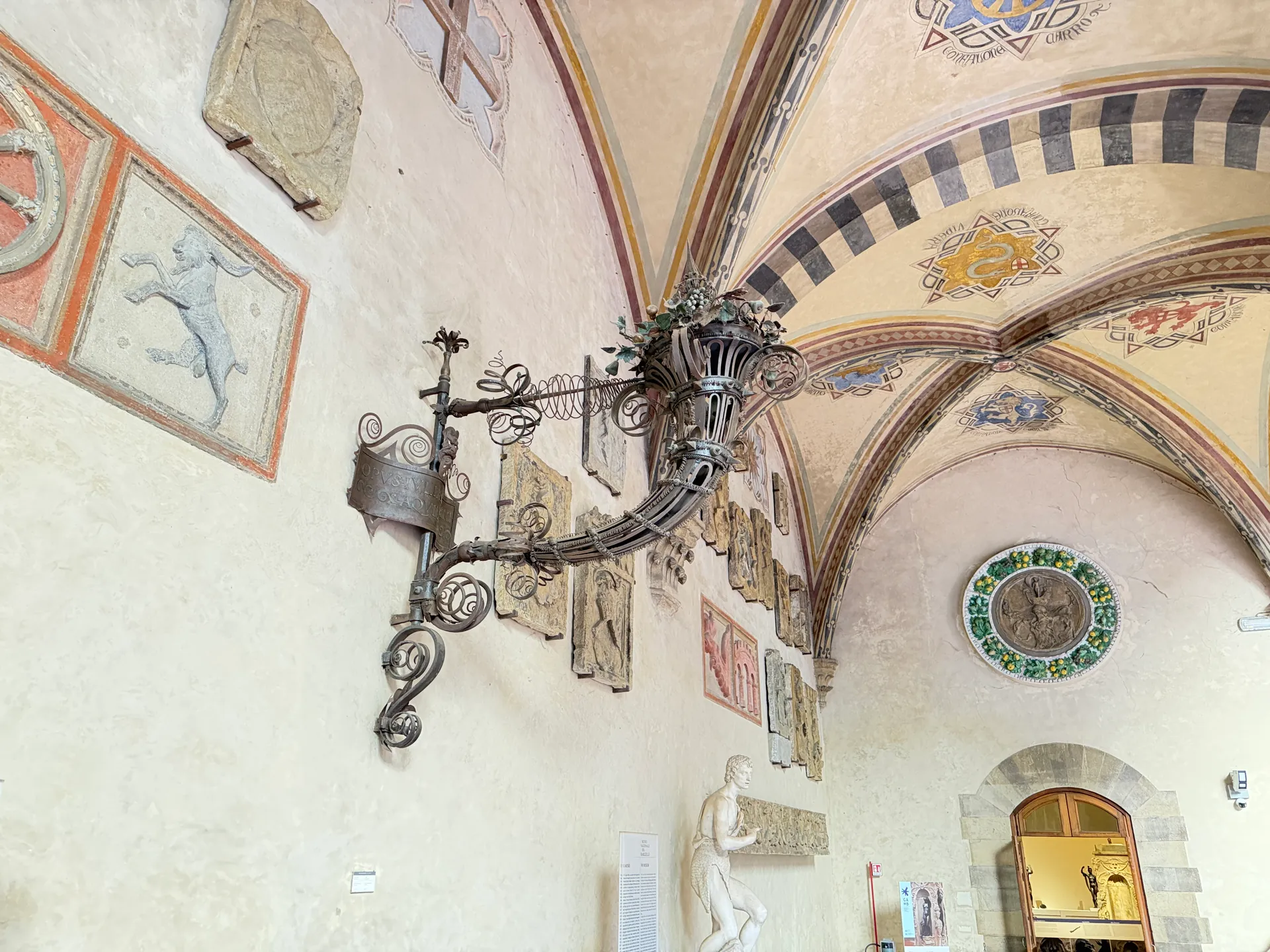
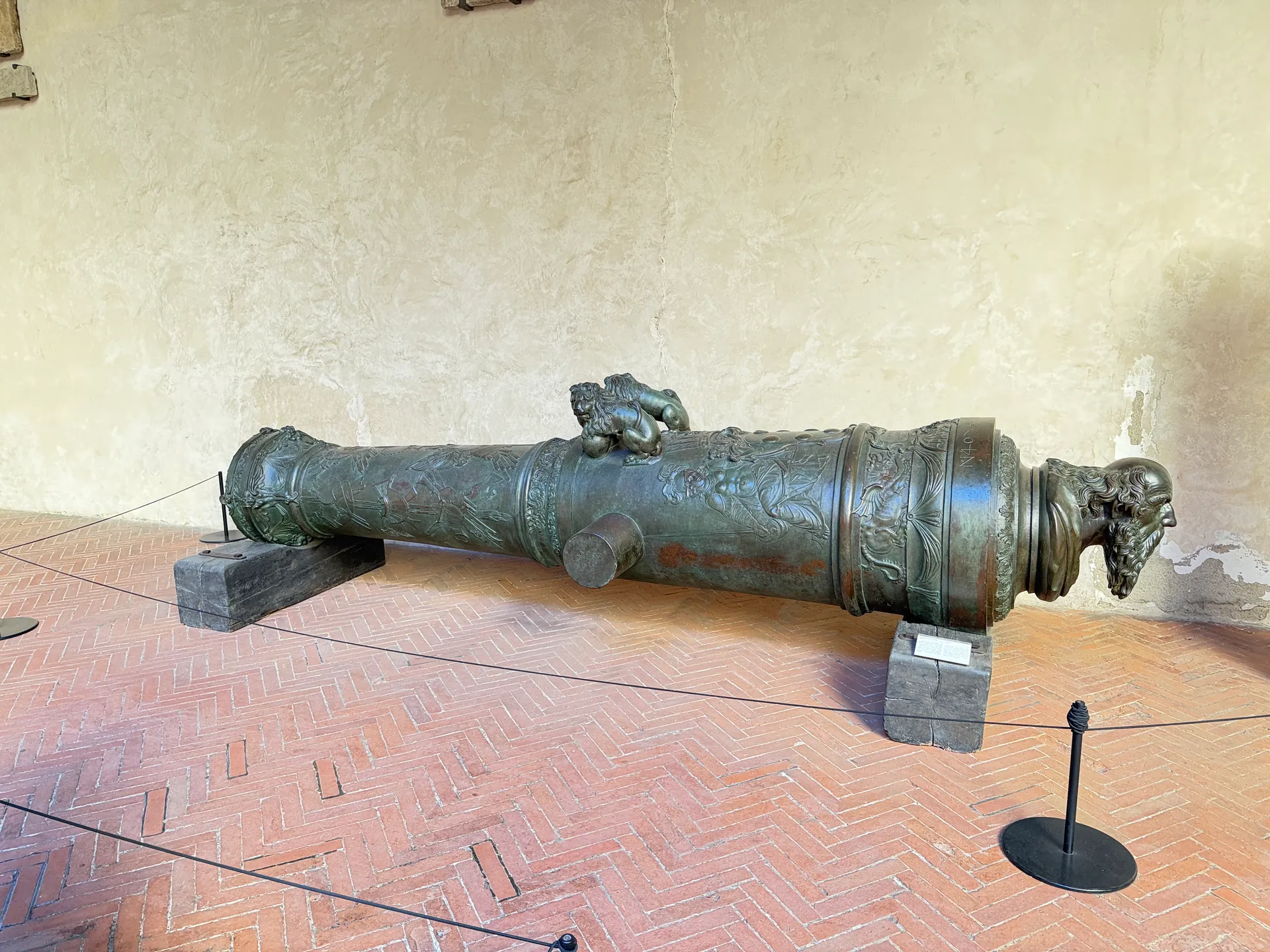
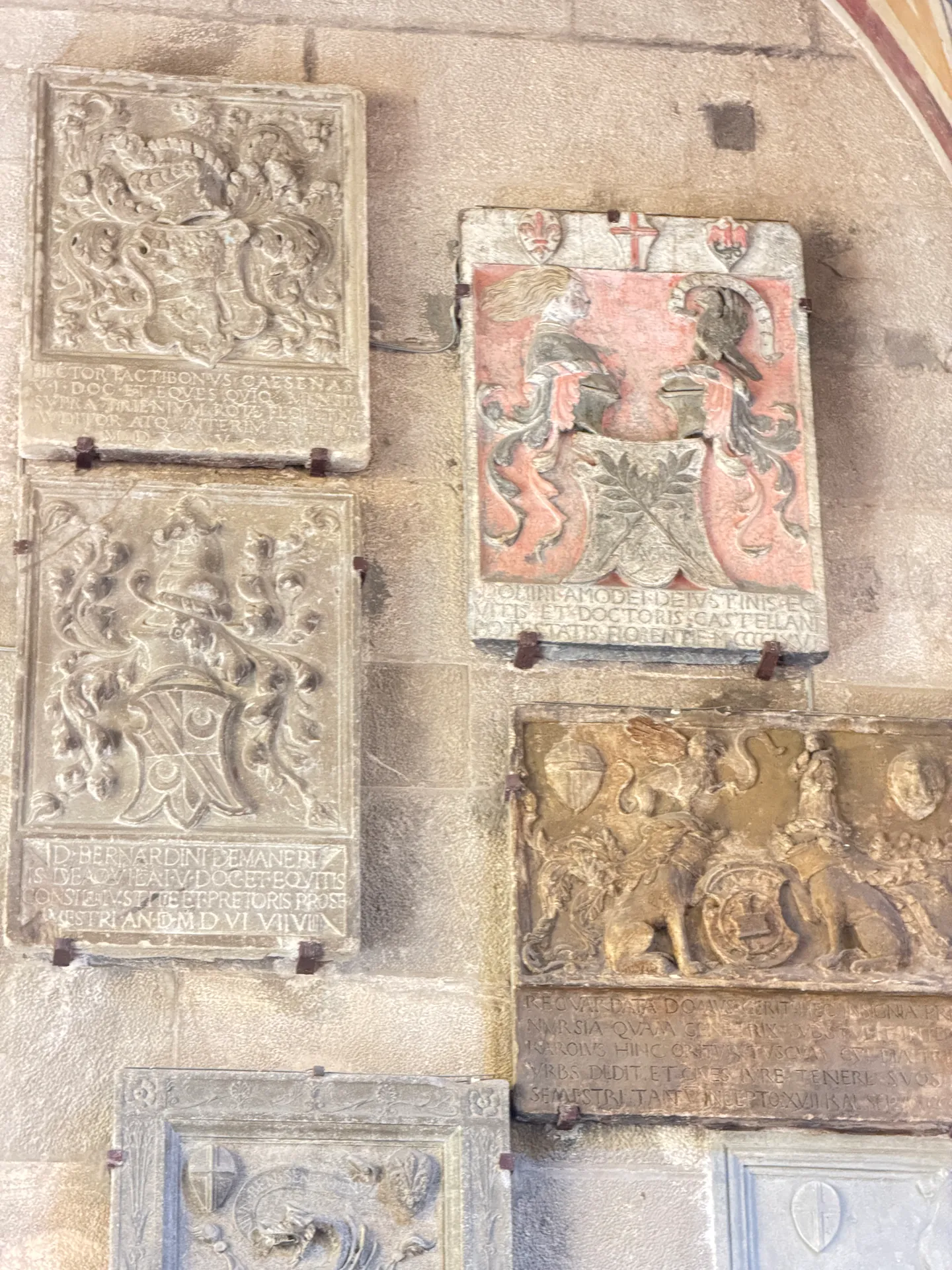
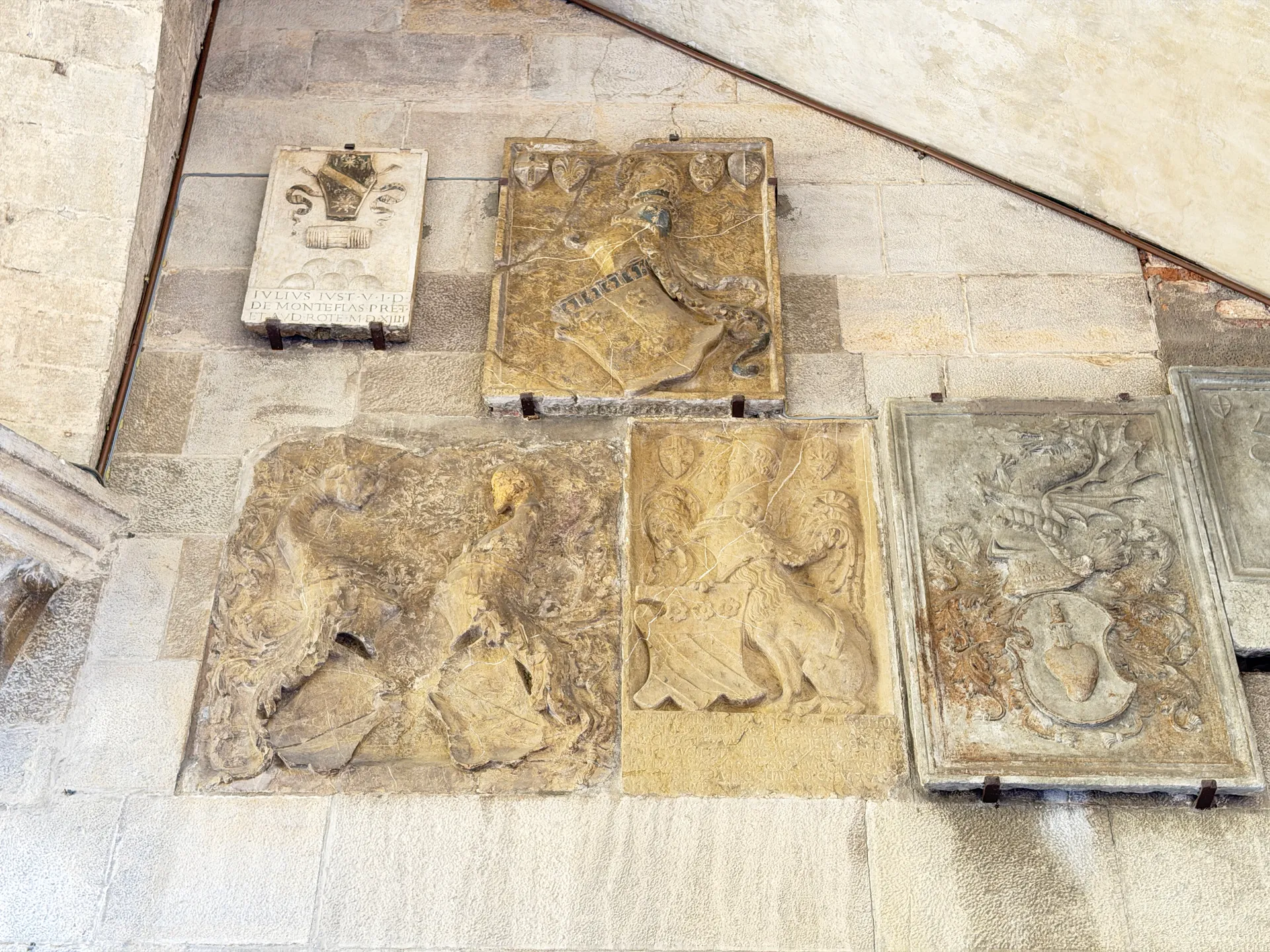
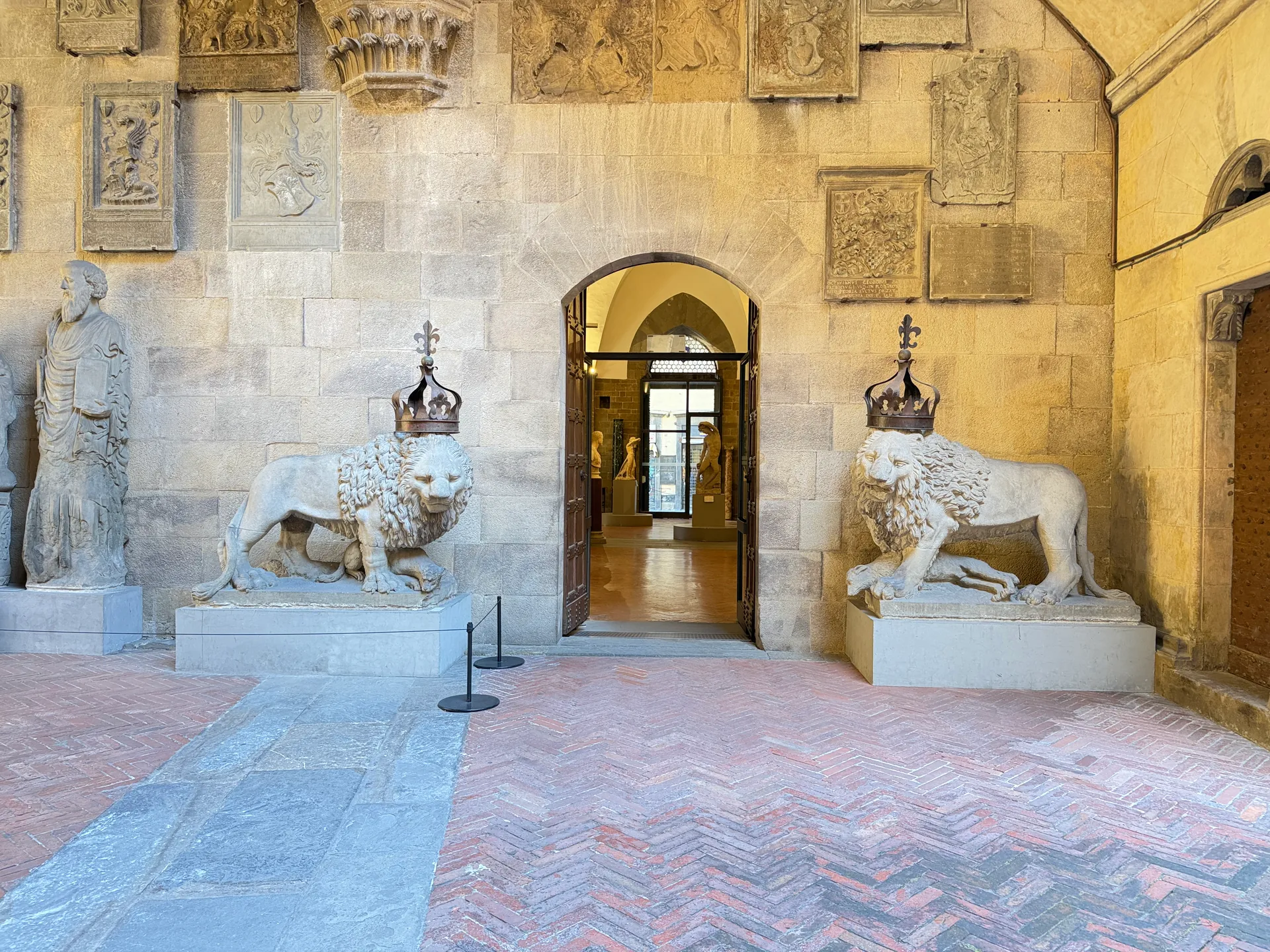
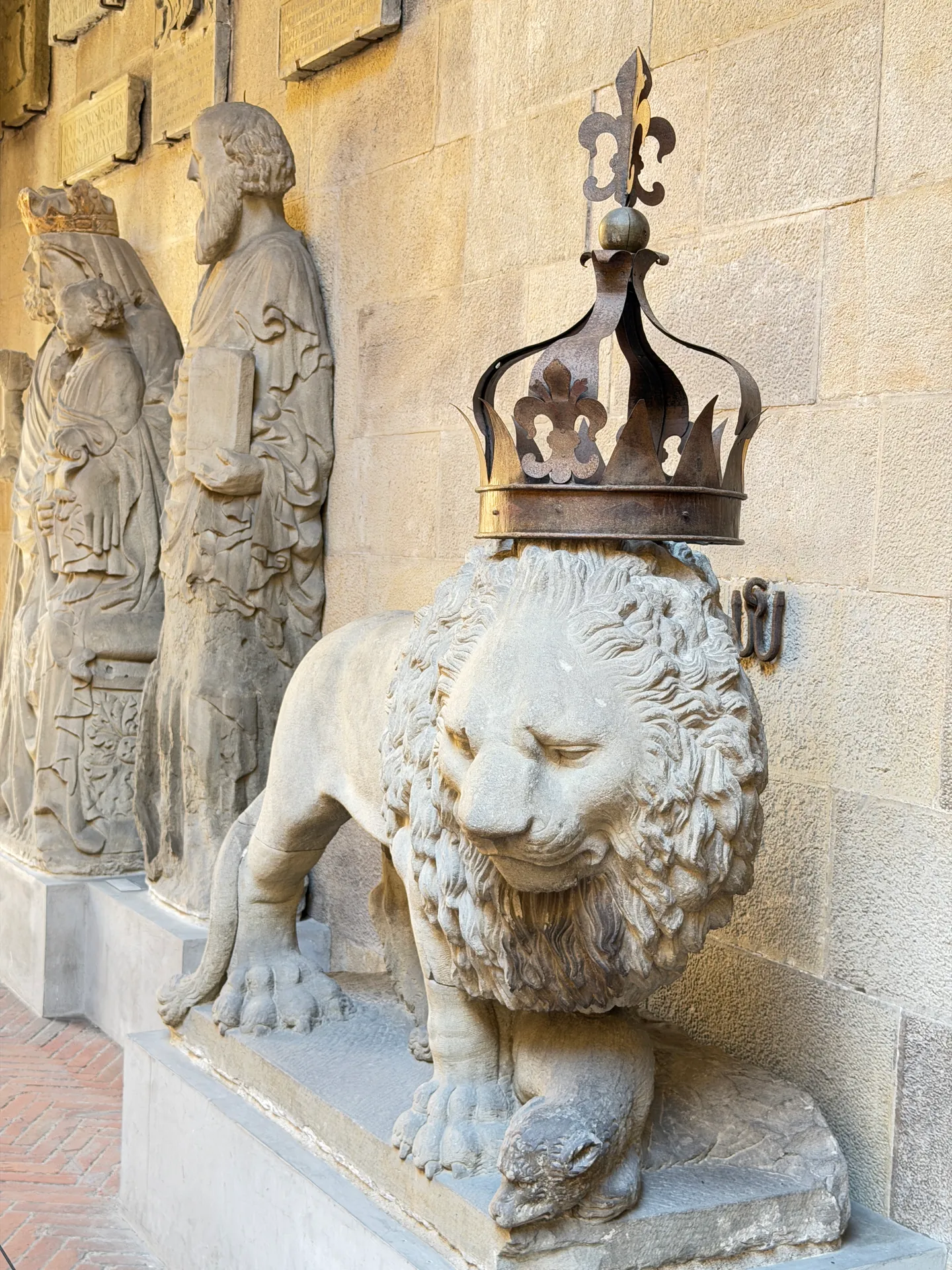
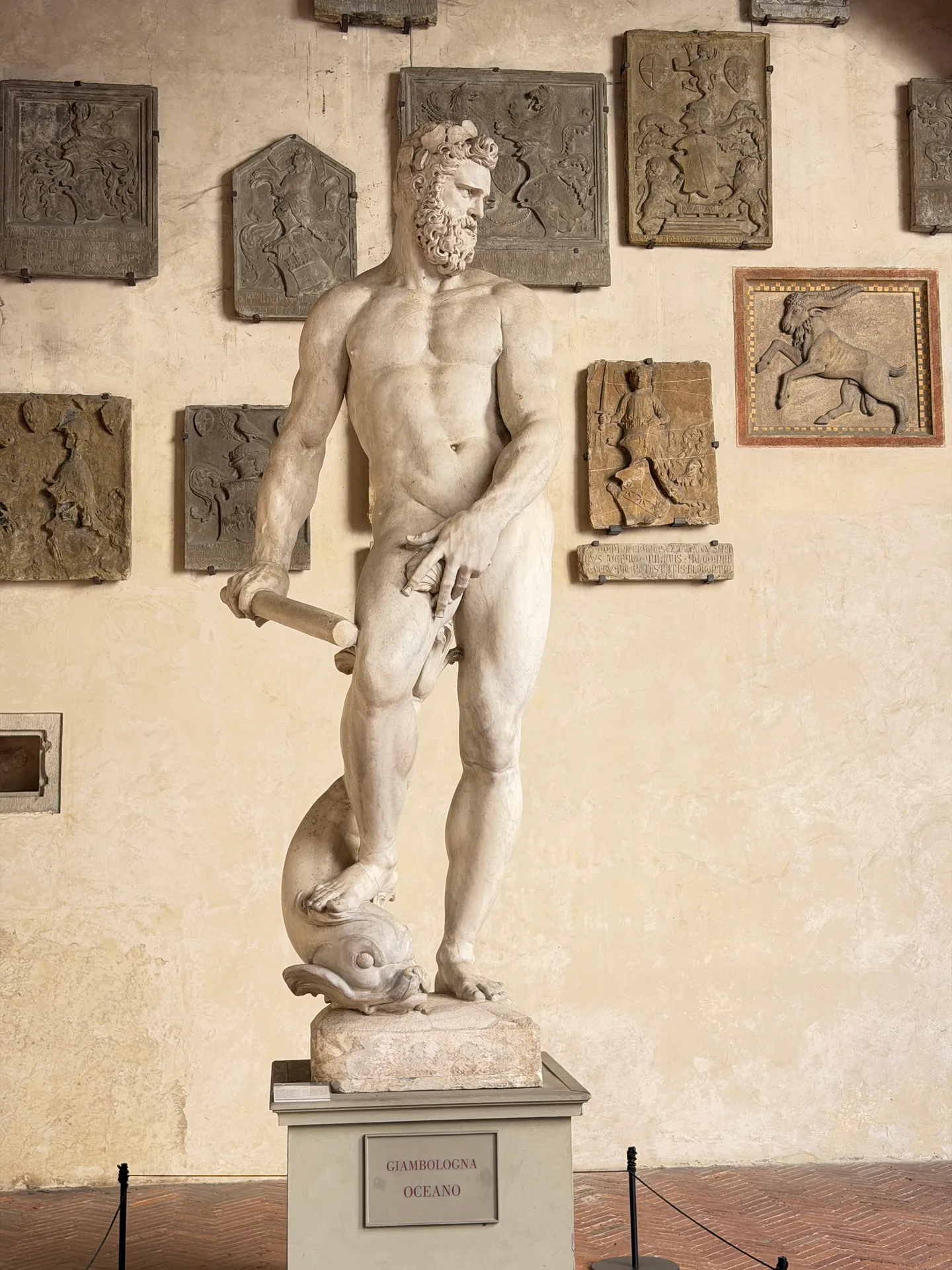
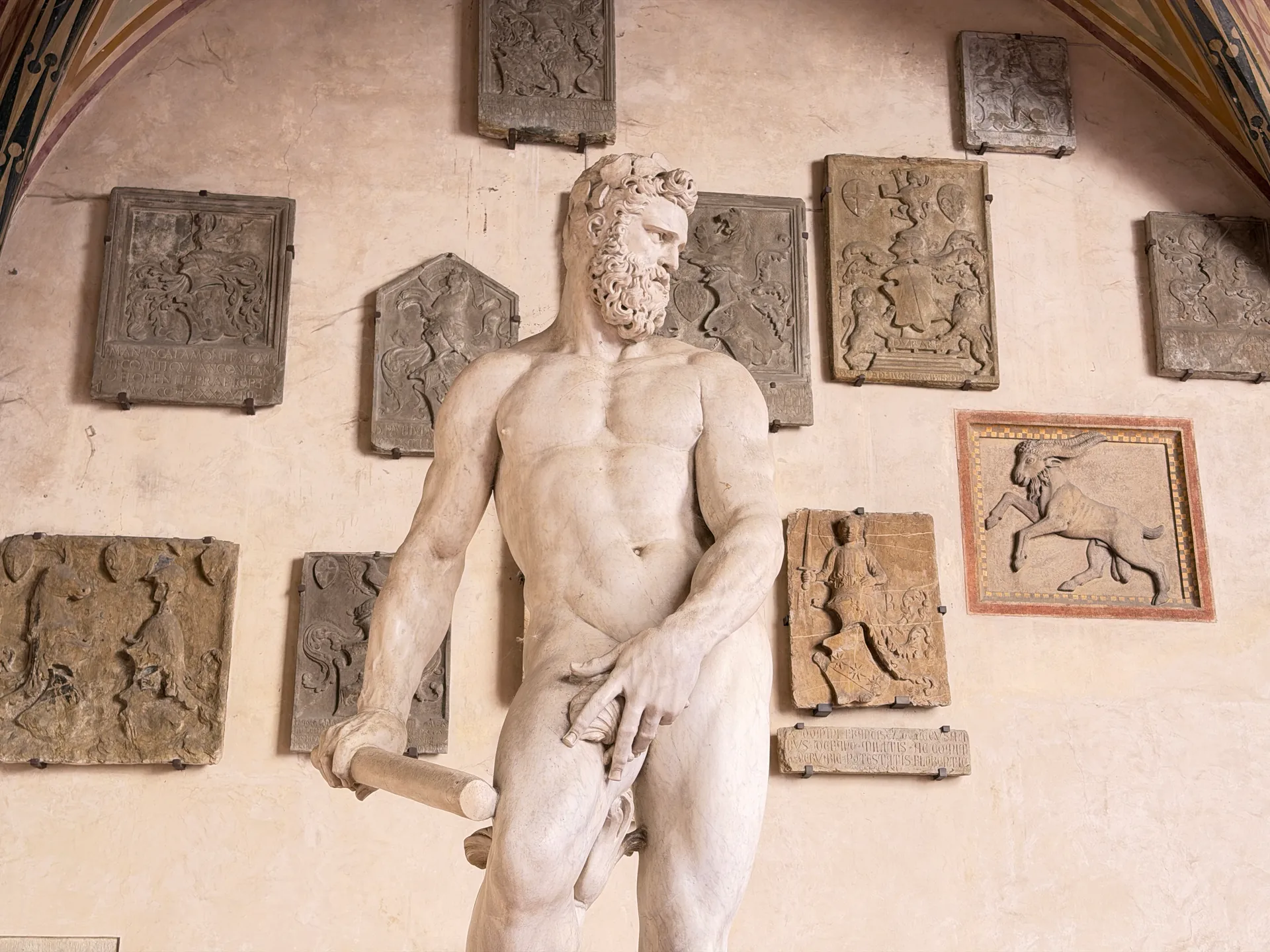
Down the arcadePainted groin vaults running away, sculpture along the wall. The vault decoration is nineteenth century, by Gaetano Bianchi.Lantern under the vaultA wrought iron lantern hanging from the boss of the arcade vault.Ironwork on stoneThe bracket itself, set into the wall, worth a frame on its own.The Cannone di San PaoloCast by Cosimo Cenni in 1638 for the fortress at Pisa. The bearded head of Saint Paul is on the breech, and the Medici arms are on the carriage.The plaque wallCarved relief plaques and a polychrome coat of arms mounted along the loggia wall.Fragments at floor levelCarved slabs and armorial fragments leaning where they were set down, which is much of what a museum of this age actually looks like.A pair at a doorwayTwo crowned marble lions on plinths, flanking a doorway off the loggia.Standing over its preyNot the Marzocco, which is seated, uncrowned, cut in pietra serena and upstairs in the Salone. This is a different lion doing a different job.Giambologna's OceanoCarved in Carrara marble between about 1571 and 1576 for the fountain on the Boboli Isolotto. A copy by Raffaello Romanelli stands there now, and the surface is what centuries in the open air did to the original.The weathered surfaceClose, against the plaque wall. Oceano once crowned a vast granite basin quarried on Elba, and the three river gods below him, the Nile, the Ganges and the Euphrates, are still at Boboli.Three worn figuresGrouped on a low plinth against the plaque wall, drapery almost gone.Two river deitiesCatalogued by the Italian state as about 1560 and attributed to Francesco Camilliani, whose great fountain for the Toledo family's Florentine garden was sold to Palermo in 1573 and stands there still. The attribution is not firm.The two headsClose, and the better picture of the pair. Three separate sets of river personifications stand in this courtyard, and this is the smallest and the least explained of them.
BUILT FOR A ROOM IT NEVER REACHED
Ammannati's Fountain
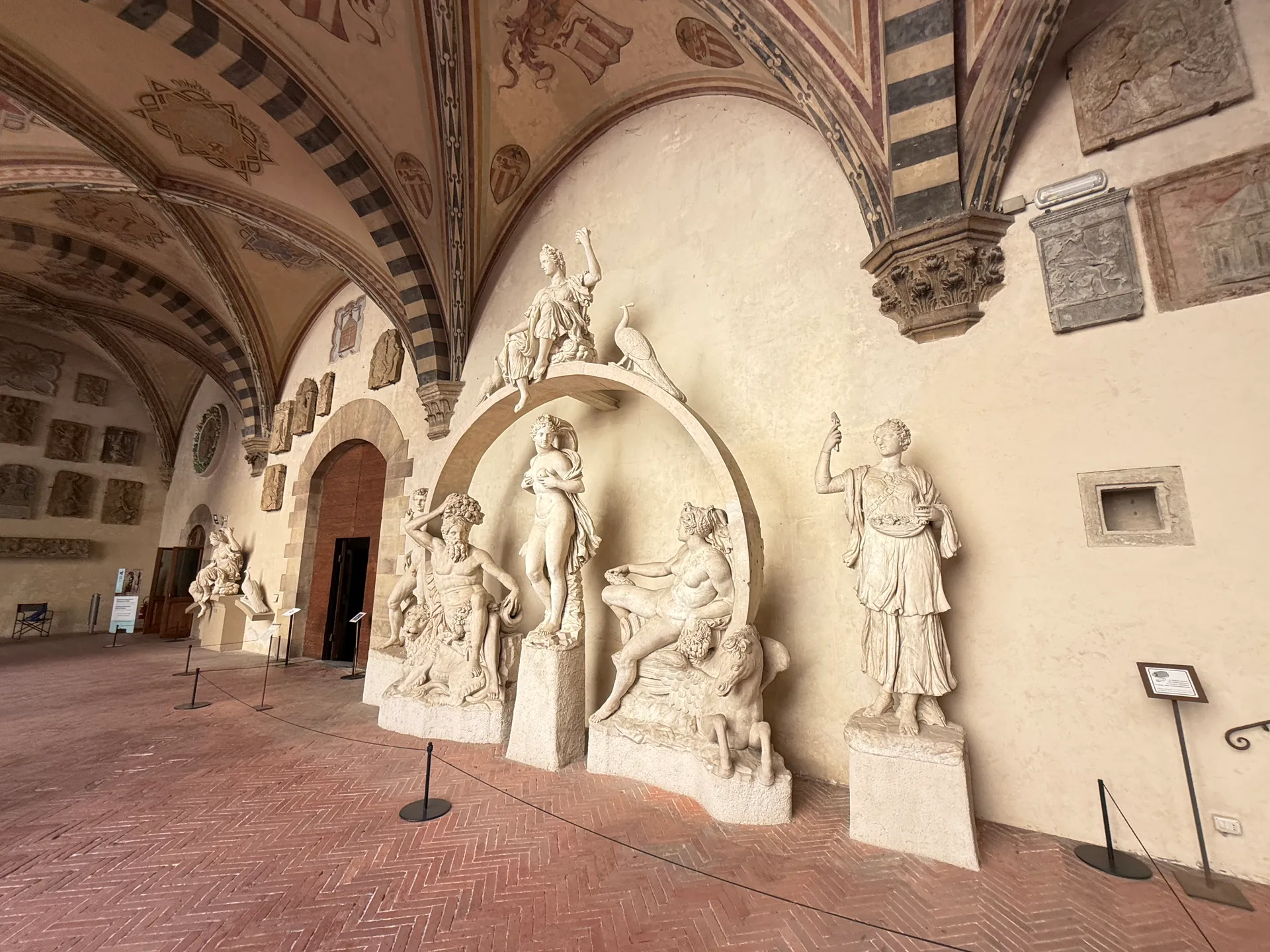
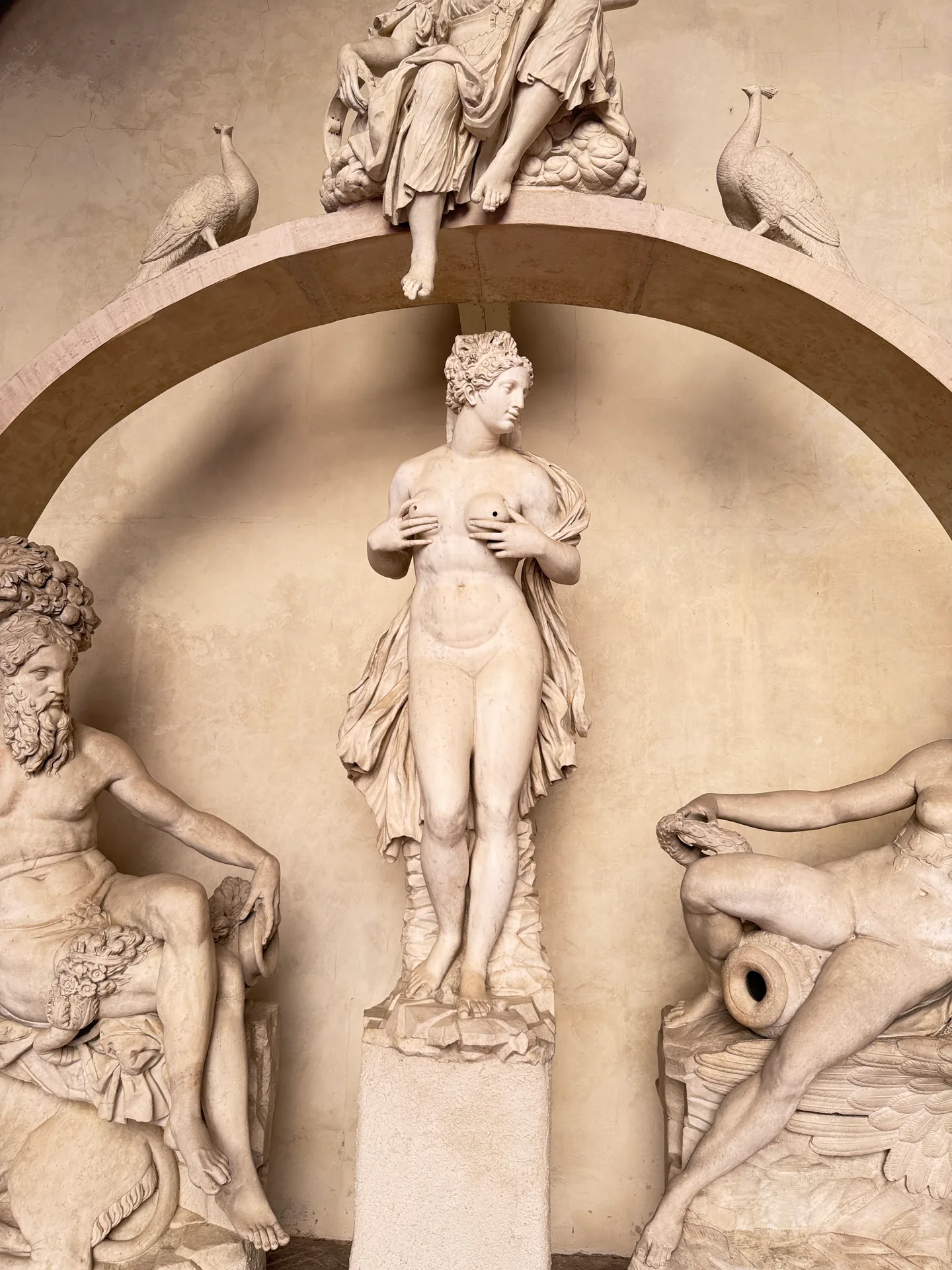
Cosimo I commissioned this fountain in 1555 for the Salone dei Cinquecento in the Palazzo Vecchio. It was never installed there. It stands reassembled here, with a modern reconstruction of its lost rainbow arch.
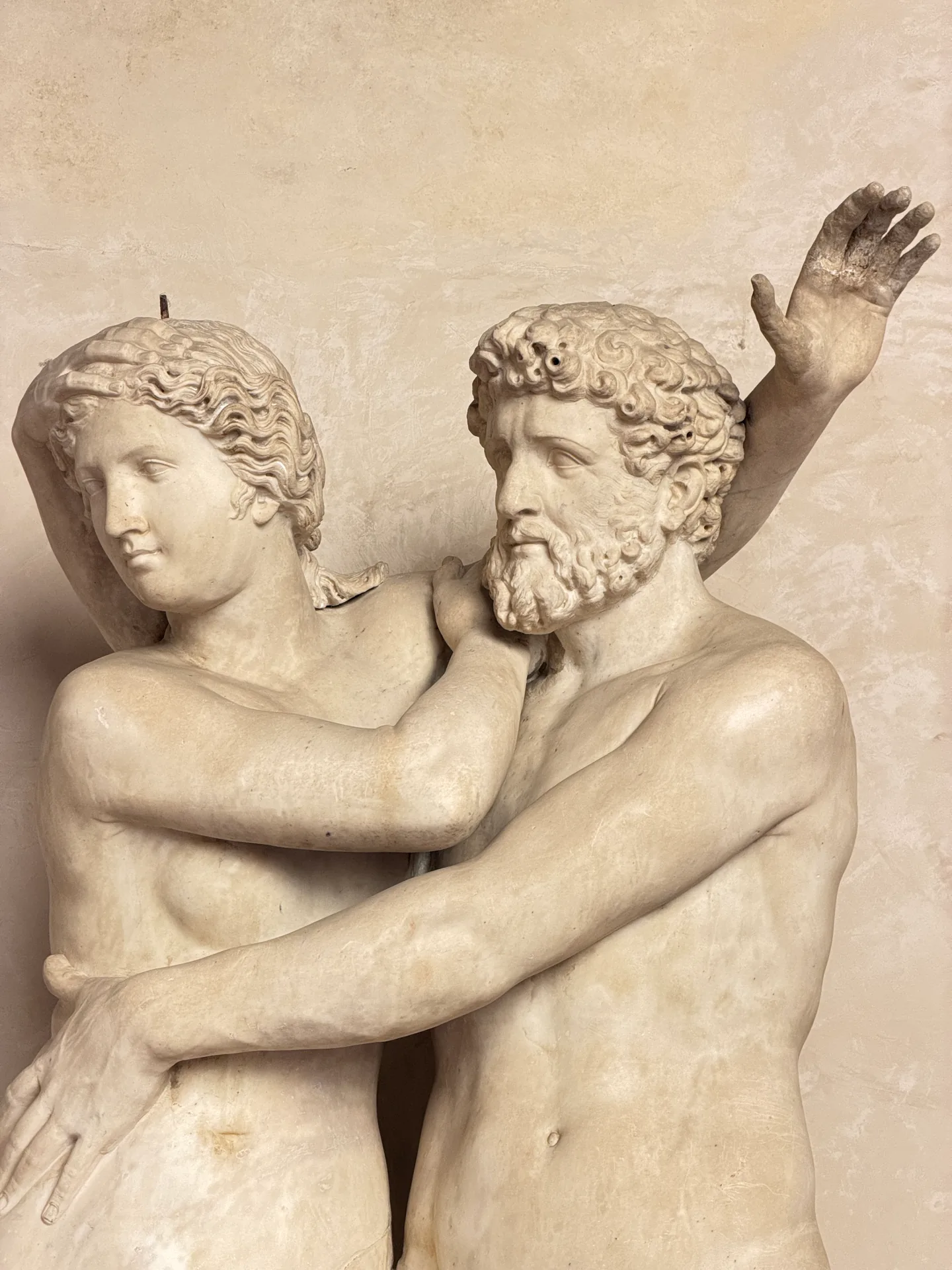
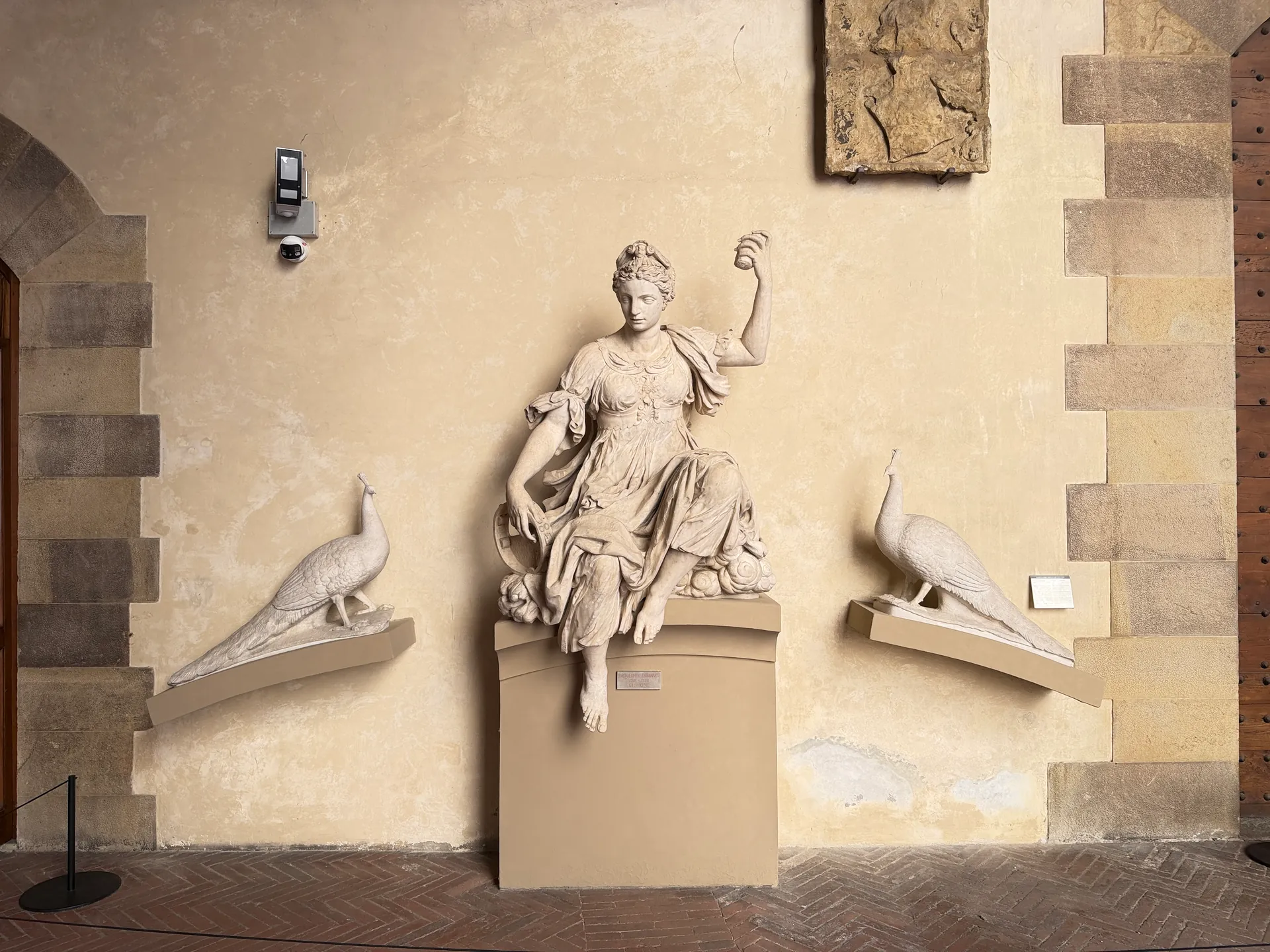
The whole ensembleCosimo I commissioned it in 1555 for the Salone dei Cinquecento and it was never installed there. The arch is a modern reconstruction of a lost element, and the figure crowning it is a cast.Juno set apartThe marble Juno, shown on the courtyard wall away from the fountain. It is her cast that sits at the top of the reconstructed arch, which is why she appears twice in this section.Under the archA standing figure in the recess between two reclining ones, a river god on the left and a spring on the right, with Juno and her peacocks seated at the apex above them.
THE FIRST FLOOR HALL
Donatello and the Salone
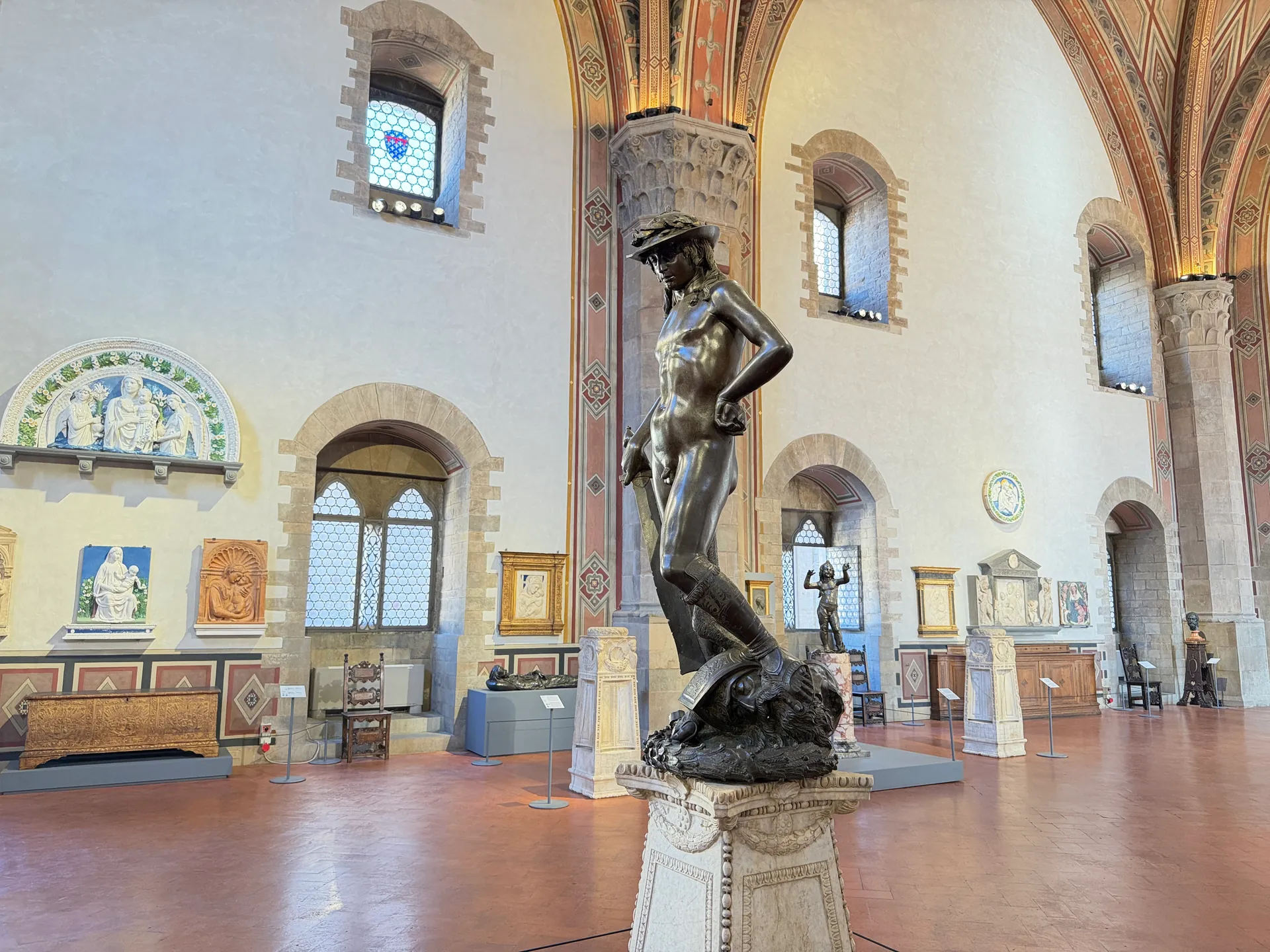
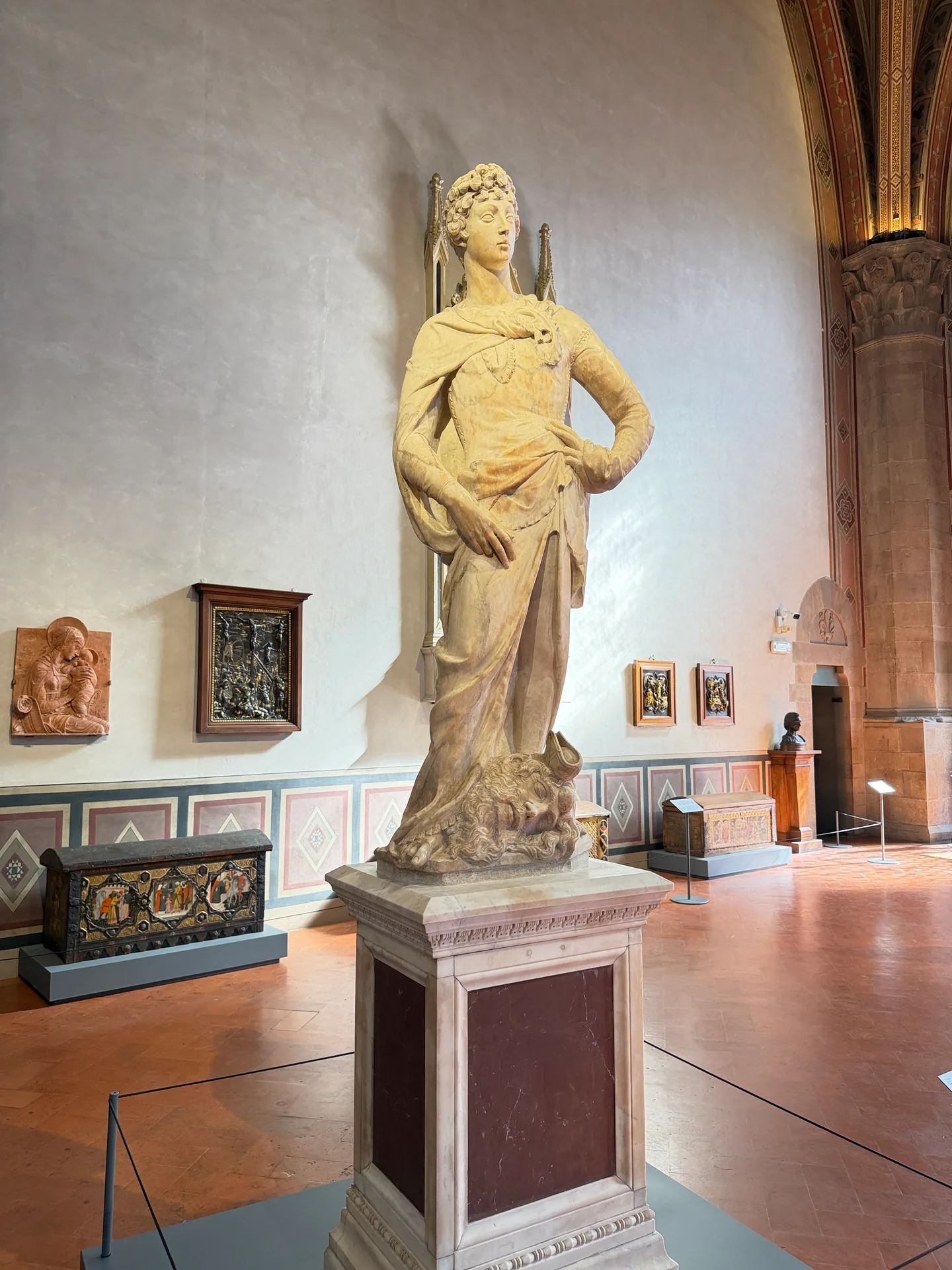
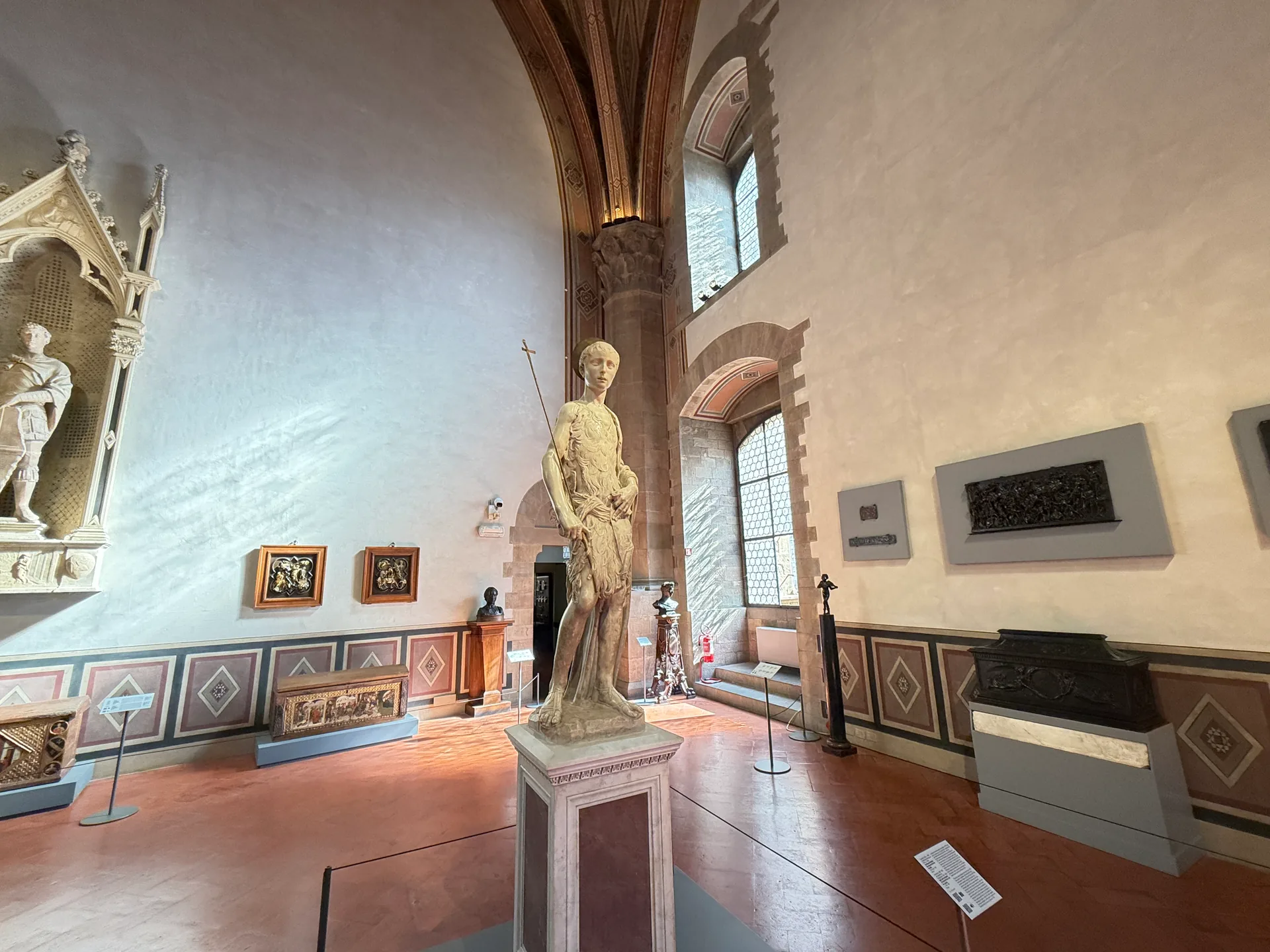
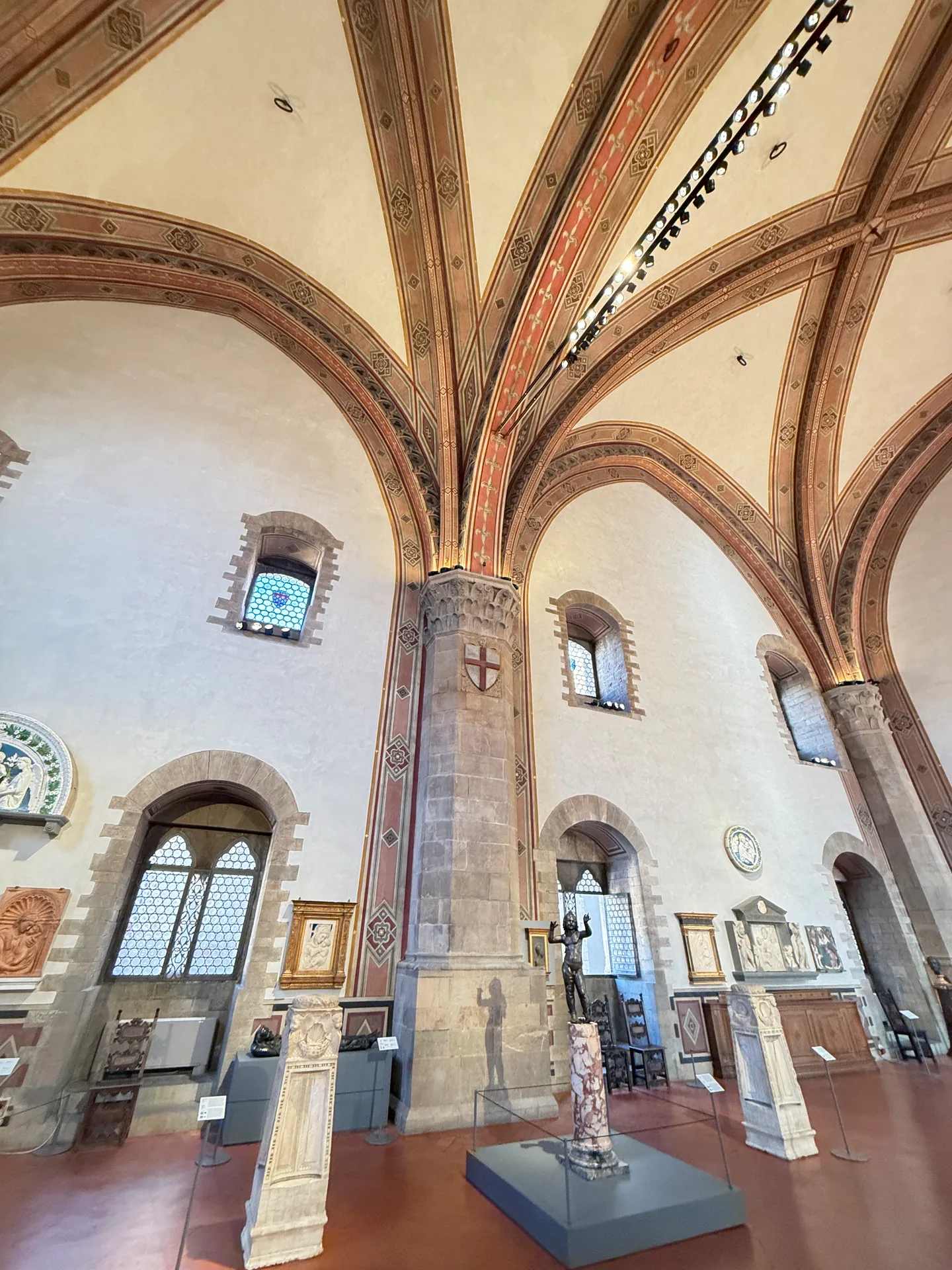
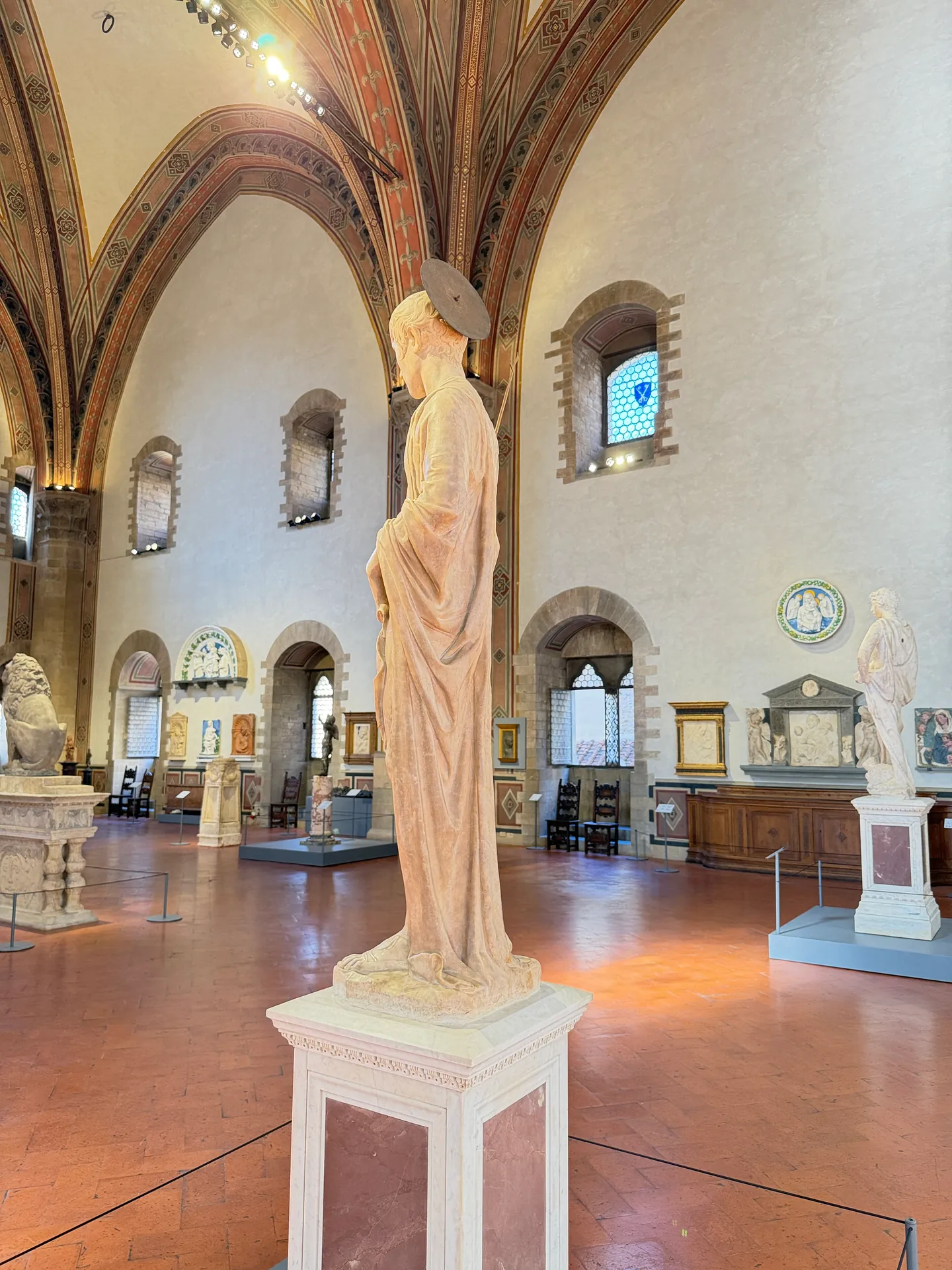
The great hall holds nine works by Donatello, reopened in 2025 after a long restoration. The bronze David is the one everybody comes for, and it is not the only reason to stand here.
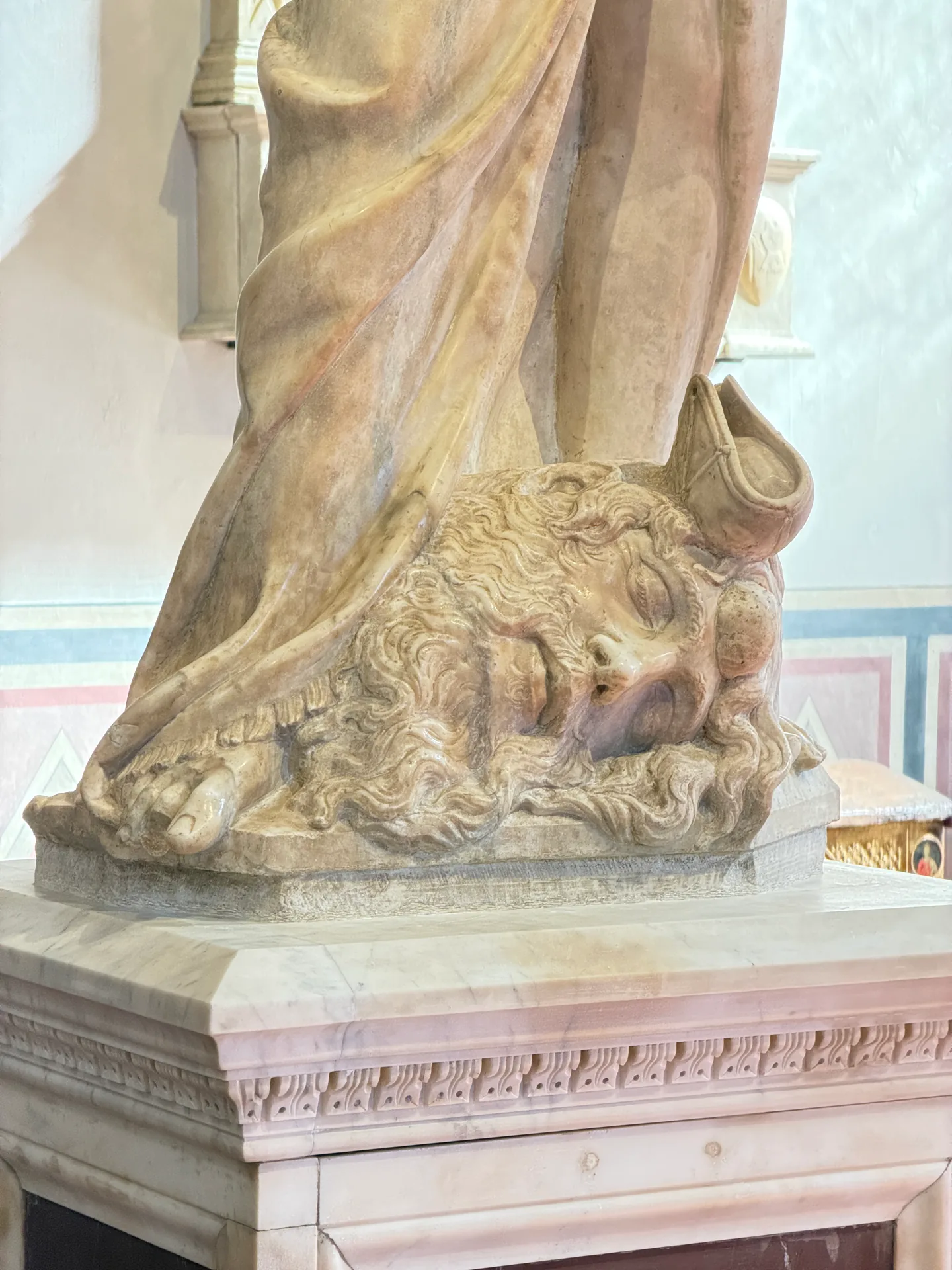
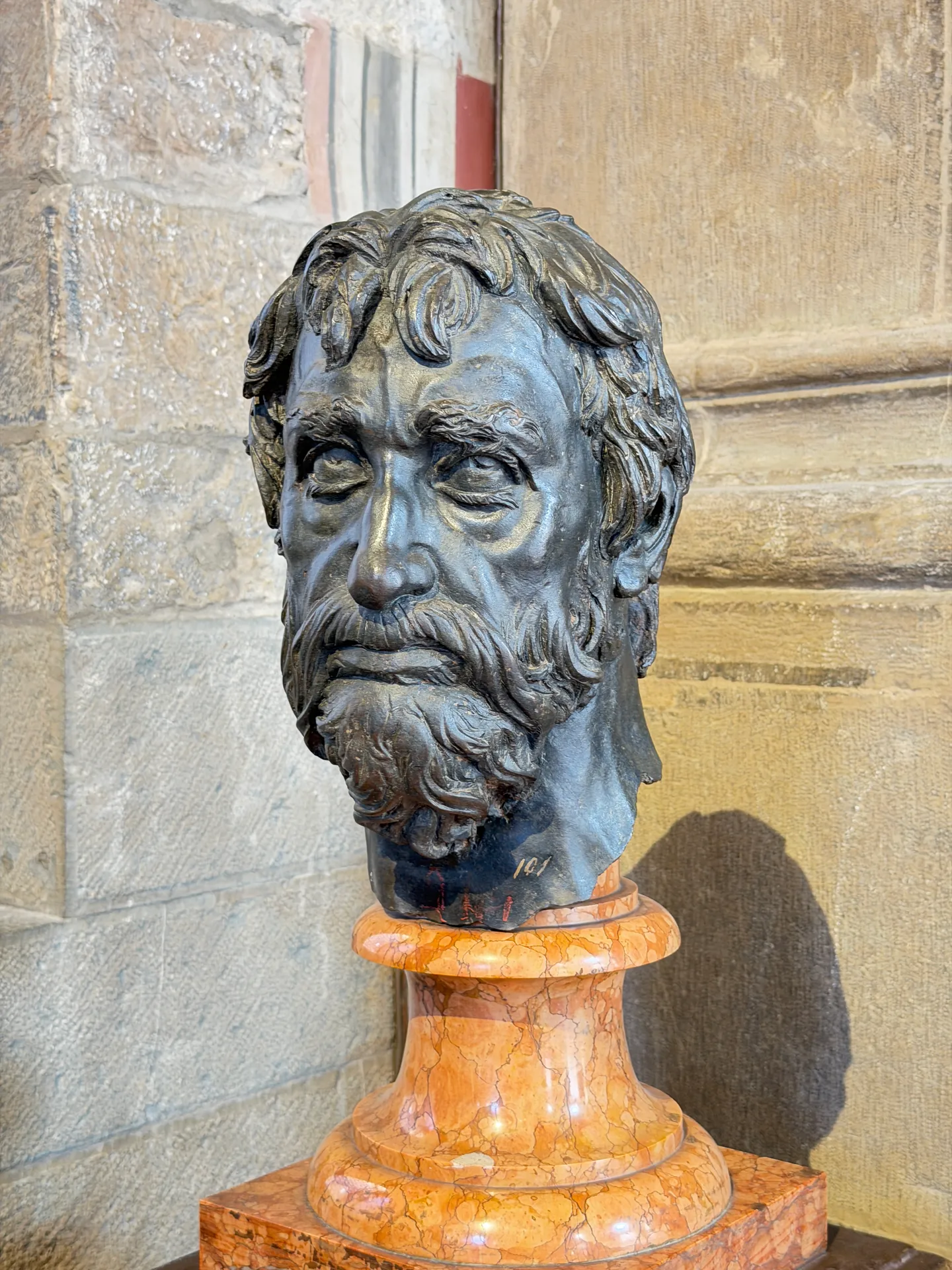
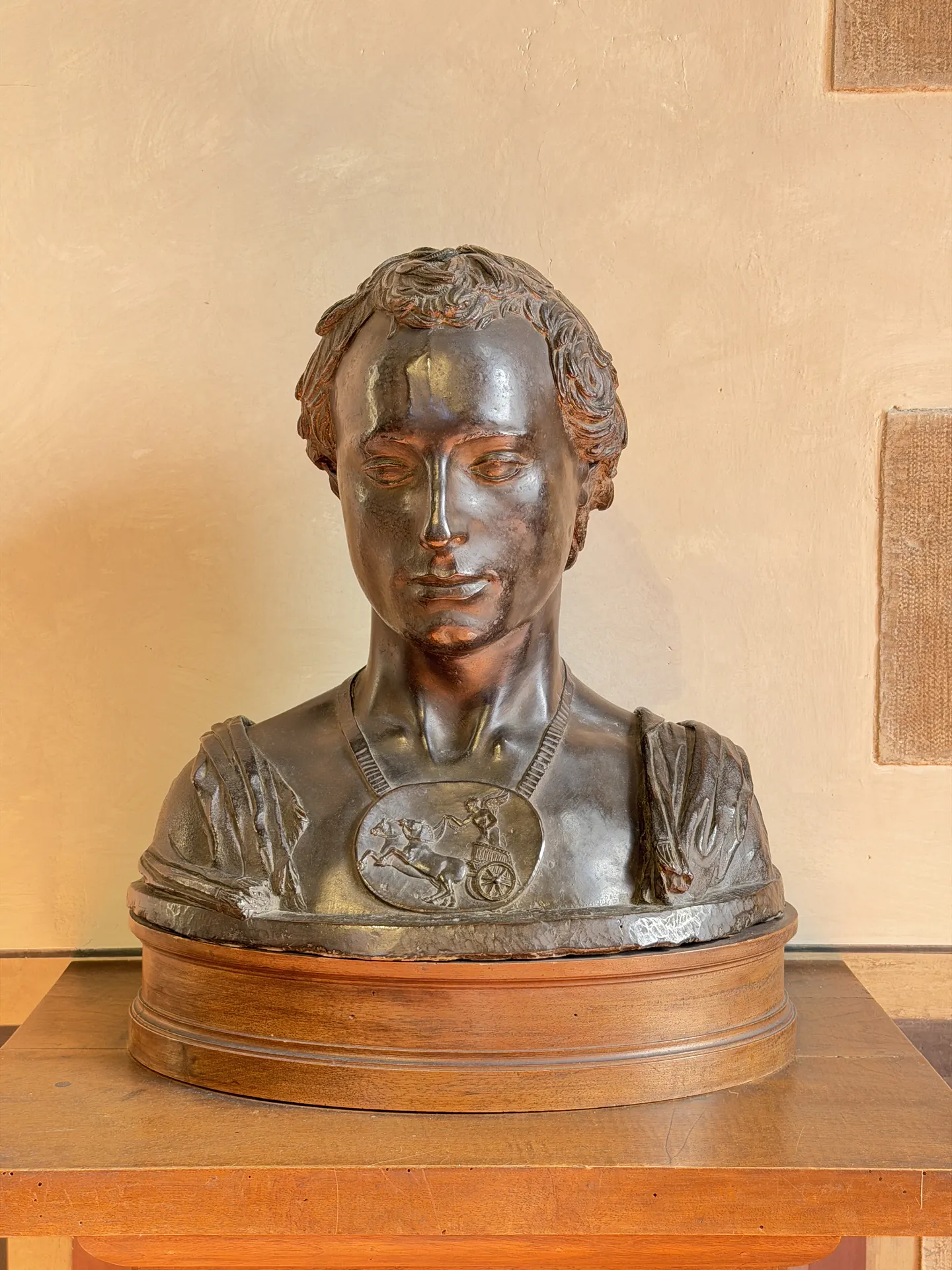
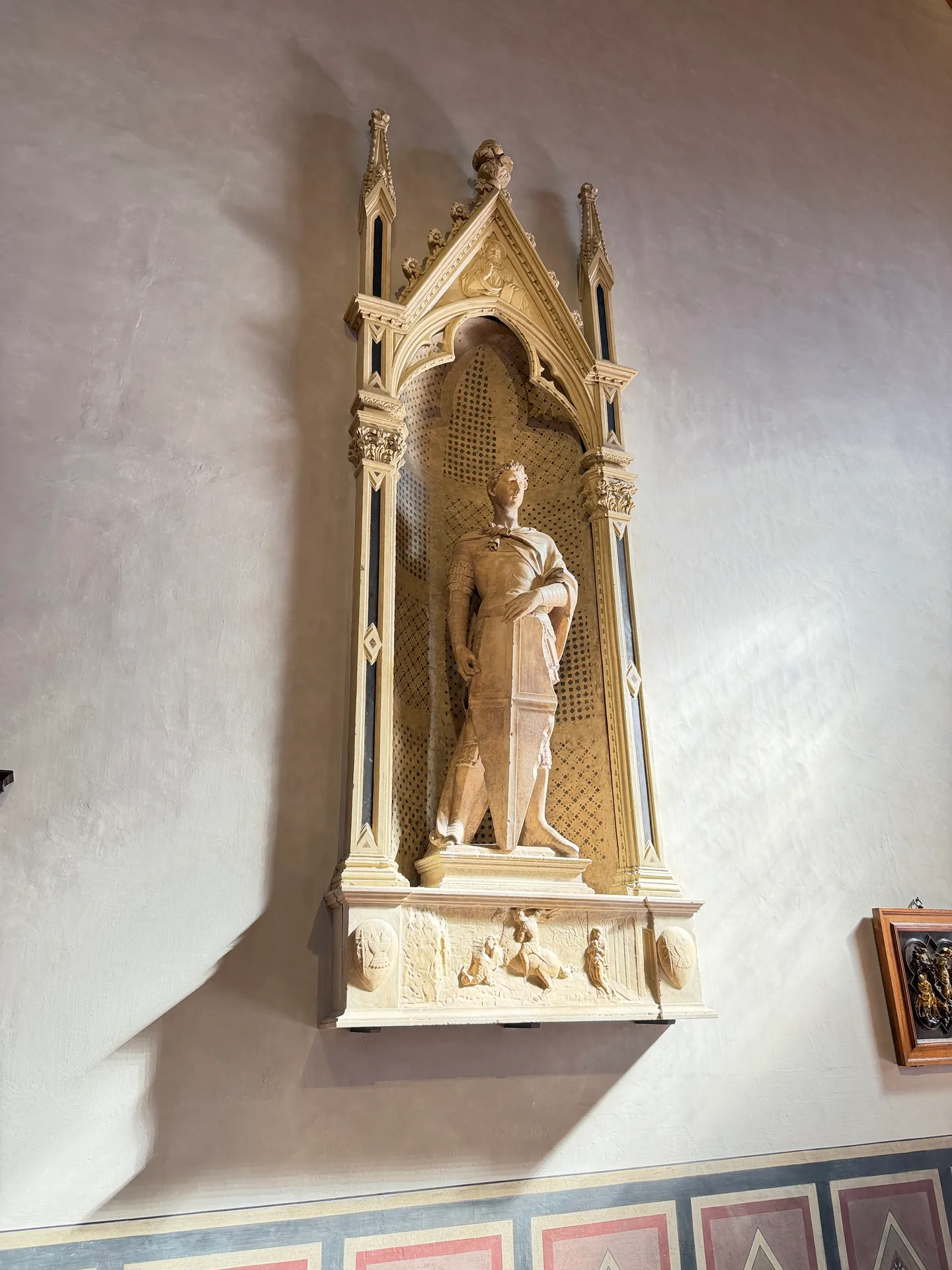
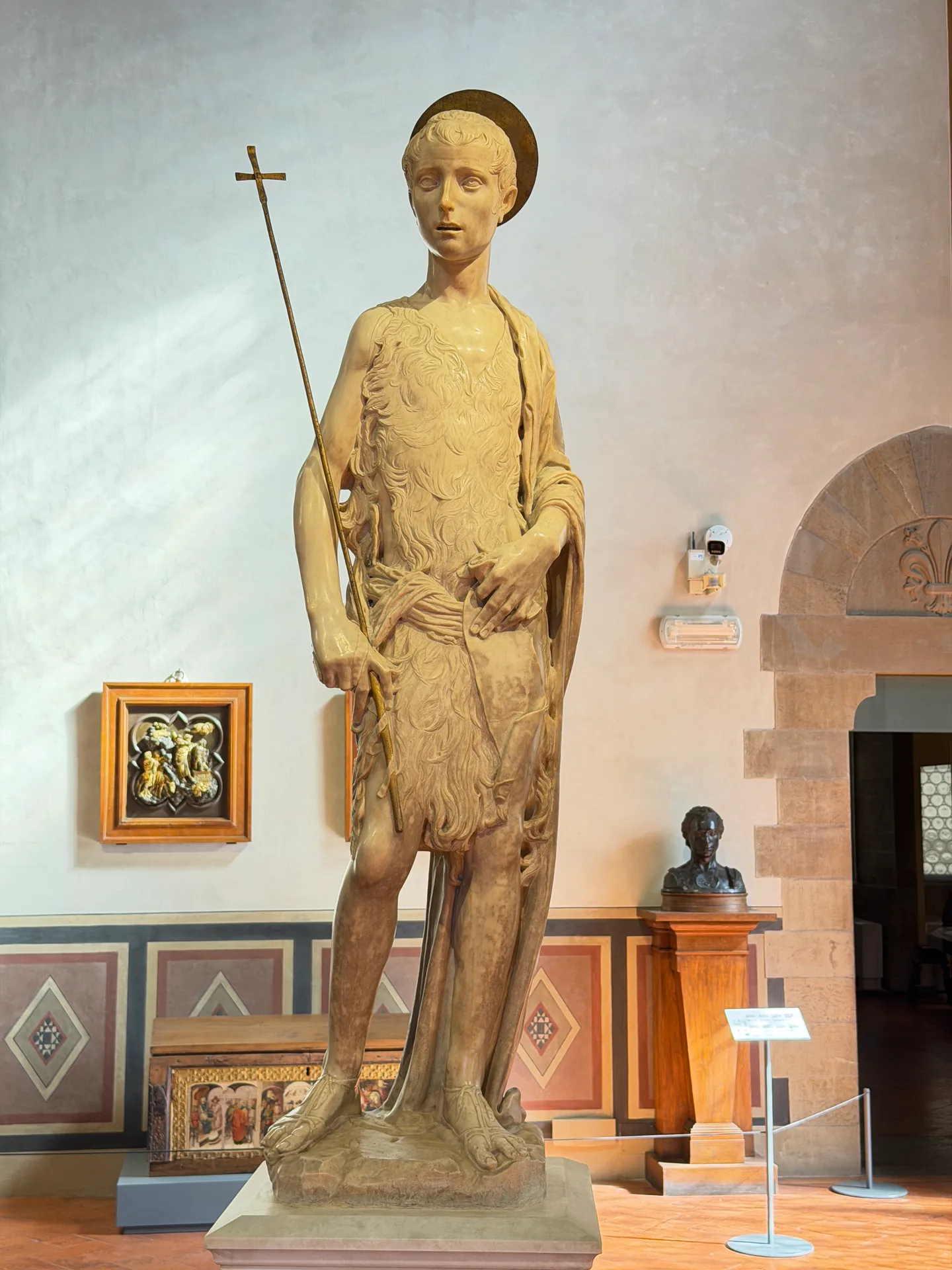
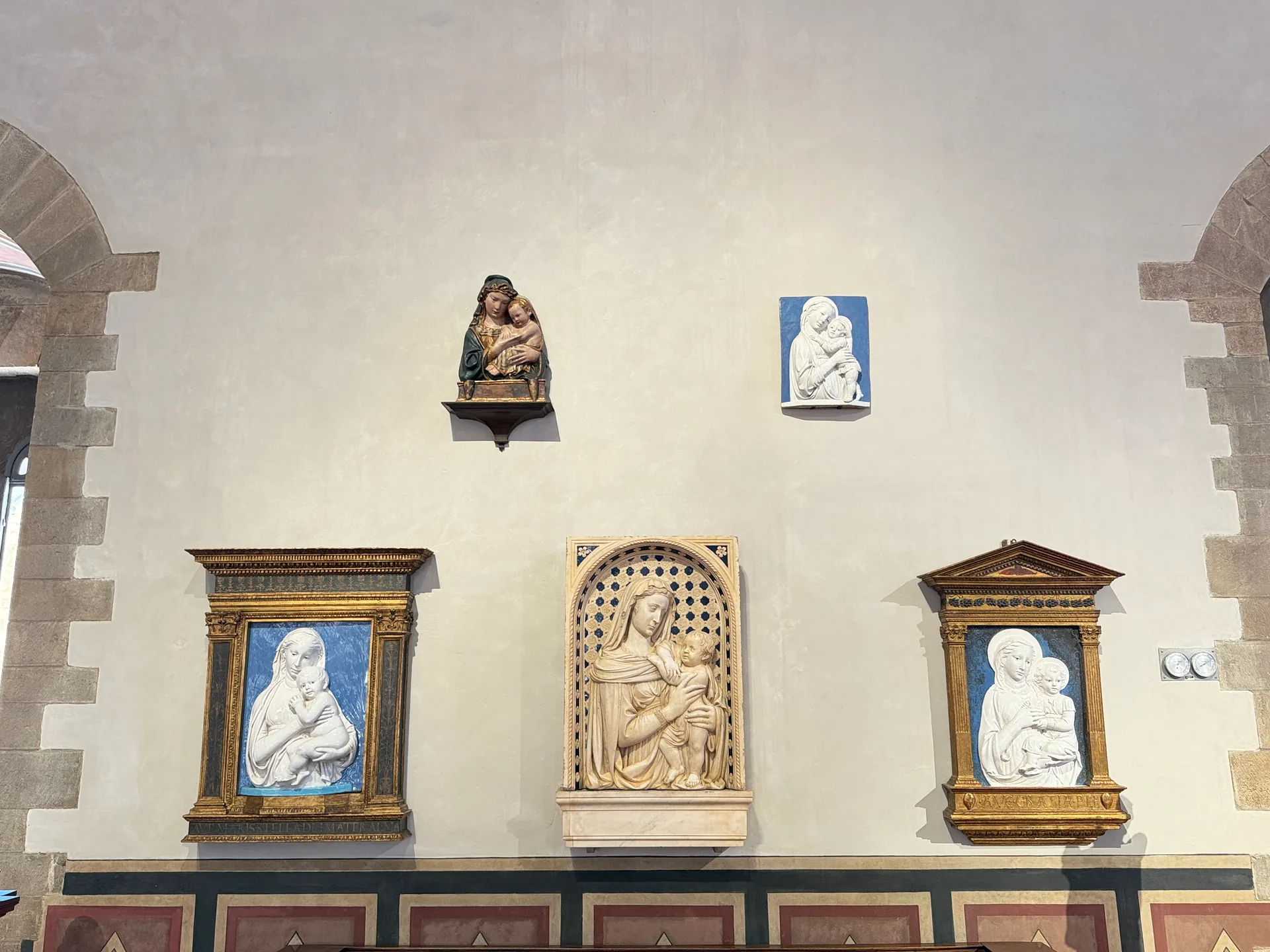
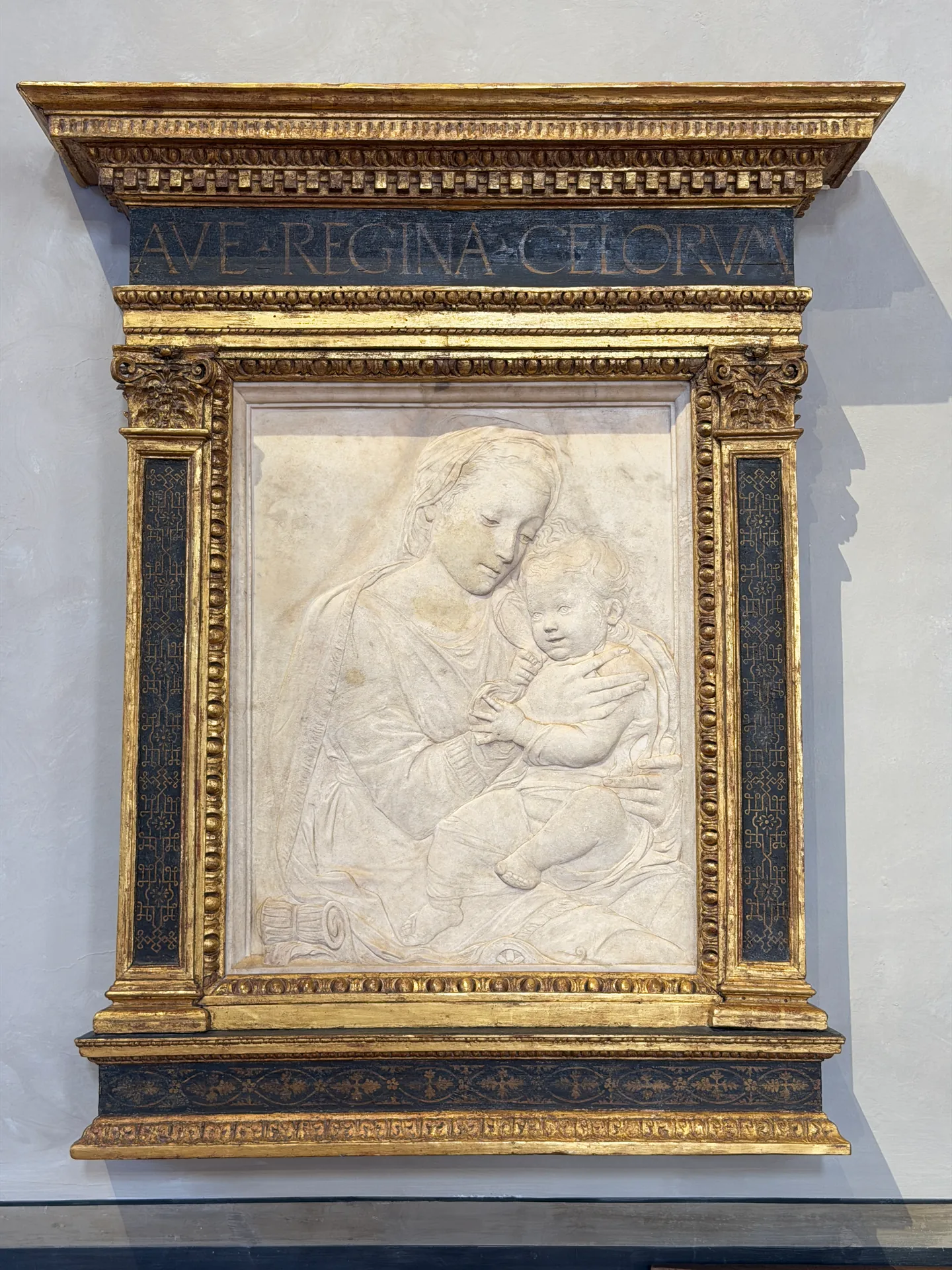
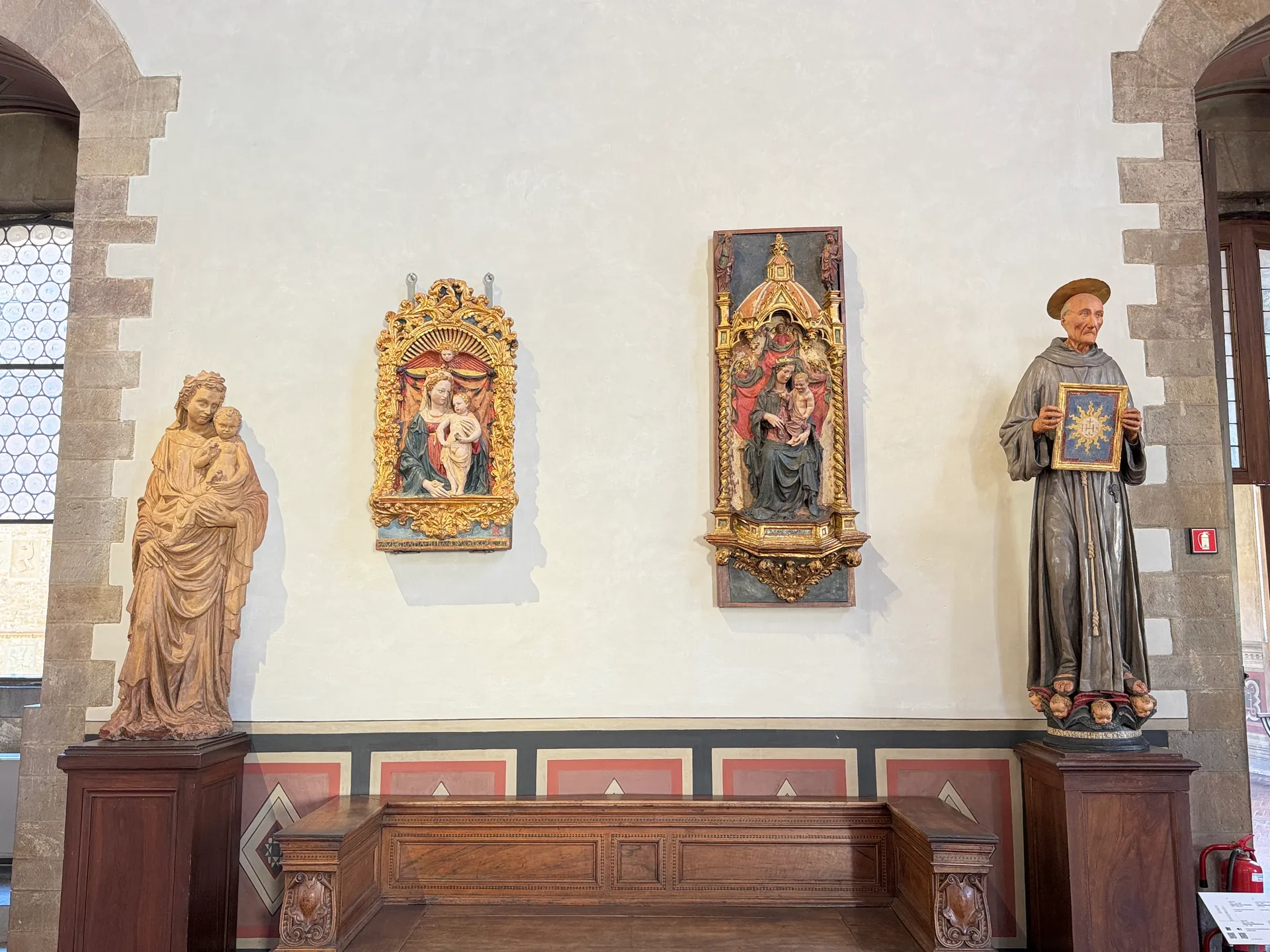
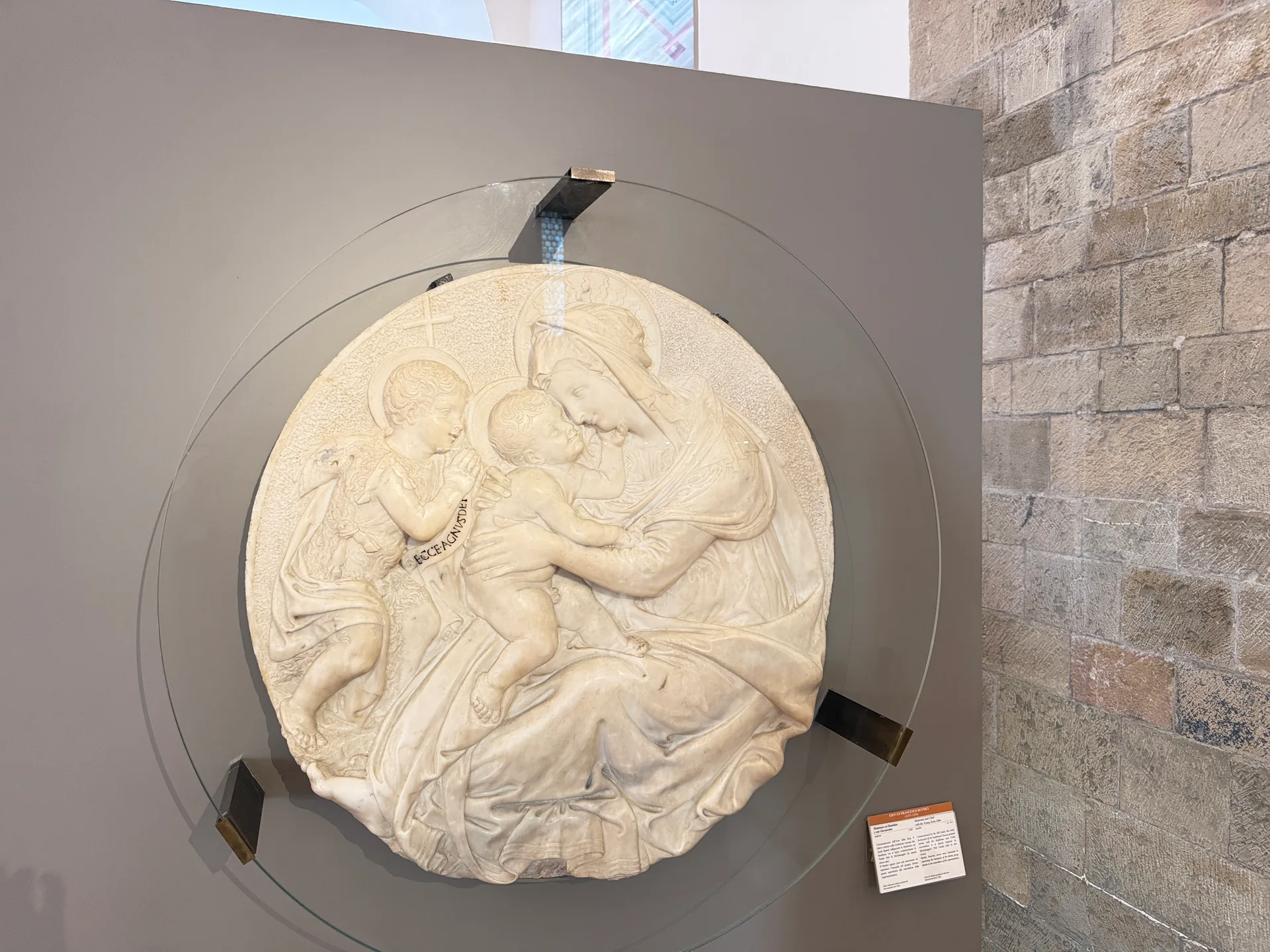
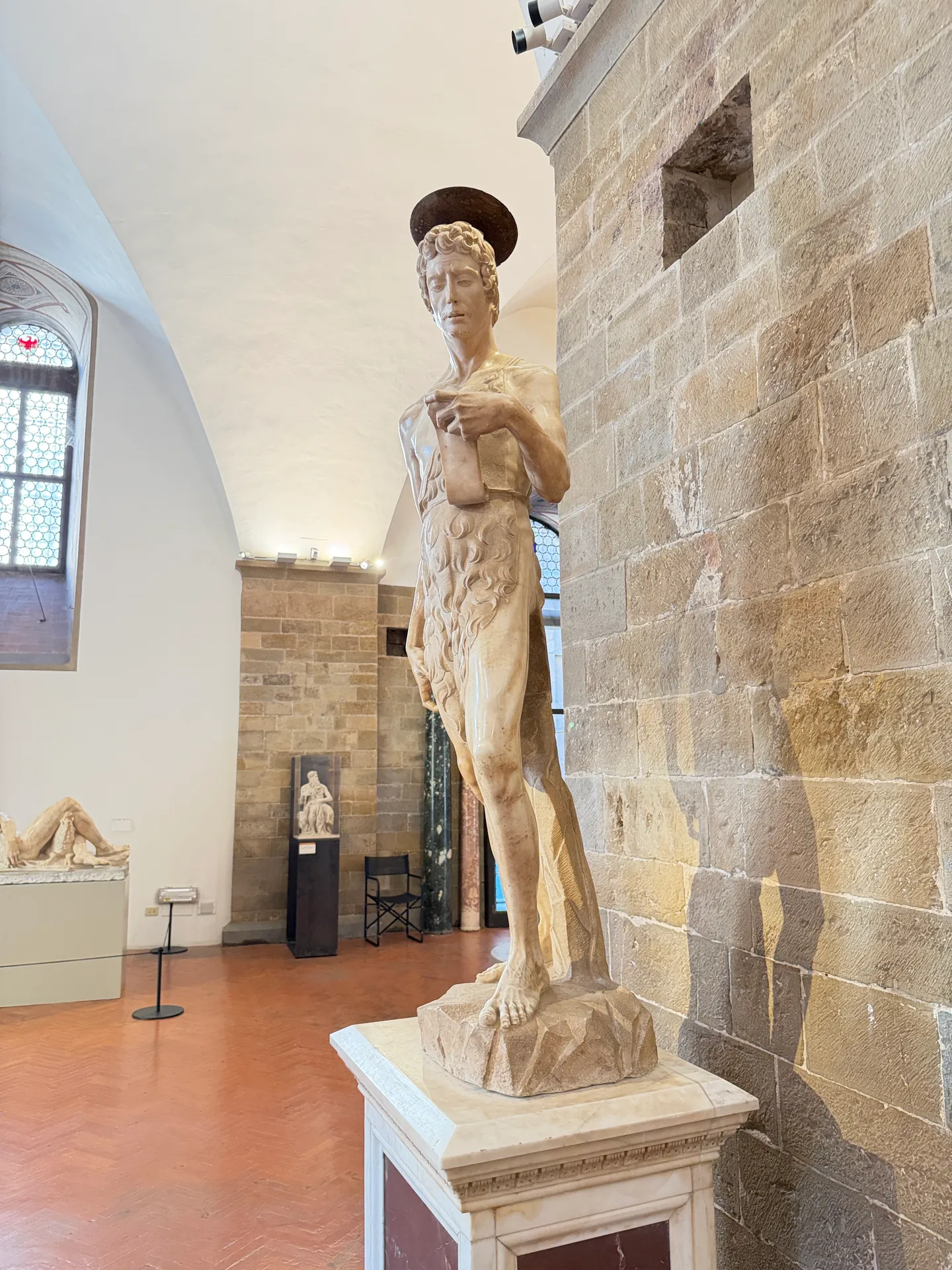
The bronze DavidThe first freestanding nude cast since antiquity, in a brimmed hat and boots with the sword lowered and Goliath's head beneath his foot. No date is settled for it.The marble DavidCommissioned in 1408 for a buttress of the Cathedral tribune, judged too small to read from the ground, and reworked by Donatello in 1416 for the Palazzo della Signoria.Goliath at his feetThe head at the base of the marble David, which is the detail the buttress would never have shown anyone.Head of a bearded manThe museum's label gives it to Donatello at about 1450. The state catalogue reads it later and the attribution is argued over, so we are showing it and not settling it.Young Man with a CameoBronze, 42 centimetres, in the Salone with the Donatellos and given to him by tradition since long before anyone could prove it. The cameo copies an antique in the Medici collection showing the chariot of Eros, a subject out of Plato's Phaedrus, which is why the bust is read as a Neoplatonic image and why some scholars push it to the 1470s and off Donatello's bench.Saint George, brought indoorsDonatello carved him for the armourers' niche at Orsanmichele. He came here in 1891 and his relief of the dragon followed in 1976. The tabernacle itself never moved, and what stands in that niche today is a copy.The great hallColumns carrying pointed arches over a terracotta floor. Nine works by Donatello are in this room.Ribs and brick bandingThe vaults of the great hall springing from a stone pier.The Baptist as a youthMarble, in a rough tunic, holding a tall reed cross.Robed and hoodedA tall marble figure in a full length robe with the veil drawn over the head.A wall of glazed terracottaDella Robbia Madonnas in blue and white, with a marble relief set between them.In a gilded frameA low relief marble Madonna and Child inside a gilded architectural tabernacle.Painted woodTwo polychrome wooden statues on high pedestals with painted tabernacles between them.
THE CONTEST THAT STARTED IT
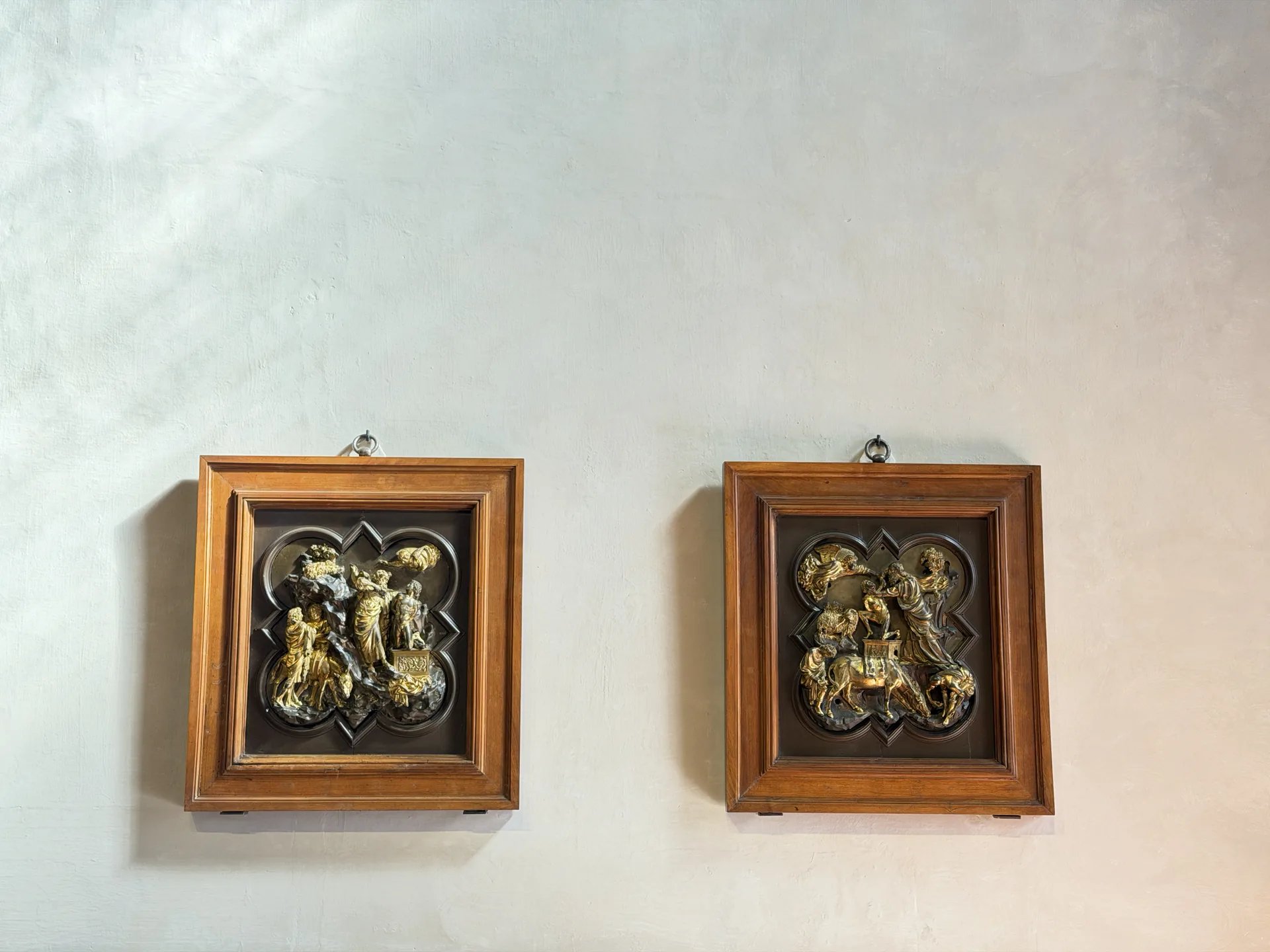
The 1401 Competition Panels
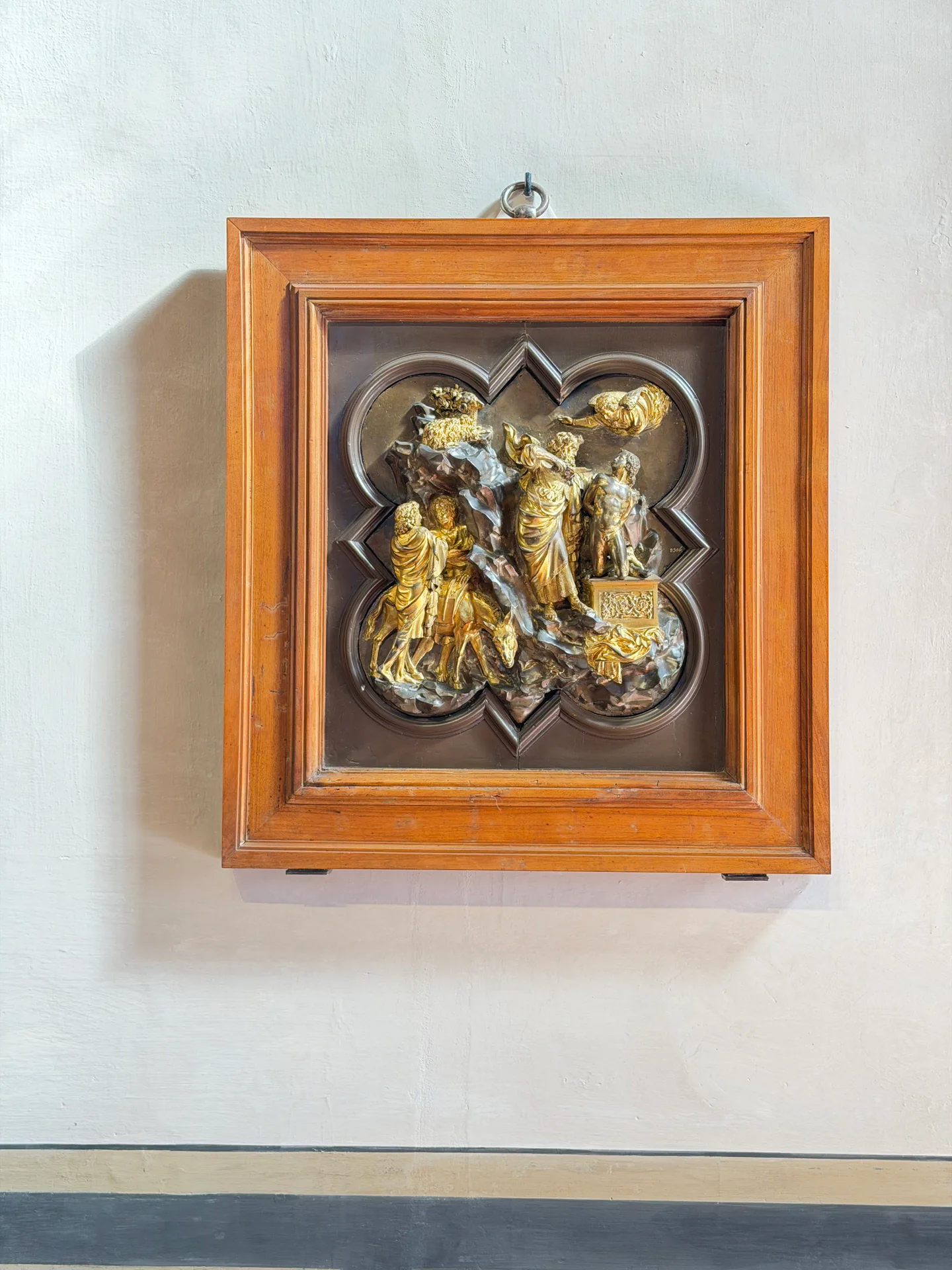
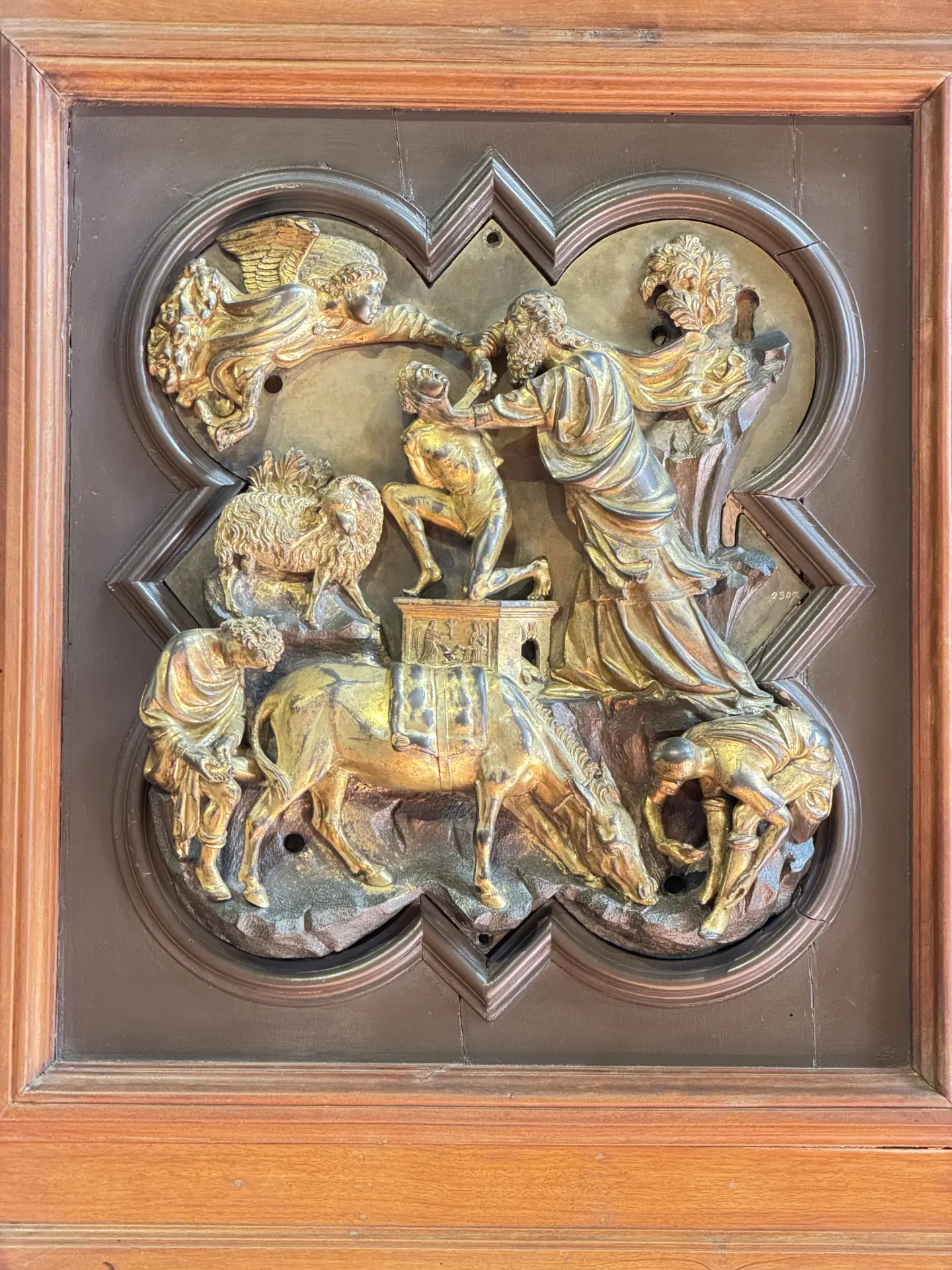
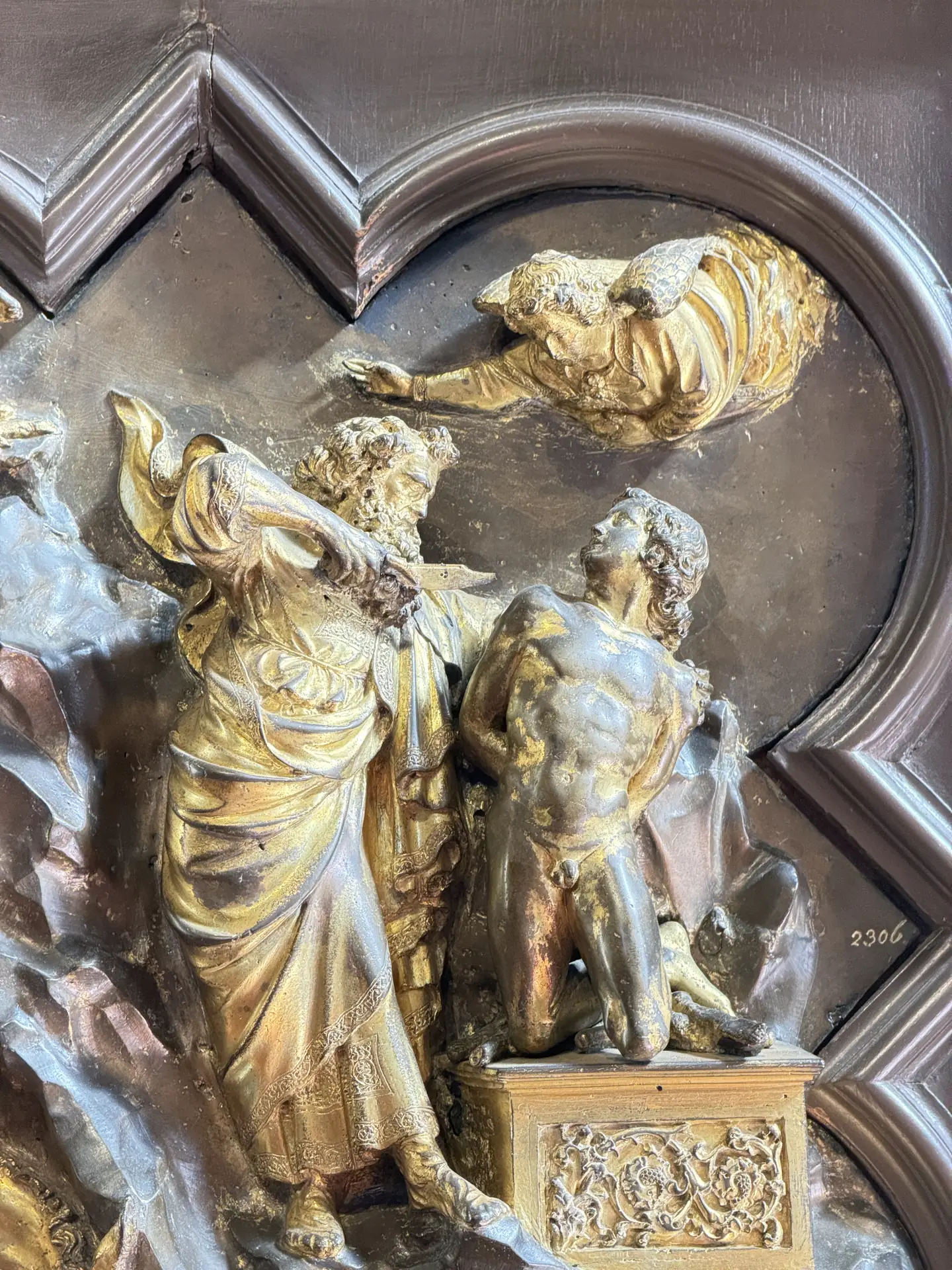
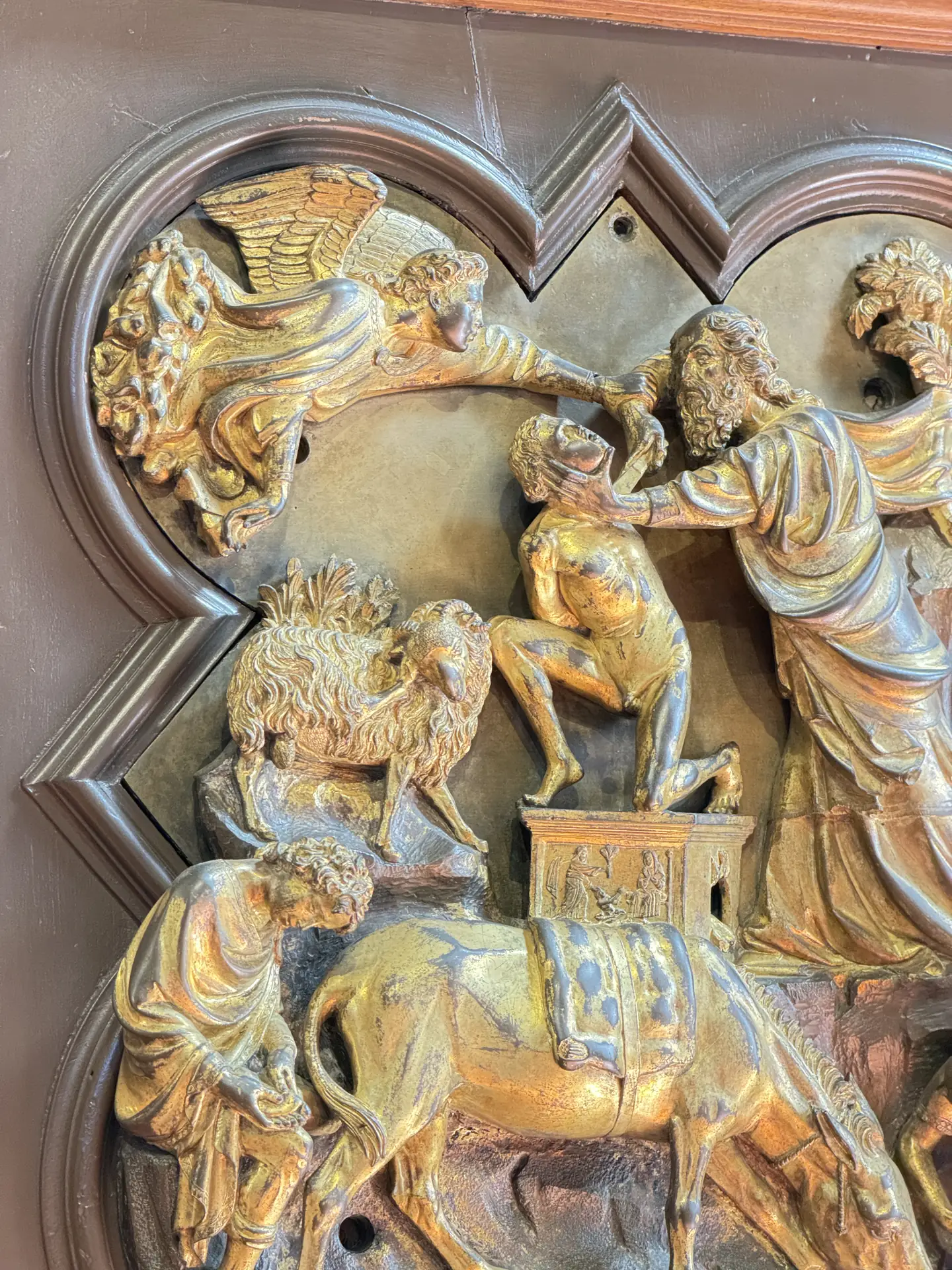
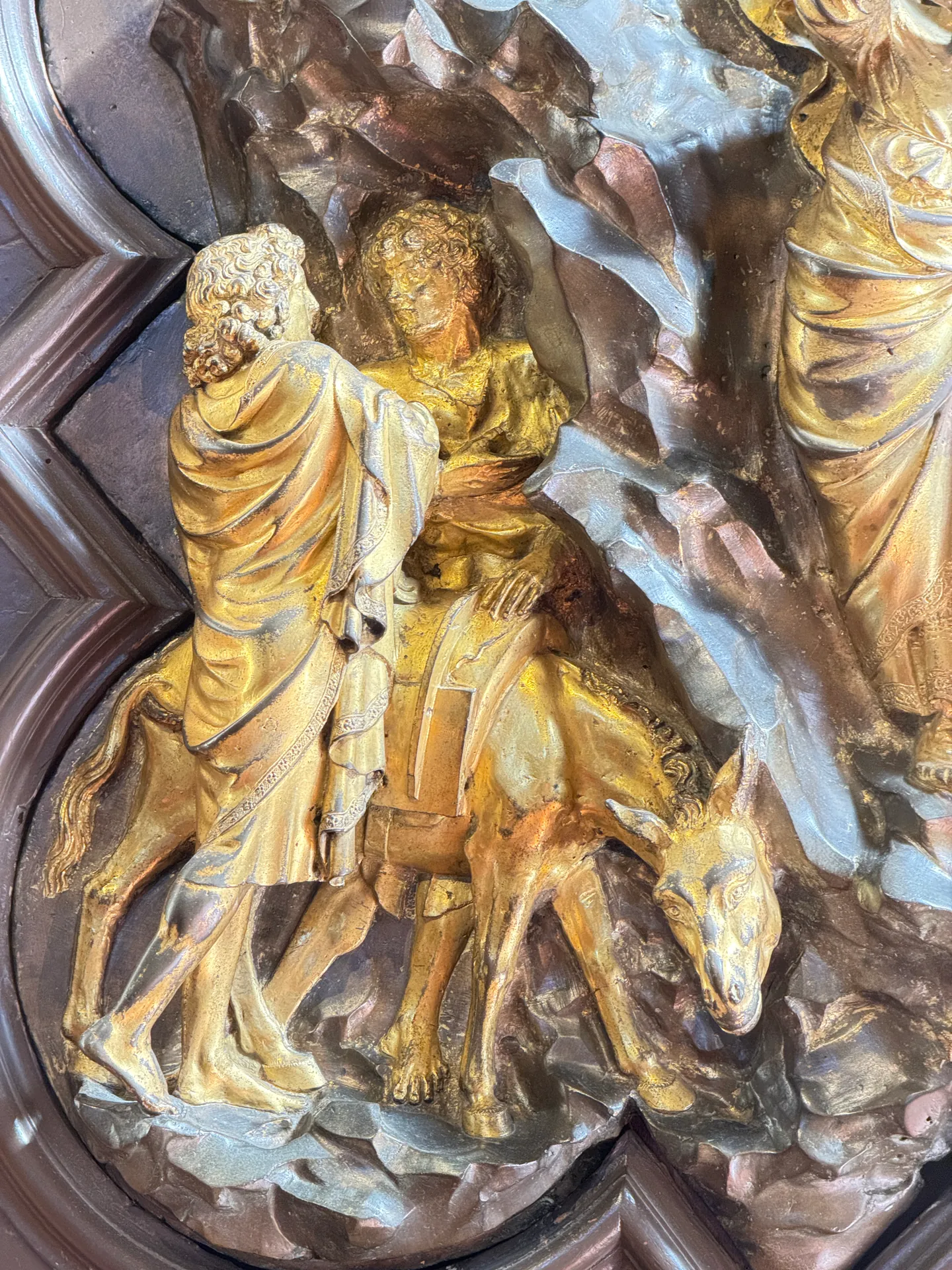
Two trial reliefs of the Sacrifice of Isaac, cast in 1401 for the Baptistery door competition by Ghiberti and by Brunelleschi. They hang side by side, which is the only place in the world you can compare them. The quickest way to tell them apart: Brunelleschi's angel grabs Abraham by the wrist, Ghiberti's never touches him.
Both reliefs, side by sideGhiberti on the left, Brunelleschi on the right. Gilt bronze in matching quatrefoil frames, cast to the same brief in 1401, and this is the only wall in the world where you can stand between them.Ghiberti's panelThe angel comes in from the upper right and never makes contact. Abraham holds the knife out and away from the boy's throat, the rock ledge cuts a clean diagonal, and the servants sit in their own lobe below. Ghiberti won.Brunelleschi's panelThe angel grabs the wrist. Abraham's other hand is clamped under Isaac's chin and the blade is at the throat, and the whole lower lobe is crowded with the servants, the ass and a boy pulling a thorn from his foot. He lost, went to Rome, and came back a builder.Isaac on the altarGhiberti's Isaac is a free standing classical nude on a carved altar, turned to face his father. This figure is the single most quoted reason the commission went the way it did.The seized wristThe tell that separates the two panels at a glance. Brunelleschi's angel makes physical contact and stops the arm. Ghiberti's does not touch him at all.The servants belowBoth artists had to fit the same cast into one quatrefoil, and the lower lobe is where they solved it most differently. Ghiberti gives the servants their own scene under the rock shelf.
THE EARLY WORK AND THE LATE
Michelangelo
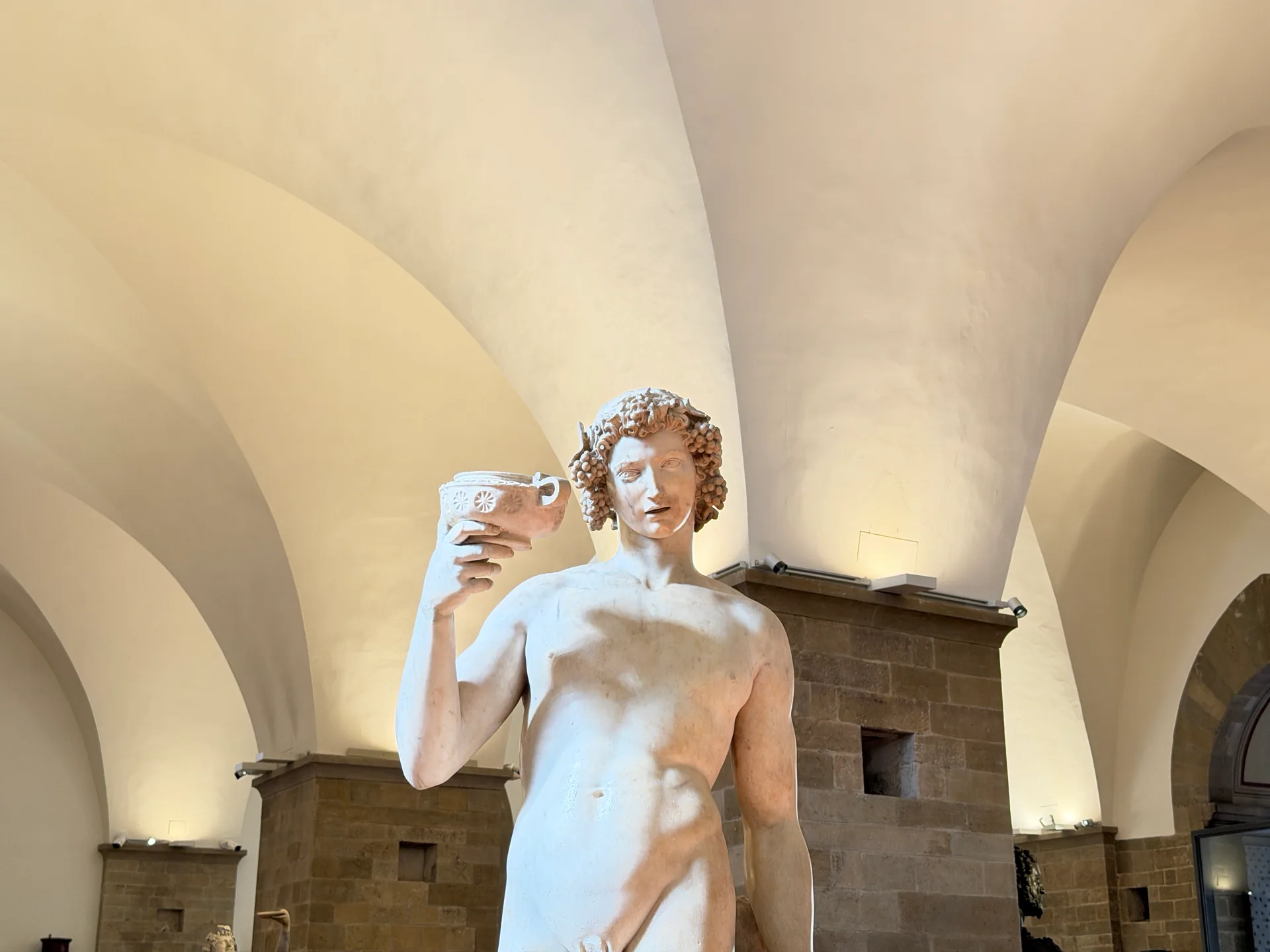
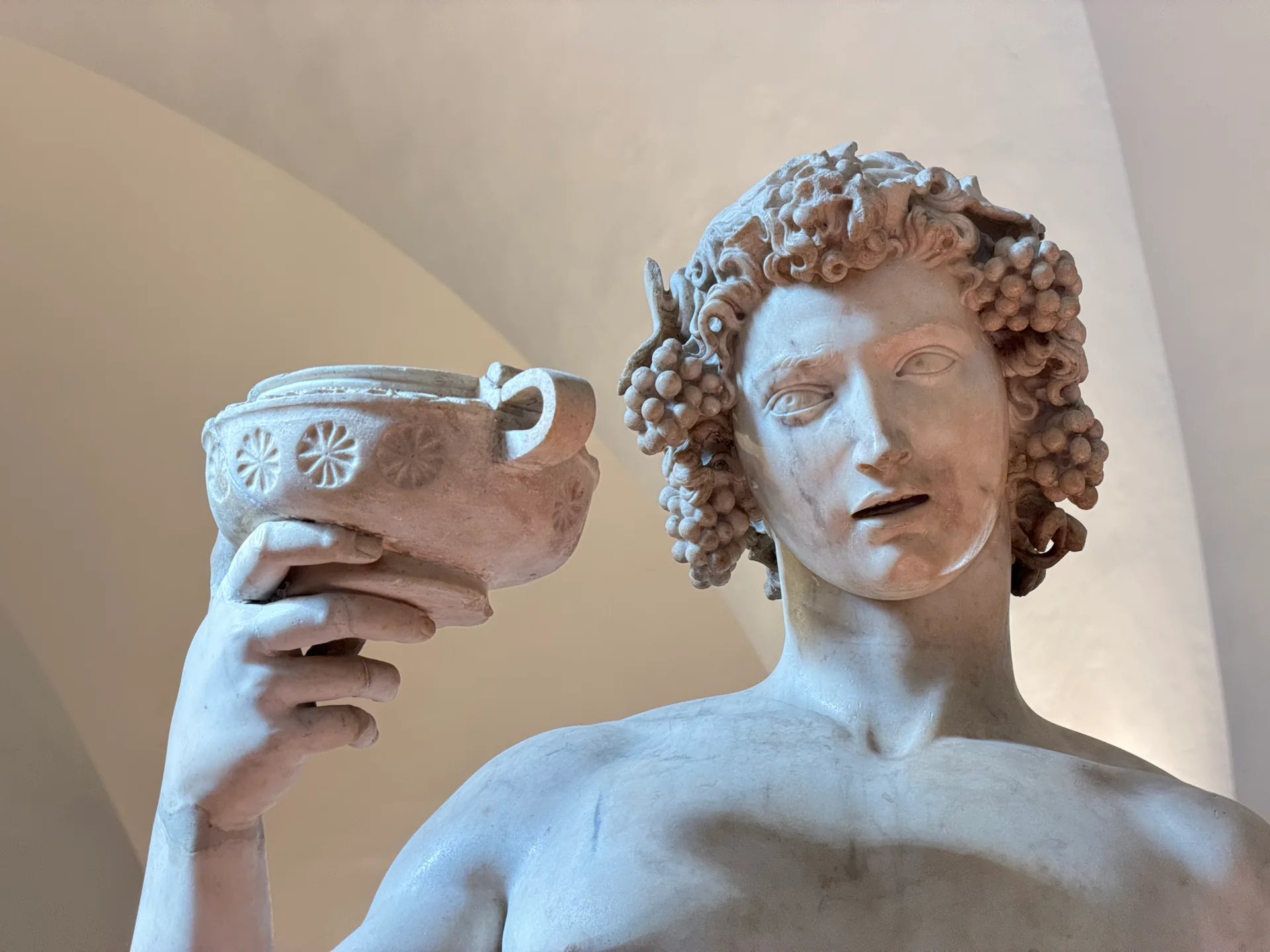
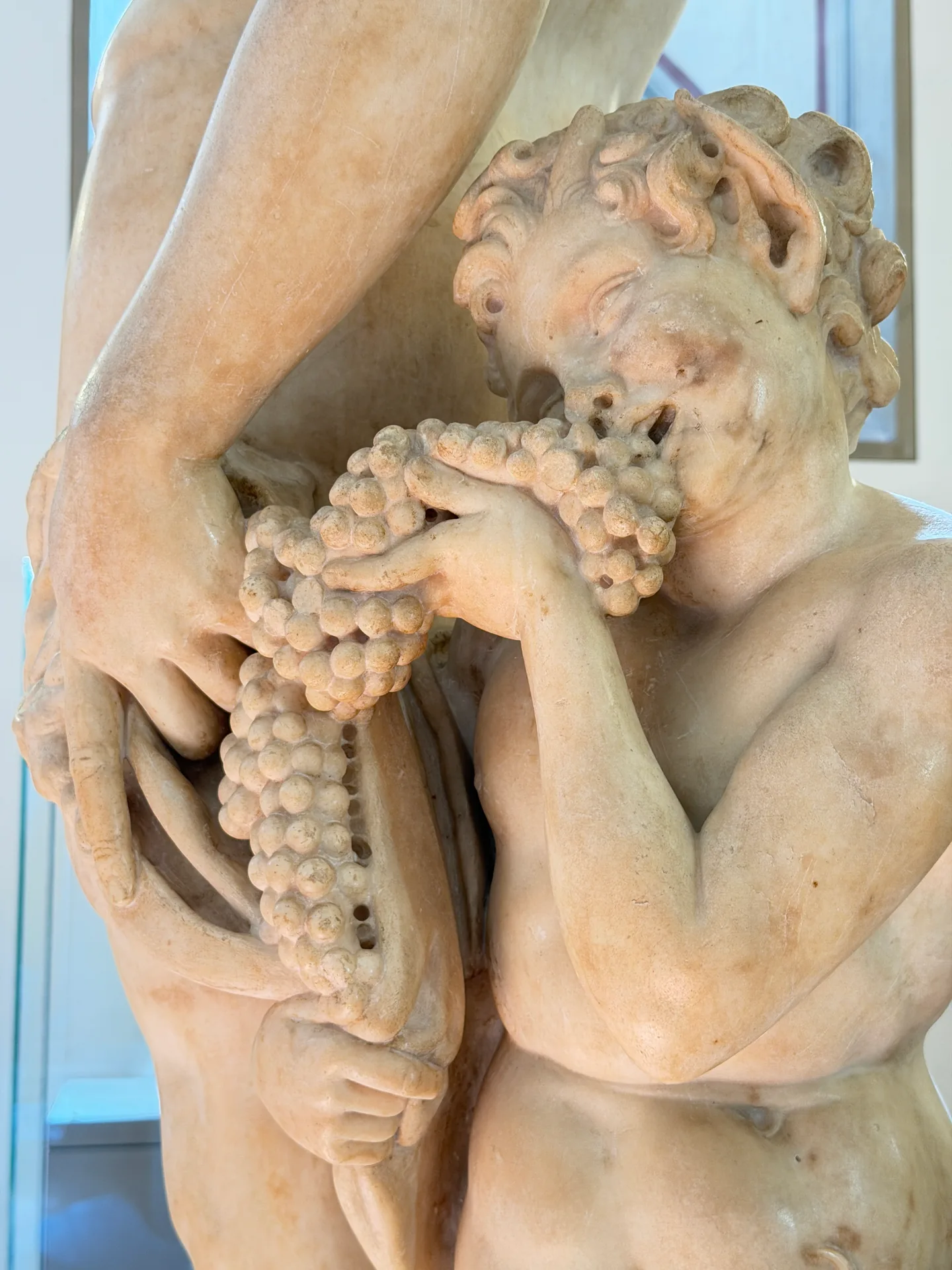
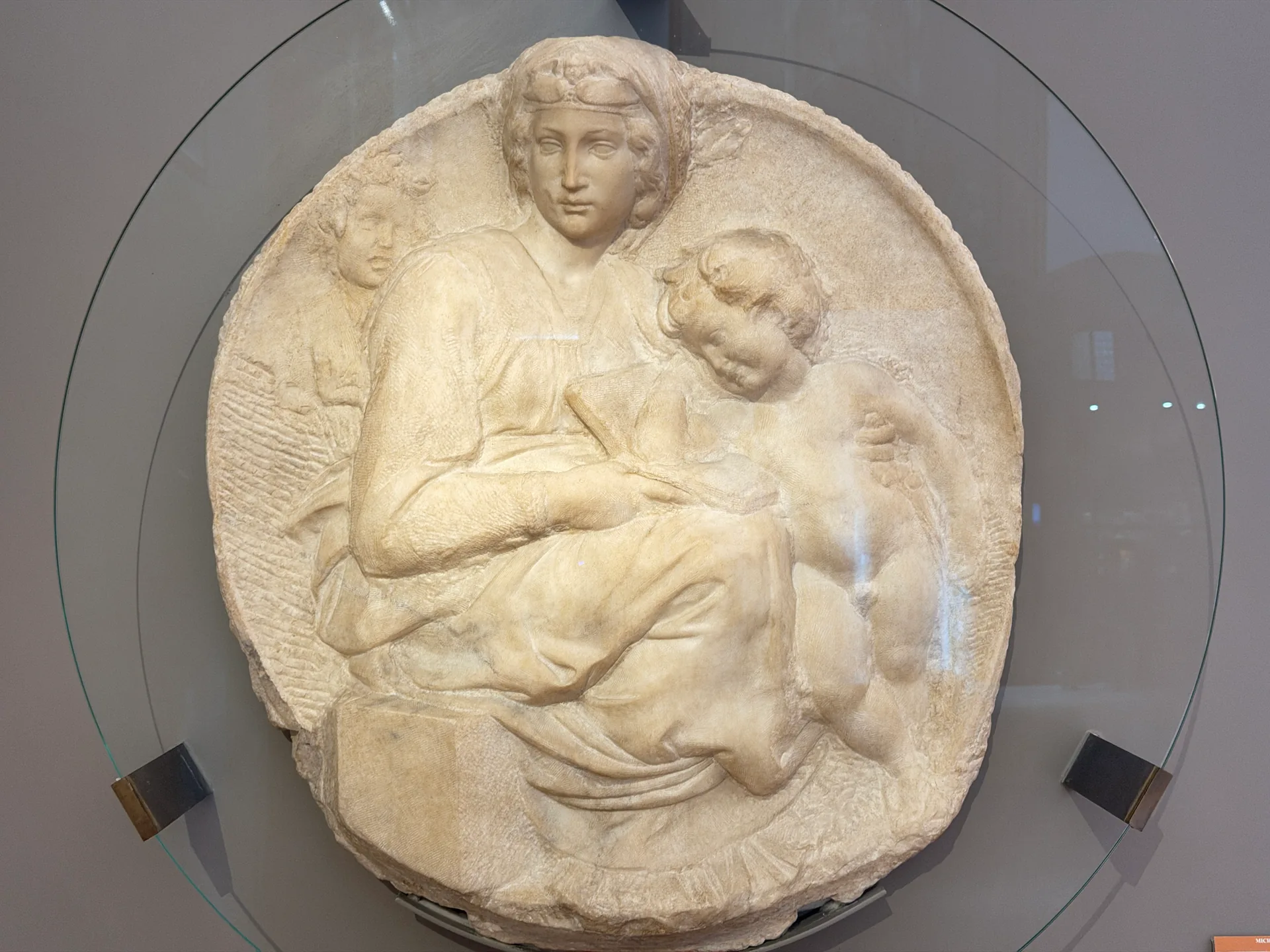
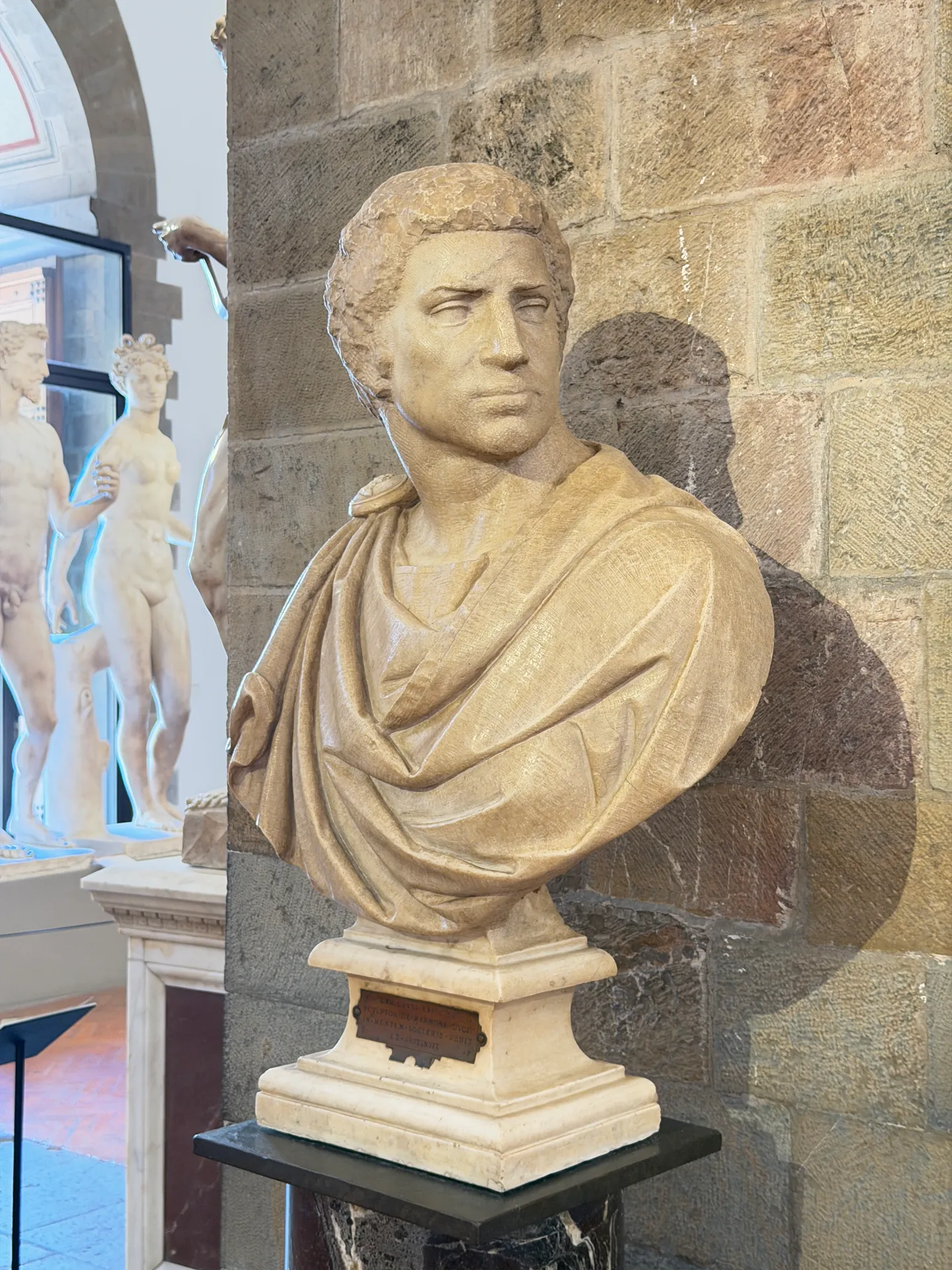
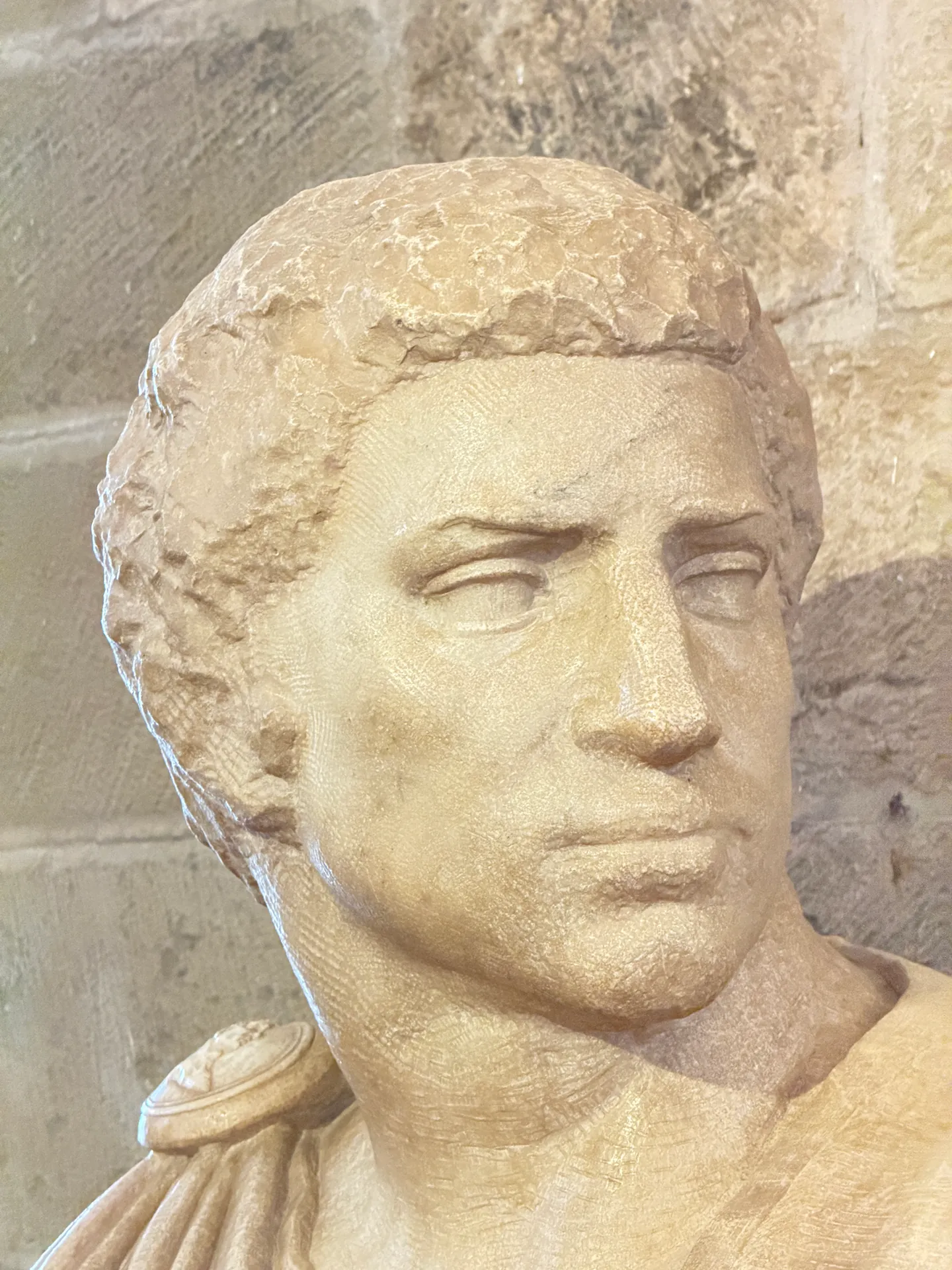
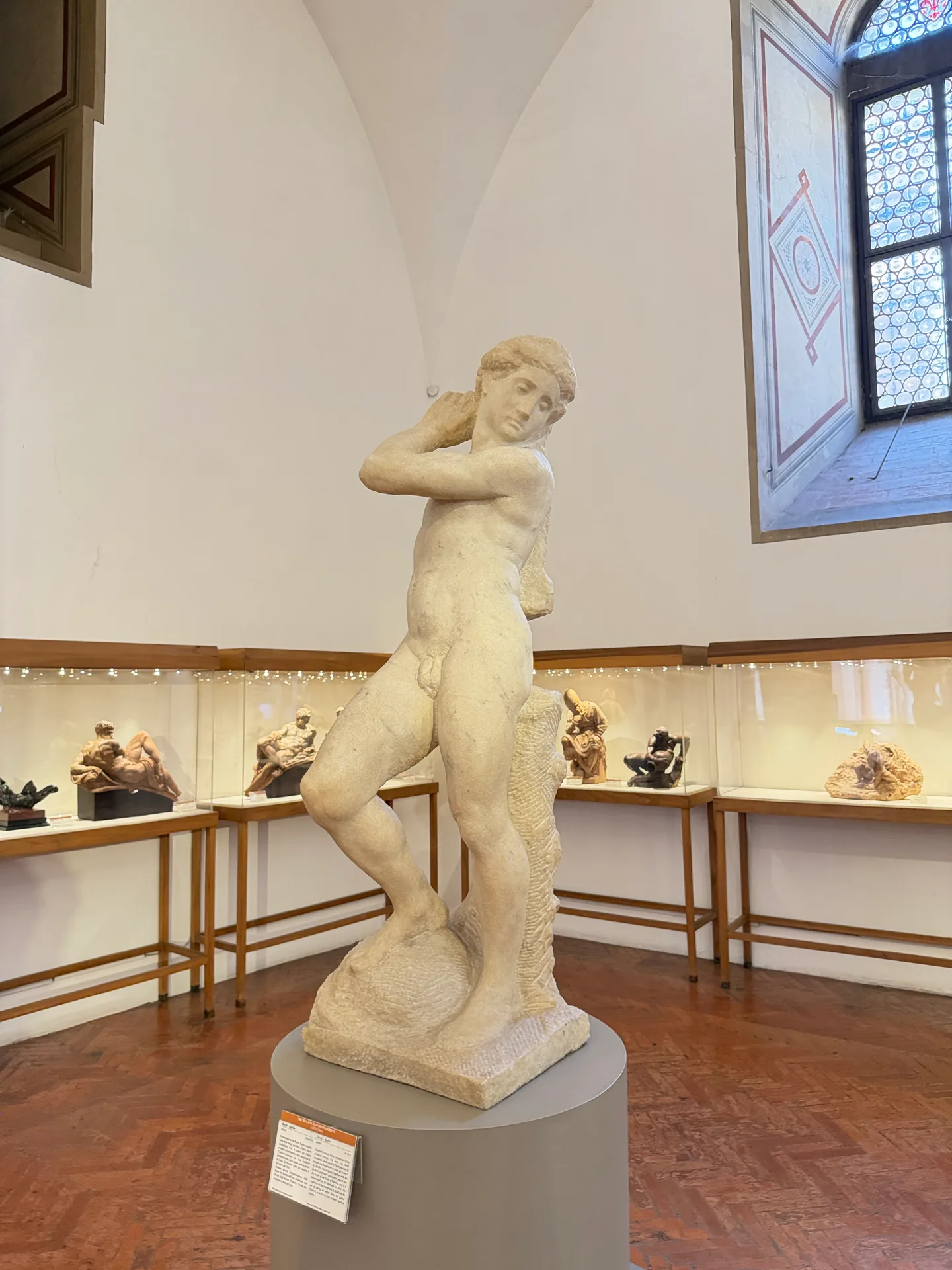
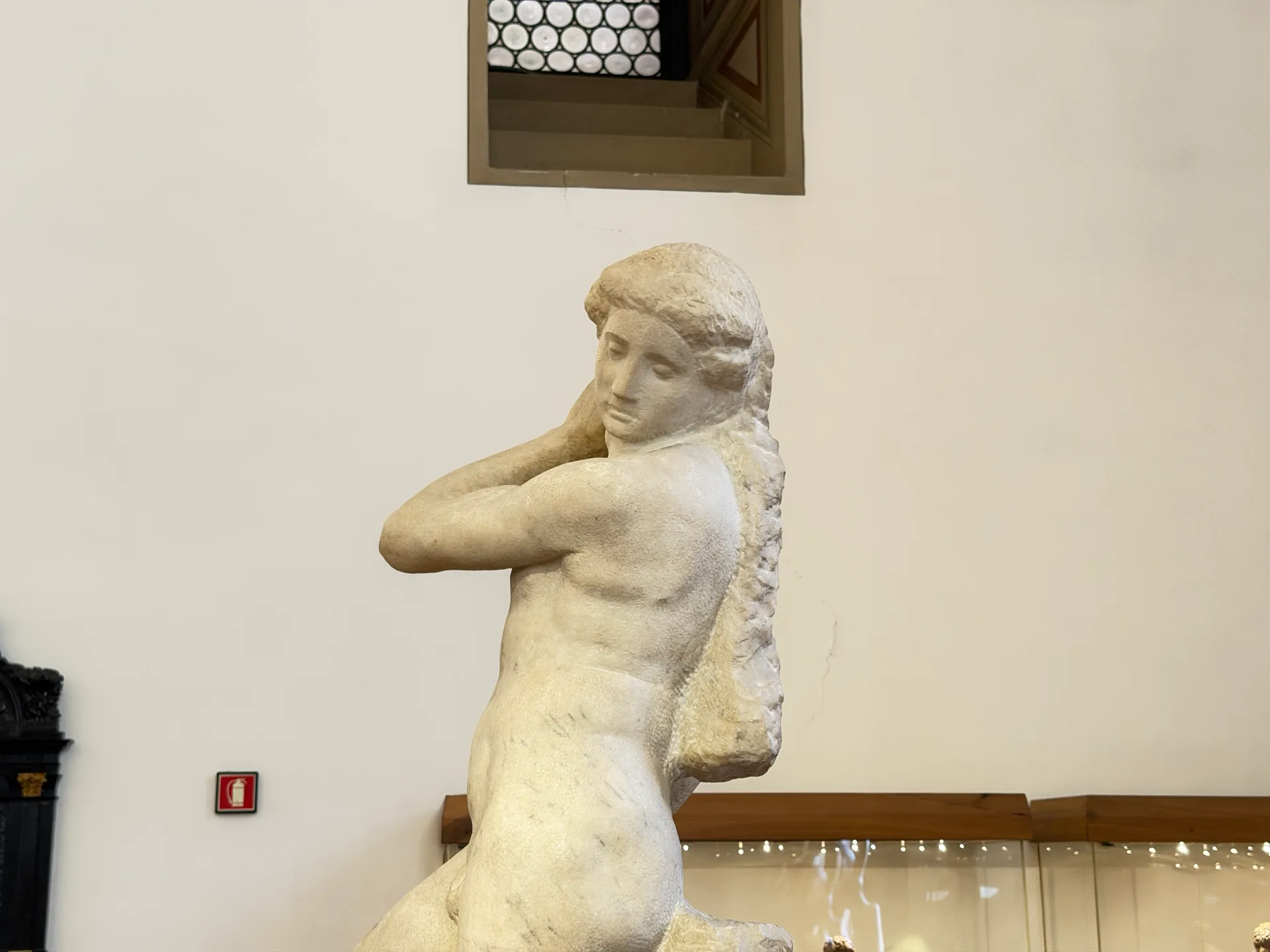
The Bacchus was carved at about twenty two, the Pitti Tondo a few years later, the Brutus and the David-Apollo much later. Four works, one room, and a career visible across them.
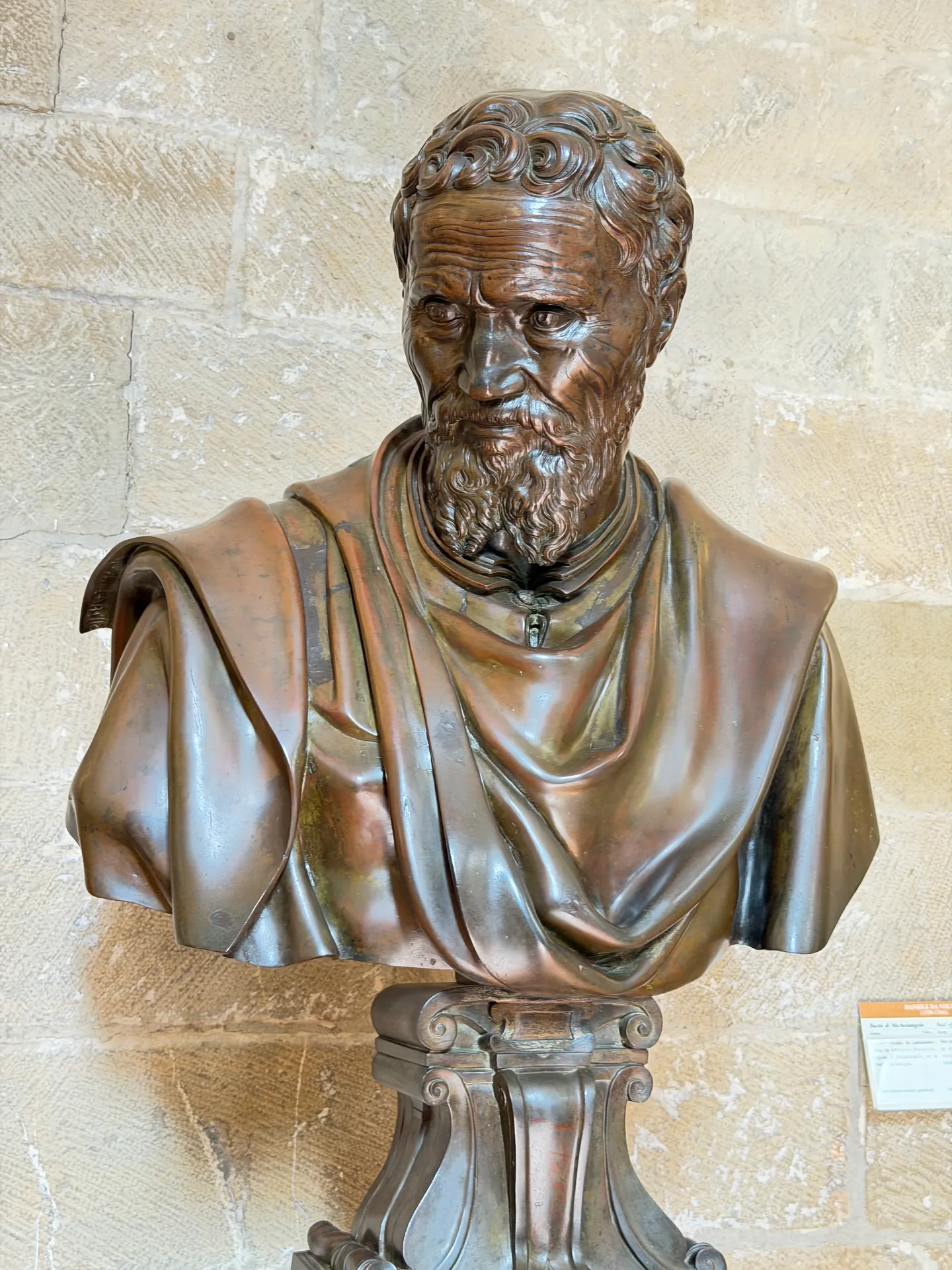
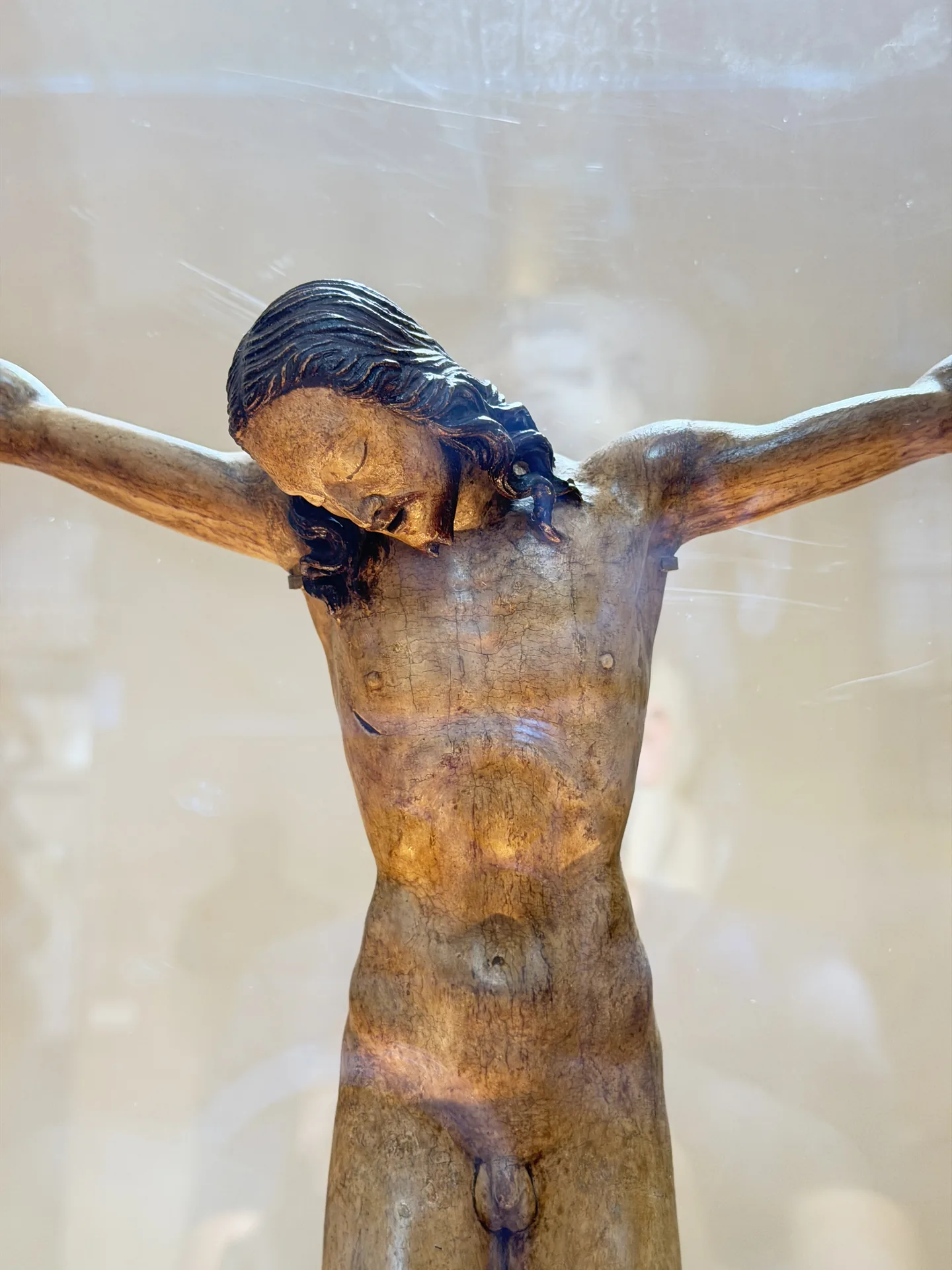
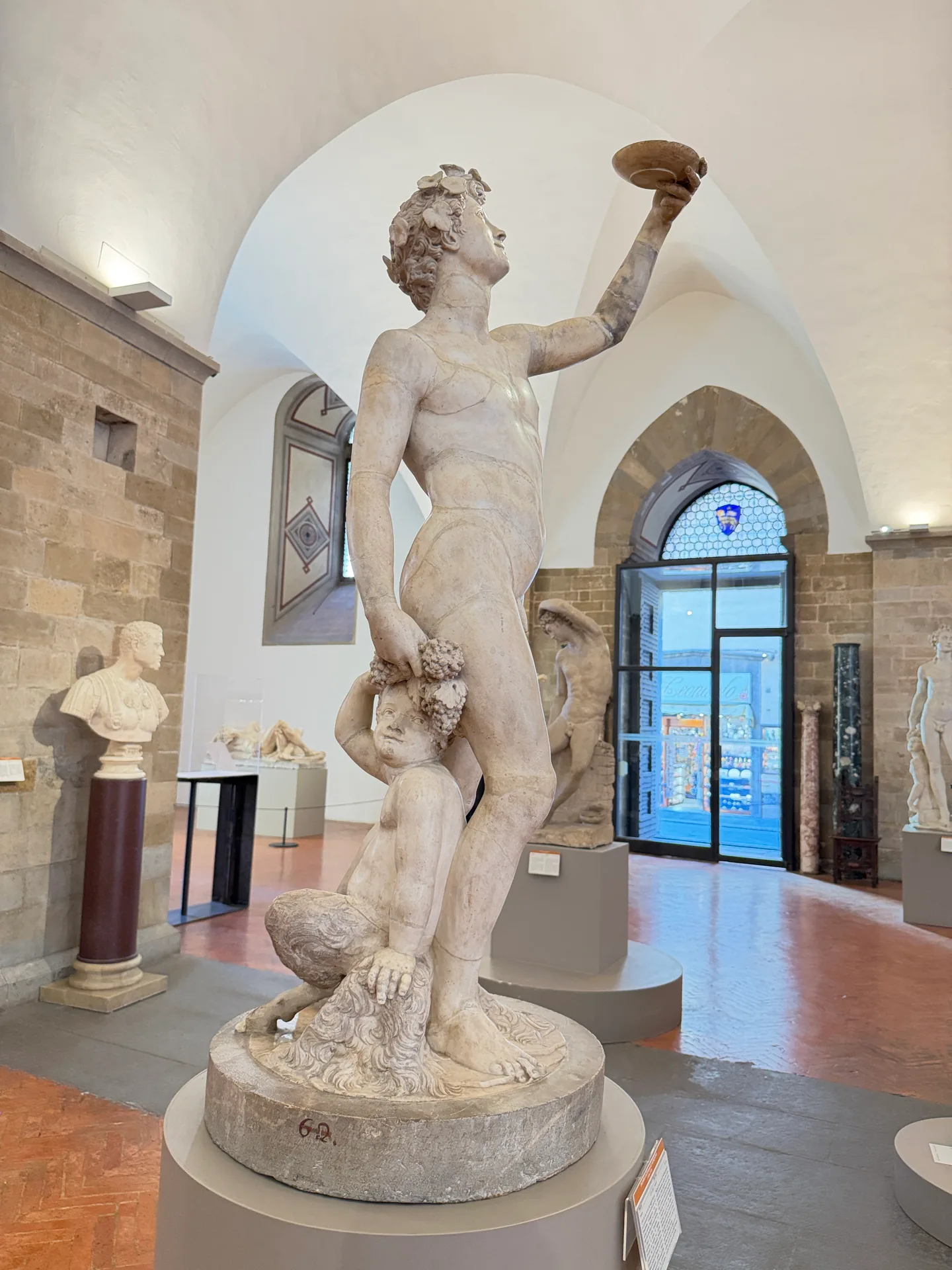
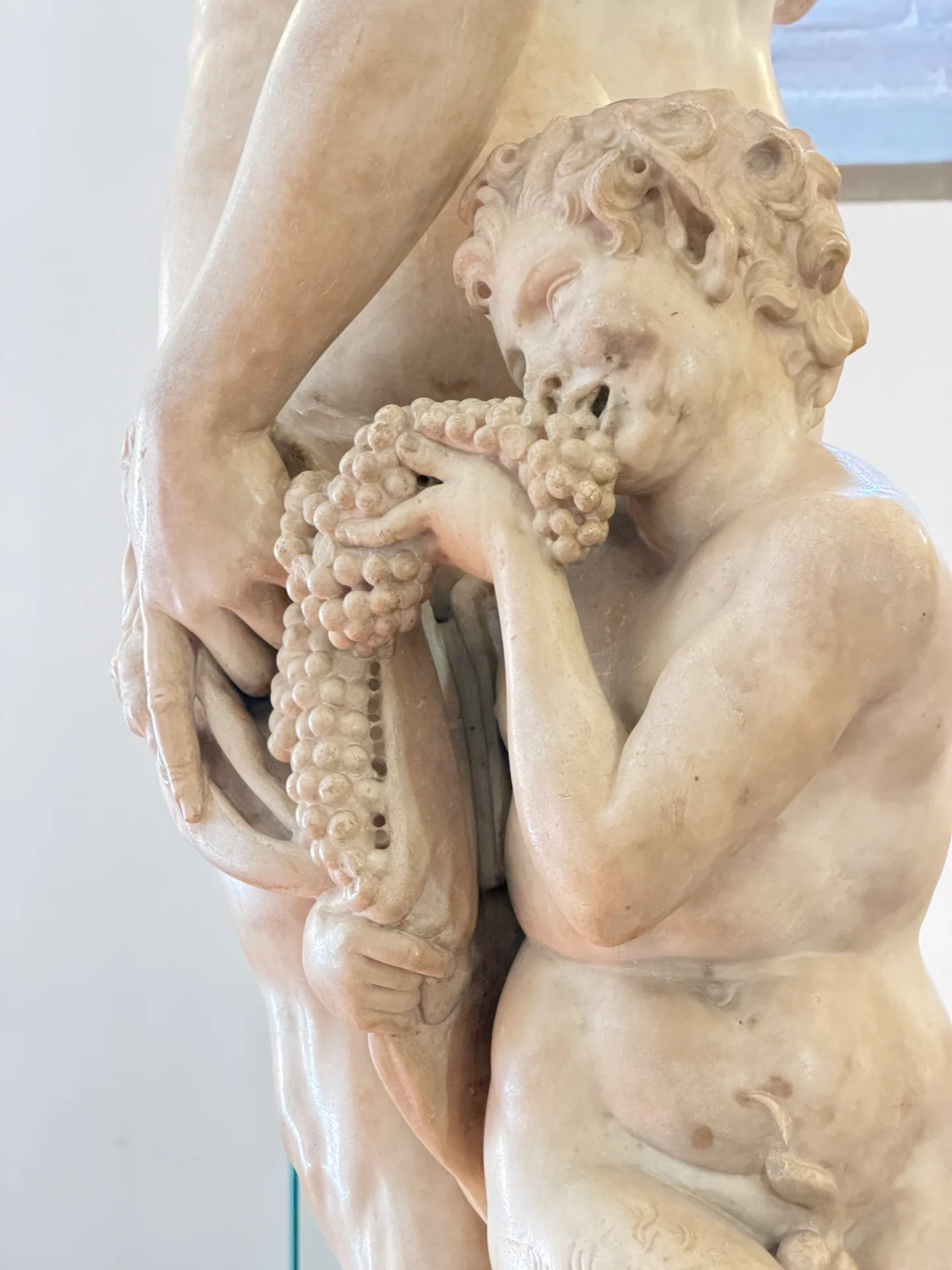
The BacchusCarved in 1496 to 1497, when Michelangelo was about twenty two. He is unsteady, the cup is up, and the satyr behind his leg is eating the grapes slipping out of his other hand.The drunken tiltThe head back and the cup raised. This is the whole argument of the figure in one detail.The satyr at the baseEating the grapes, and enjoying himself considerably more than Bacchus is.The Pitti TondoMarble, about 1503 to 1504. The Virgin and Child with the young Baptist just emerging from the background, which is the part Michelangelo left barely cut.On the wallThe tondo on its mount against the ashlar, which is how the room actually presents it.The BrutusThe head turned hard over the shoulder. Michelangelo left the face unfinished and the bust is usually read as a republican statement.Close against ashlarThe head alone, with the sandstone wall behind it.The David-ApolloBegun about 1530 for Baccio Valori and abandoned. The figure is still coming out of the block and nobody has ever agreed which of the two subjects it is.The unworked blockThe turned head and the rough mass still standing behind the shoulder.Michelangelo himselfBronze, the broken nose and the short beard clear against plain ashlar.The Gallino CrucifixPoplar, about 41 by 40 centimetres, dated to about 1495 to 1497. The Italian state bought it in 2008 for 3.25 million euro as an early Michelangelo. Caglioti, Barocchi and others reject that outright, and other names have been put forward. We are showing it and not settling it.
AFTER MICHELANGELO
Sixteenth Century Sculpture
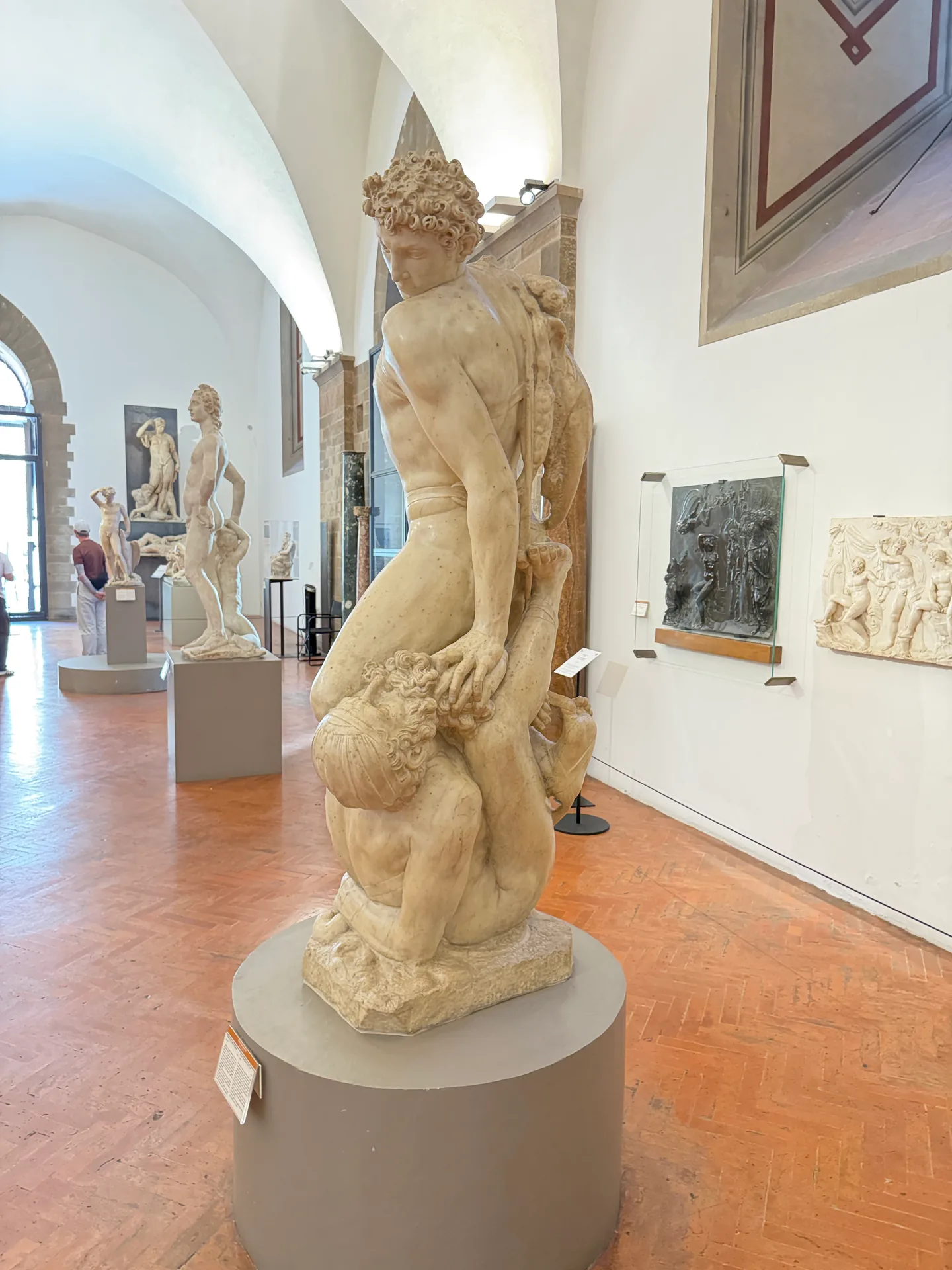
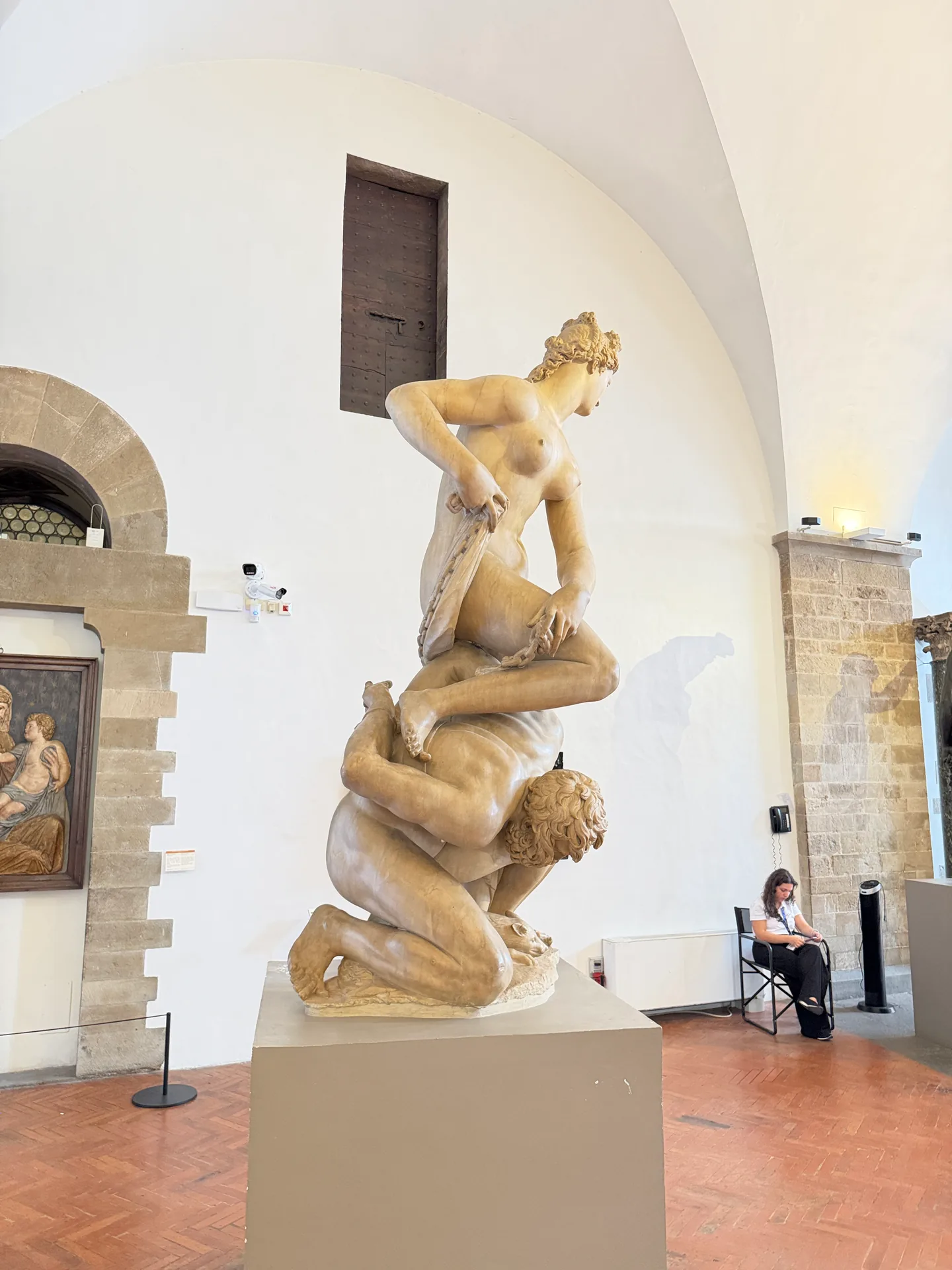
Sansovino, Giambologna, Ammannati, Bandinelli and Danti, working for the Medici and against each other. This is the century when Florentine sculpture went from devotional to virtuoso.
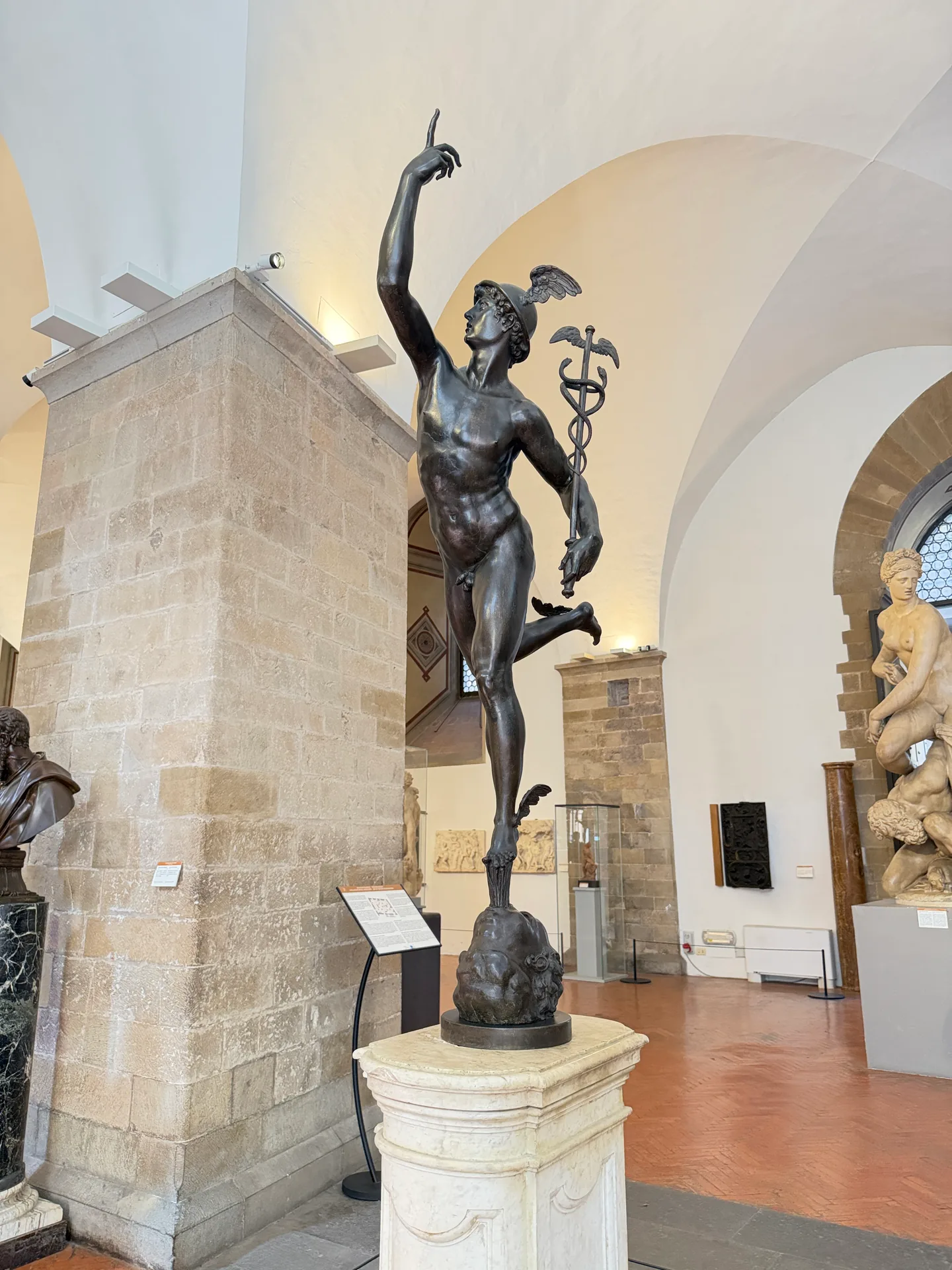
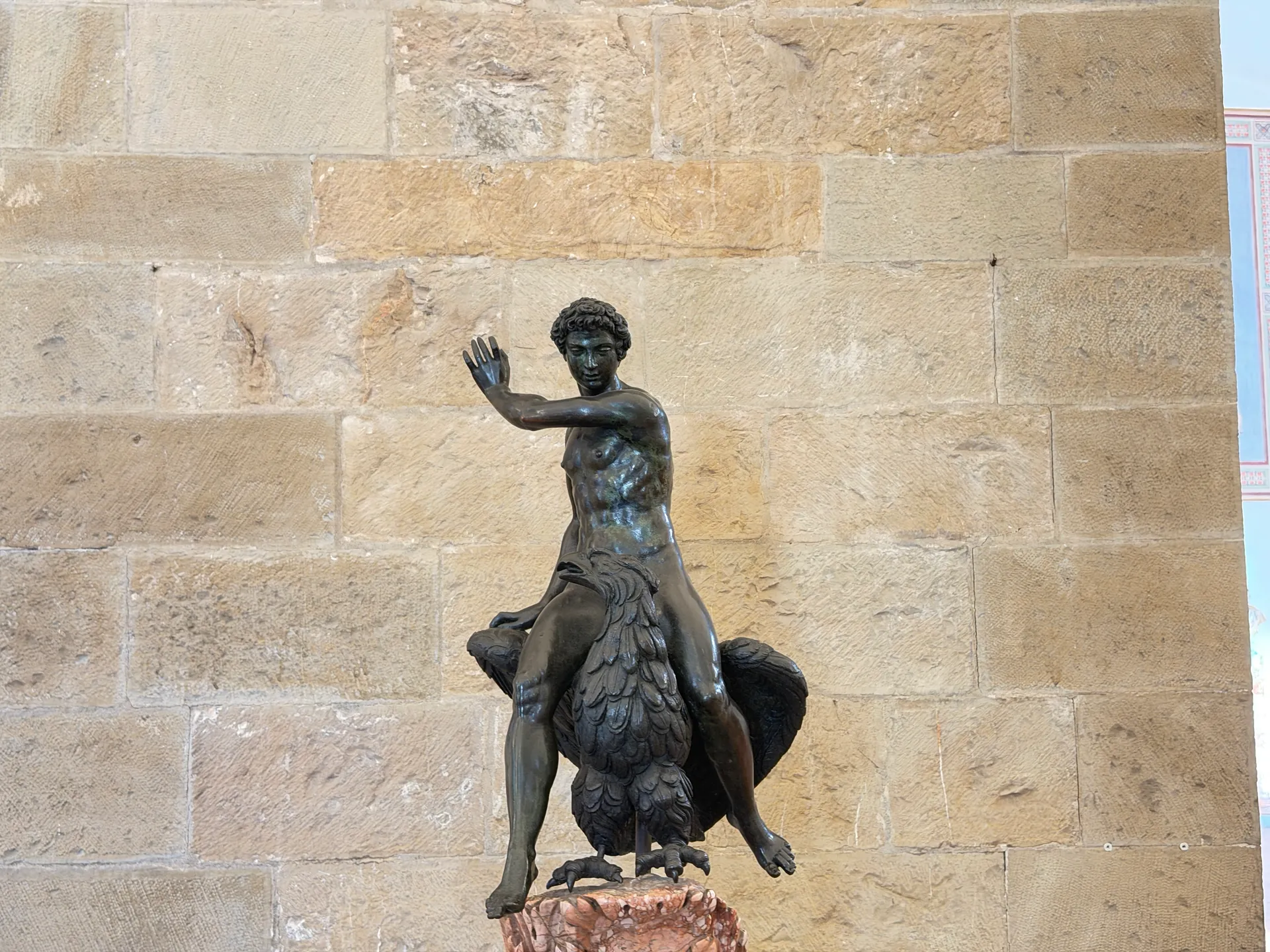
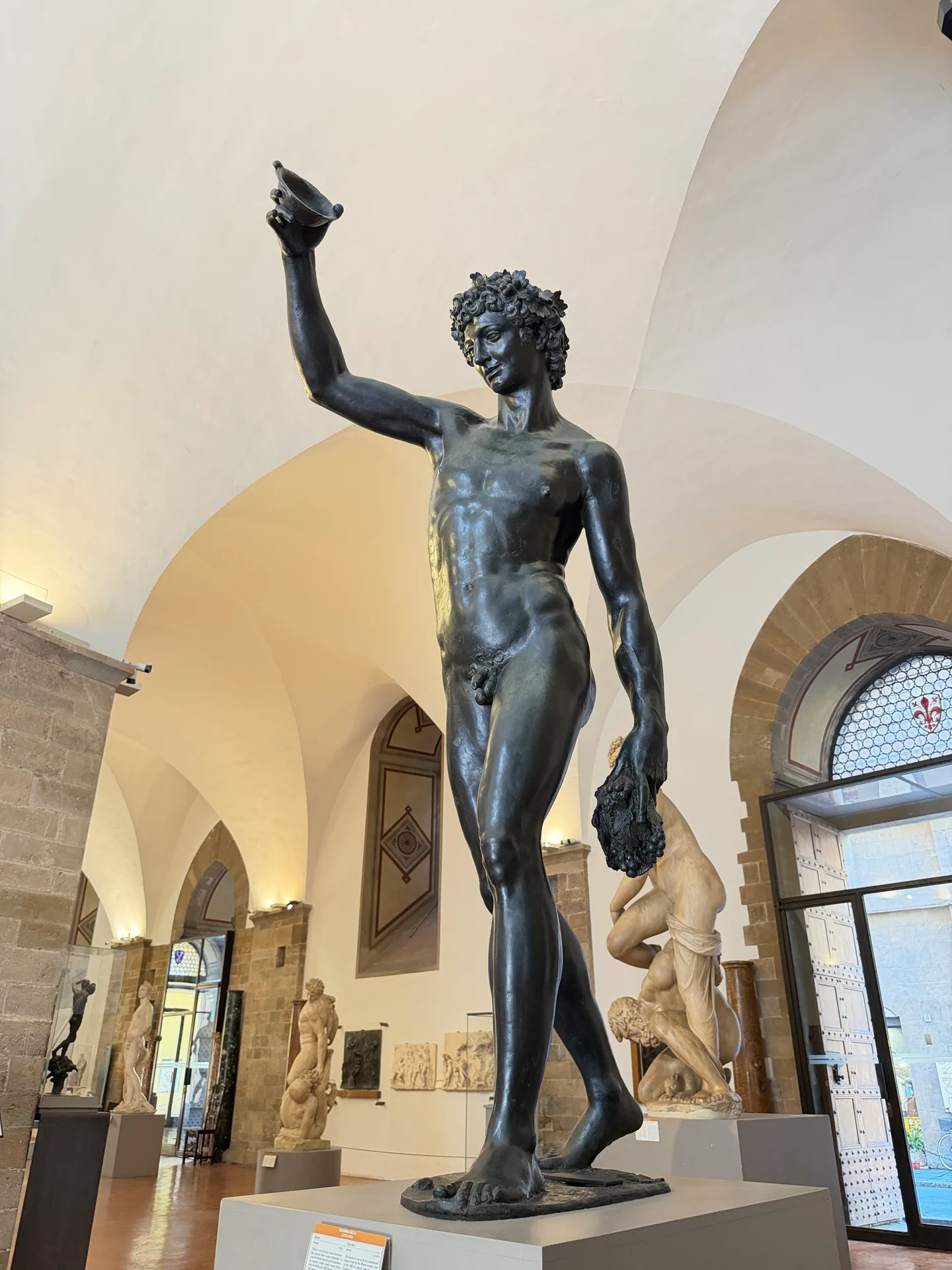
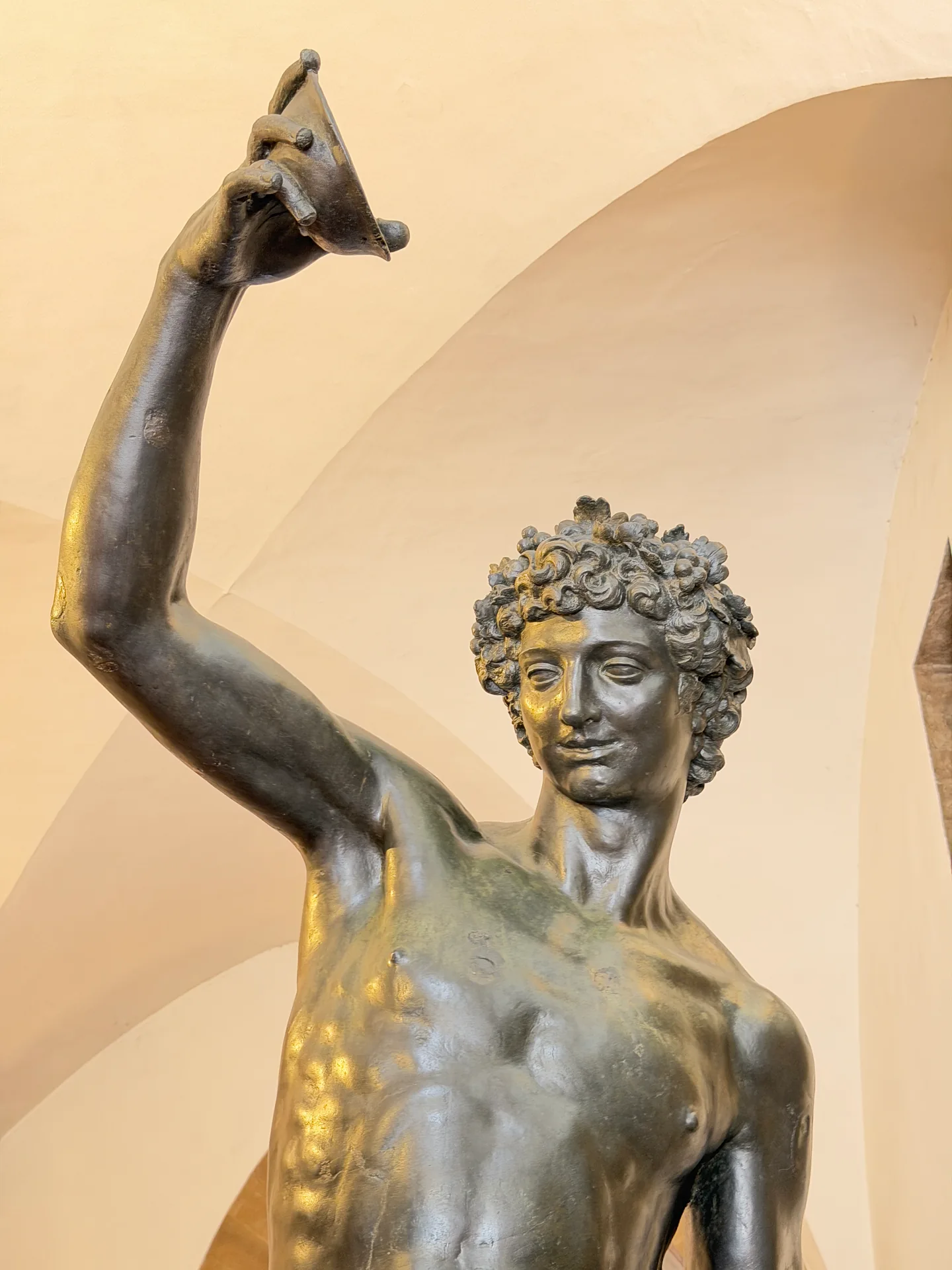
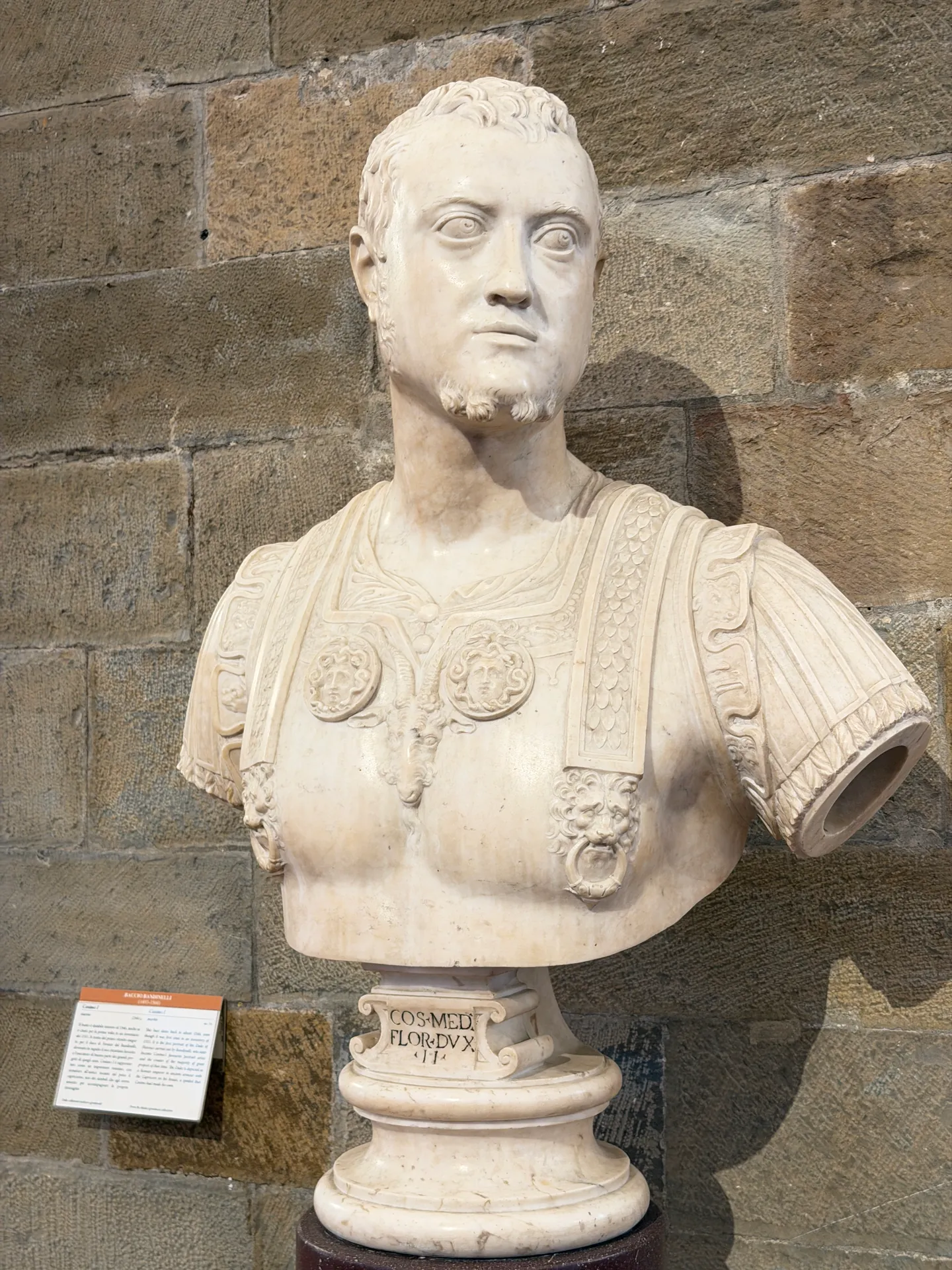
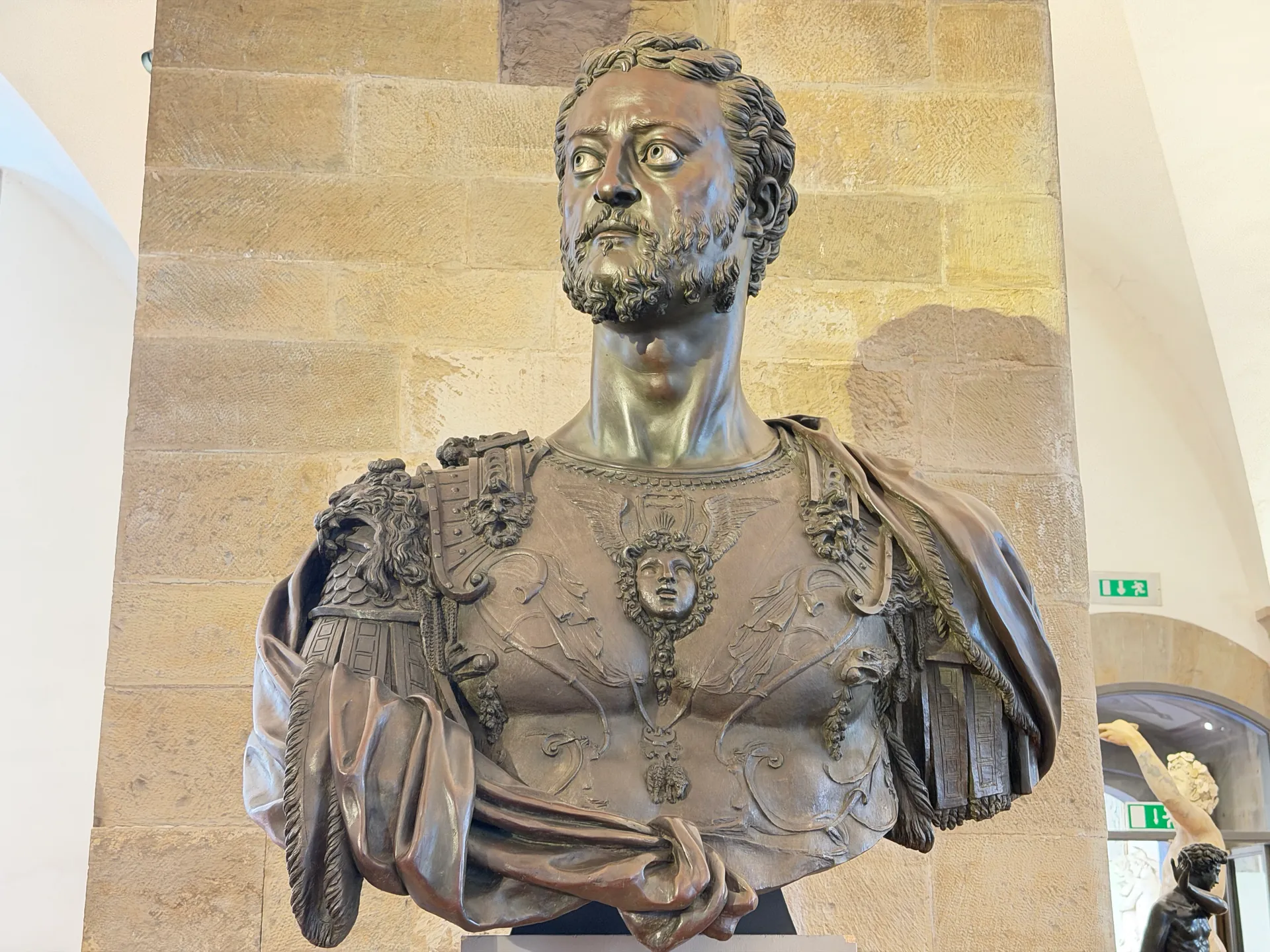
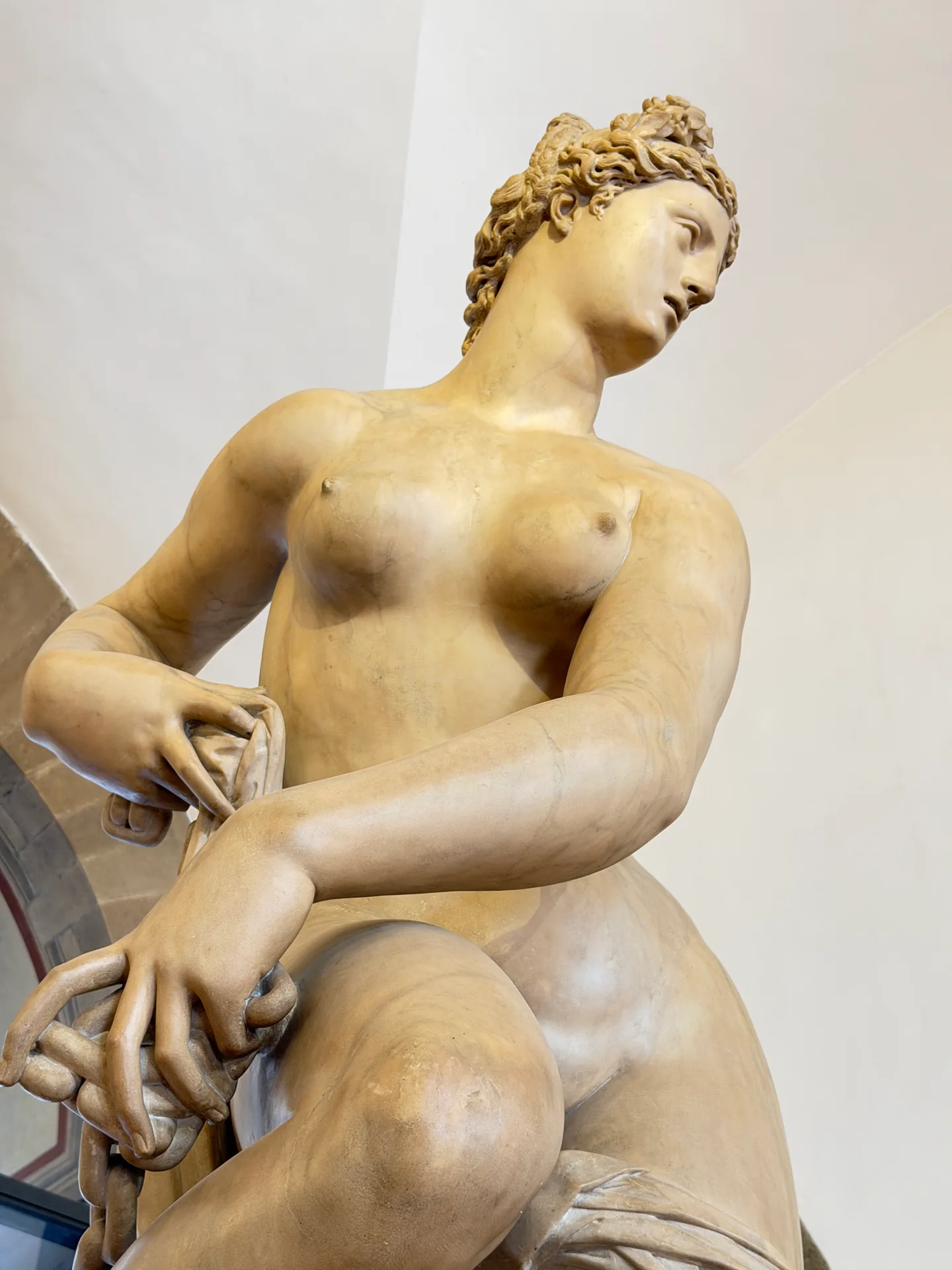
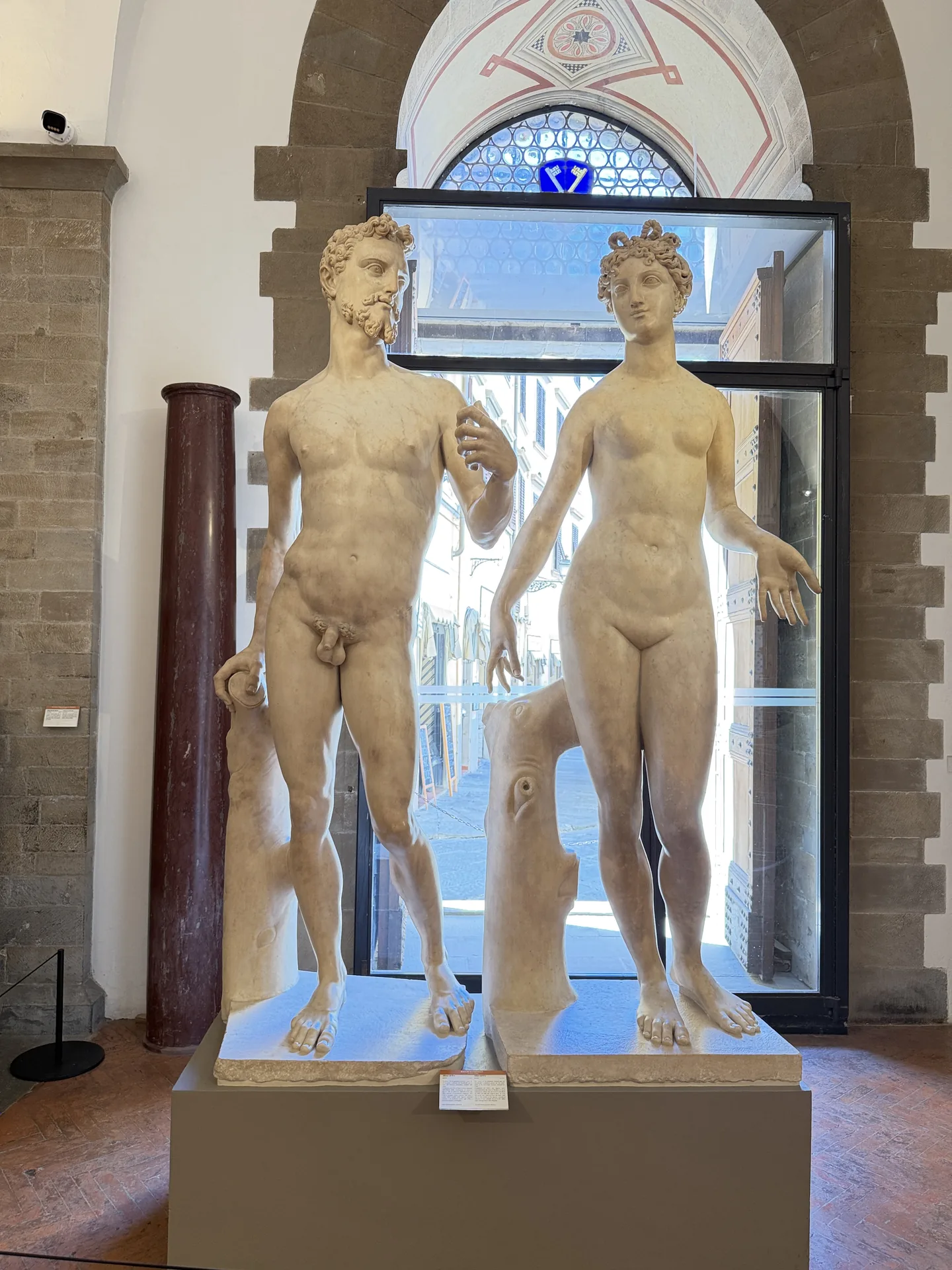
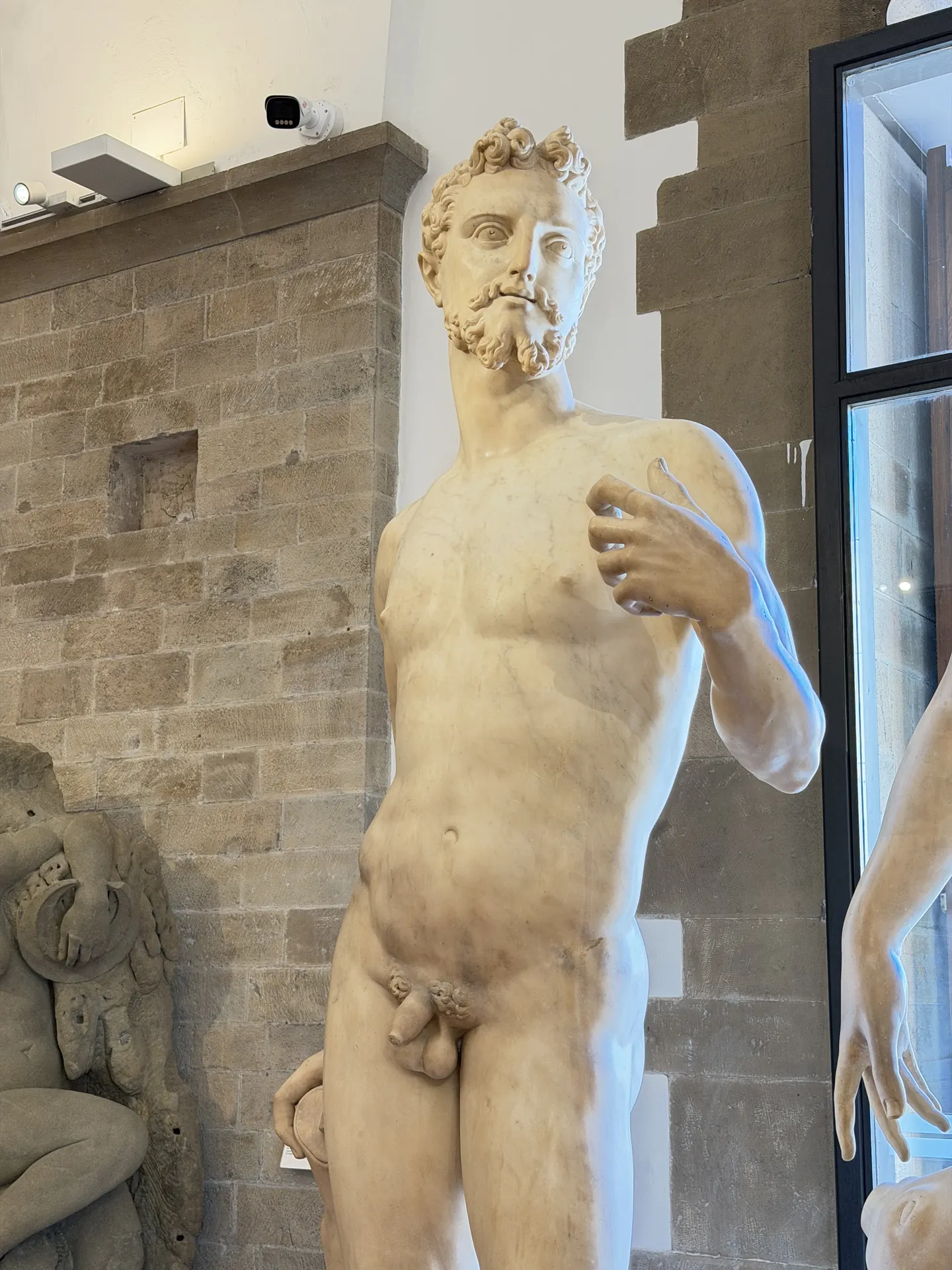
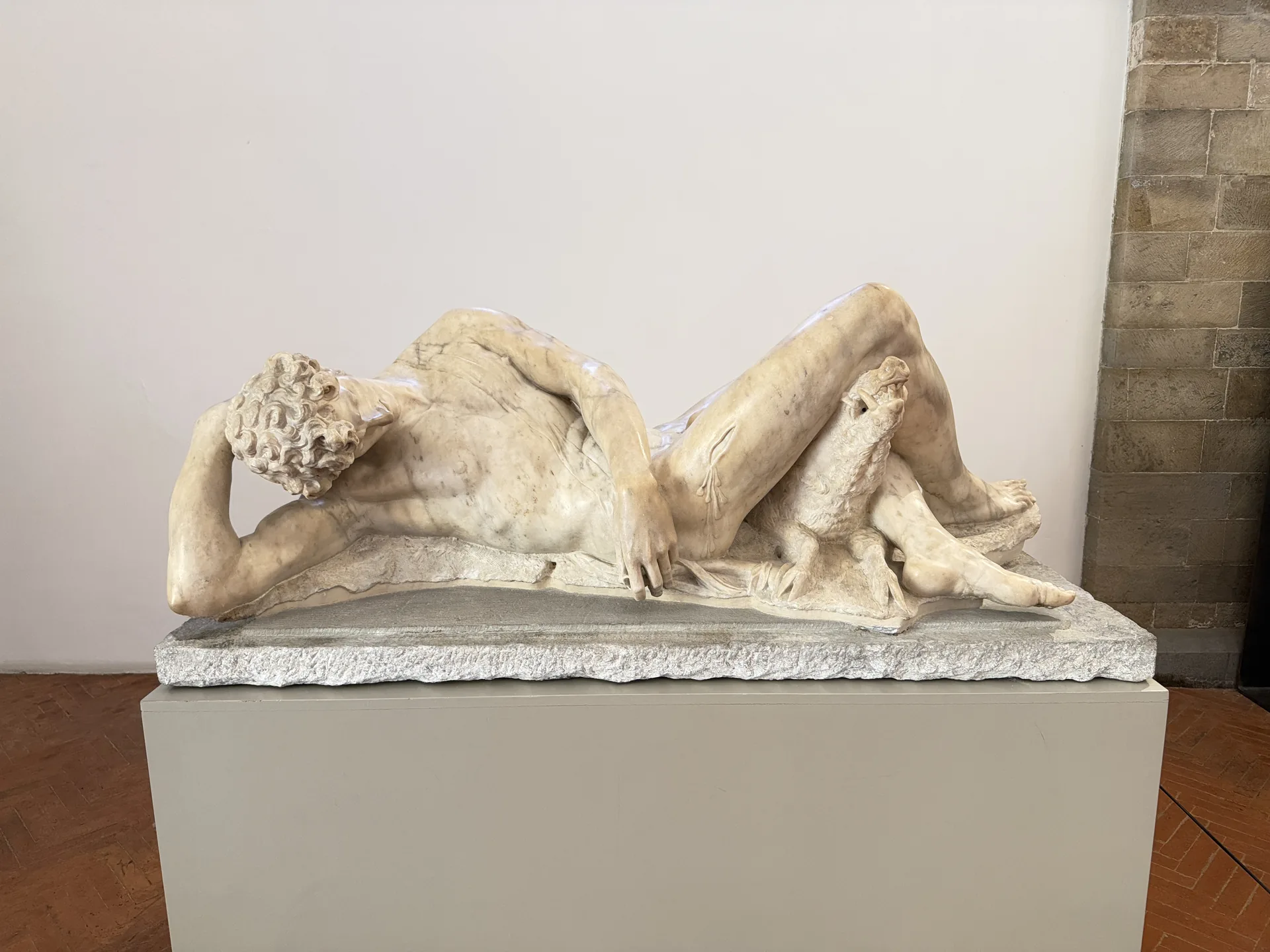
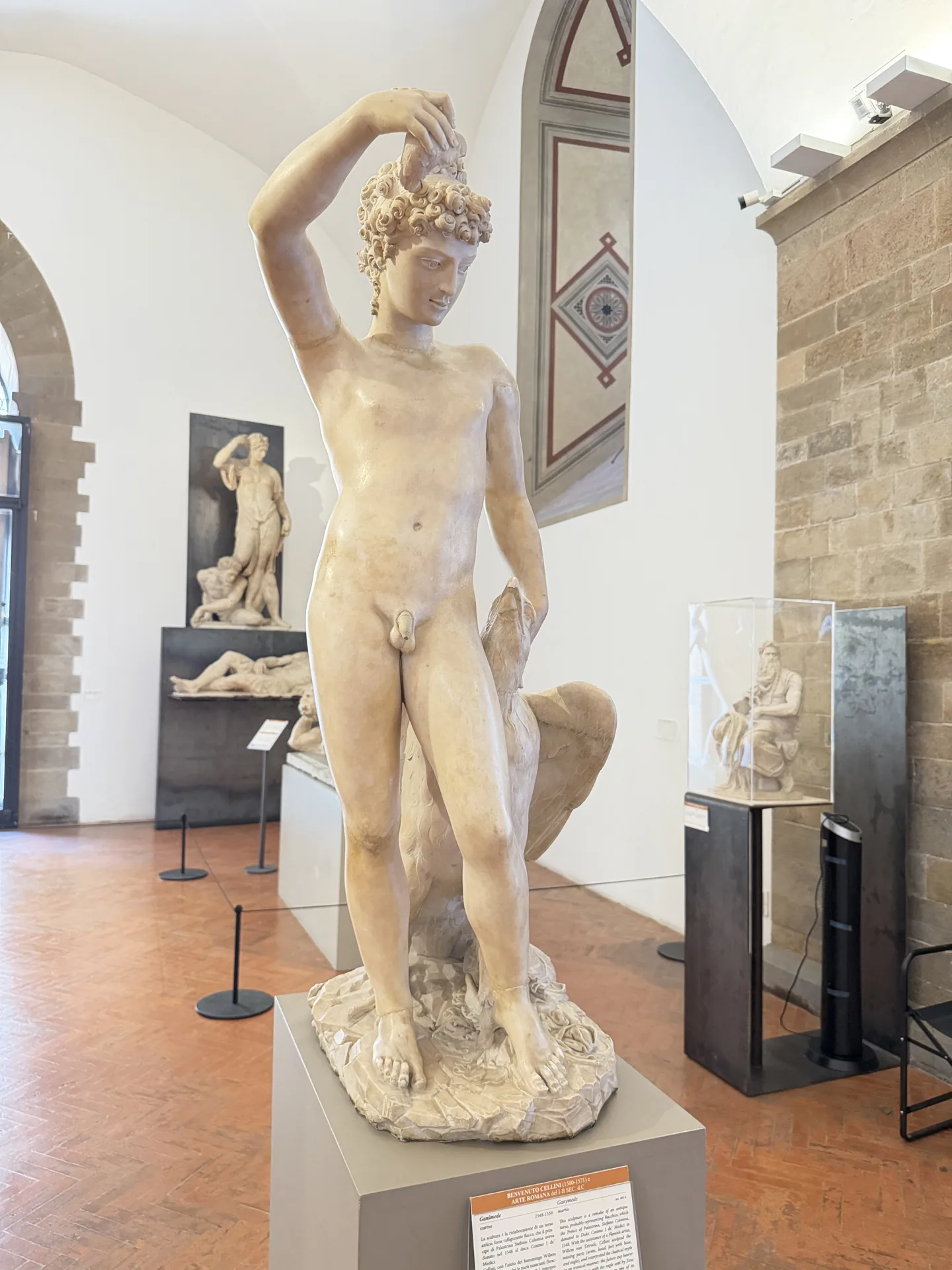
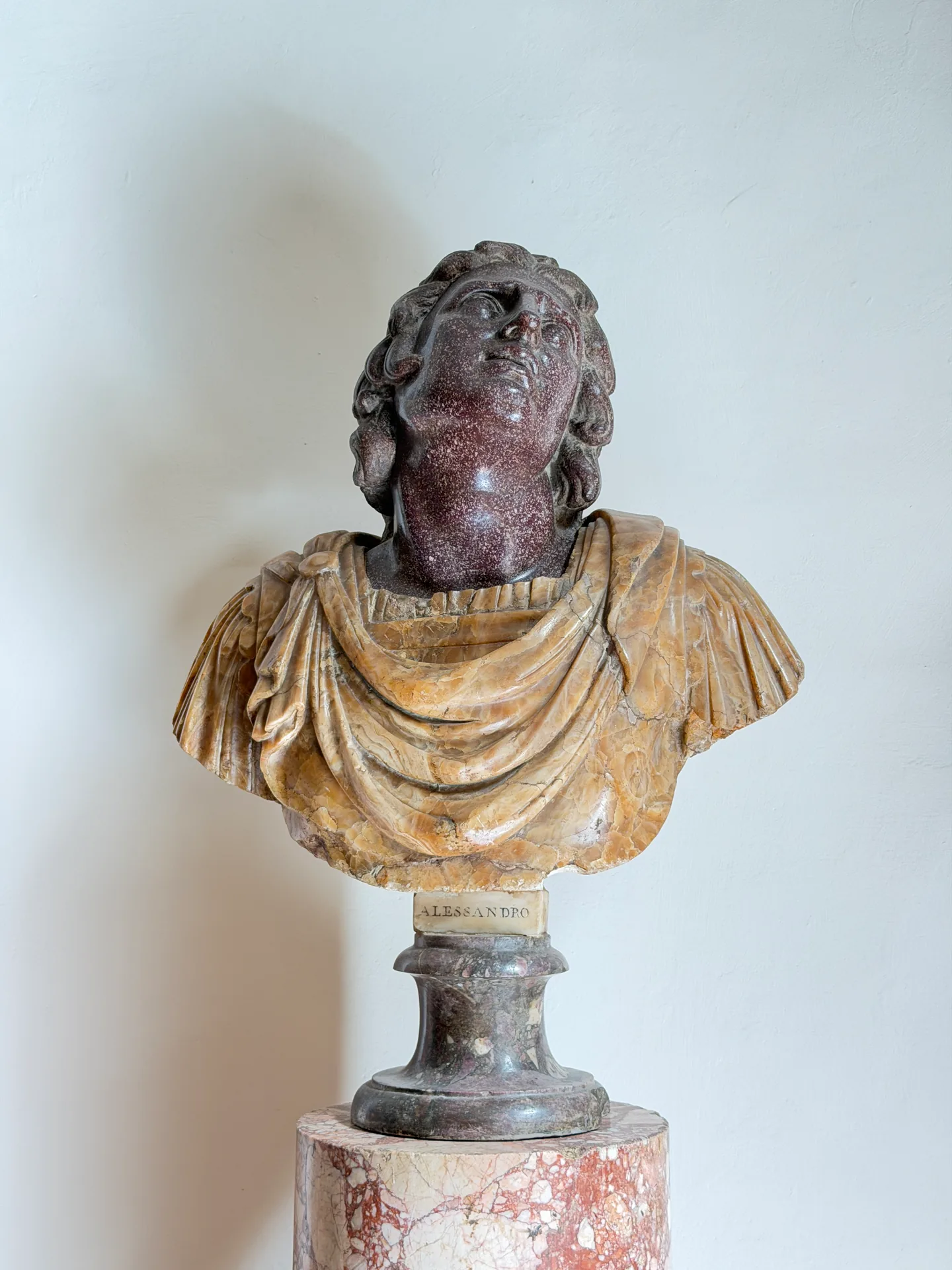
Sansovino's BacchusThe cup held out at full stretch, which is the hardest thing to carve in marble and the whole point of the figure. A satyr sits at the base.The bunch of grapesThe satyr at Sansovino's base, holding his grapes.The MercuryBronze, 1578 to 1580, winged cap and caduceus, balanced on one foot on a breath of air blown from the head of the west wind.Ganymede and the eagleA bronze boy astride the eagle, on a red marble column against the sandstone wall.A bronze BacchusCrowned with vine and grapes, raising a shallow cup. The third Bacchus on this page and not the last one in the building.Gilding in the vineHead, raised arm and cup, with traces of the original gilding still in the vine leaves.Cosimo I as a RomanBandinelli's marble bust, in an antique cuirass with the Capricorn on the breastplate. The Capricorn was Cosimo's own device.Cosimo in bronzeAntique armour, lion masks on the shoulders and a grotesque on the breastplate.Honour over DeceitVincenzo Danti, 1561. The composition is close enough to Michelangelo's Victory that the two get confused, and the Victory is in the Palazzo Vecchio.Florence over PisaGiambologna's group, modelled in 1565 for the Salone dei Cinquecento. The victorious figure kneels over the subdued one, and the politics are not subtle.Torso and handThe Florence figure close, which is where the carving is.Adam and EveBaccio Bandinelli, about 1548 to 1551, carved for the choir enclosure of the Duomo and taken out of it in 1722. The stump with the serpent between them is doing structural work as well as narrative work.Adam, closeThe male half of the pair from the waist up. Bandinelli was mocked in Florence more than any sculptor of his generation and this pair took the worst of it, which is a reason to stand close rather than a reason not to.The Death of AdonisVincenzo de' Rossi, catalogued by the Italian state as after 1565 and before 1580. The boar that killed him is carved in against his thigh, and the slab he lies on was left rough on purpose.GanymedeBenvenuto Cellini, 1548 to 1550. The torso is Roman, of the first or second century, and was probably a Bacchus. Cellini supplied the head, the arms, the feet and the eagle, and the object became a Ganymede.Porphyry and alabasterMatteo Ferrucci del Tadda cut the head in porphyry, which is about as hard as stone carving gets, and set it above alabaster drapery.A broad brimmed hatA marble standing figure on a tall carved pedestal against the ashlar.
THE COLLECTIONS UPSTAIRS
Bronzes, Ivories and the Decorative Arts
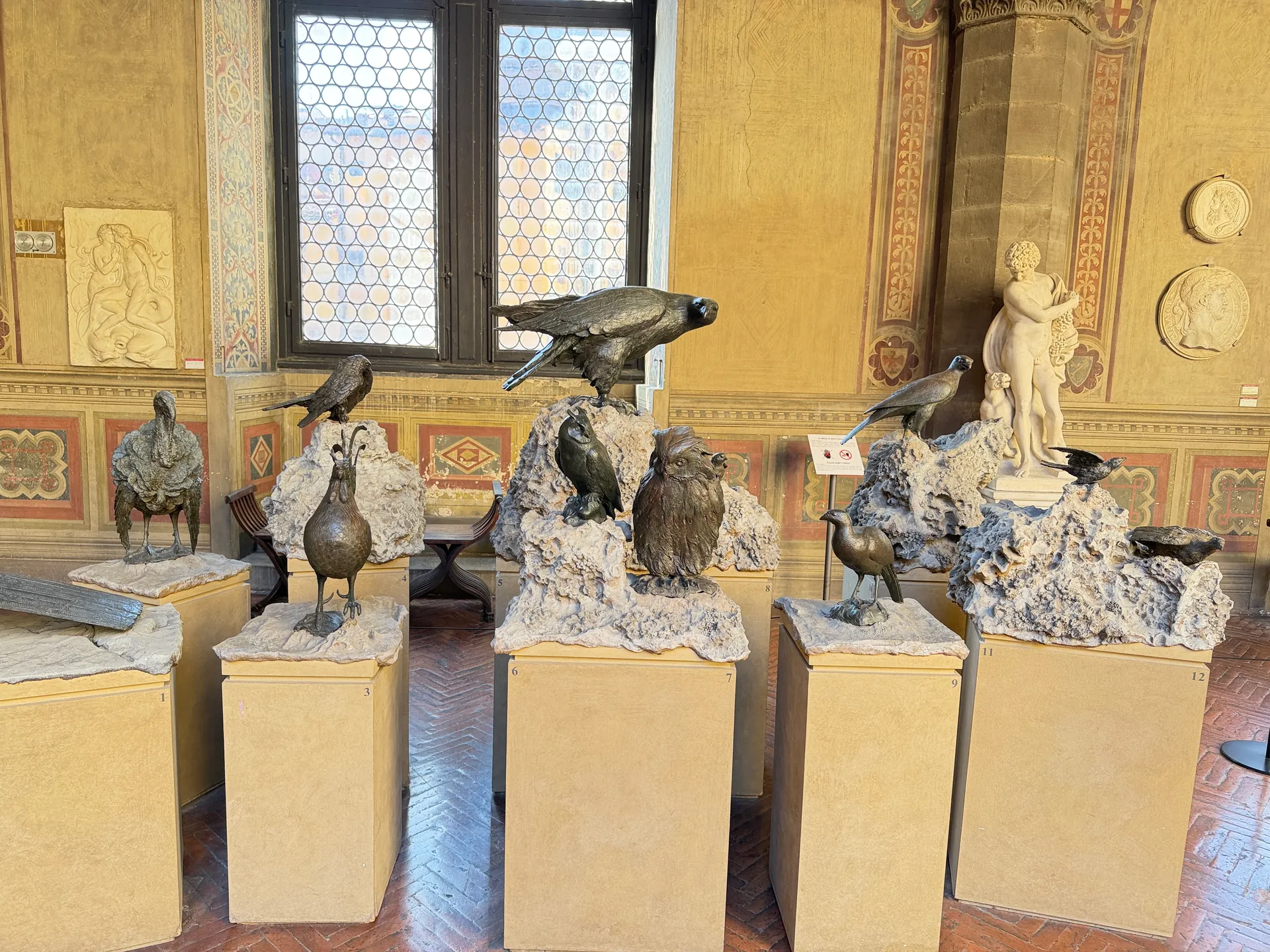
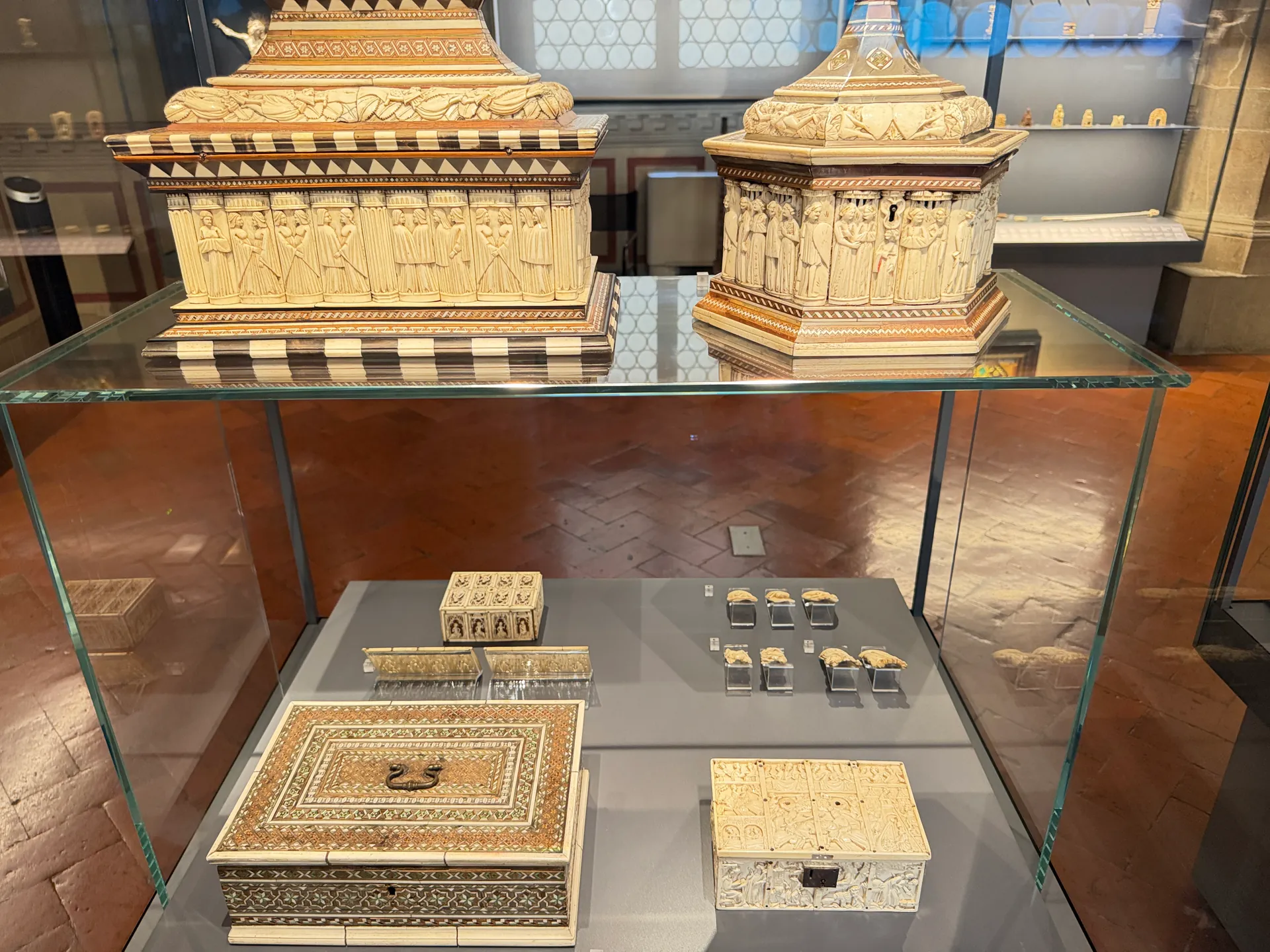
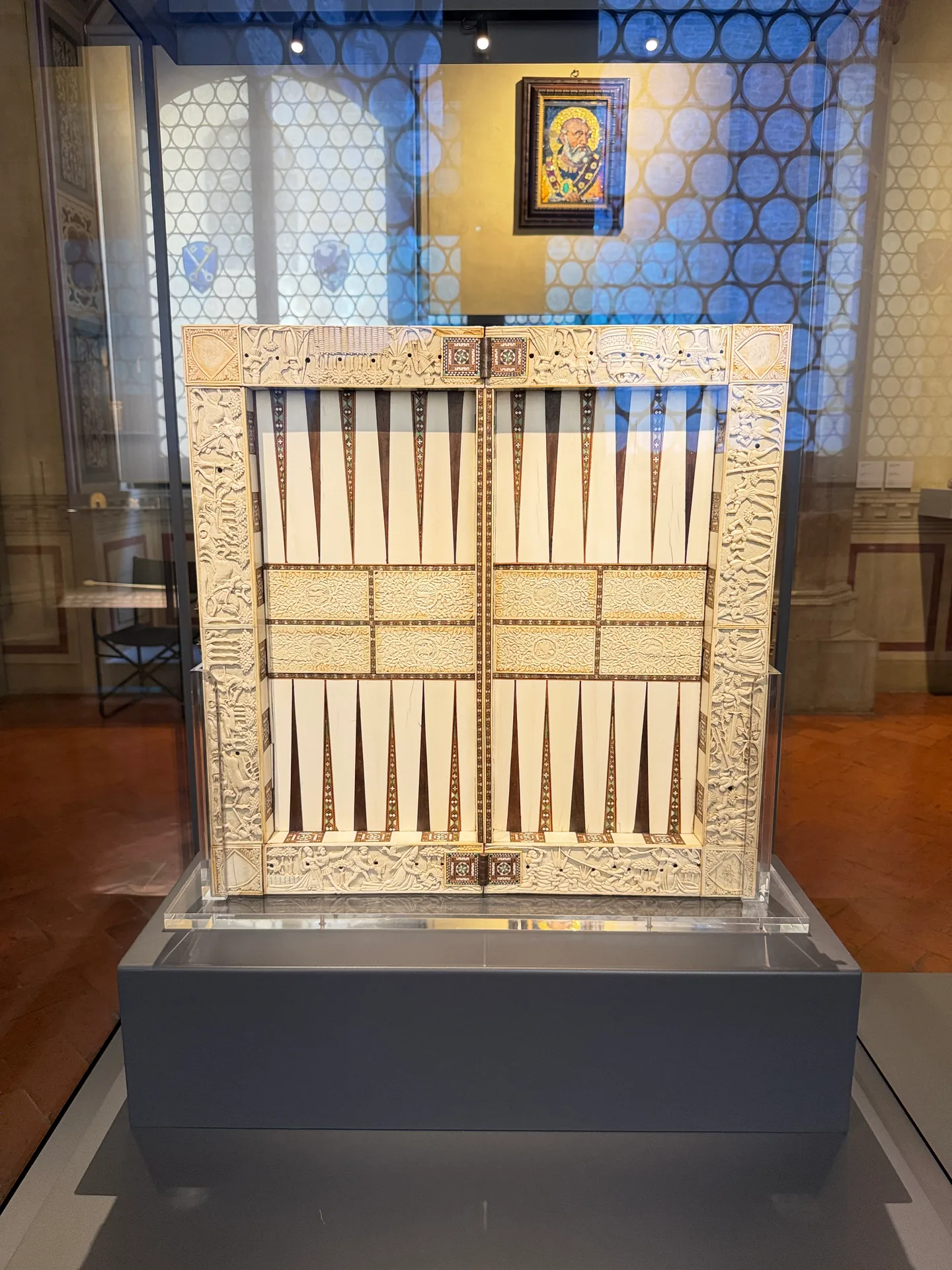
The upper floors hold what the Salone does not: Giambologna and Ammannati bronze birds from a Medici grotto, carved bone and ivory, arms and armour, and a great deal behind glass.
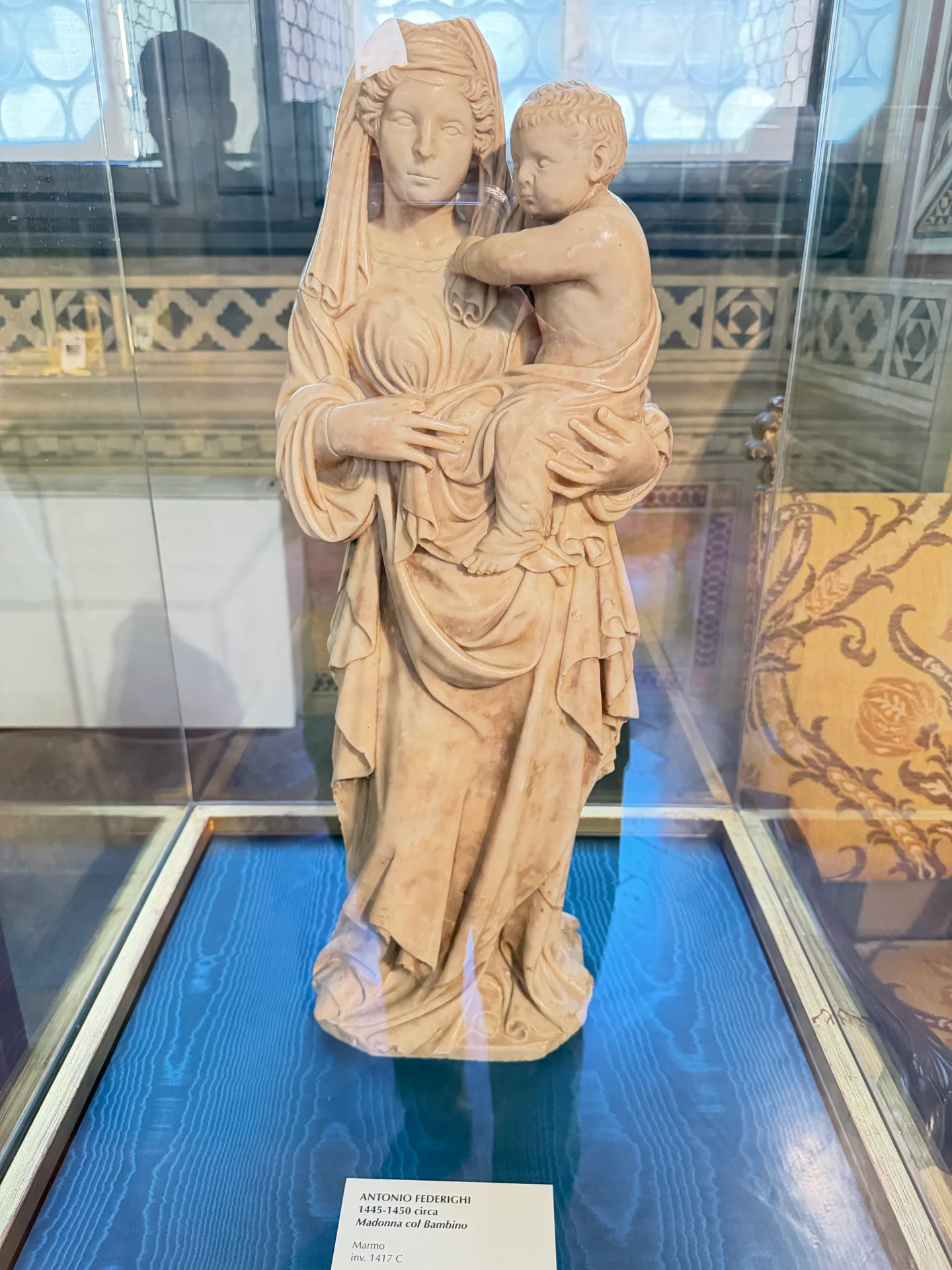
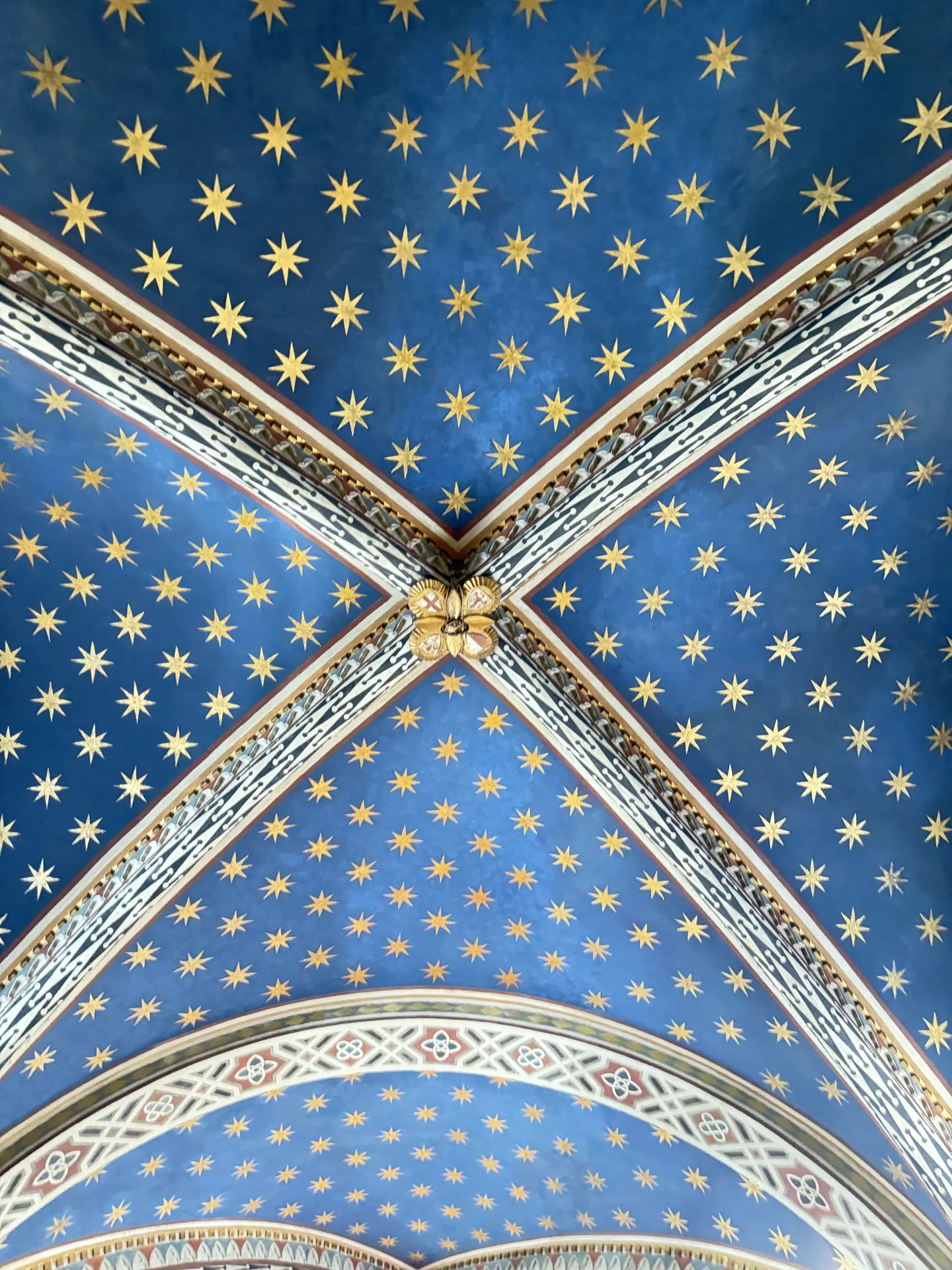
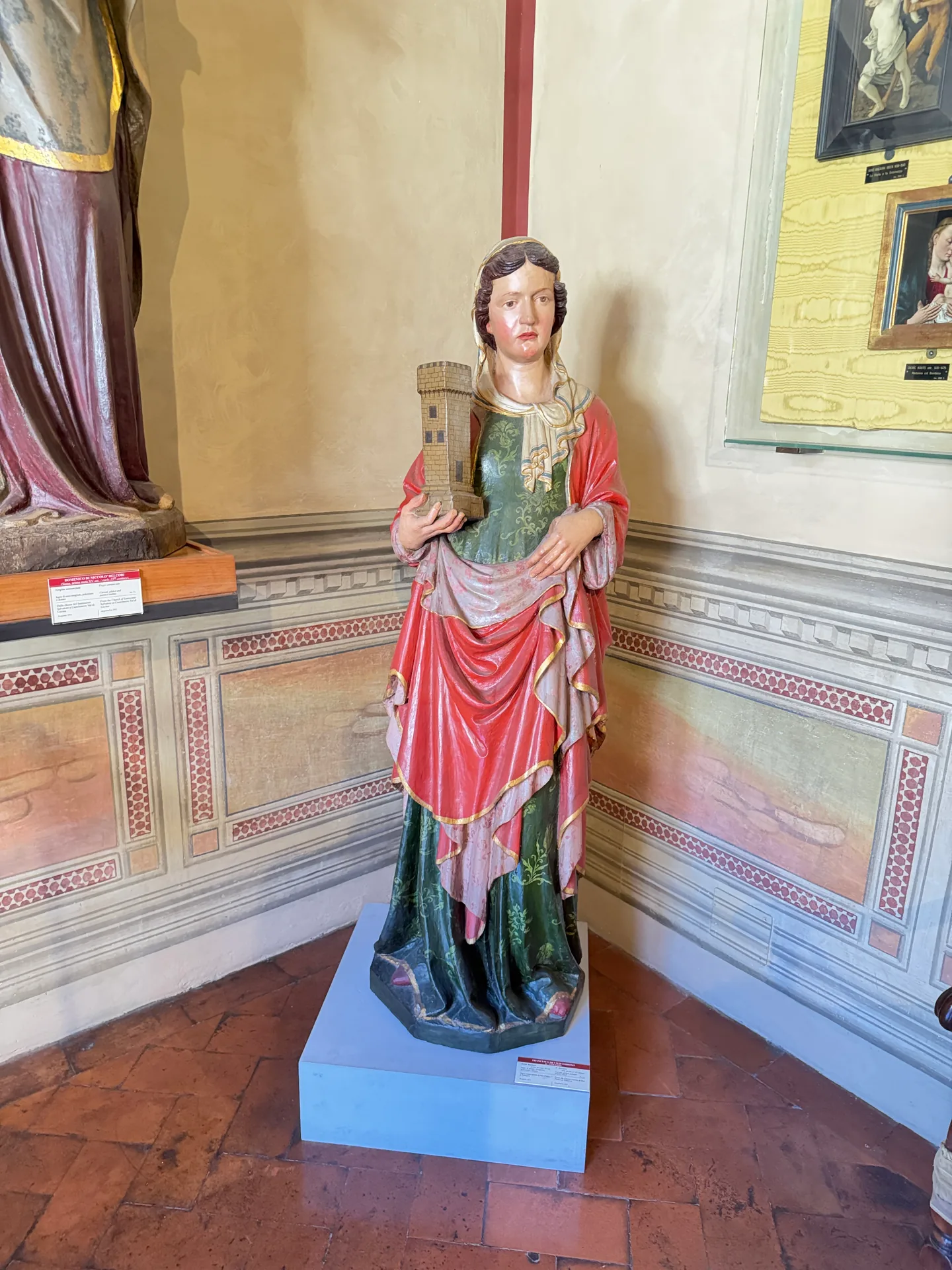
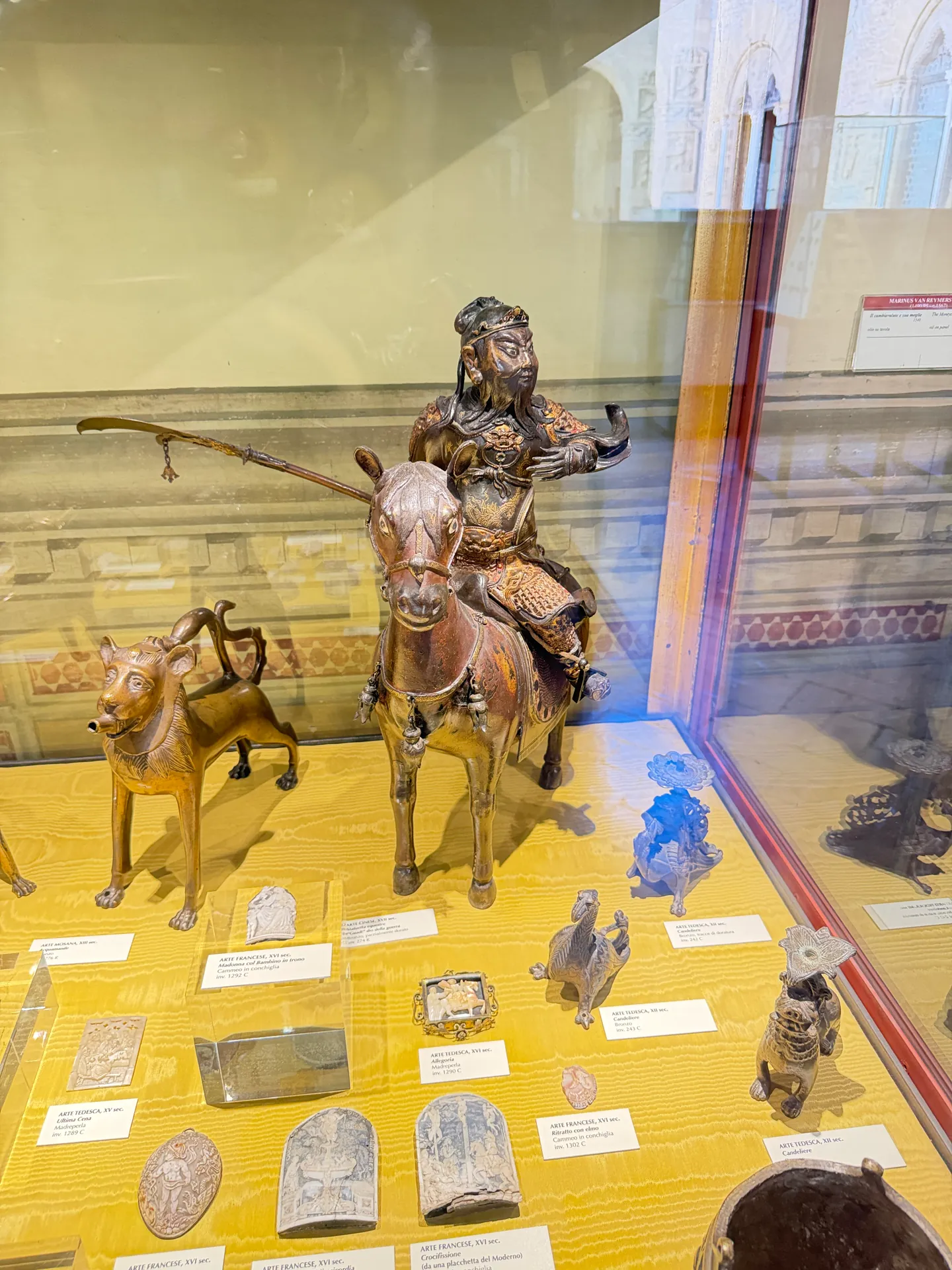
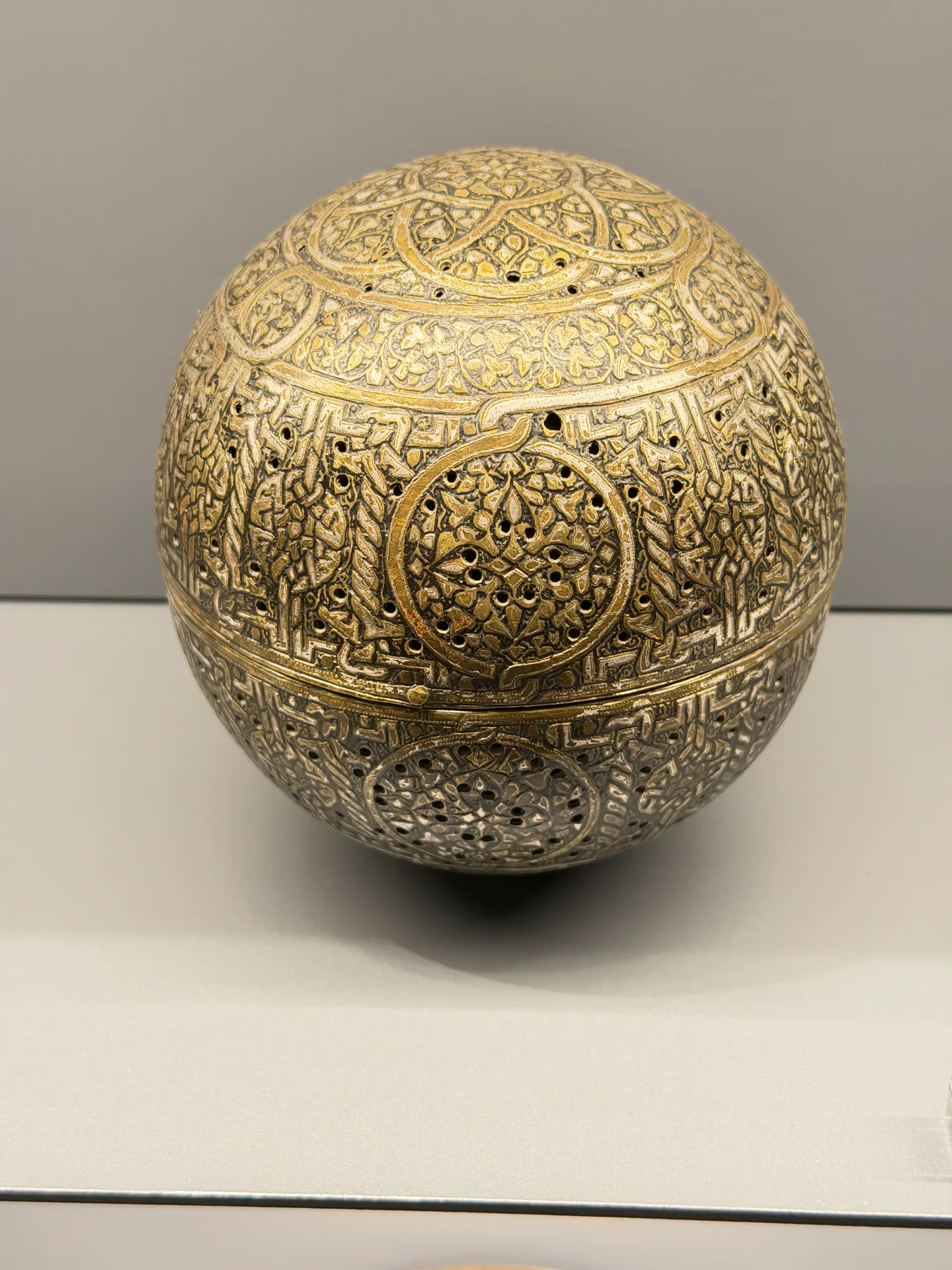
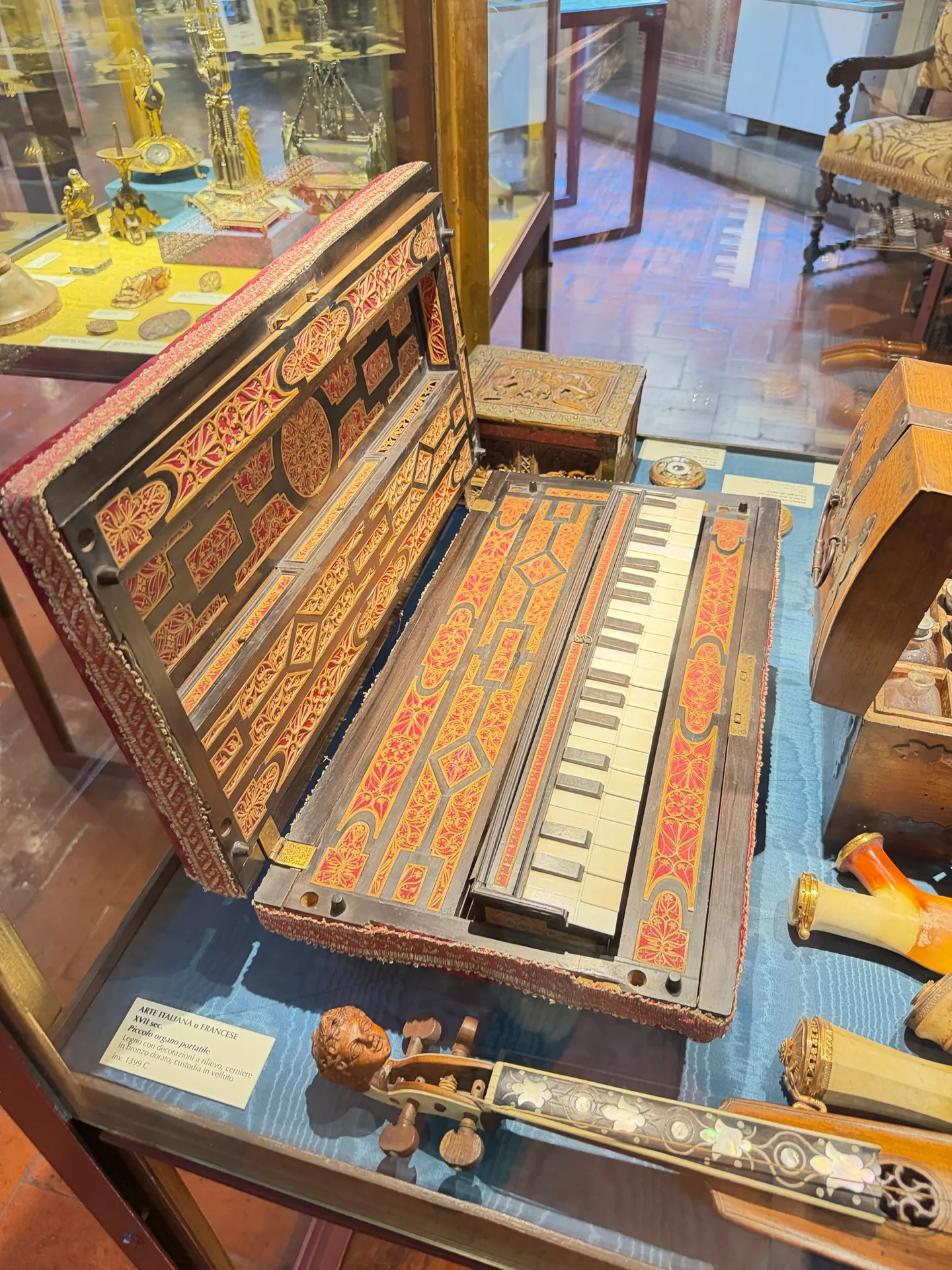
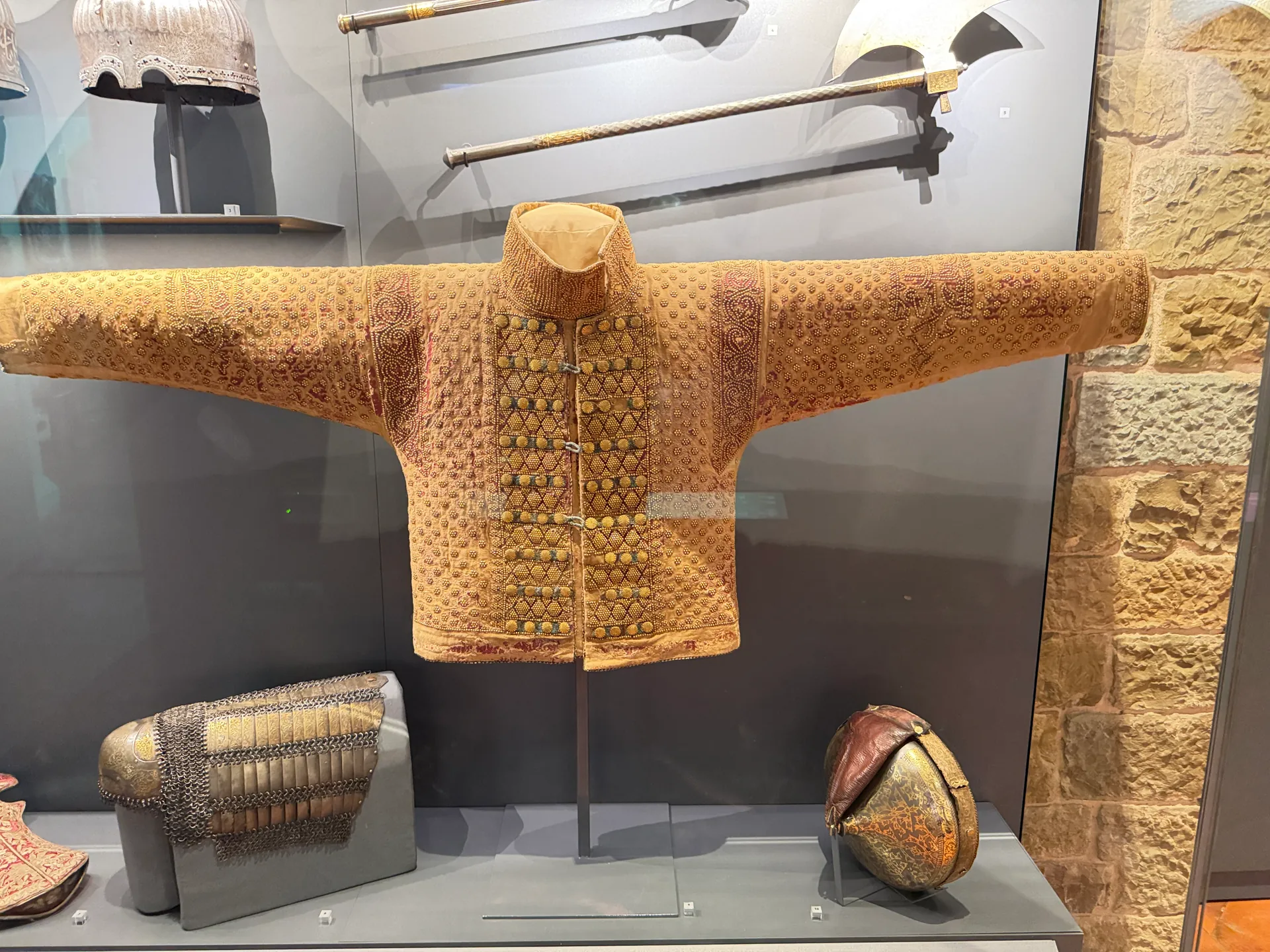
The grotto birdsBronze birds from the Medici grotto at Castello, ranged along their plinths with the eagle crowning the group. Ammannati and his school cast six of them and Giambologna cast six more.Two casketsGabled lids and dense inlaid bone panelling, in their case.Carved in boneA tall altarpiece of carved bone and ivory panels under a gabled crest.A Gothic VirginTall and swayed, standing alone in a glass case.The Carrand room vaultThe room was the Sala del Duca d'Atene until 1888, when Louis Carrand left the museum some three thousand objects and it took his name. The vault is a nineteenth century Gothic revival scheme, not medieval paint.Red and greenA polychrome standing saint, complete, on a blue plinth.A case of small bronzesTwo equestrian groups among vessels and figures. The small bronzes are the collection people miss.Arabesque and inscriptionA spherical metal vessel worked all over in arabesque and inscription bands.An opened caseA keyboard instrument with a decorated case, shown with strings. The glass in this room beat us and this is the least reflected frame we have.Mail on a cross standA mail defence on a cruciform stand with sword blades and helmet elements behind it.
CARPETS, VELVETS AND SILK
Textiles and the Islamic Collection
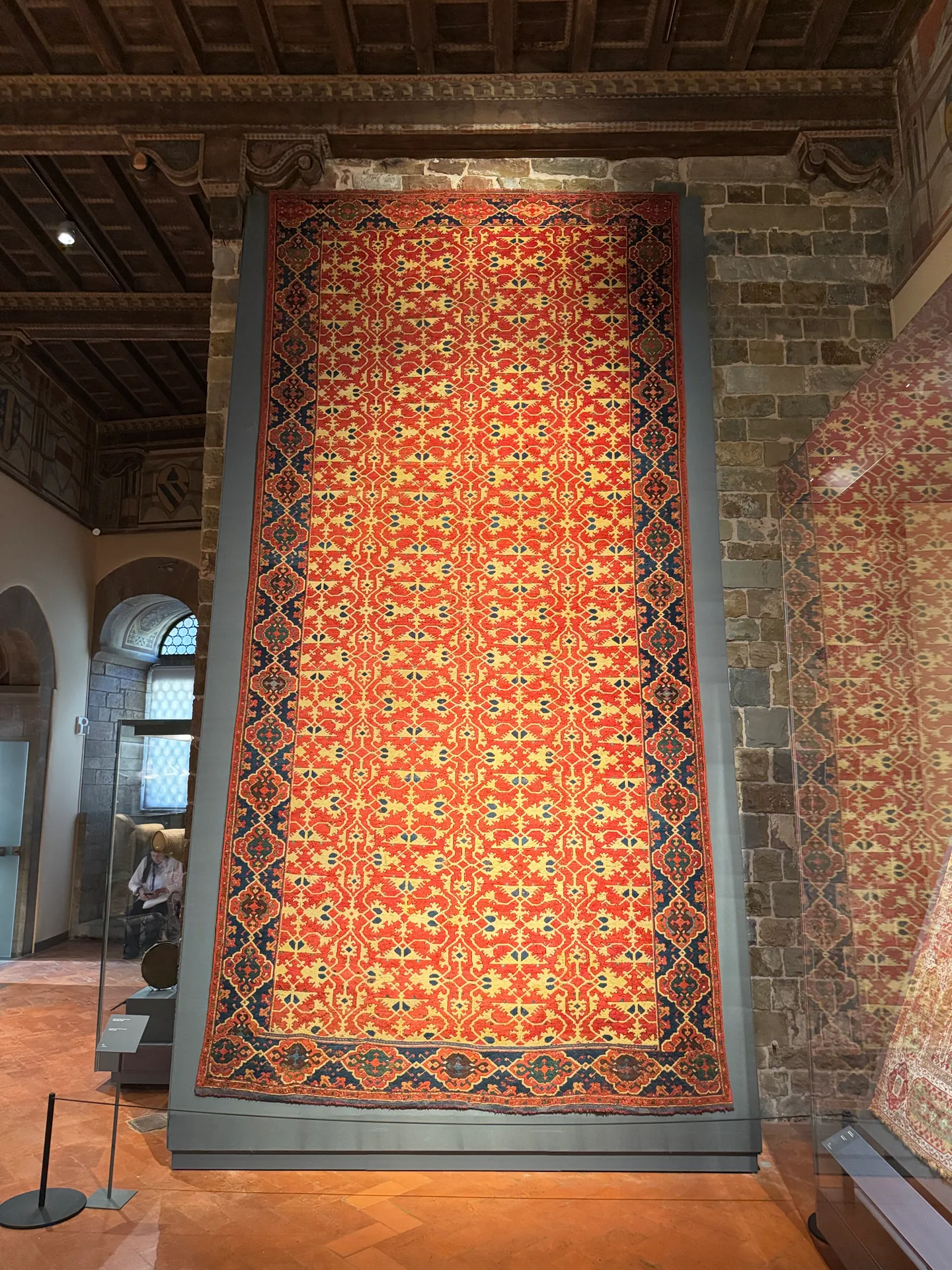
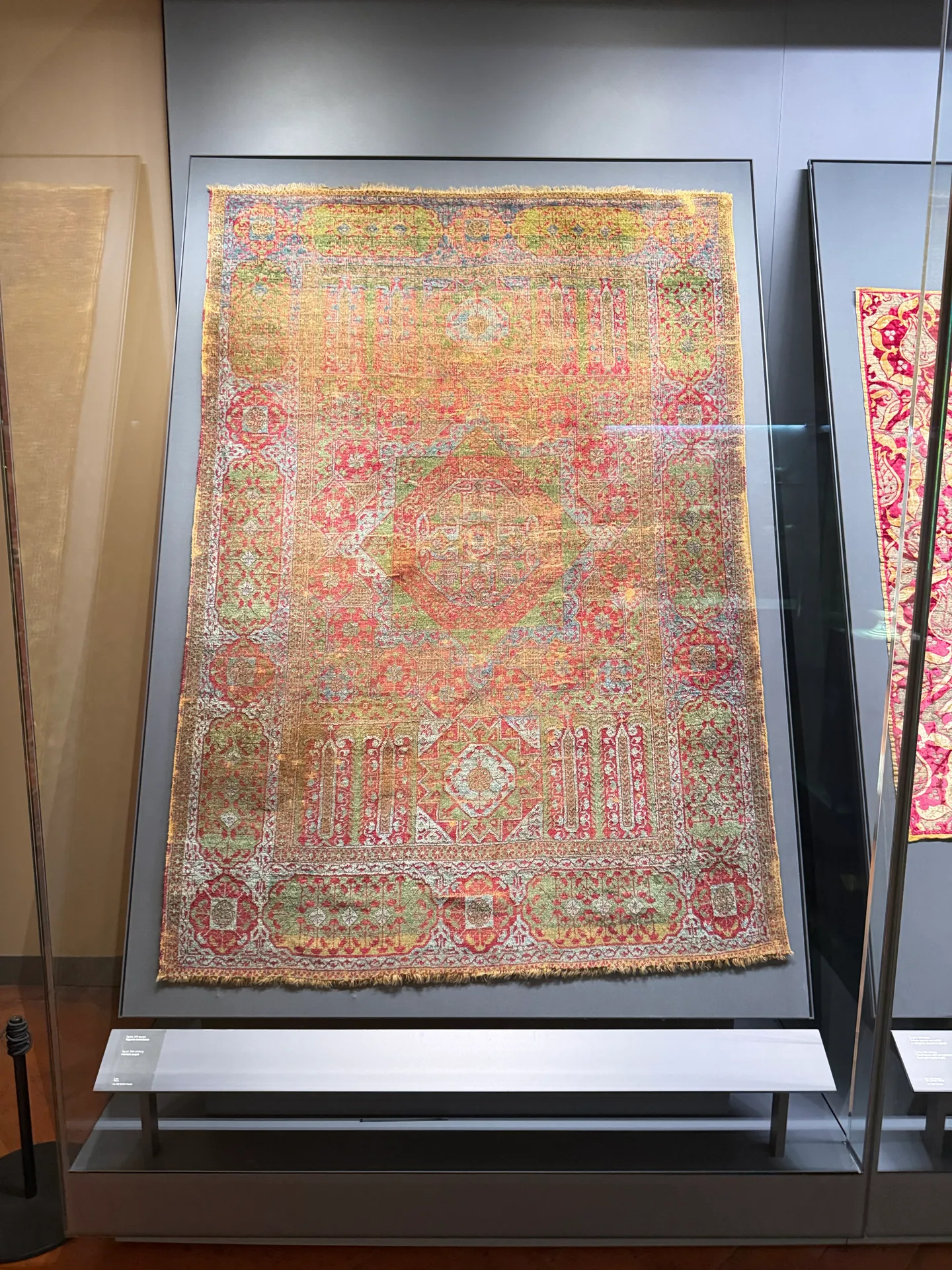
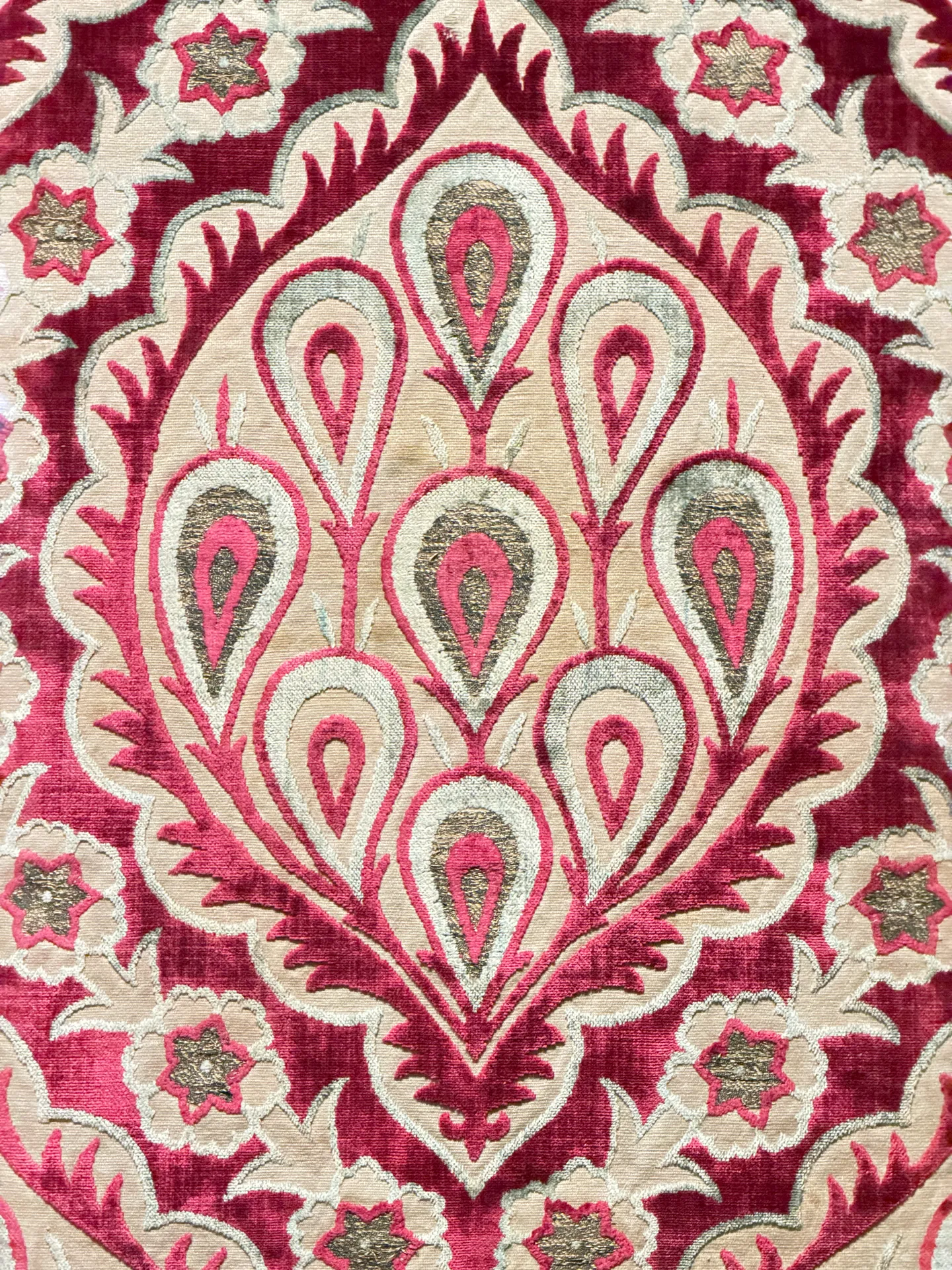
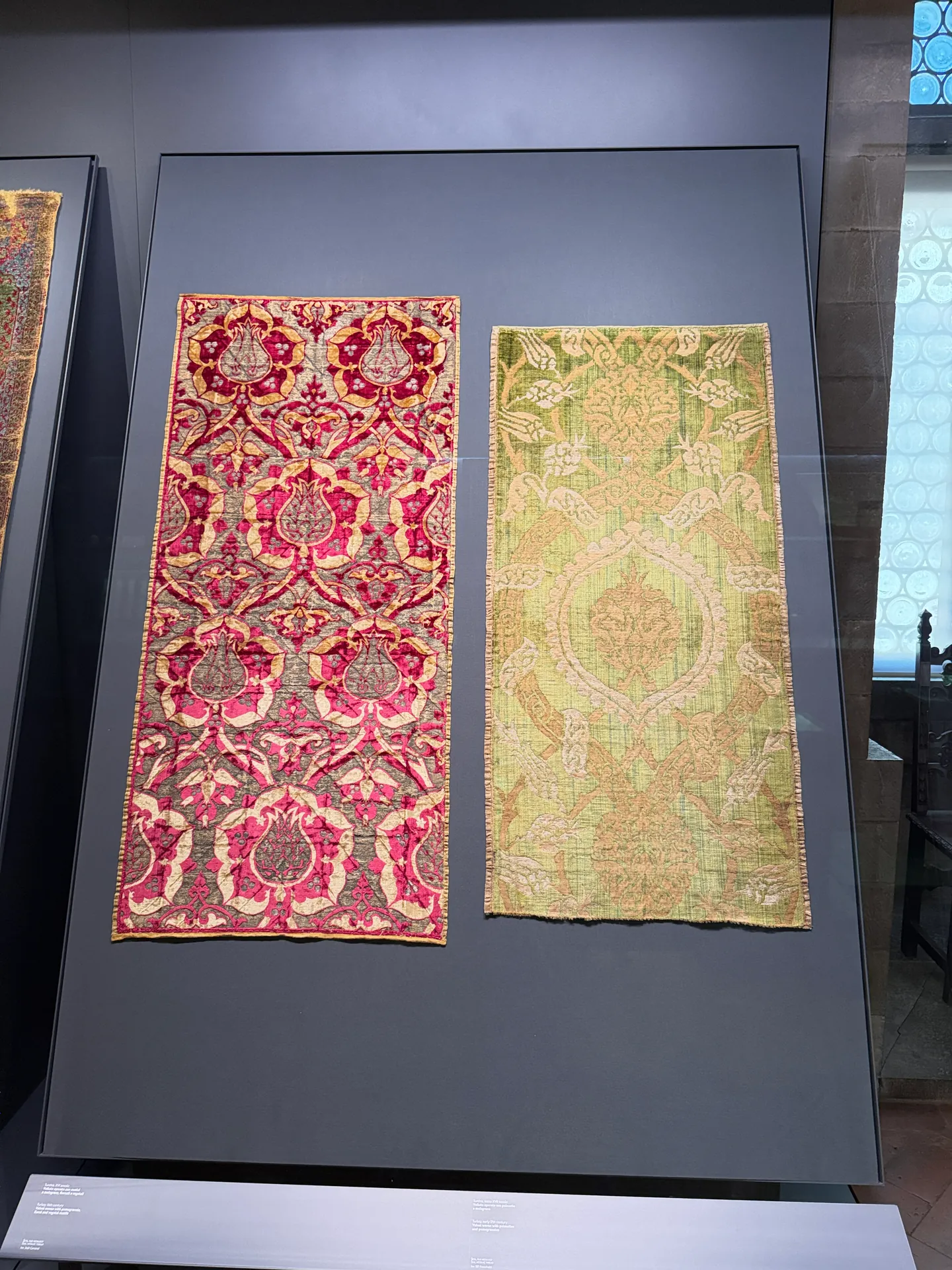
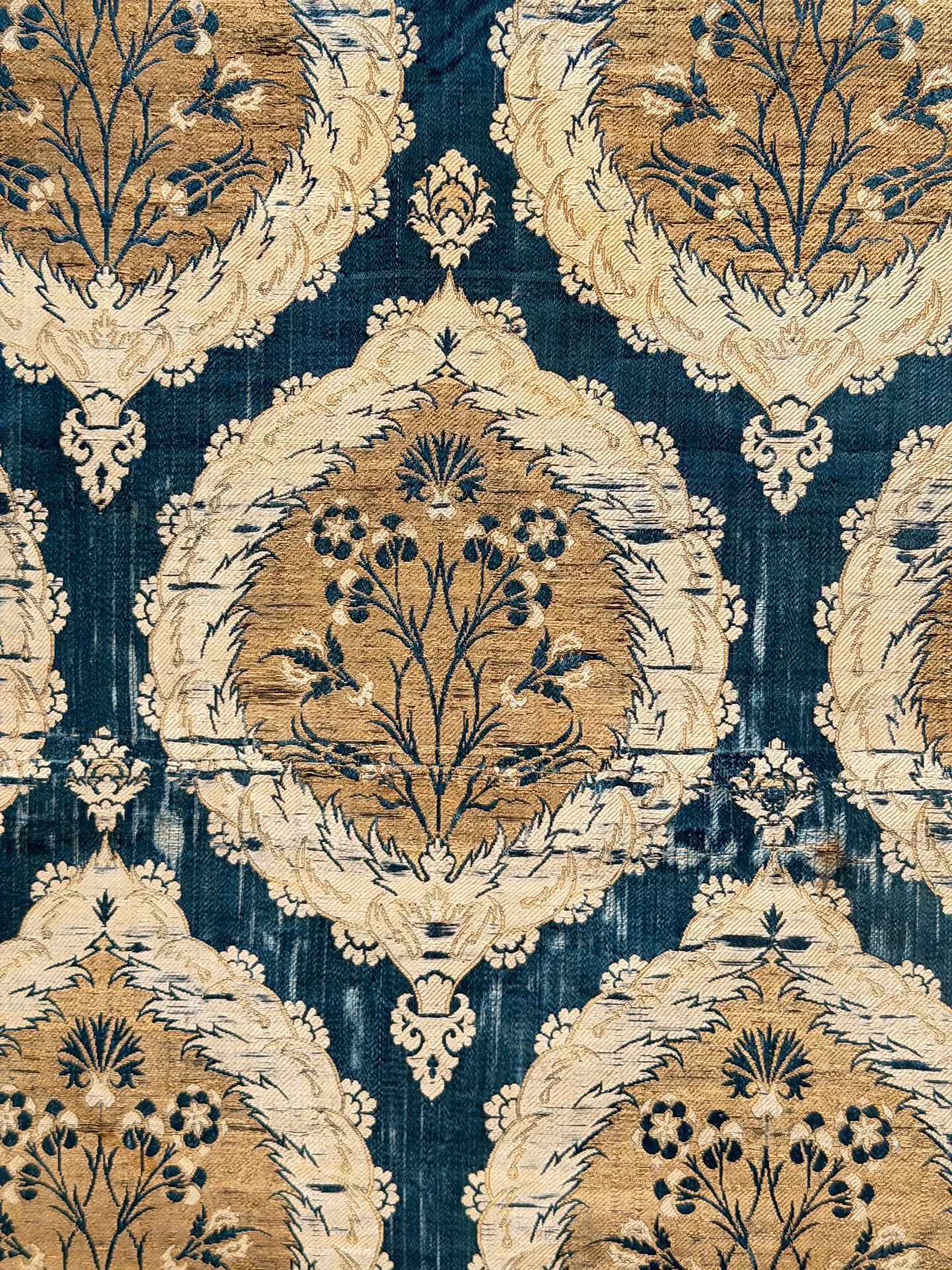
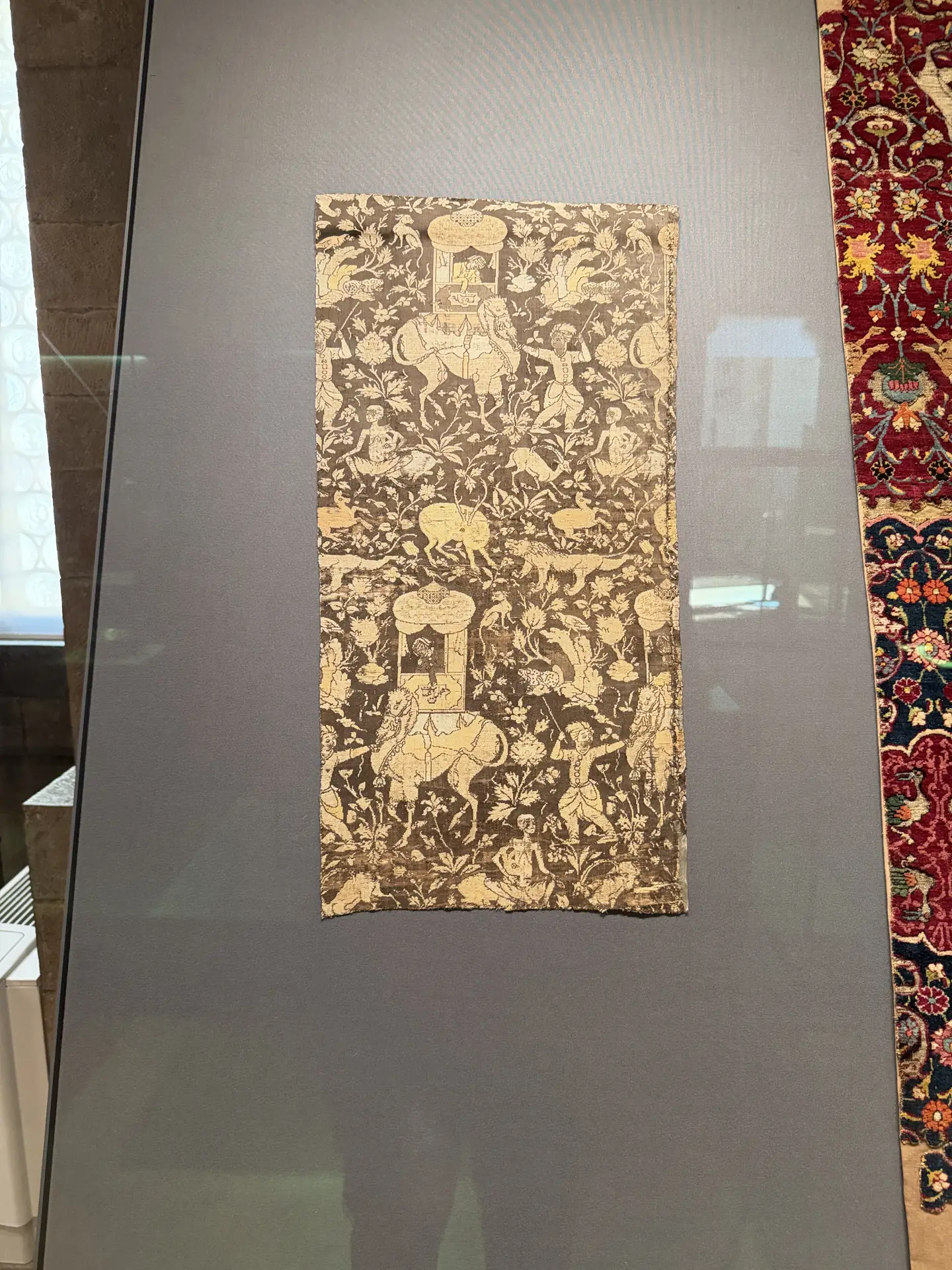
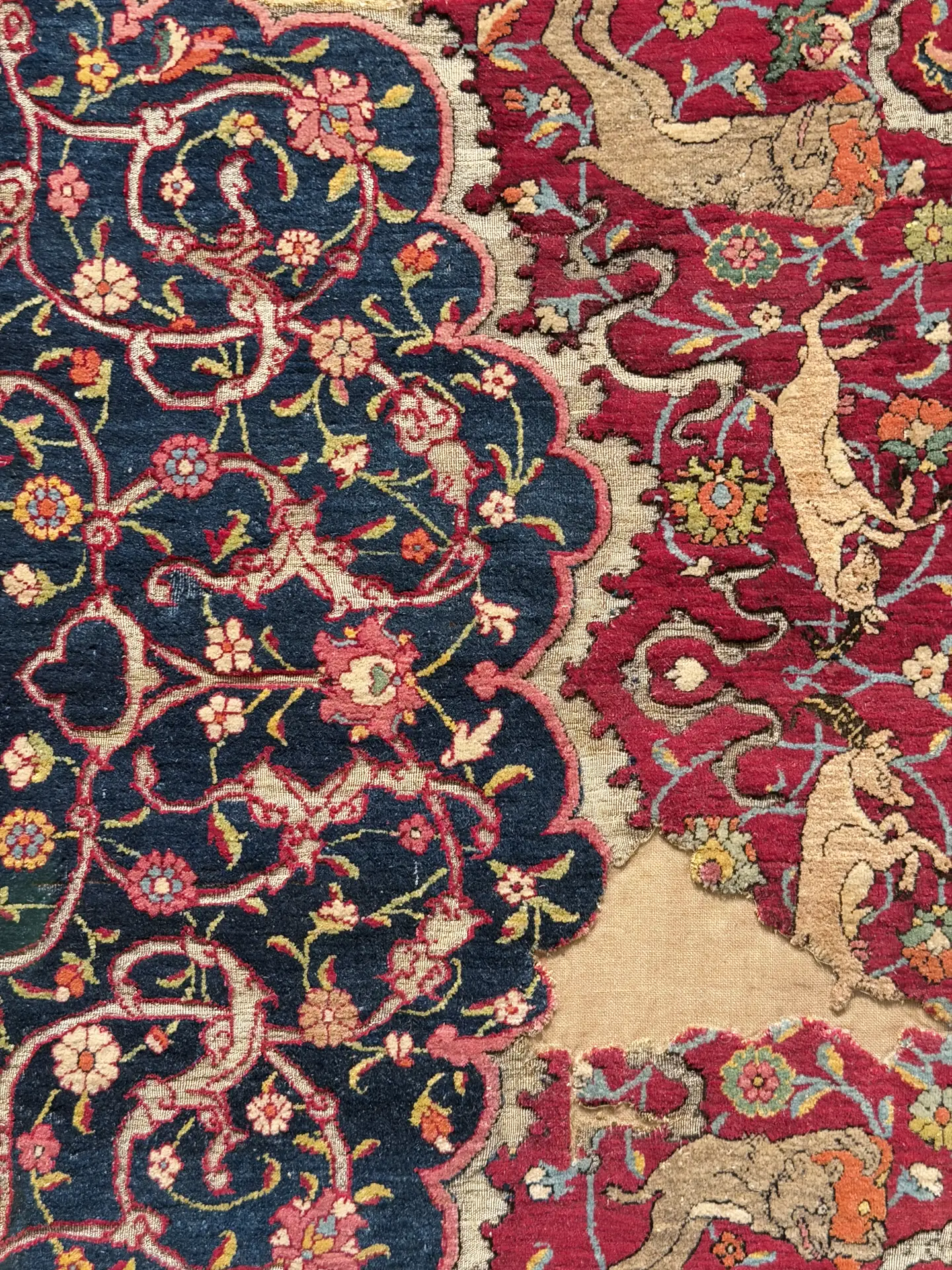
The Bargello holds one of the better textile and Islamic collections in Italy and almost nobody walks into it. Mamluk carpets from Egypt, Ottoman velvets, and a painted beam ceiling over all of it.
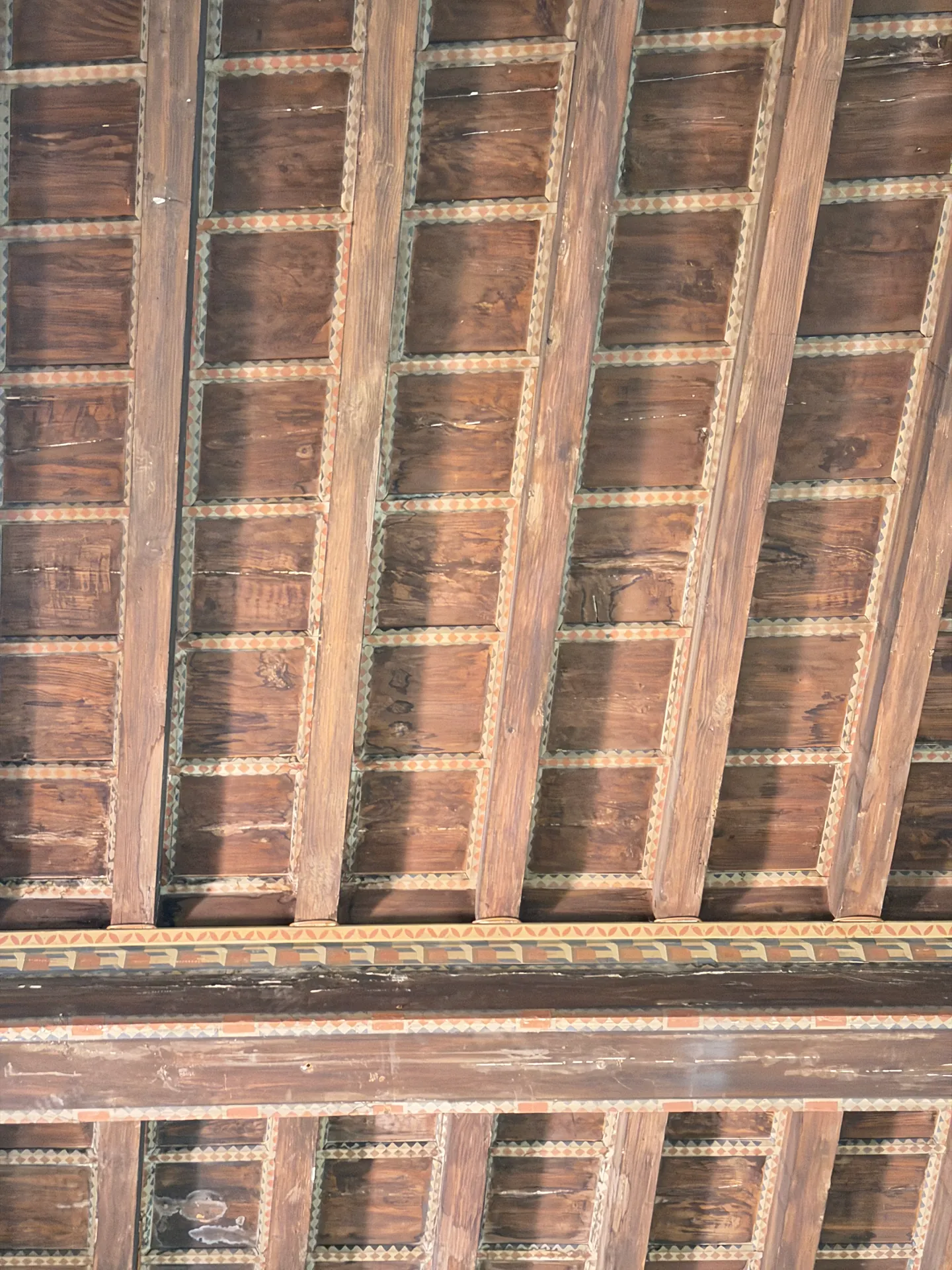
The long roomA carpet hung full height between a brick pier and the window. Almost nobody who comes for the David walks in here.A Mamluk carpetSixteenth century, from Egypt, its medallion field faded to something quieter than it began.Cream on crimsonTurkey, sixteenth century. Velvet woven with floral decoration in silk and metallic thread, one large palmette filling the frame. Carrand 2466.Two panels togetherFigured velvets side by side on an inclined case.Palmettes on blueA figured silk of ogival lattice and palmette medallions on a deep blue ground.Layla and MajnunPersia, Yazd or Isfahan, late sixteenth to early seventeenth century, silk with metallic thread. The inscription in the weave signs it, made by Ghiyath, which is rare enough that the weaver is named on the label ahead of the collection. Franchetti 428.The Tabriz carpetPersia, Tabriz, sixteenth century, wool and metallic thread. A Persian poem runs along the border. Carrand 2203, which is one of the three thousand odd objects Louis Carrand left the museum in 1888.Painted timbersThe beam ceiling over the textile rooms, carried on carved corbels, and worth looking up for.
WHERE THE CONDEMNED WERE BROUGHT
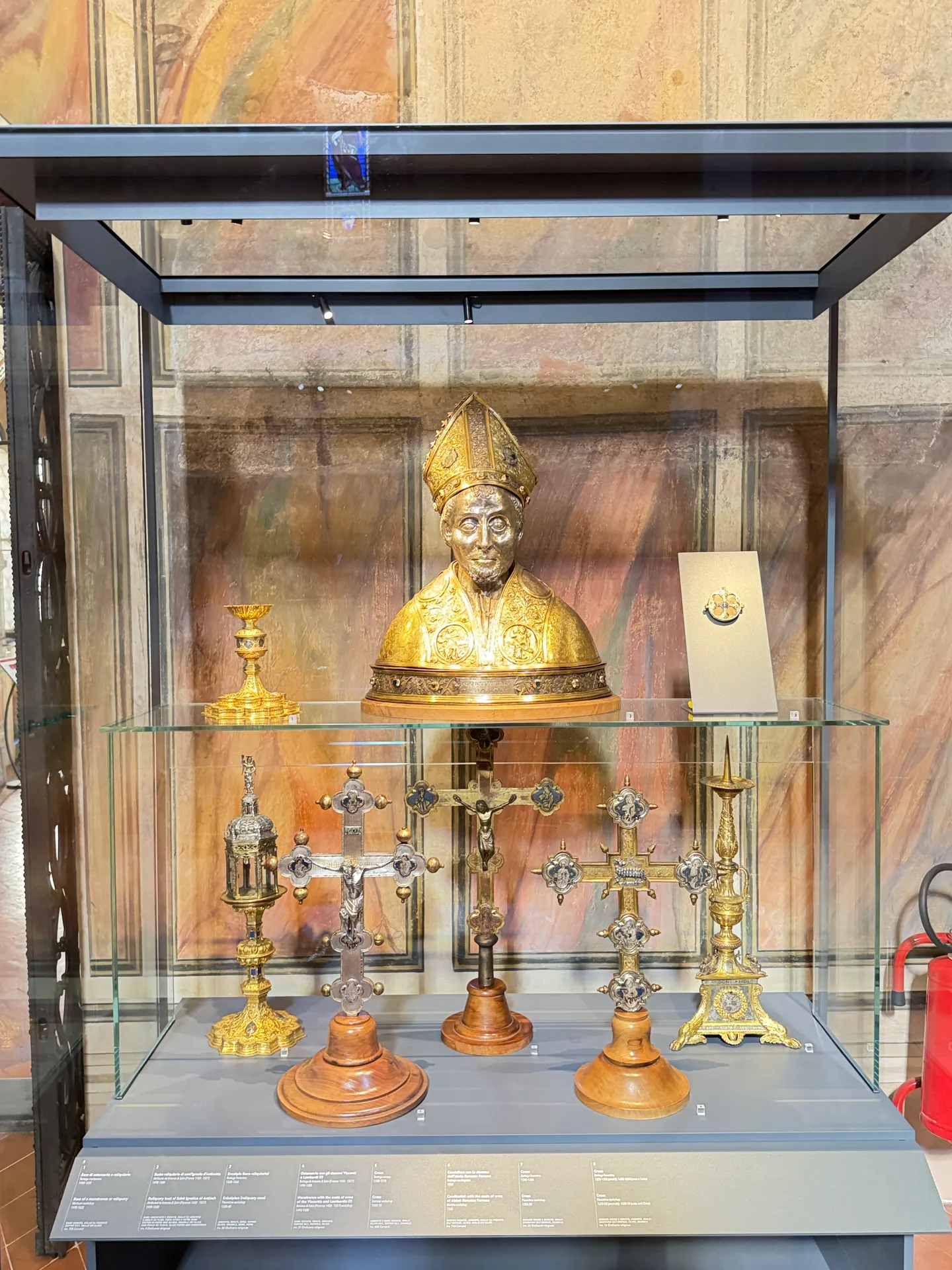
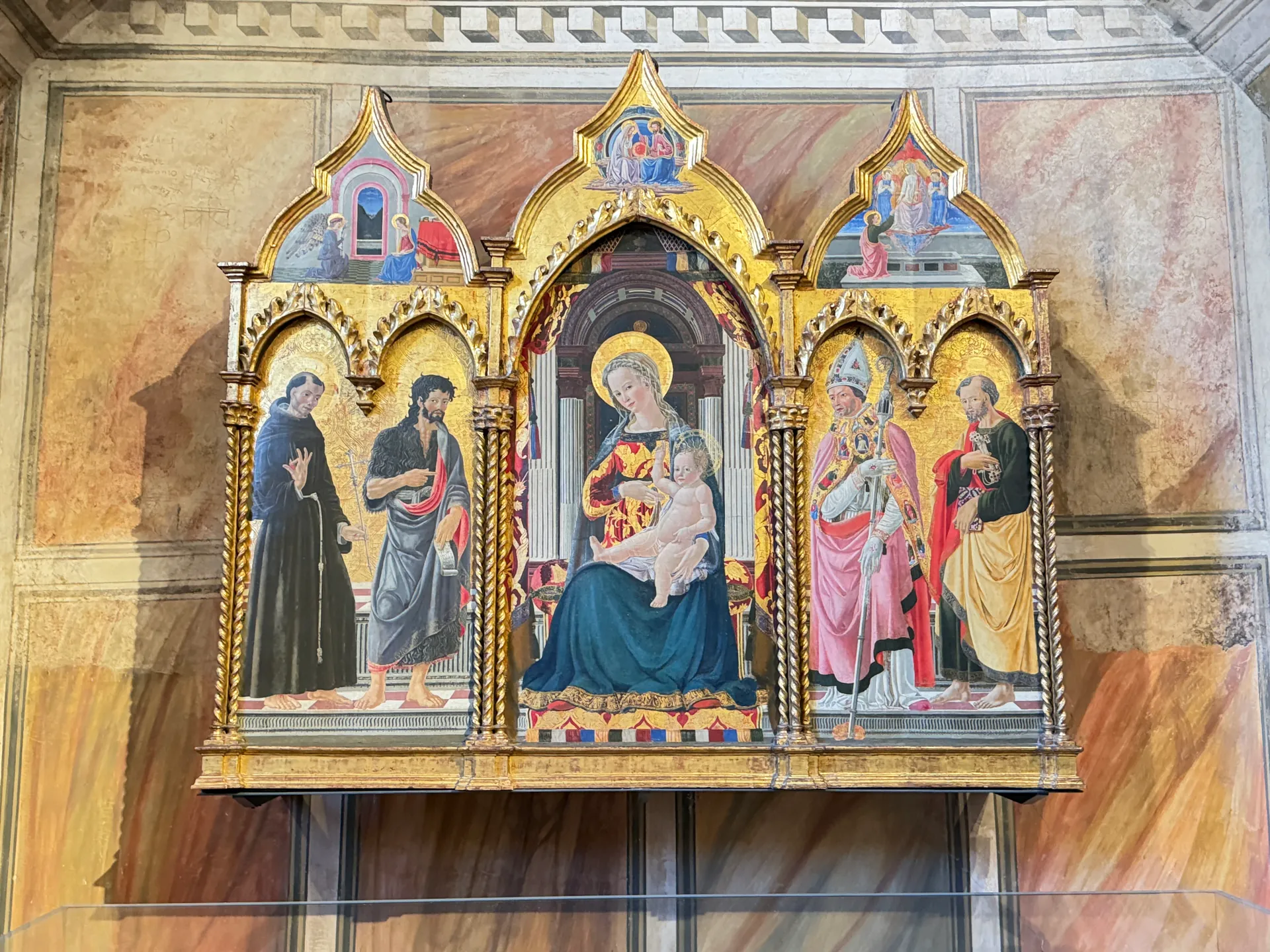
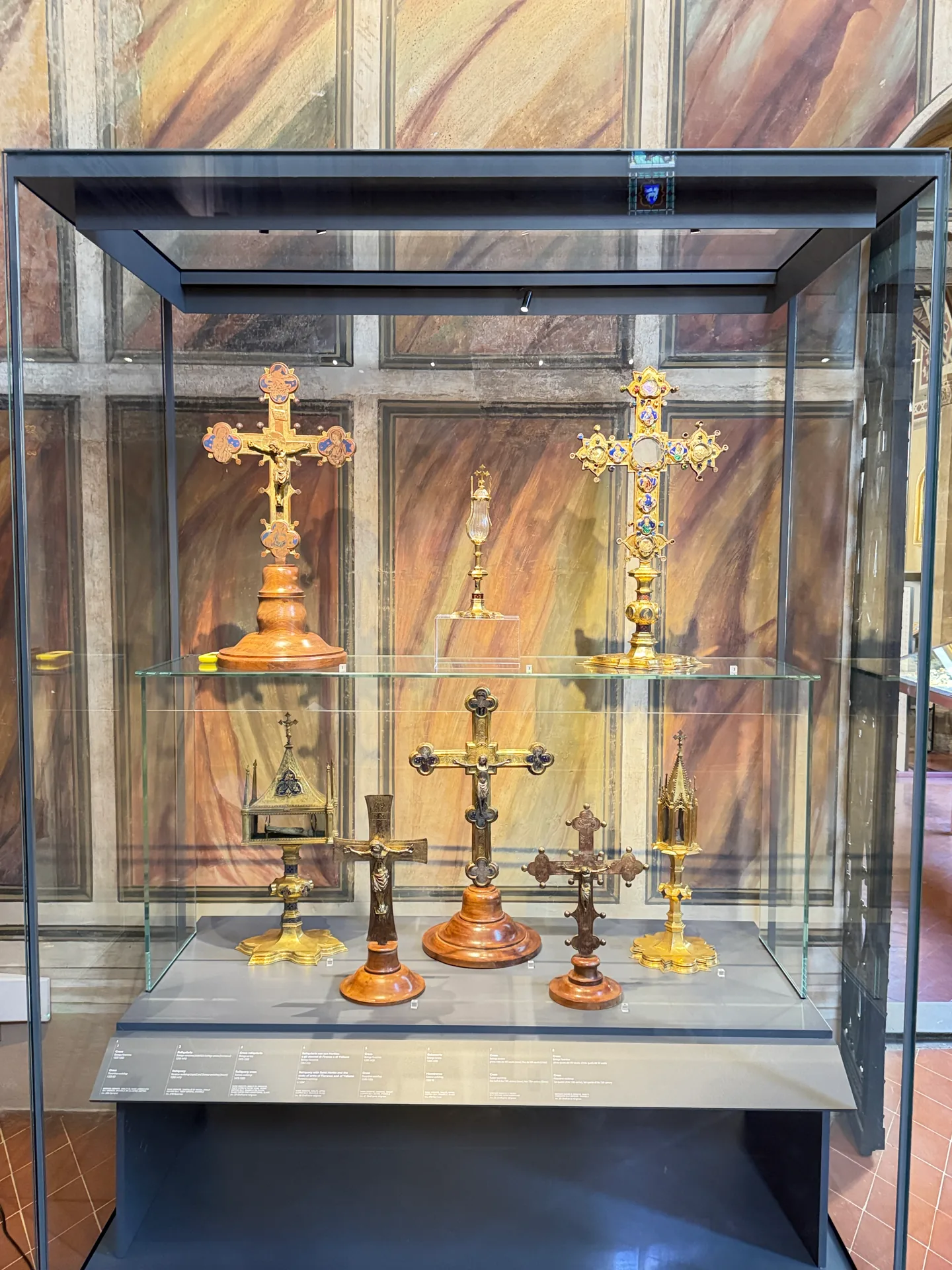
The Chapel and the Goldsmith Work
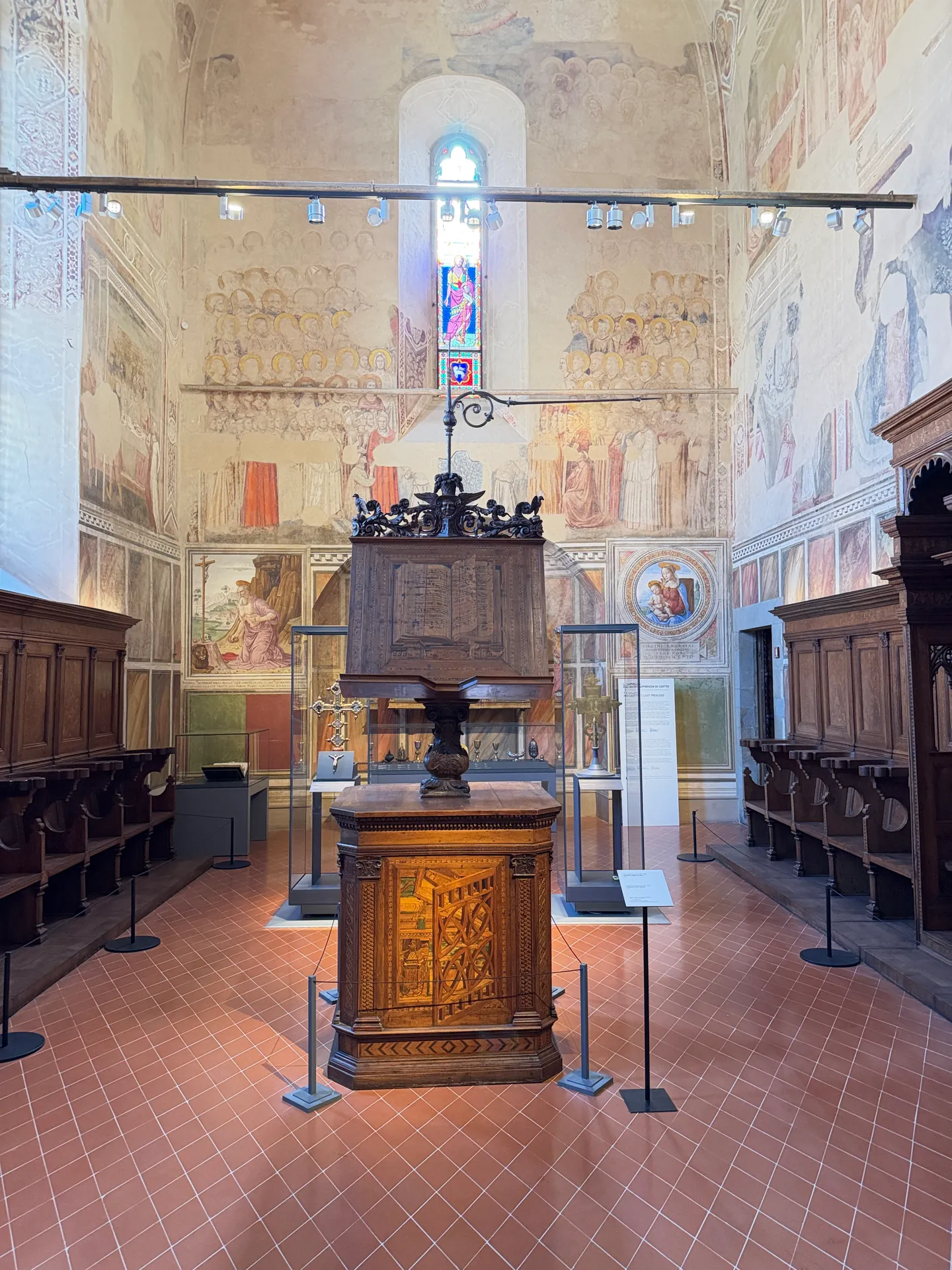
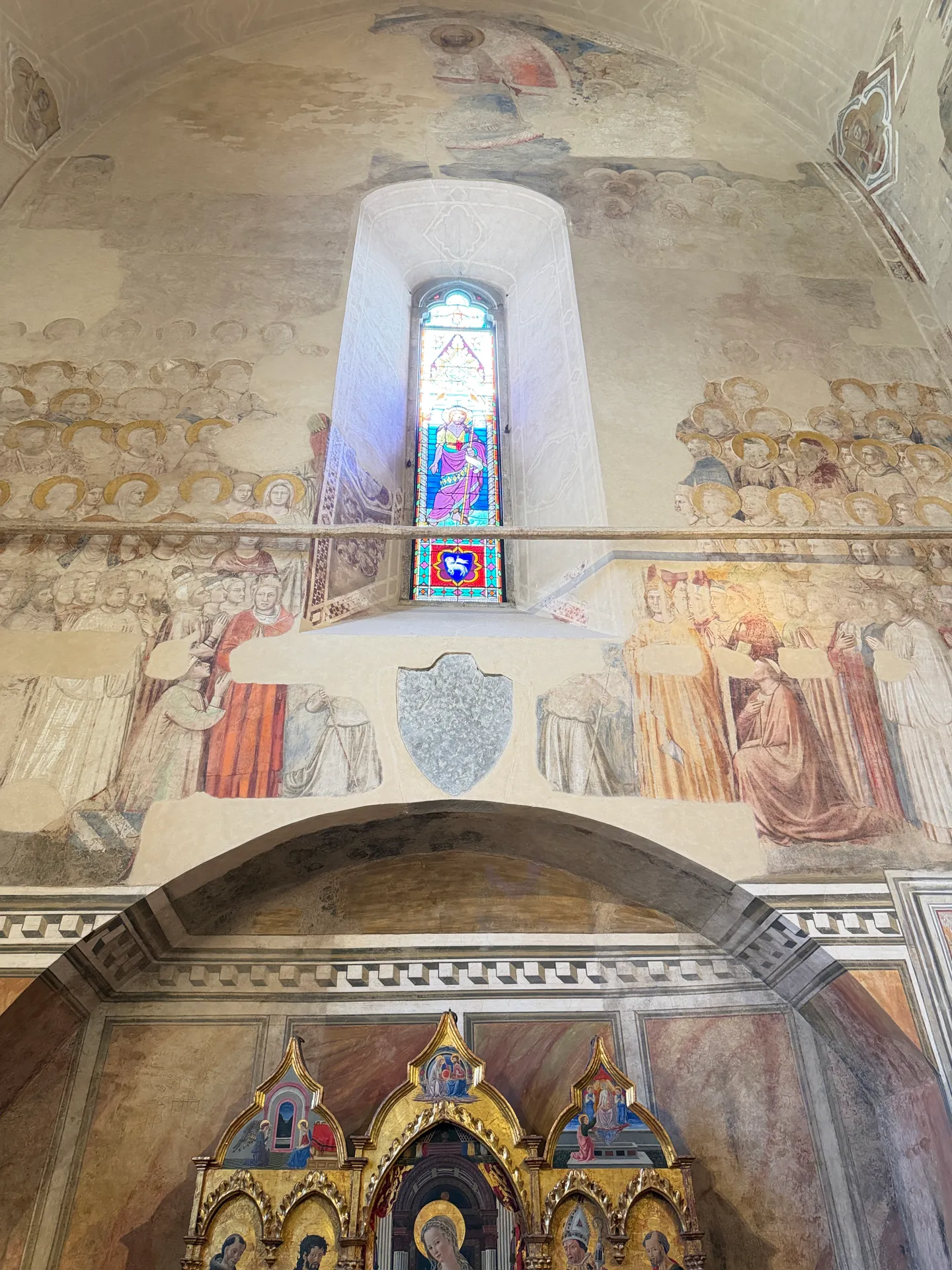
The Cappella della Maddalena was frescoed about 1332 to 1337 by Giotto and his workshop. The oldest known portrait of Dante was uncovered on its wall in 1840. Goldsmith work is shown in the same room.
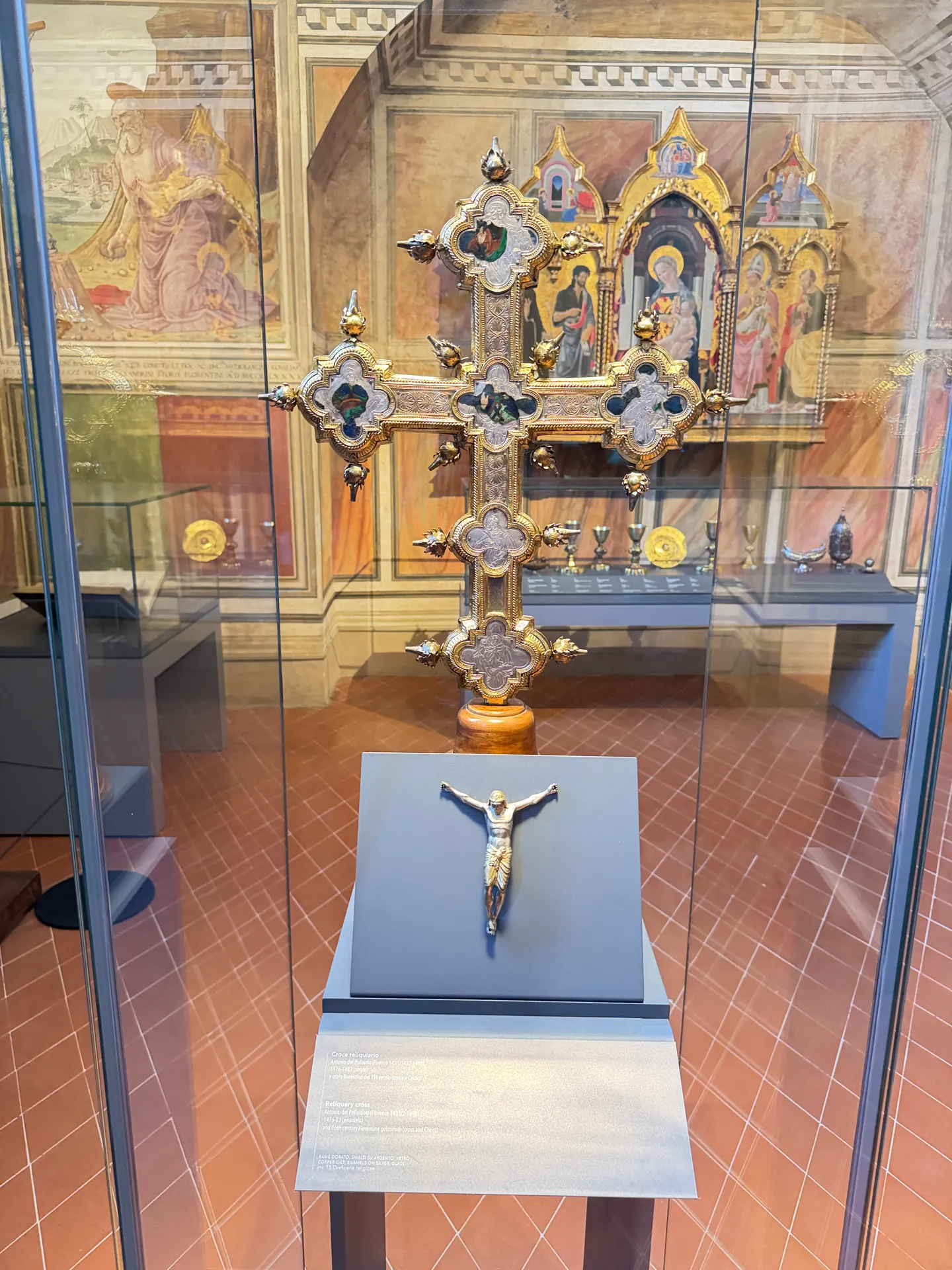
On the axisThe carved wooden lectern centred below the lancet window. The lectern came here from San Miniato al Monte in the nineteenth century.Around the window bayThe frescoed upper walls, given to Giotto and his workshop and painted about 1332 to 1337. Giotto was dead before the cycle was finished.A reliquary crossThe enamels are by Antonio del Pollaiolo, 1476 to 1483. The cross and the Christ are by a sixteenth century Florentine goldsmith, so the object is two things at once.Mitred and giltA gilt reliquary bust in a mitre, flanked by candlesticks in a glass case.Gold groundThe Madonna and Child enthroned between saints under cusped arches, on the chapel altar.Crosses and candlesticksProcessional crosses and candlesticks standing together in a case in the chapel.
Different revolution. Donatello's bronze David was the first freestanding nude since antiquity, and it stands here beside young Michelangelo's Bacchus and Verrocchio's David, all practically queue-free.
What are the competition panels?
The 1401 bronze trial pieces by Ghiberti and Brunelleschi for the Baptistery doors, displayed side by side. It is the contest that arguably opened the Renaissance.
Is it good with limited time?
It's the best art-per-minute value in Florence. World-class sculpture, a medieval courtyard, no crowds. Ninety minutes feels complete.
Some links on this site are affiliate links. If you book through them, we may earn a commission at no additional cost to you. We only recommend tours and stays we would book ourselves.