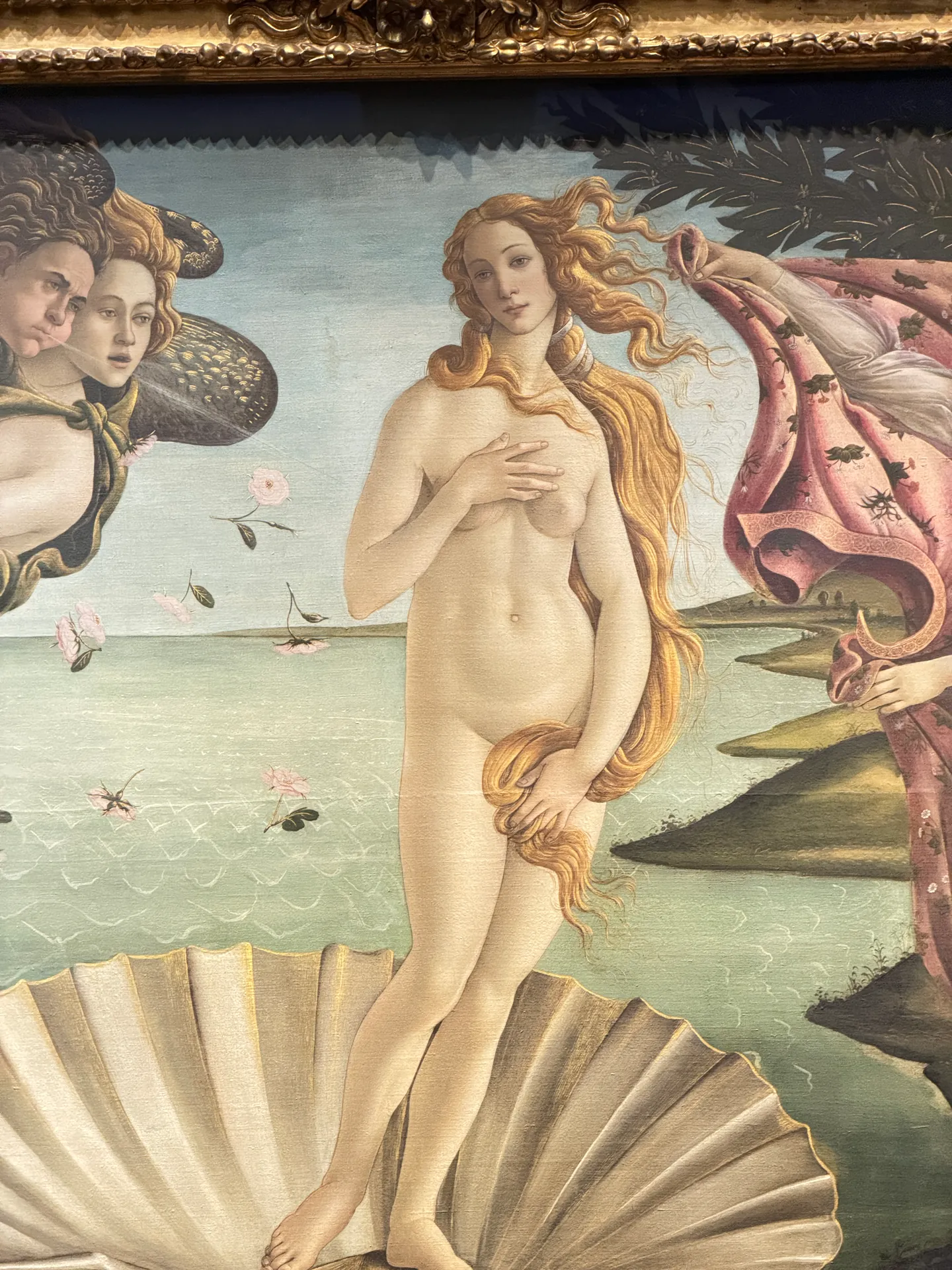
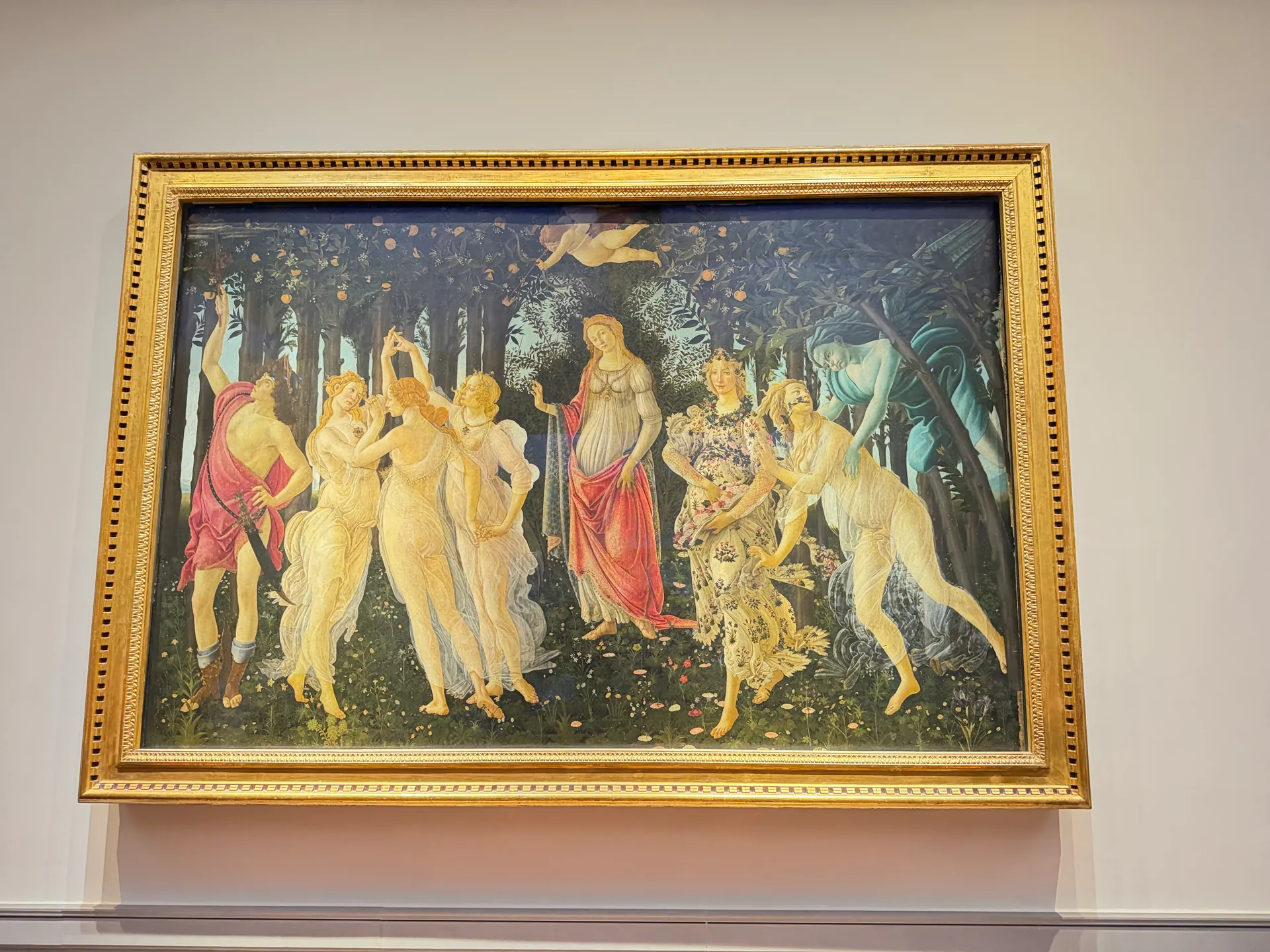
The Renaissance's family album. Botticelli's Venus and Primavera, Leonardo's Annunciation, and Michelangelo's only panel painting hang in the offices Vasari built for the Medici. Book the first slot and walk straight to the Botticelli room; you'll have Venus nearly alone.
🏛️ A Little History
Vasari built the 'uffizi' (offices) for Cosimo I's bureaucracy in 1560; the family's art migrated in, and when the Medici line ended in 1737, Anna Maria Luisa's Family Pact bound the collection to Florence forever. It is the gift that made the city a museum.
💡 Did You Know?
The Vasari Corridor, a kilometer-long elevated passage, runs from the Uffizi over the Ponte Vecchio to Pitti Palace, built in five months so the duke could commute without touching street level. The 1993 Mafia bomb that killed five reshaped the museum's west wing.
Where to stay nearby
🛏️ Sleep Between the Signoria and the River
The streets behind the Uffizi run from Piazza della Signoria down to the Lungarno, which puts the gallery door, the Ponte Vecchio…
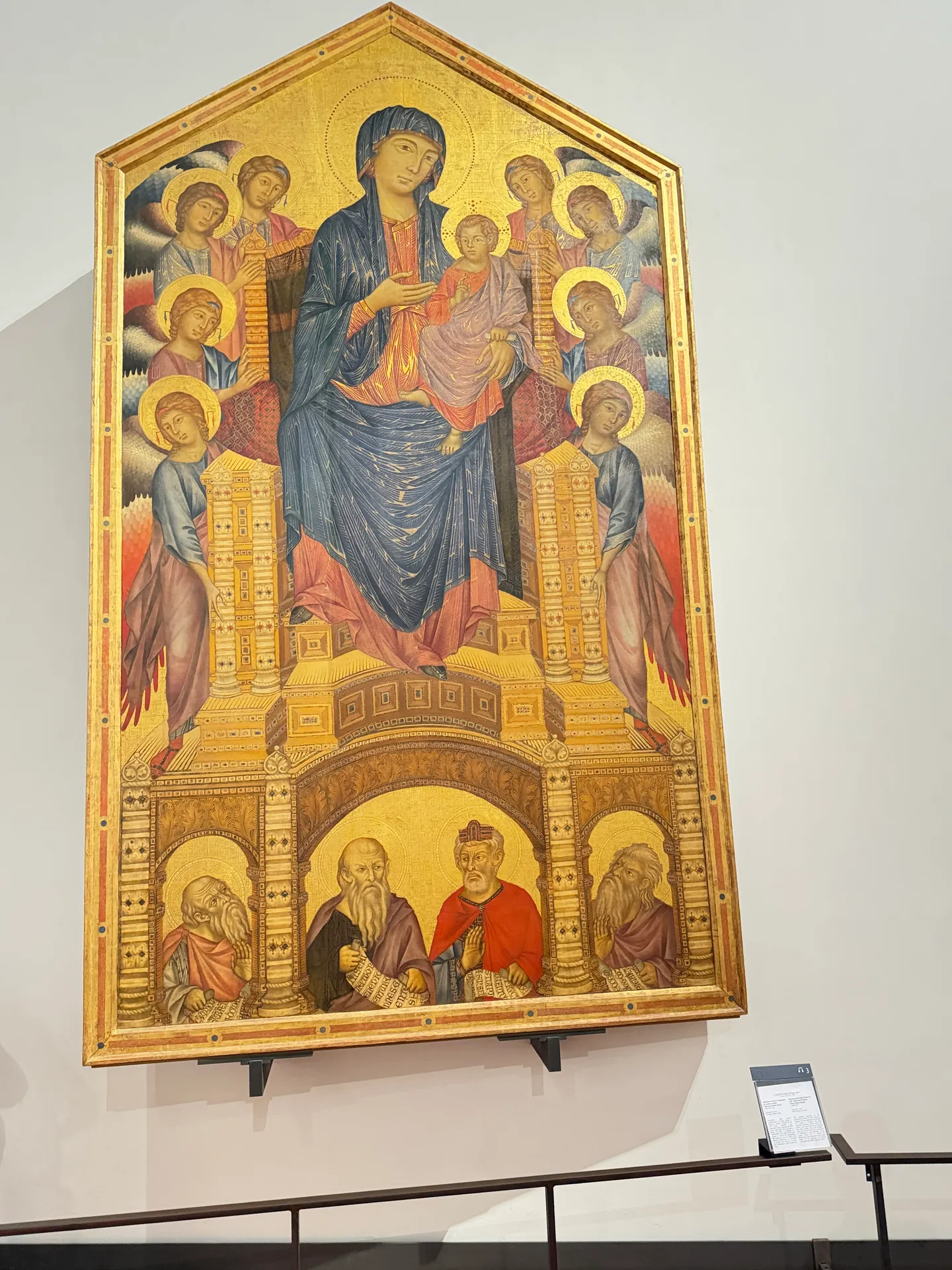
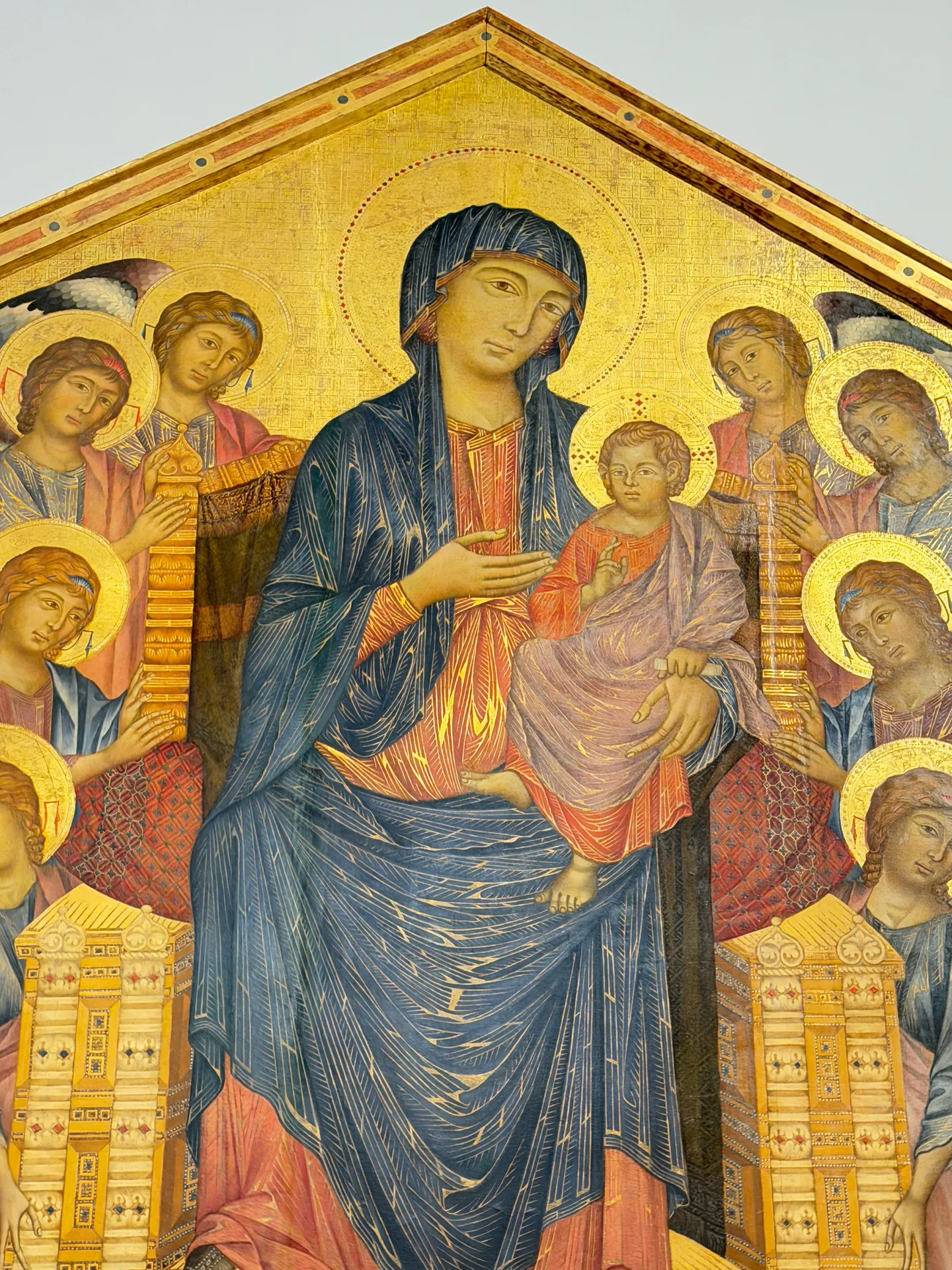
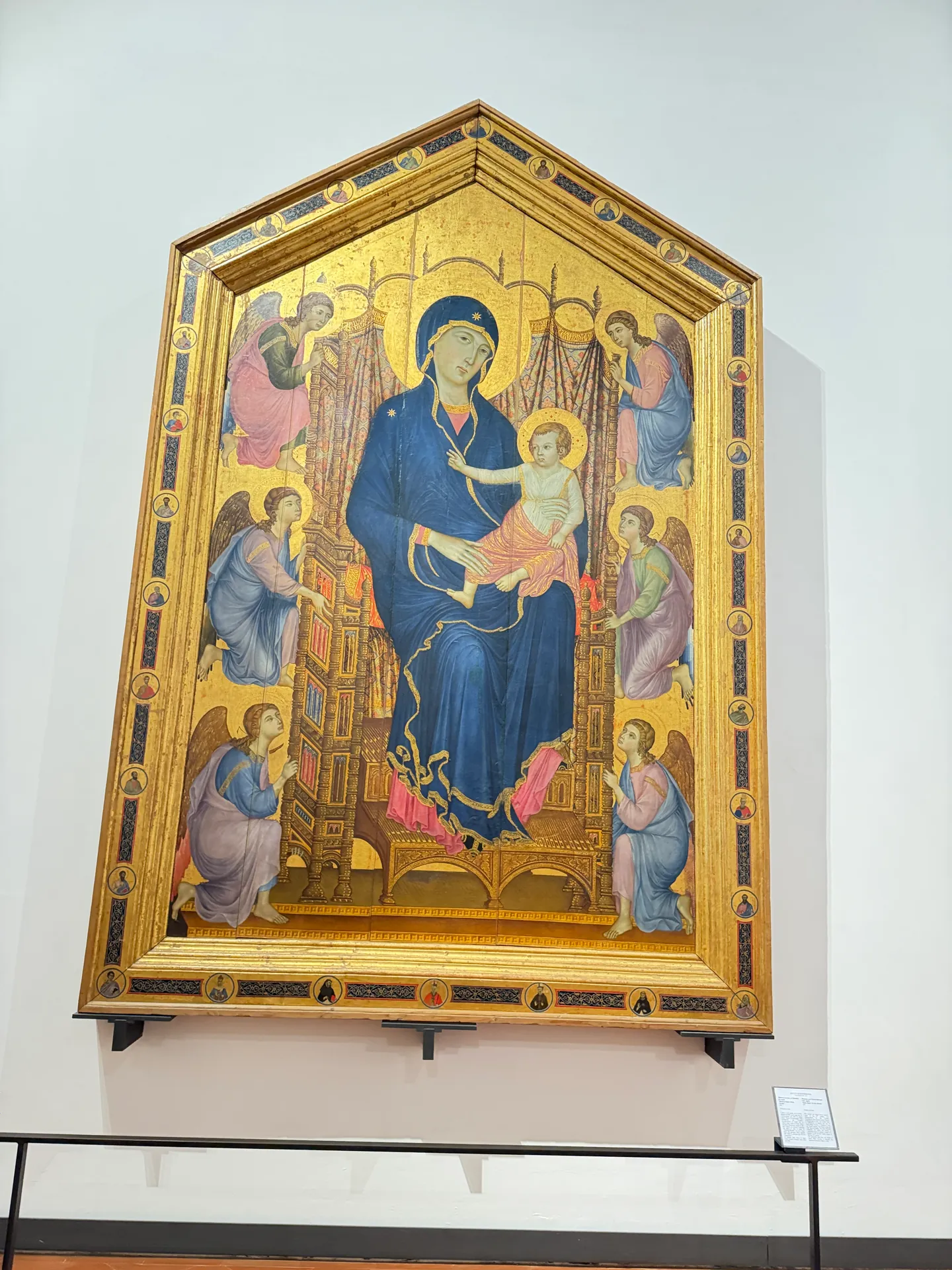
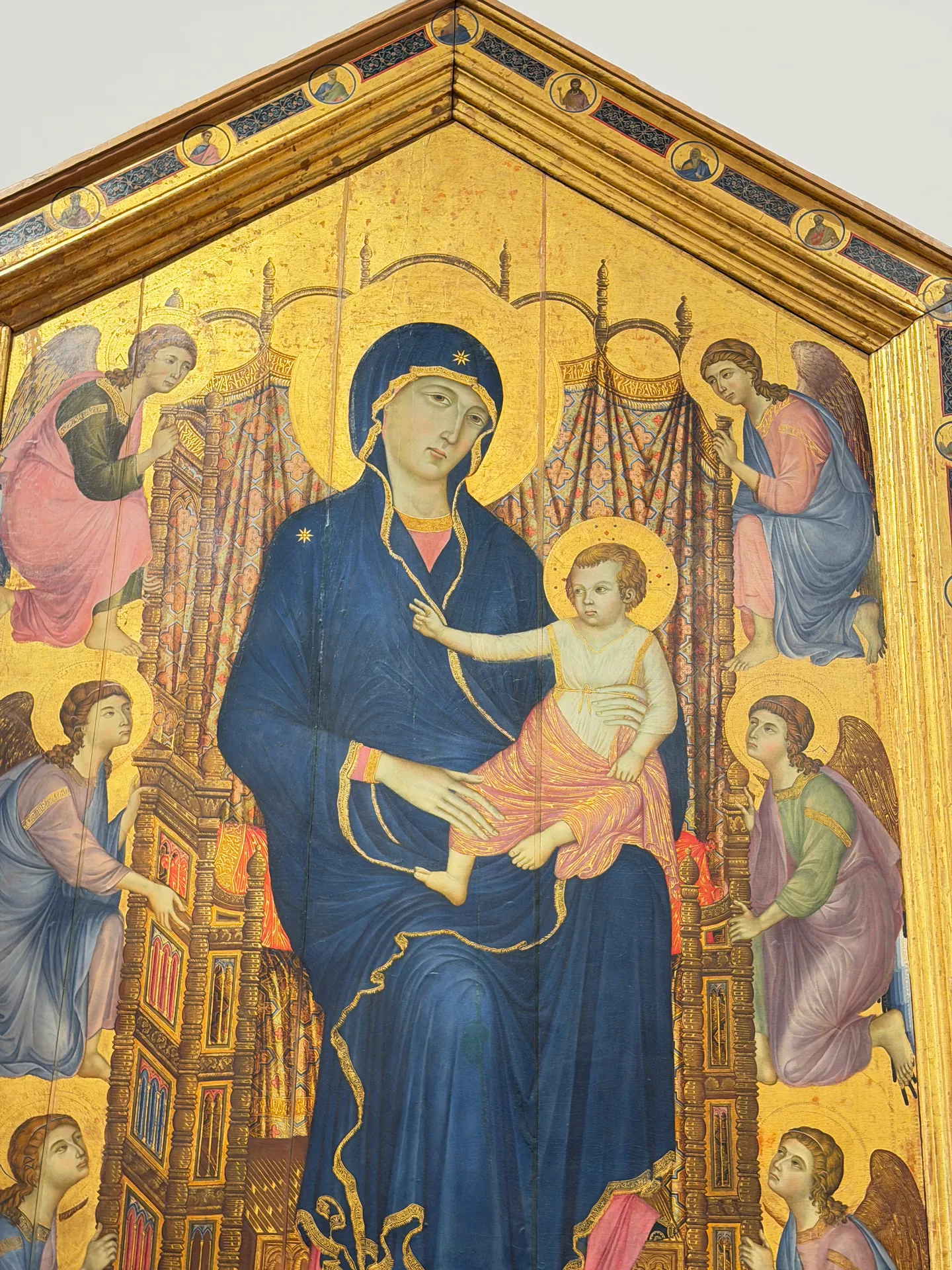
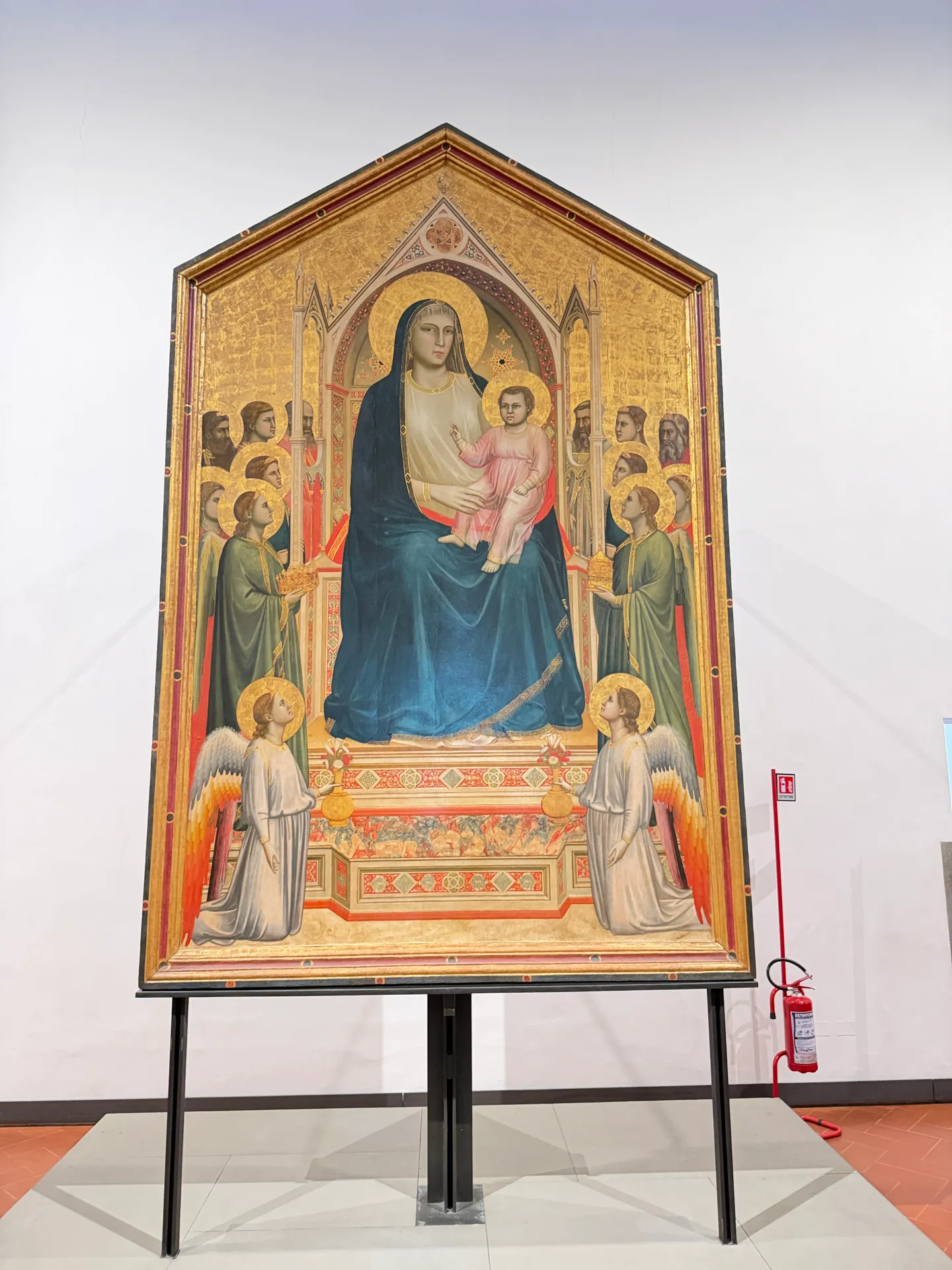
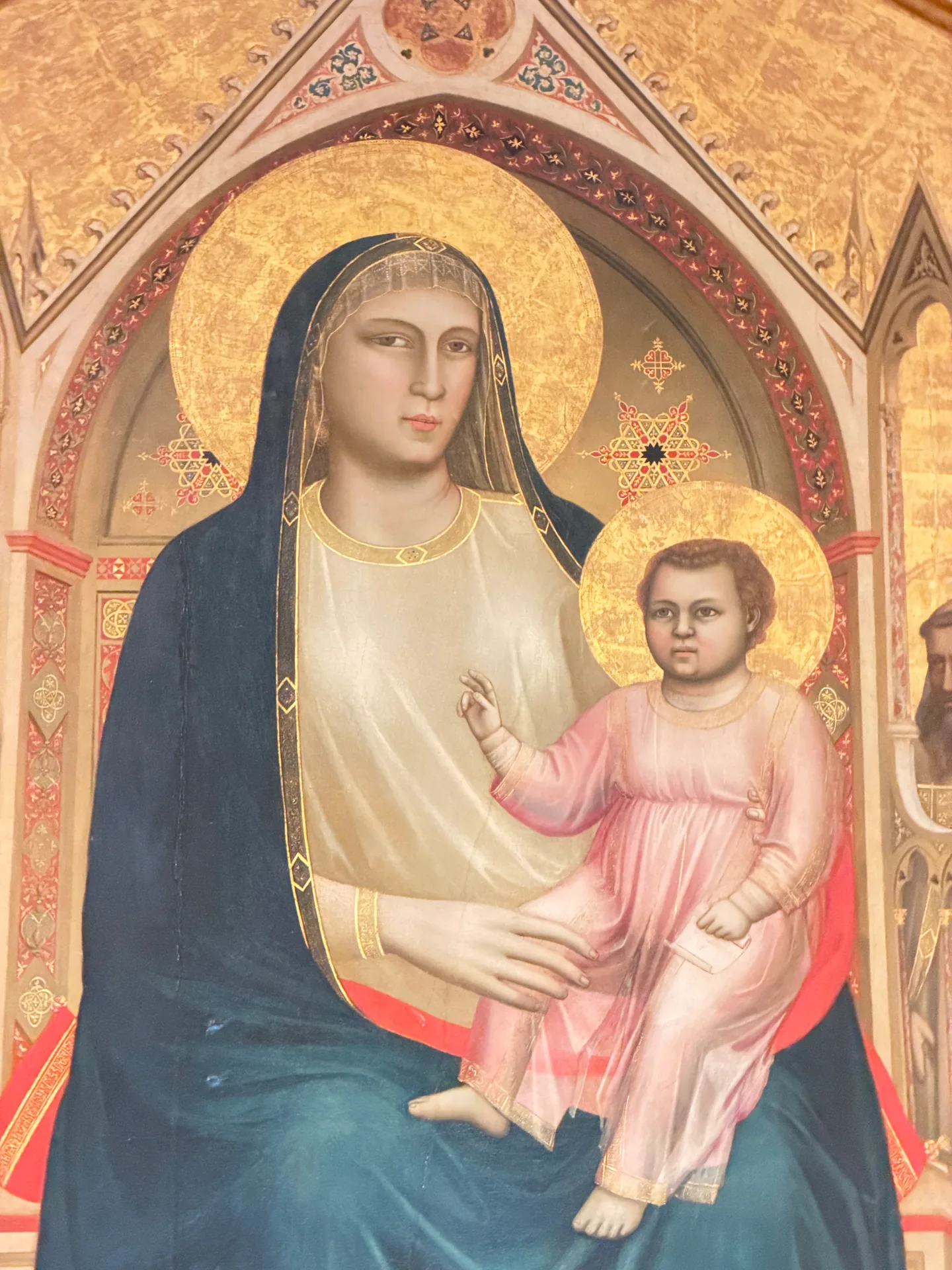
The first rooms hold three enthroned Virgins painted within about forty years of each other, by Cimabue, by Duccio and by Giotto, hung so they can be read against one another. The gold behind them is leaf, punched and tooled so it breaks the light as you move.
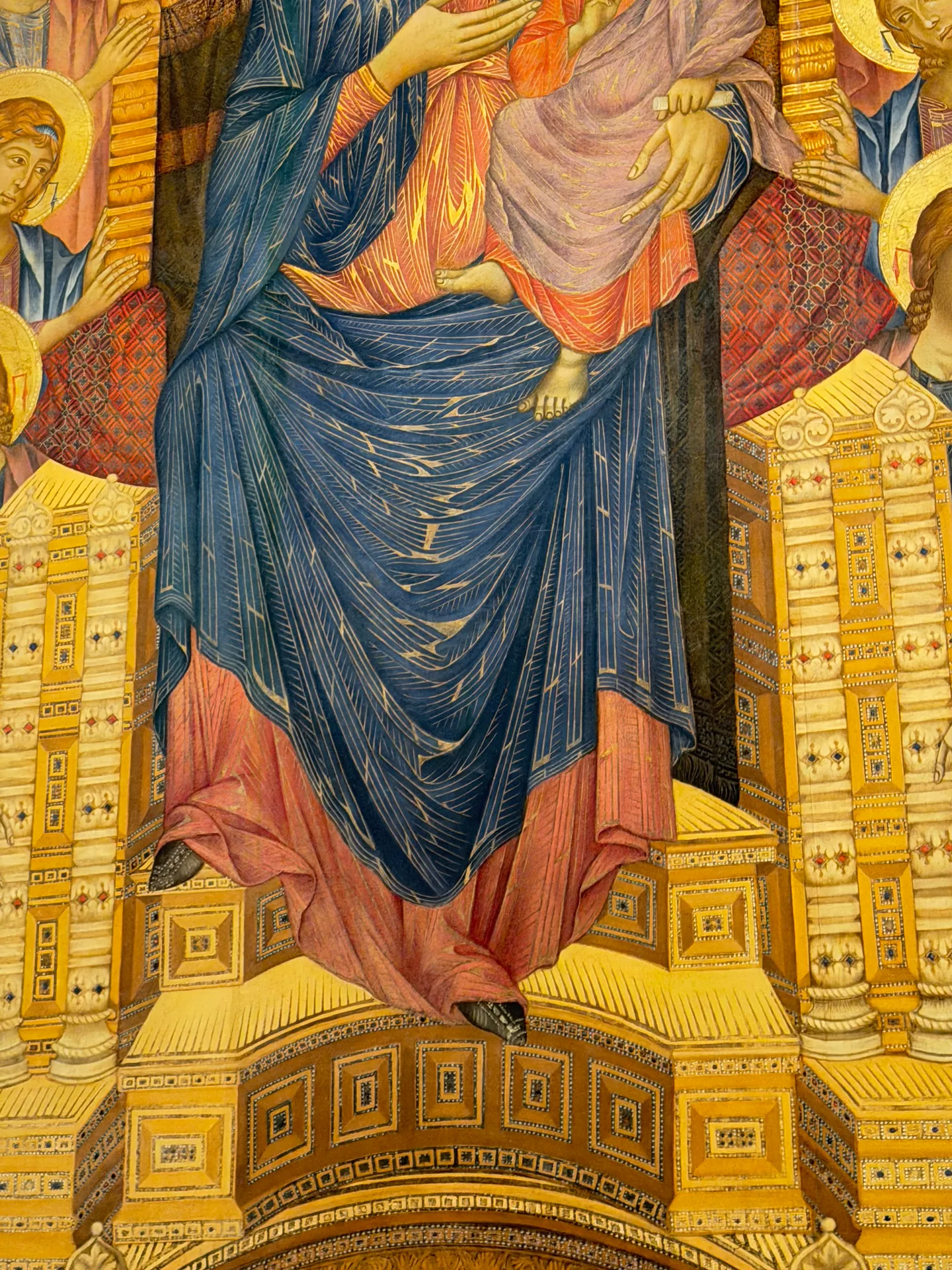
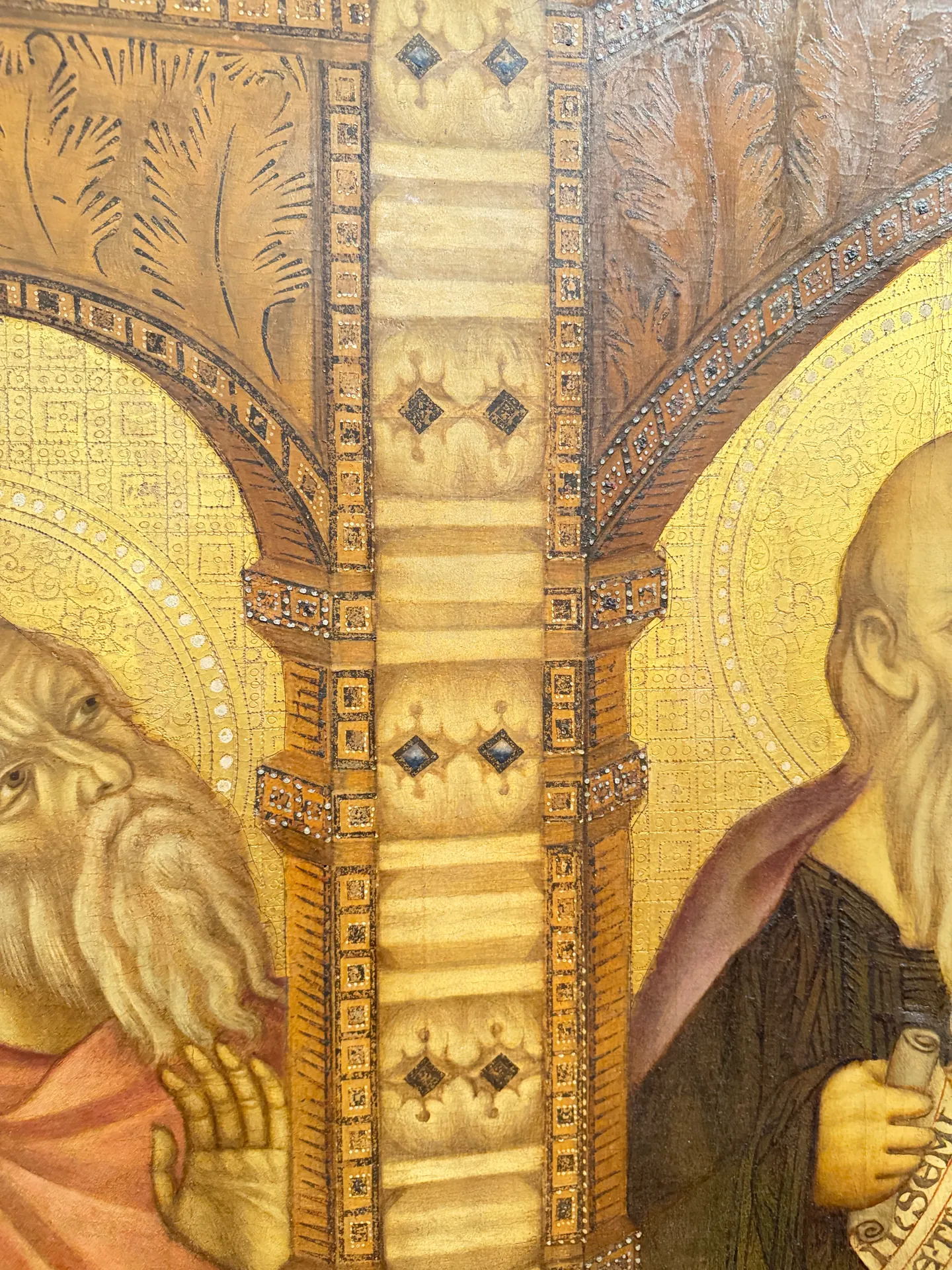
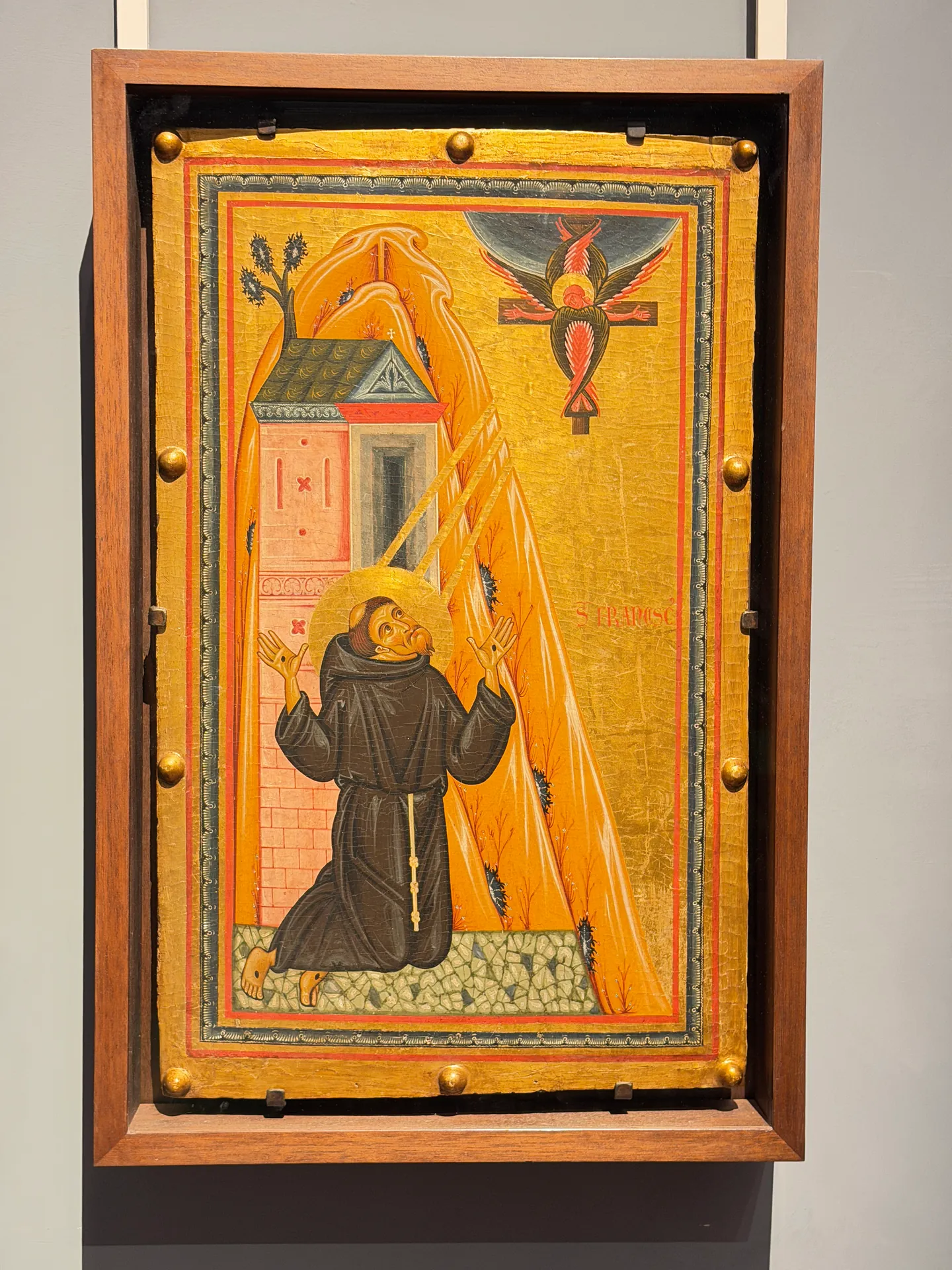
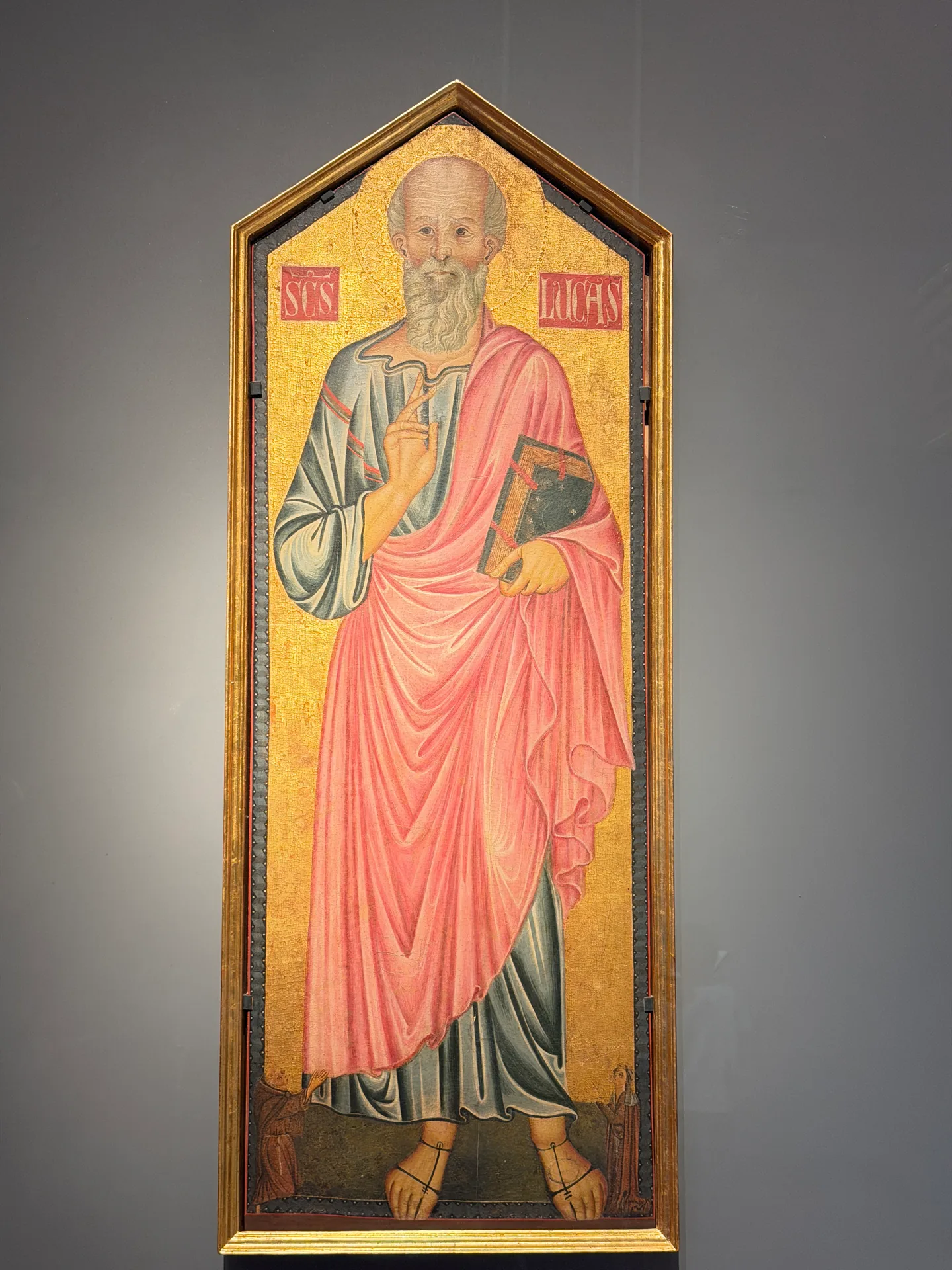
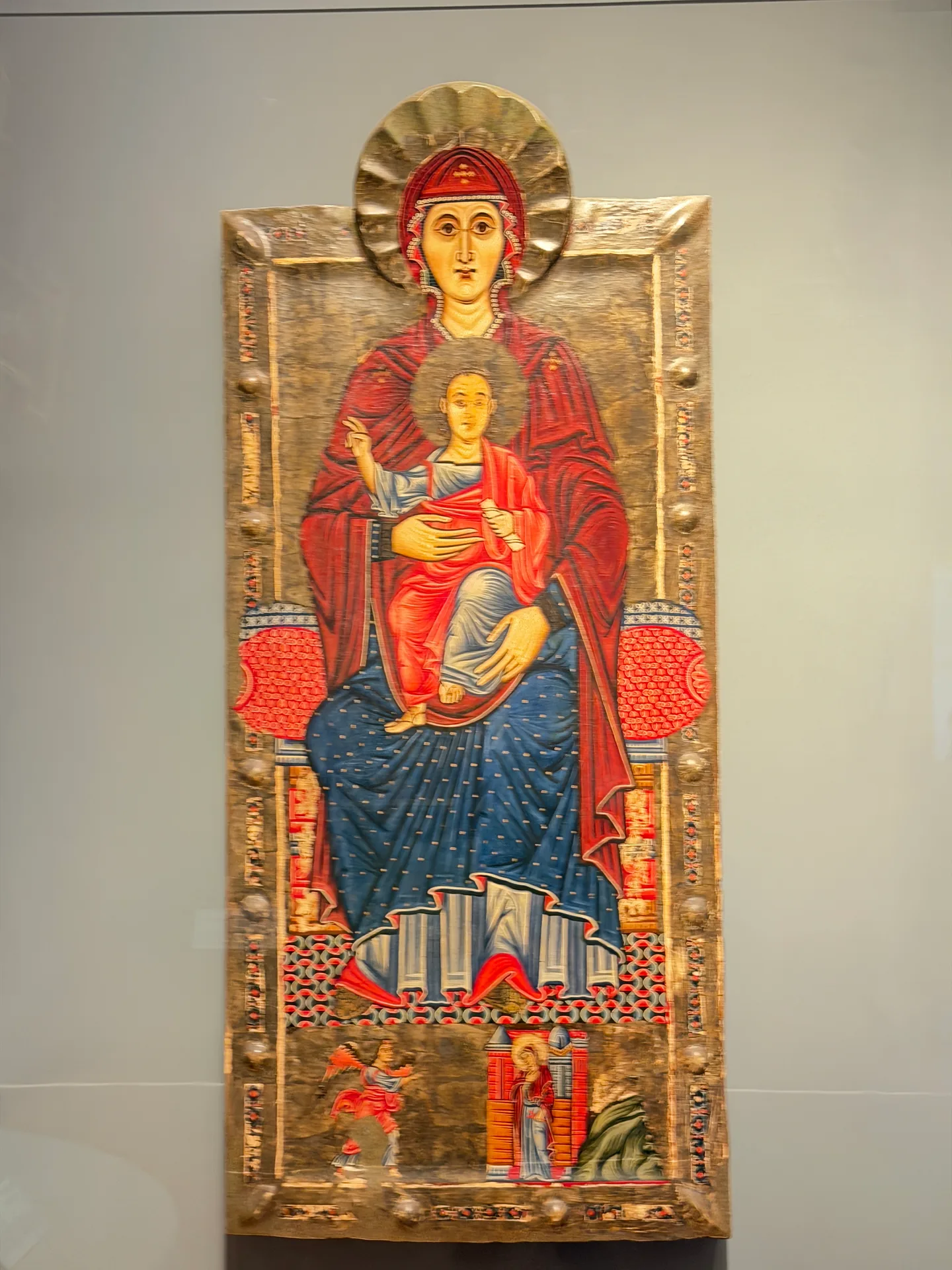
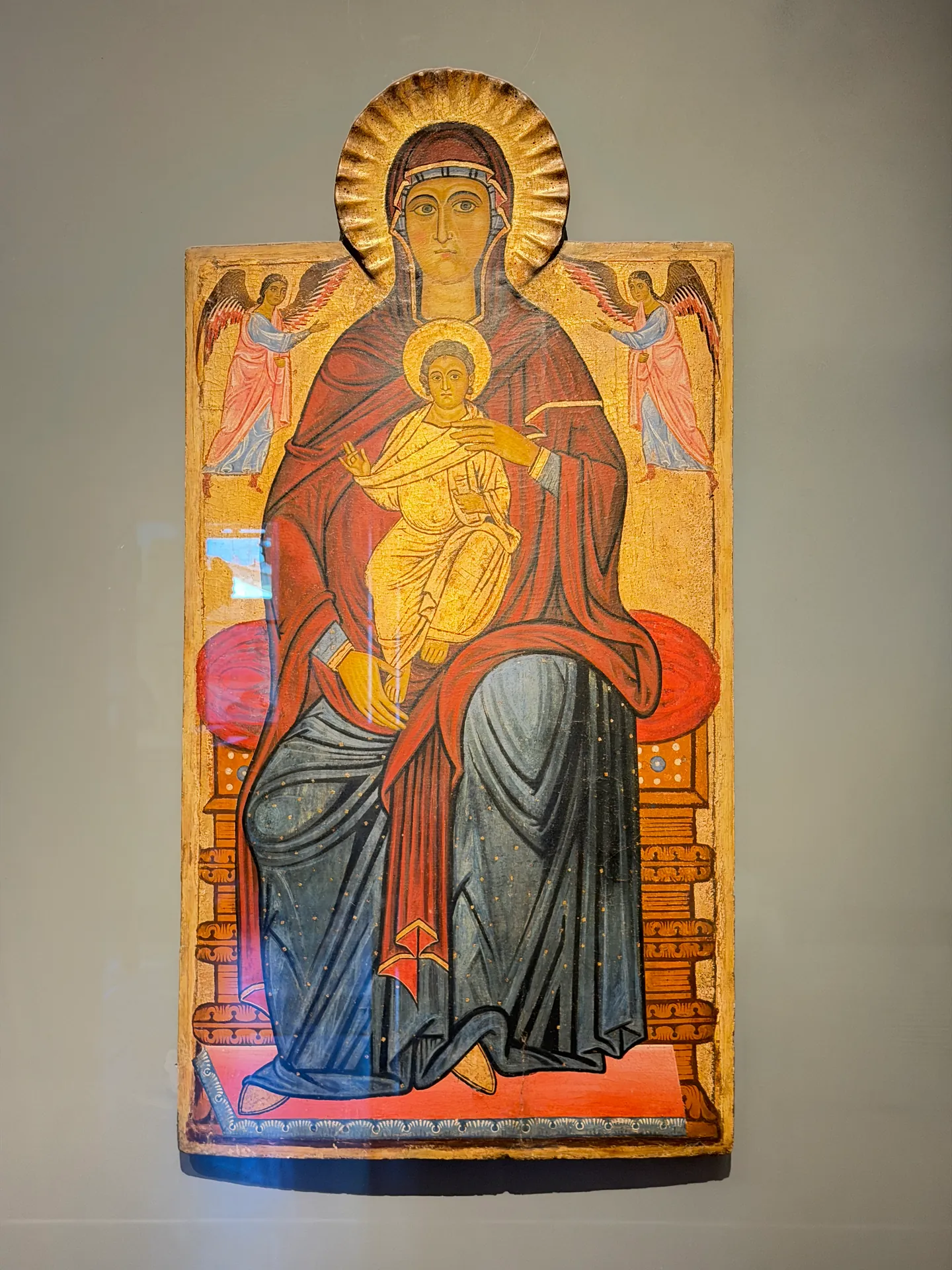
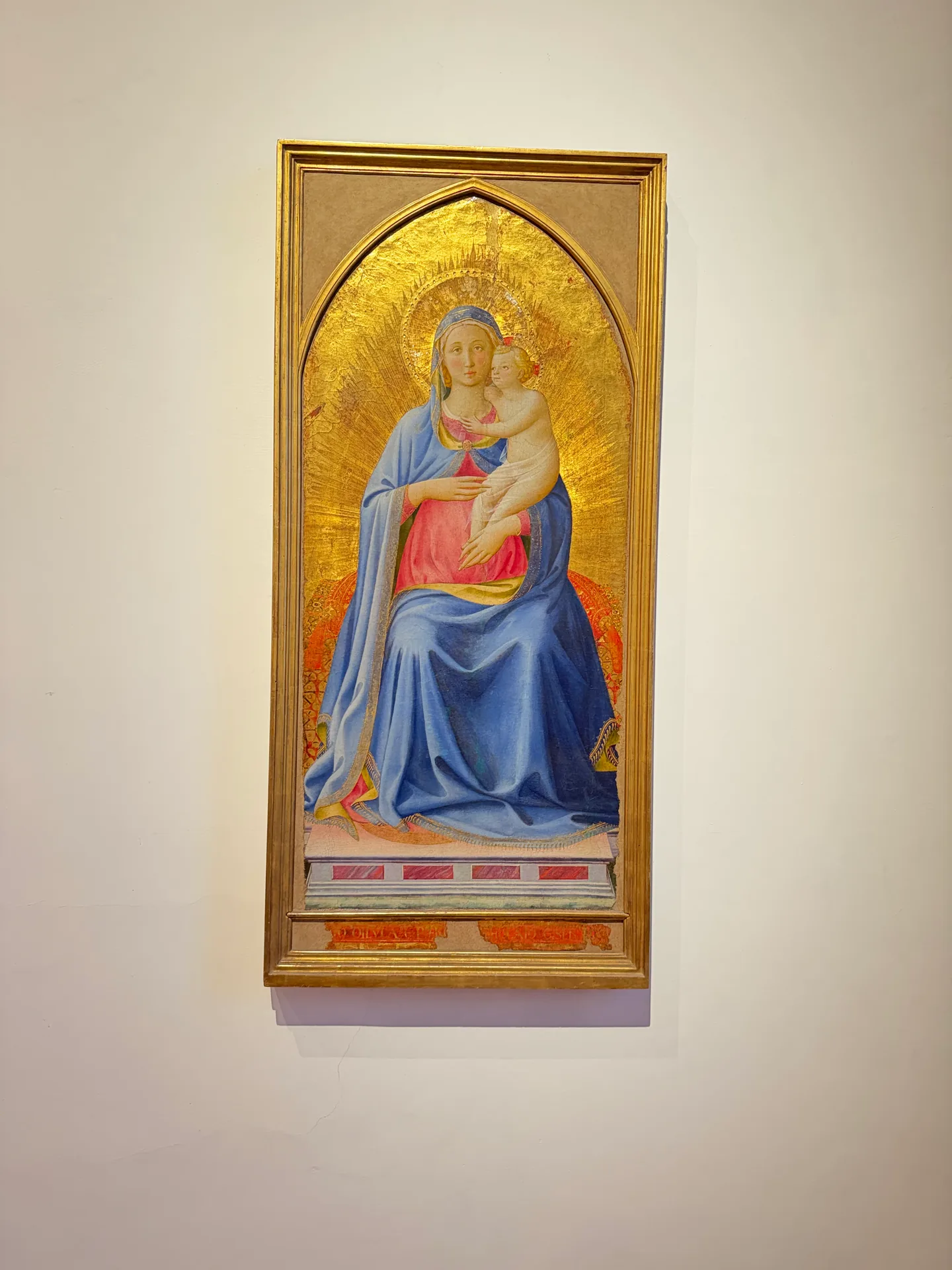
Cimabue, about 1290Painted for Santa Trinita and more than three metres tall. The Virgin sits above four Old Testament prophets set into a painted arcade at the foot of the throne.The upper tiersAngels stacked in ranks either side of the throne, each rank a little smaller than the one in front. That is how depth was suggested before perspective.The throne itselfGilded and architectural, built up in gesso so the relief catches real light. Cimabue is describing a structure here, not just drawing one.Tooled goldThe ground is not flat leaf. It is punched and tooled so the surface breaks the light differently as you move past it, which is the one thing no reproduction carries.Giotto, about 1310Painted for the Ognissanti church. The throne has depth, the Virgin has weight under her robe, and the angels stand on a floor instead of floating on gold.Kneeling at the footTwo angels kneel in front of the throne and their bodies overlap it. Twenty years after Cimabue and the space has become a real room.The third panelThe room holds three great enthroned Virgins hung within sight of each other. This is the third of them, standing free on the floor under the open timber roof.Virgin and ChildThe centre of the same panel, close enough to read the modelling of the faces and the tooling around the haloes.Francis and the seraphA thirteenth century panel. The rays run from the winged seraph to the kneeling friar as straight gold lines ruled across the ground.Maestro della MaddalenaA pointed panel of Luke the Evangelist, its painted inscription still legible along the board.Silver, not goldThe ground is silver leaf, now tarnished dark, and an Annunciation runs in small scenes along the foot of the panel.Maestro del BigalloThe Virgin enthroned among angels, the figures set almost flat against the gold with very little overlap.A tall narrow panelVirgin and Child enthroned in a plain gilt surround. The proportions were dictated by the space the panel had to fill.
THE PASSION ON ONE OBJECT
Painted Crosses
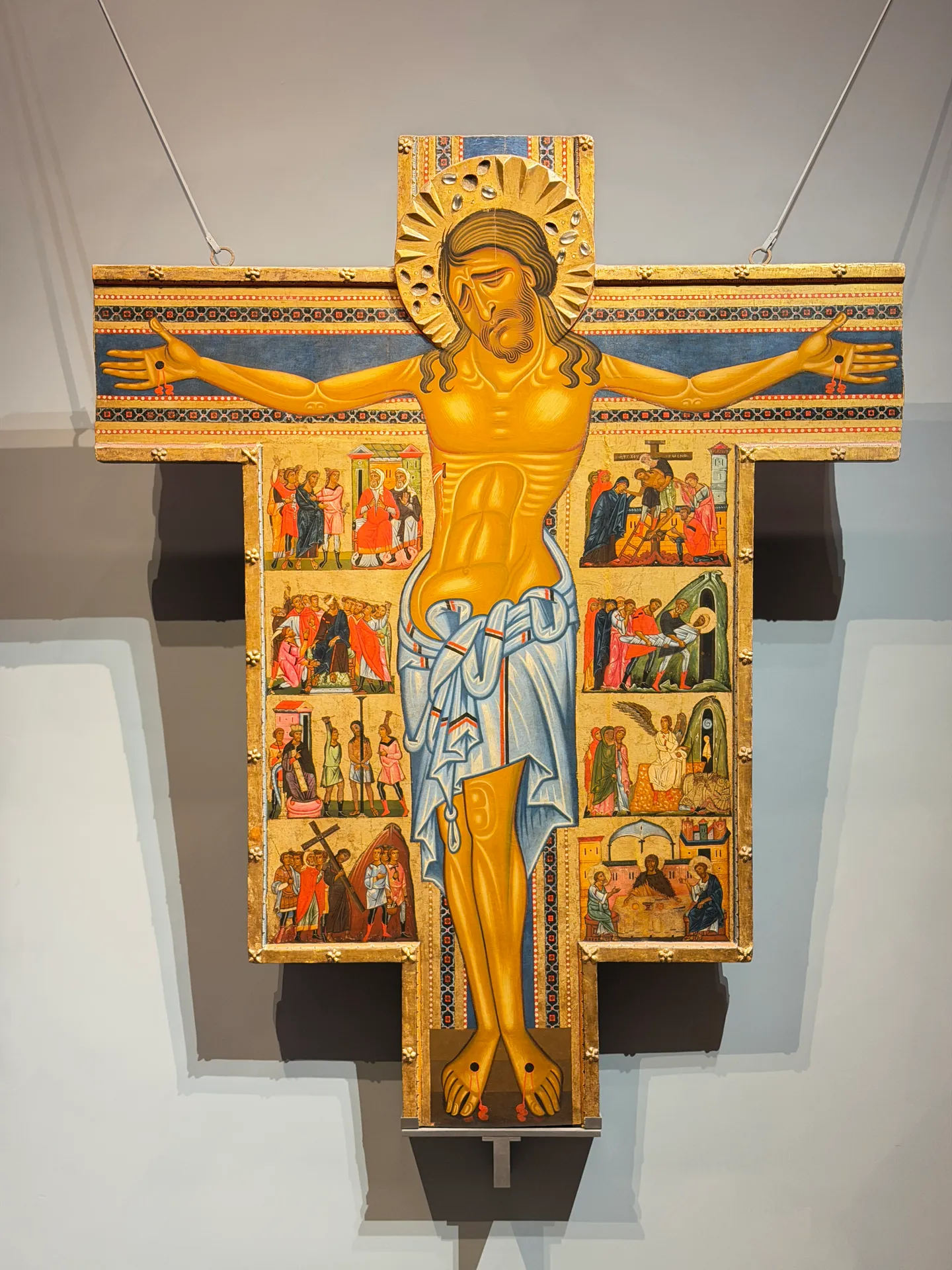
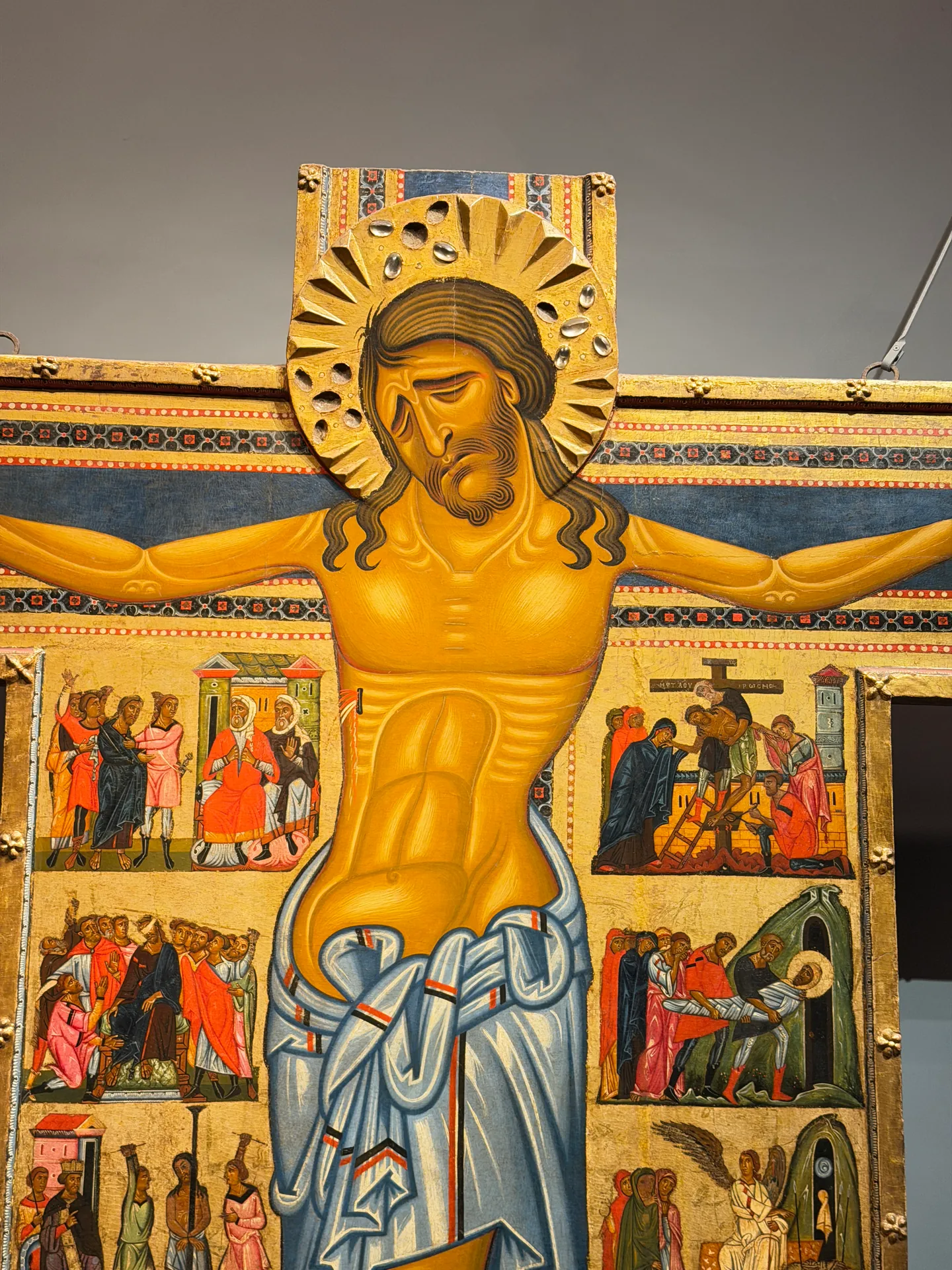
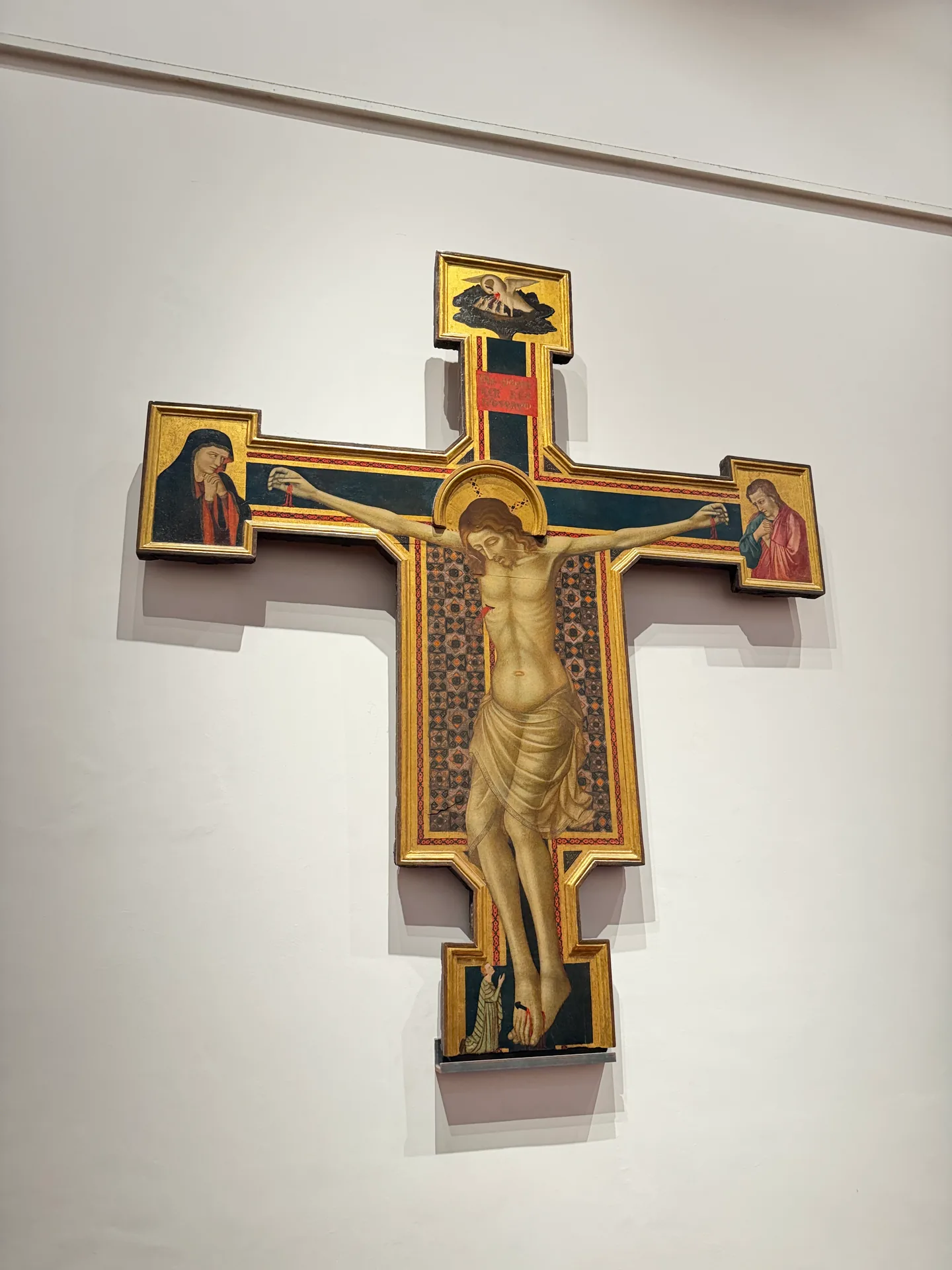
Before the altarpiece there was the painted cross, hung above the rood screen of a church. Tiers of small narrative scenes run down the sides and out along the arms, so the whole Passion is carried on a single shaped panel.
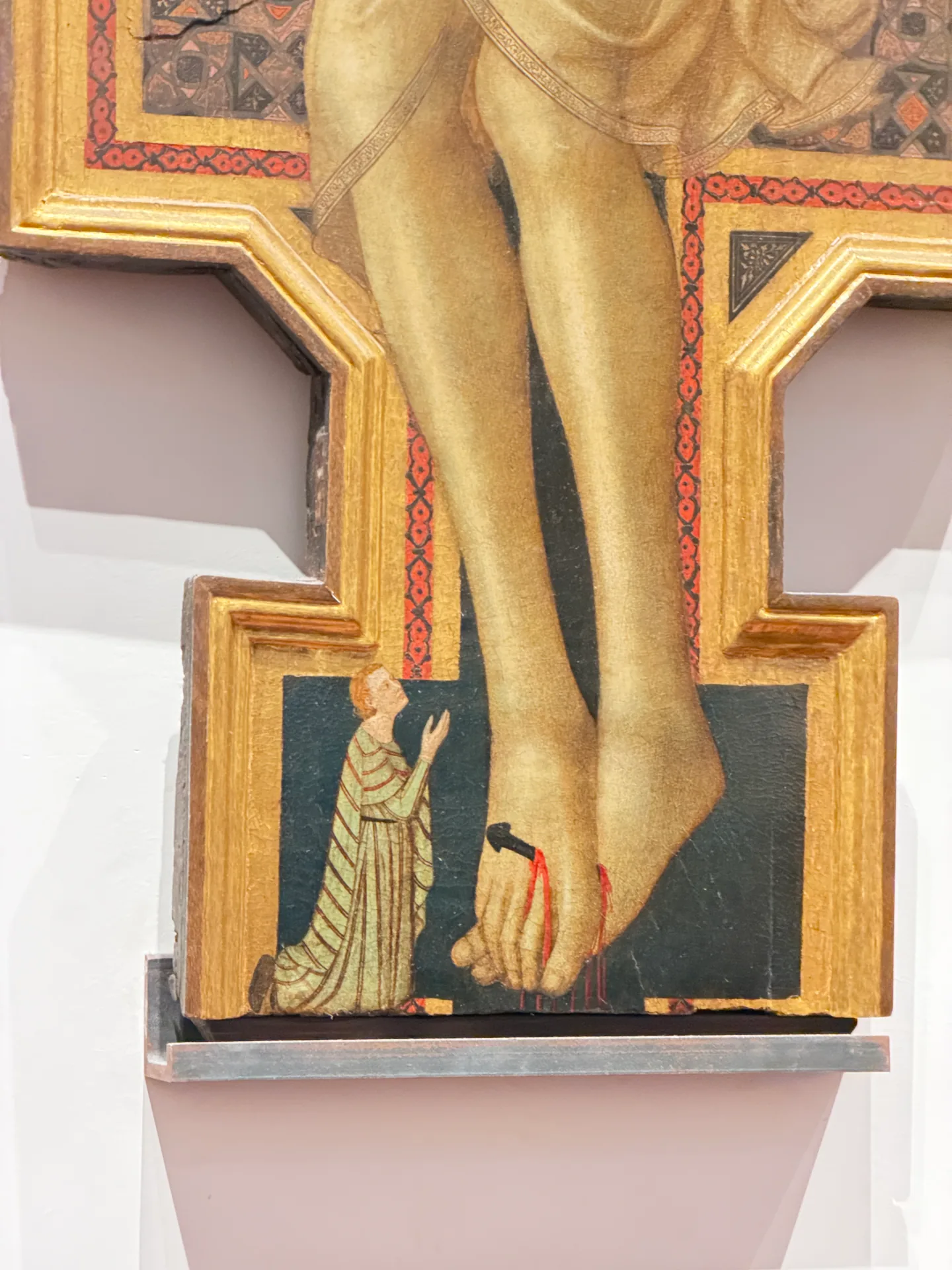
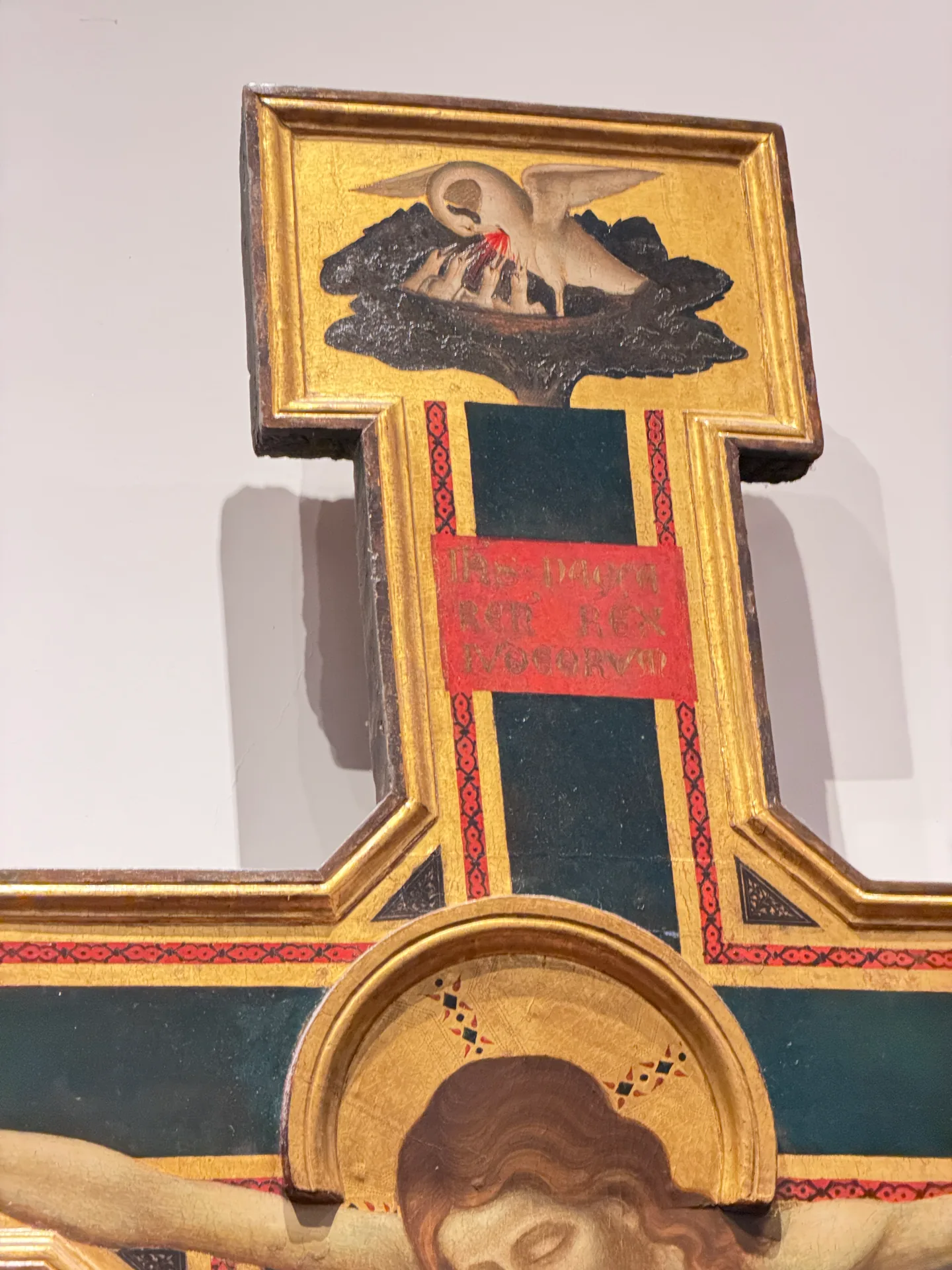
Christ and the small scenesTiers of narrative run down both sides of the body, so a single object carries the whole Passion rather than one moment of it.Narrative on the armsHere the scenes run out along both arms of the cross as well as down the sides, filling the gold to the edge.Hung flatA crucifix on a dark ground shown flat against a white wall rather than suspended, with half figures set into the terminals.The donor at the footA small kneeling figure painted below Christ's feet. That is the person who paid for the cross, at the scale the convention allowed him.The upper terminalA half figure set into the top arm of the cross, the panel shaped around it.
GOLD, PATTERN AND PROCESSION
International Gothic
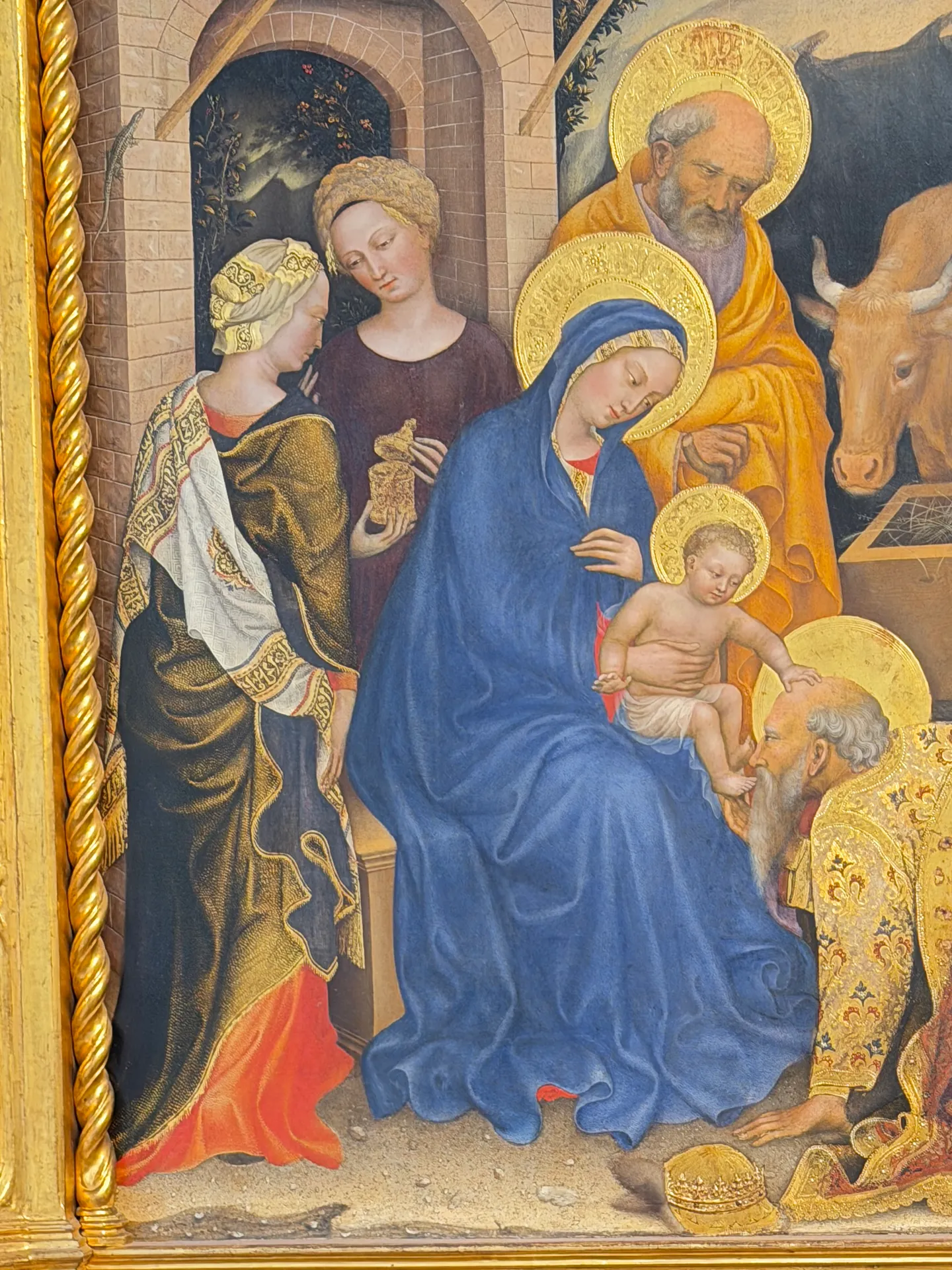
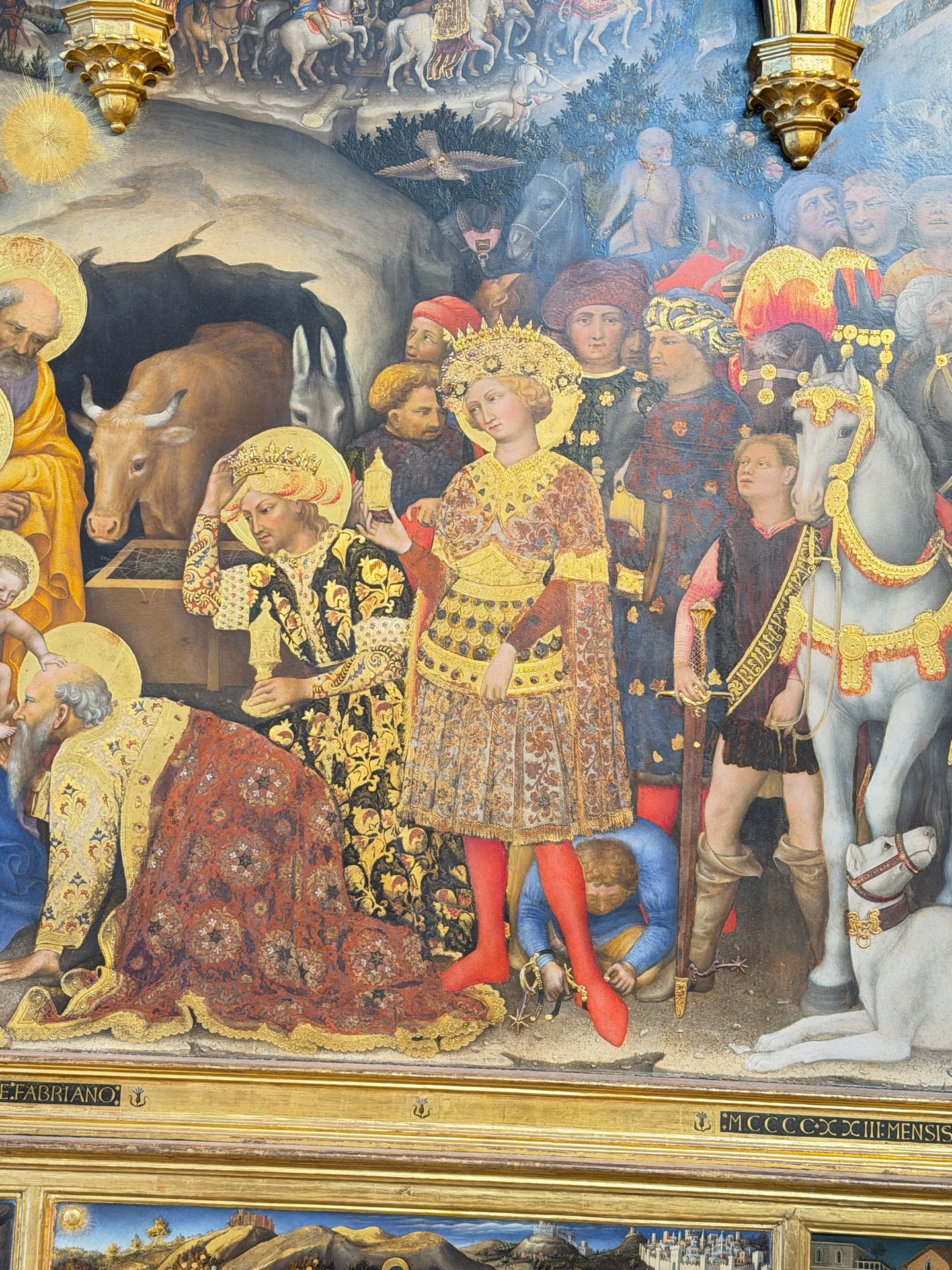
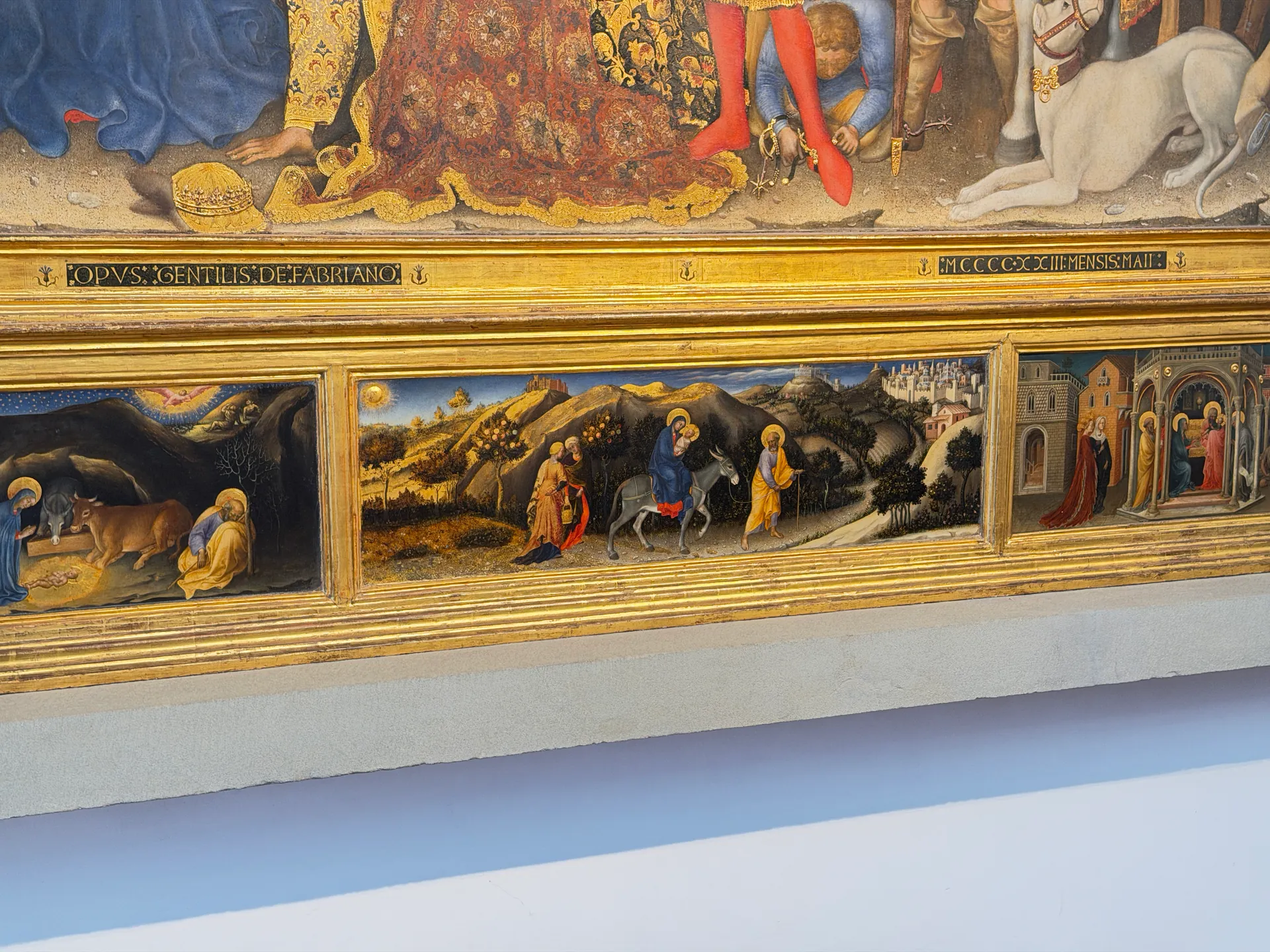
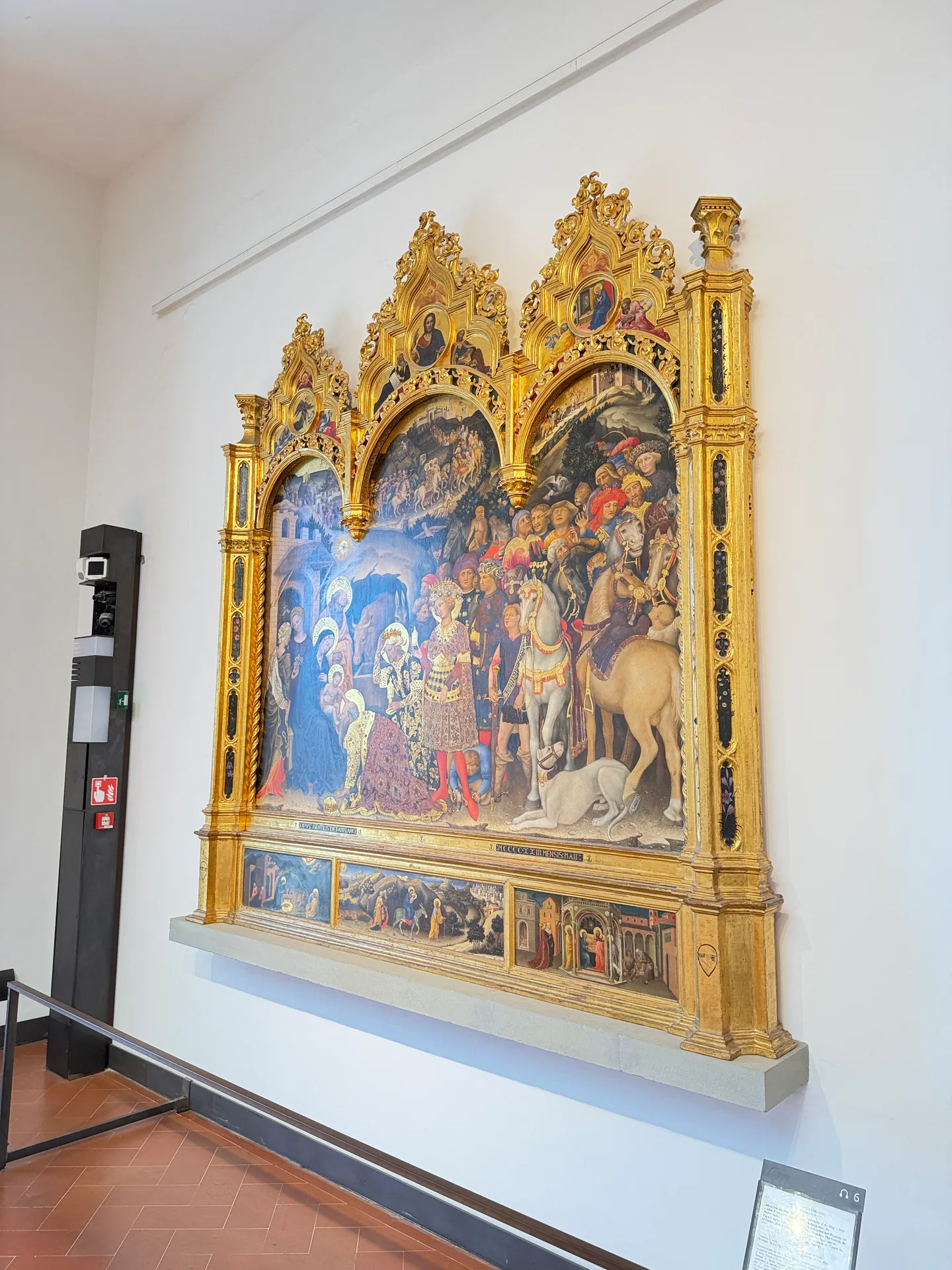
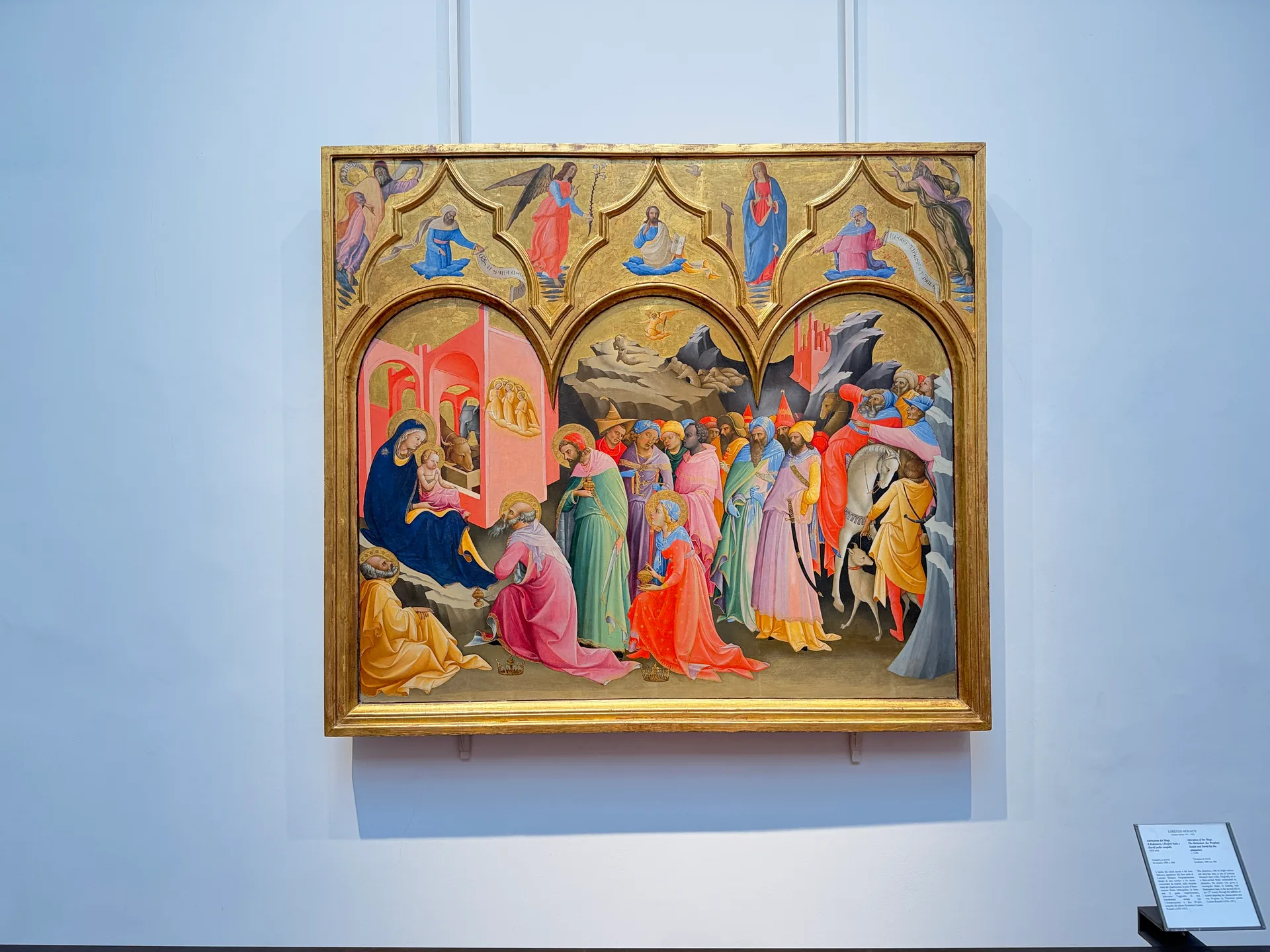
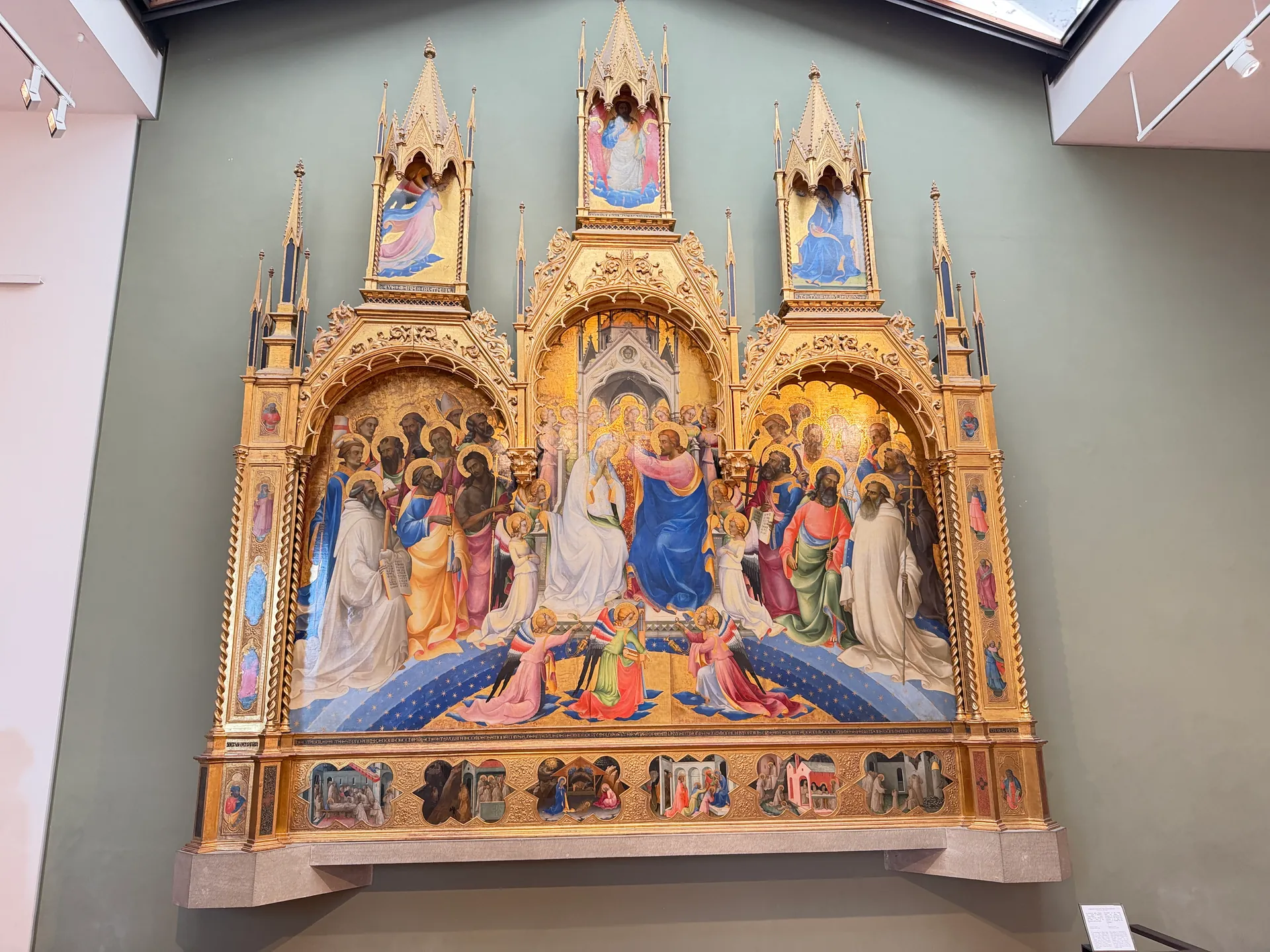
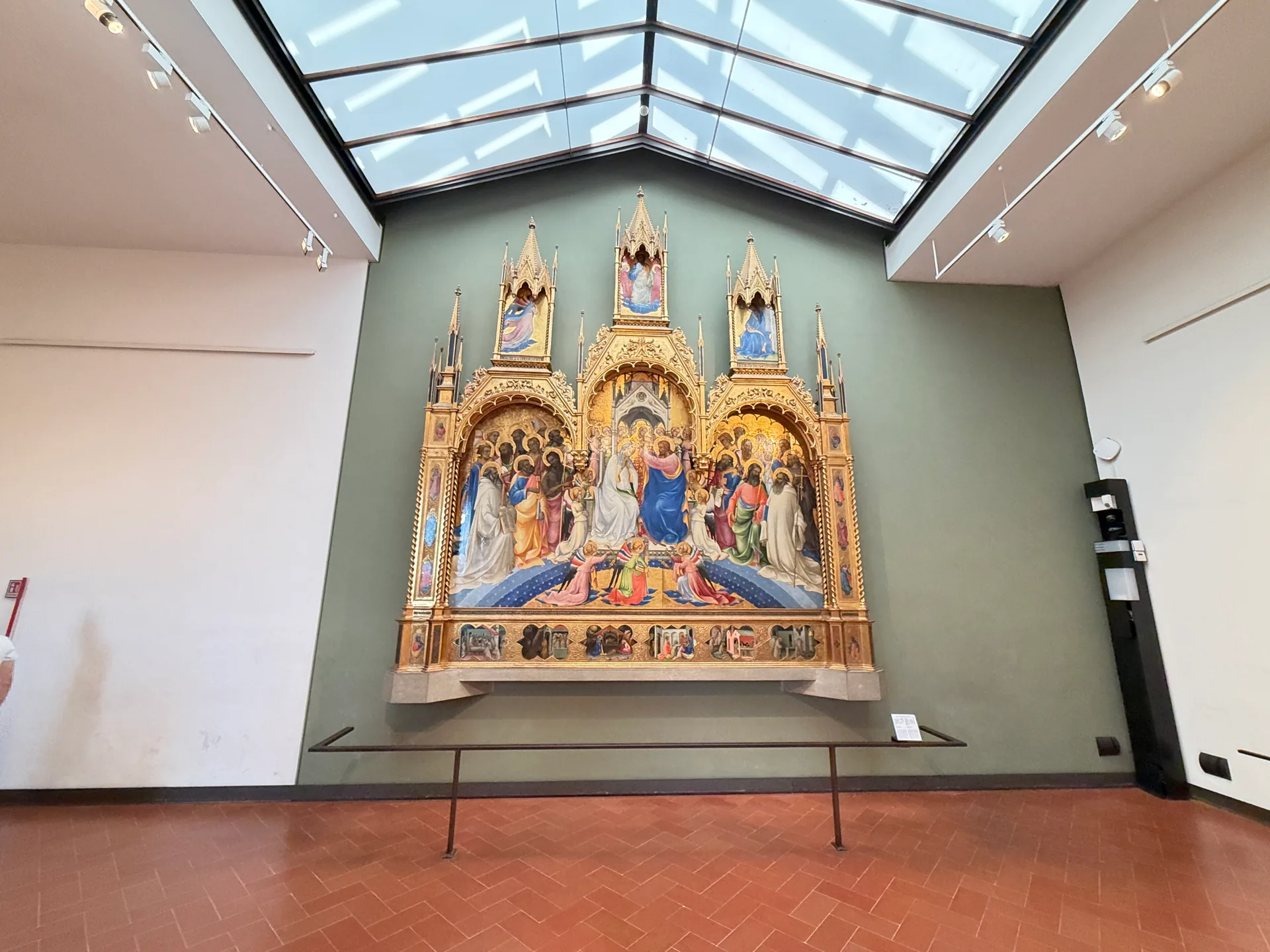
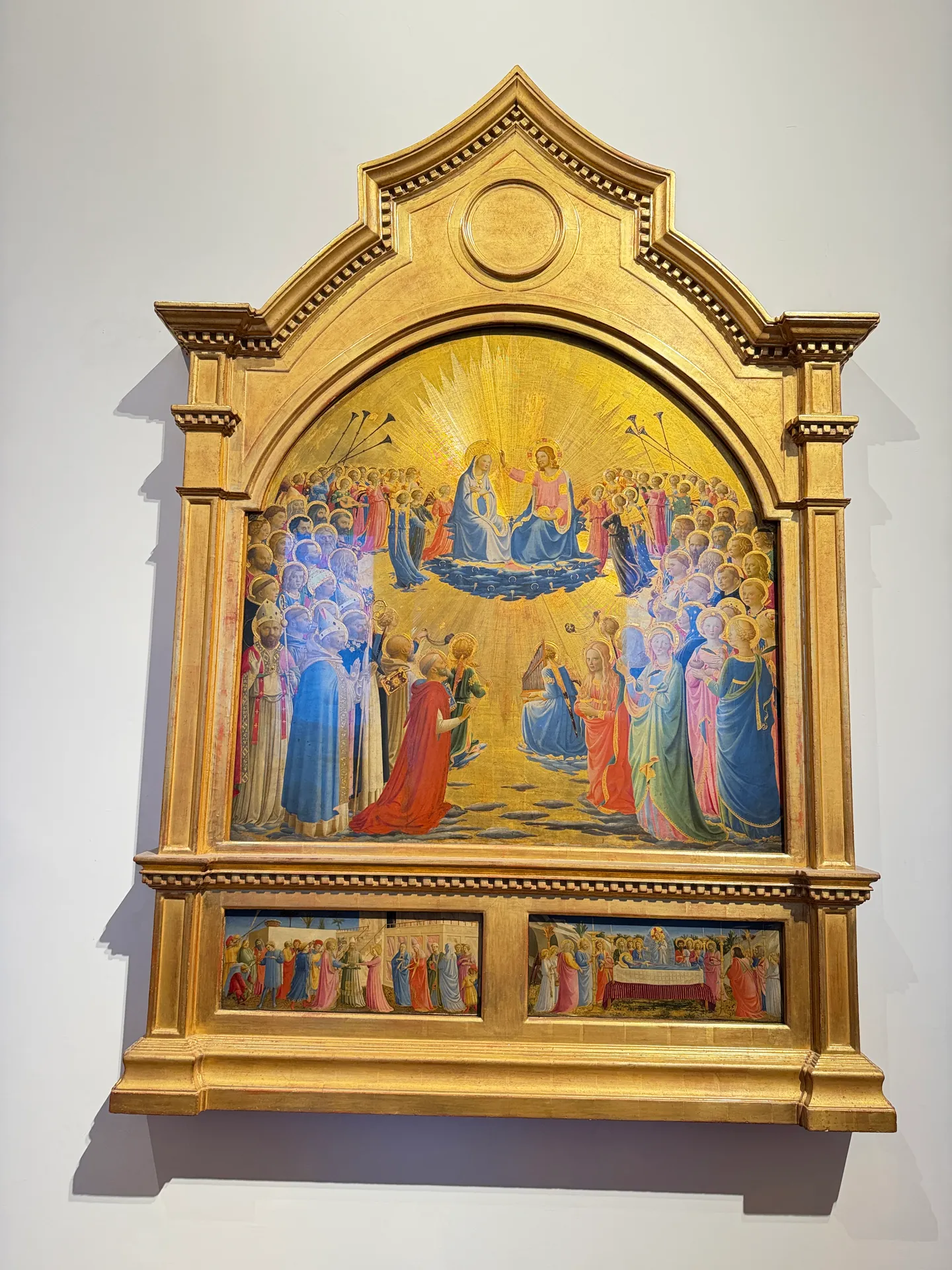
Gentile da Fabriano and Lorenzo Monaco were working in Florence at the same moment as Masaccio, and they were not behind him. This is a different ambition: surface, ornament, cloth of gold, and a cavalcade that winds back through the hills into the frame.
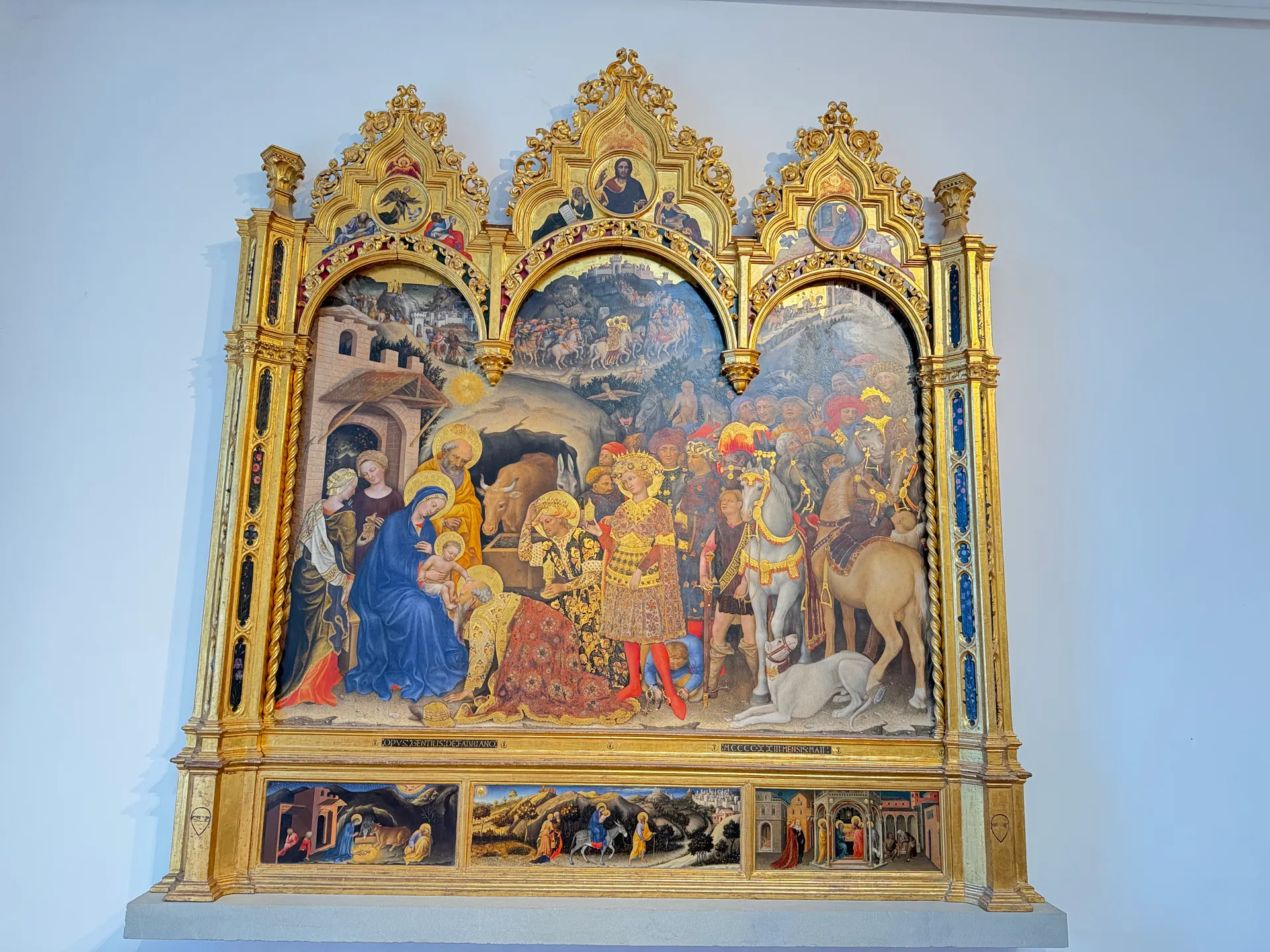
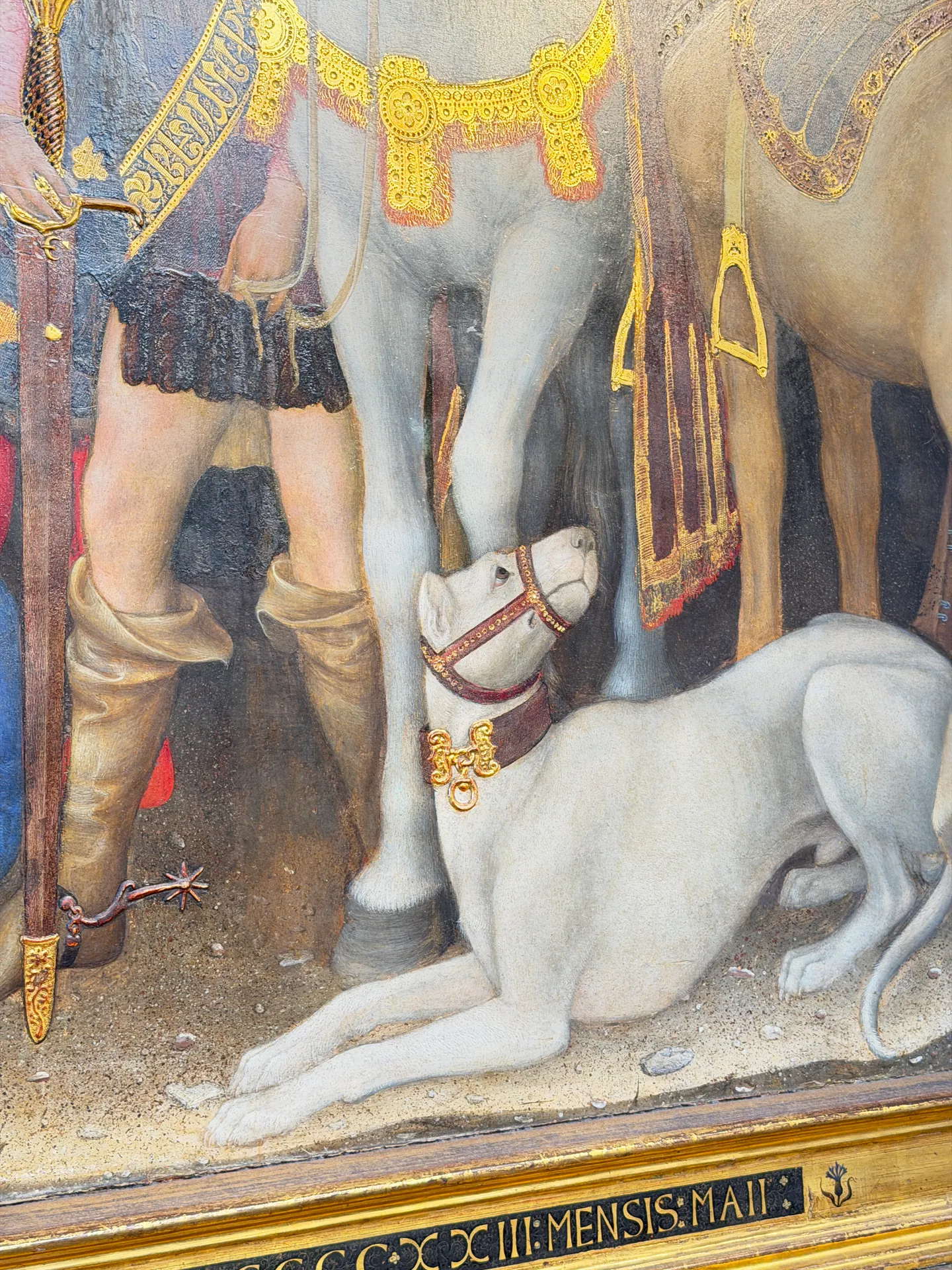
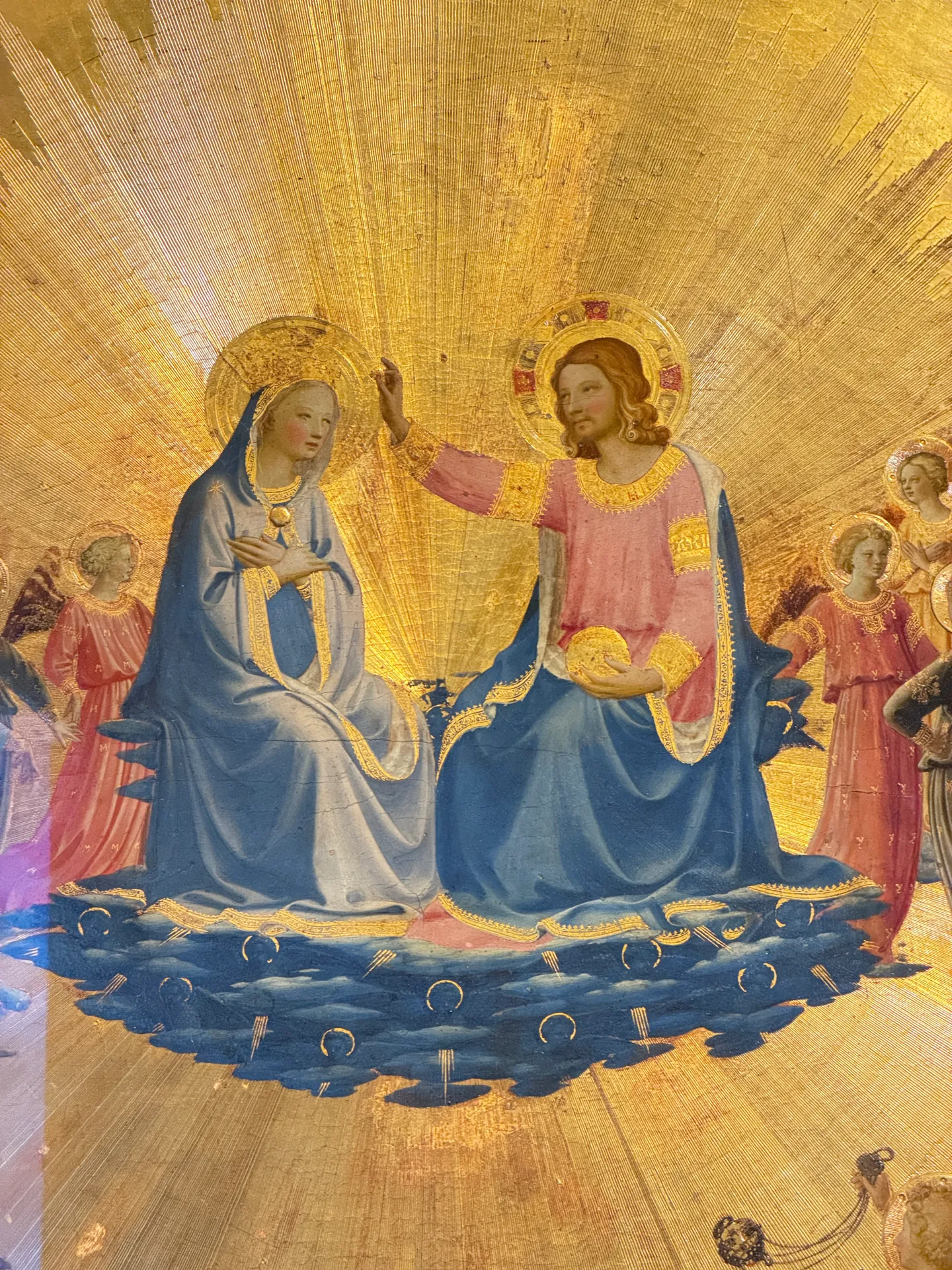
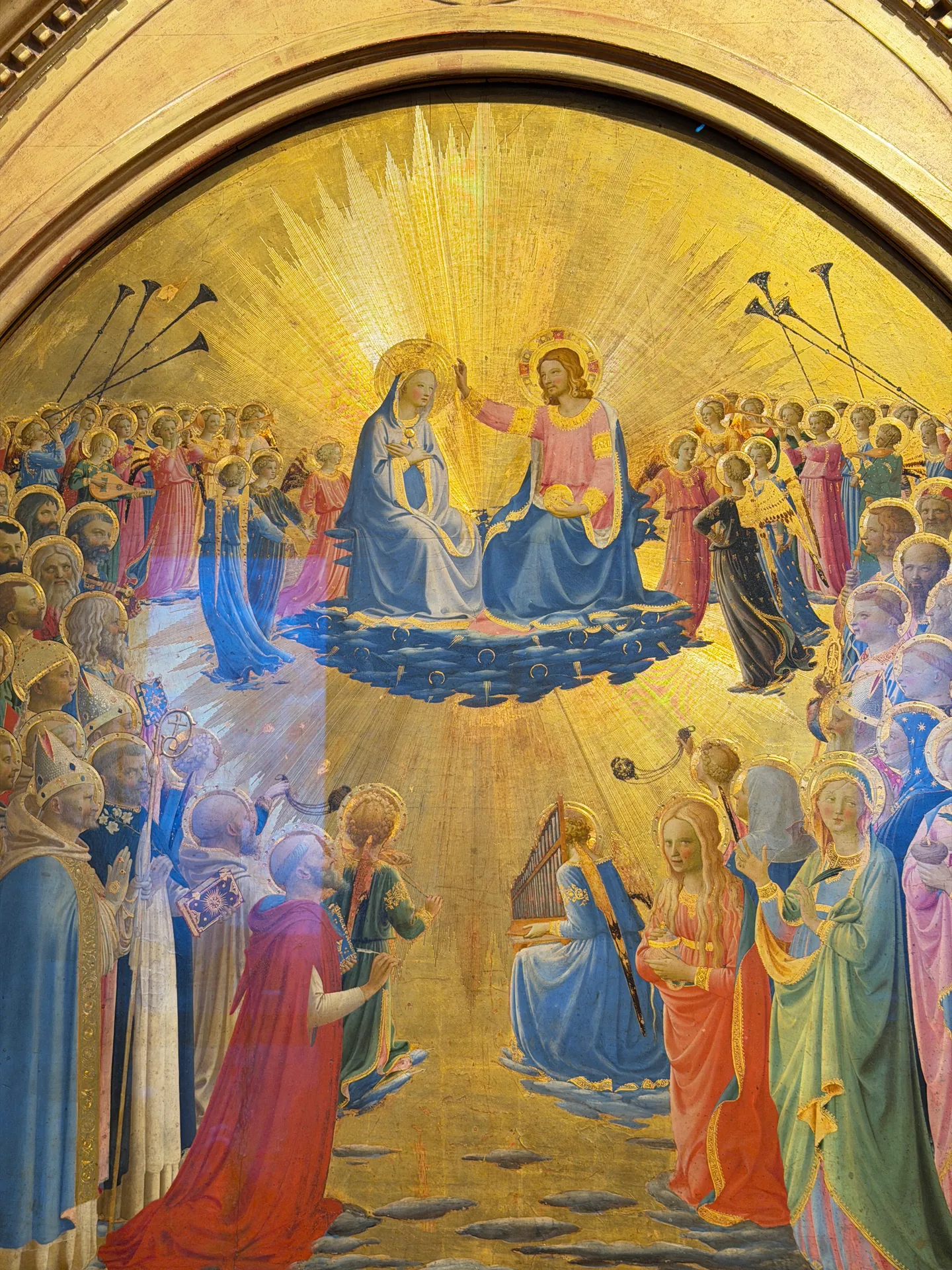
Gentile da Fabriano, 1423Painted for Palla Strozzi, the richest man in Florence. The cavalcade winds back through the three arches, out of the hills and down to the stable, all inside one frame.Hounds and horsesThe retinue is full of animals, observed rather than symbolic, and the gold on the harness is worked in relief.The eldest MagusHe has already taken off his crown and is kneeling to hold the Child's foot, with the Virgin at the centre of the crowd behind him.The trainHorses and riders packed shoulder to shoulder behind the kings. The depth is carried by overlap, not by perspective.One panel of the baseA narrative scene from the predella that runs under the main panel. One of the three scenes here is a modern copy, and which panel this is has still to be checked against the label.Across the goldSeen at a raking angle so the carved frame throws a hard shadow and the tooled ground reads as a surface rather than as a colour.Lorenzo Monaco, about 1420The Redeemer in the central pinnacle with the prophets Isaiah and David either side of him, the shape of the altarpiece intact.The CoronationChrist and the Virgin enthroned under a ciborium above a rainbow scattered with stars, complete from pinnacles down to predella.Under the skylightThe same Coronation on its mount in a room lit from above, which is close to the light these panels were built for.Fra AngelicoRays radiate from the crowning across the gold ground, with the saints packed into dense ranks below it.The crowningThe moment itself at the centre of the panel, Christ setting the crown on the Virgin's head.Ranked haloesThe haloes overlap in rows going back. That is how a crowd is given depth on a flat gold ground.
PERSPECTIVE, WEIGHT AND OIL
Early Renaissance Panels
Uccello laying out broken lances on a perspective grid, Masaccio giving the Virgin weight under her robe, Piero della Francesca in strict profile, and the Portinari Triptych arriving from Bruges in 1483 to show Florence what oil paint could do.
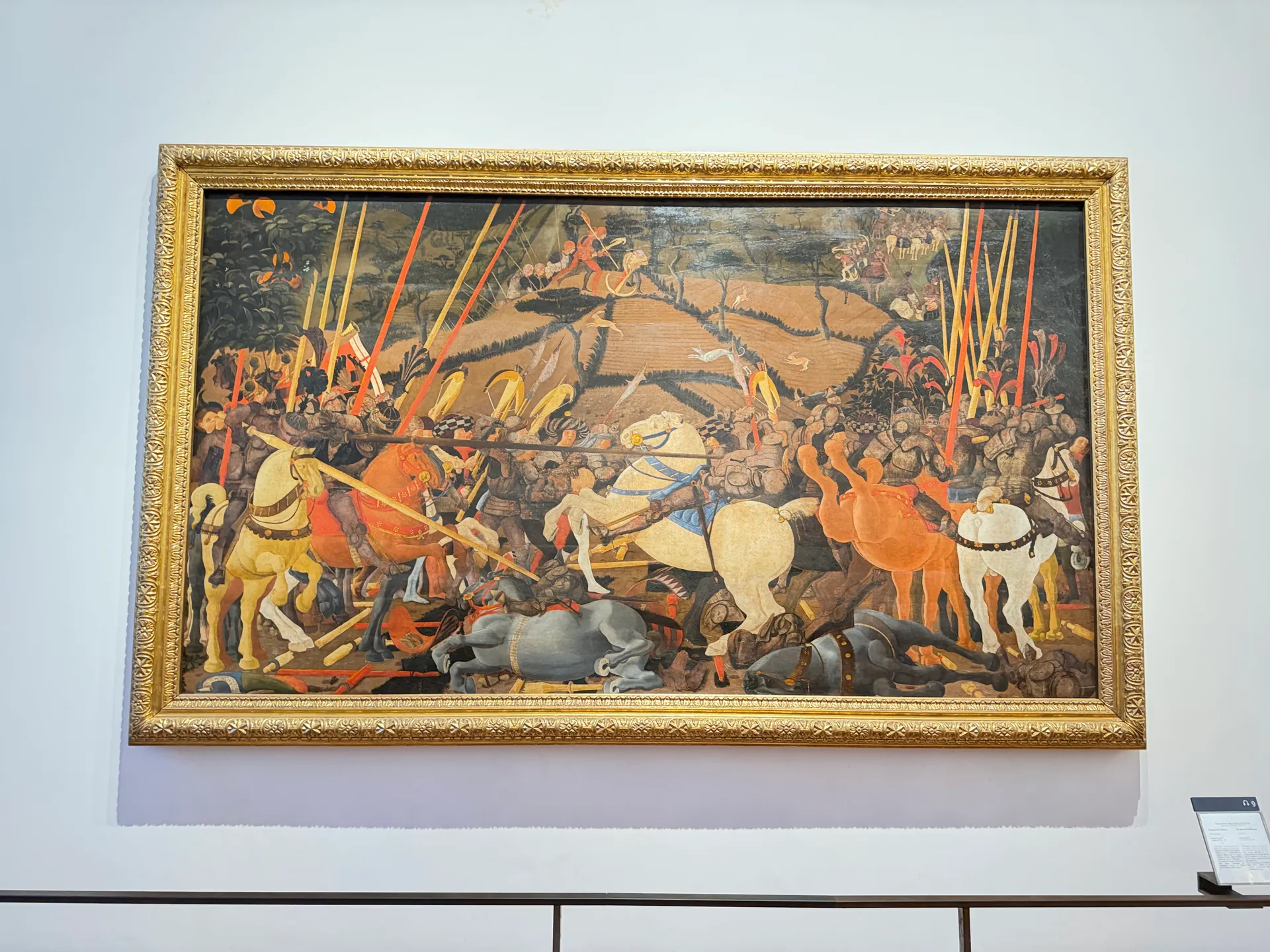
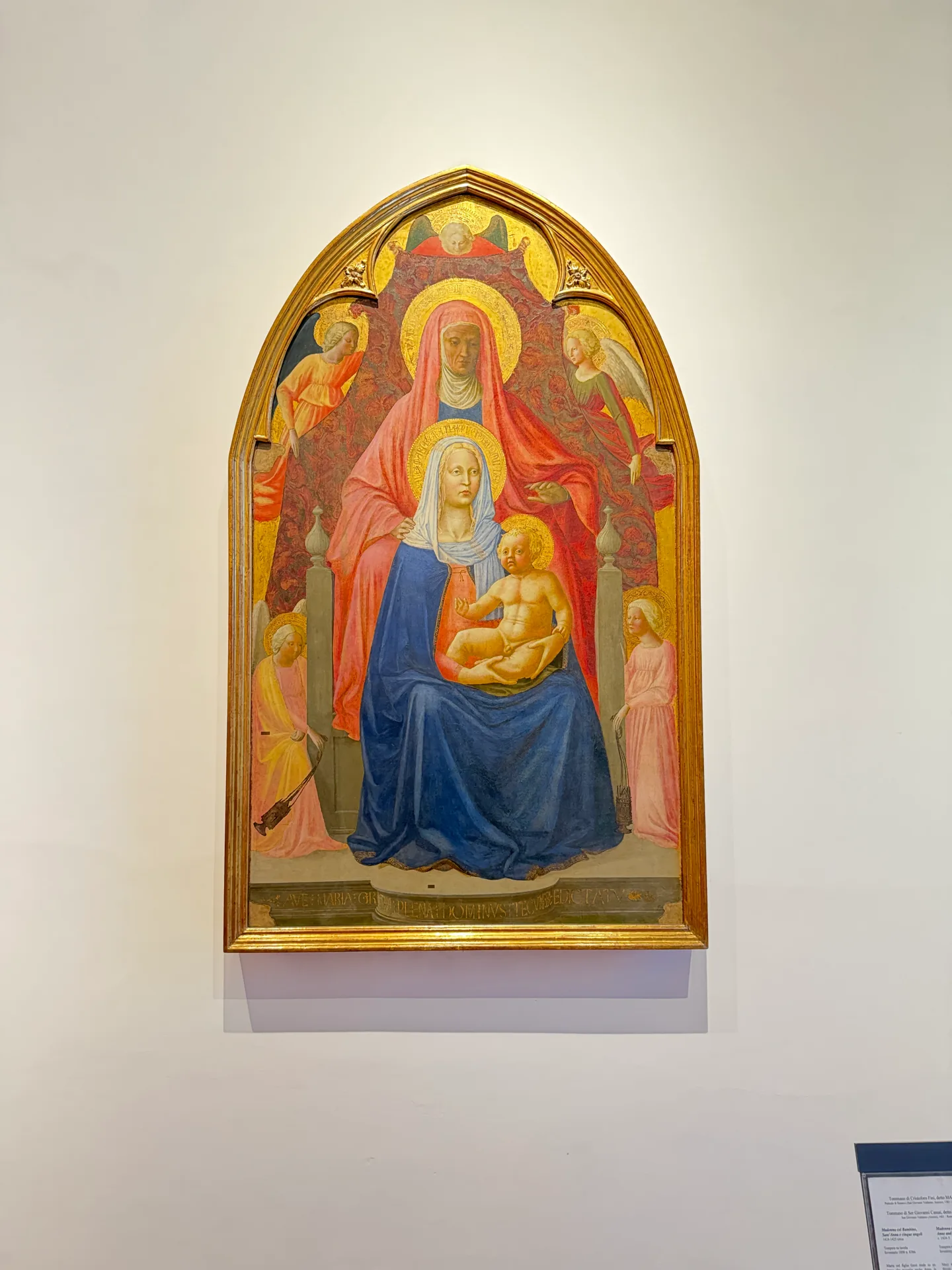
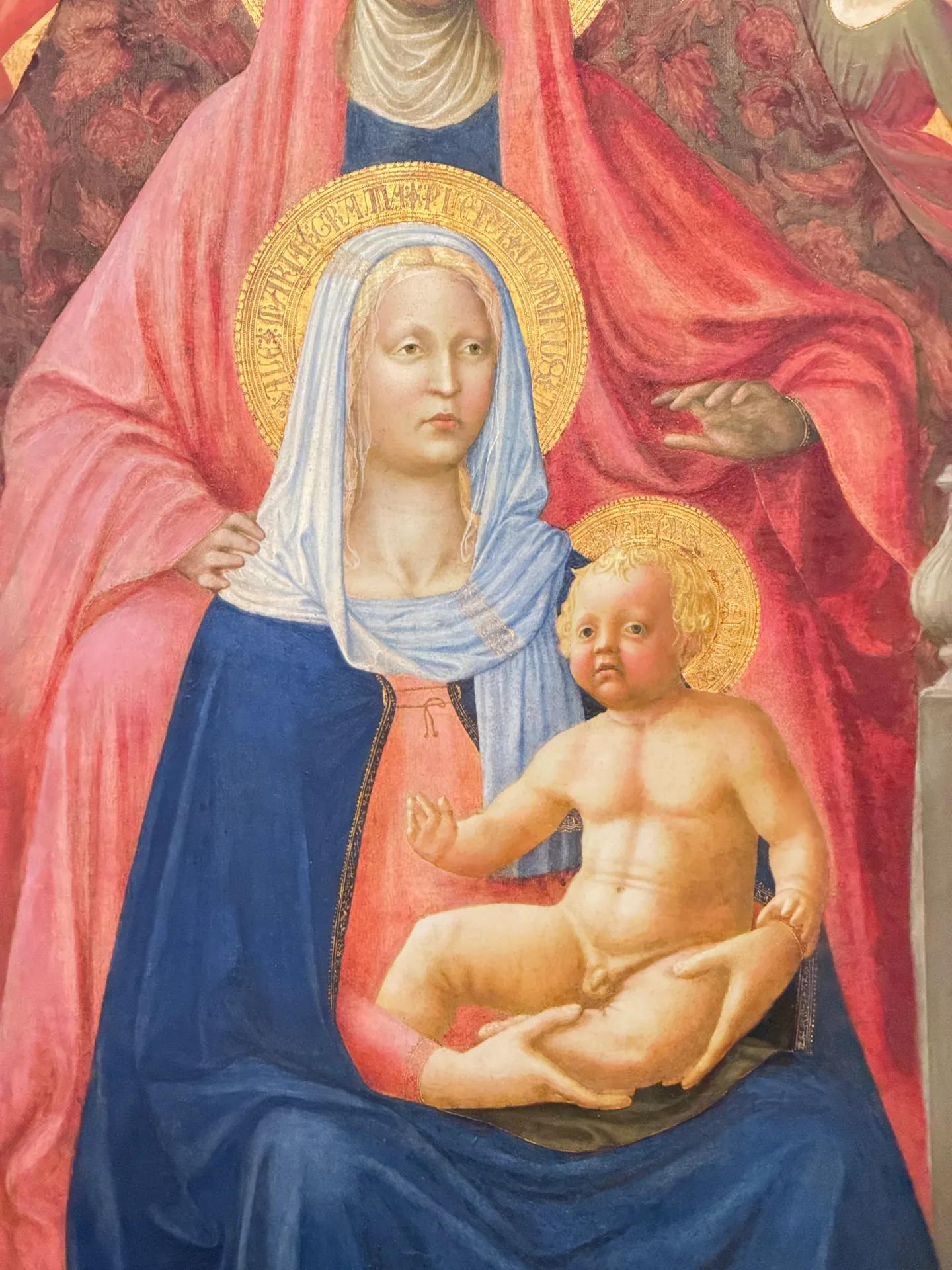
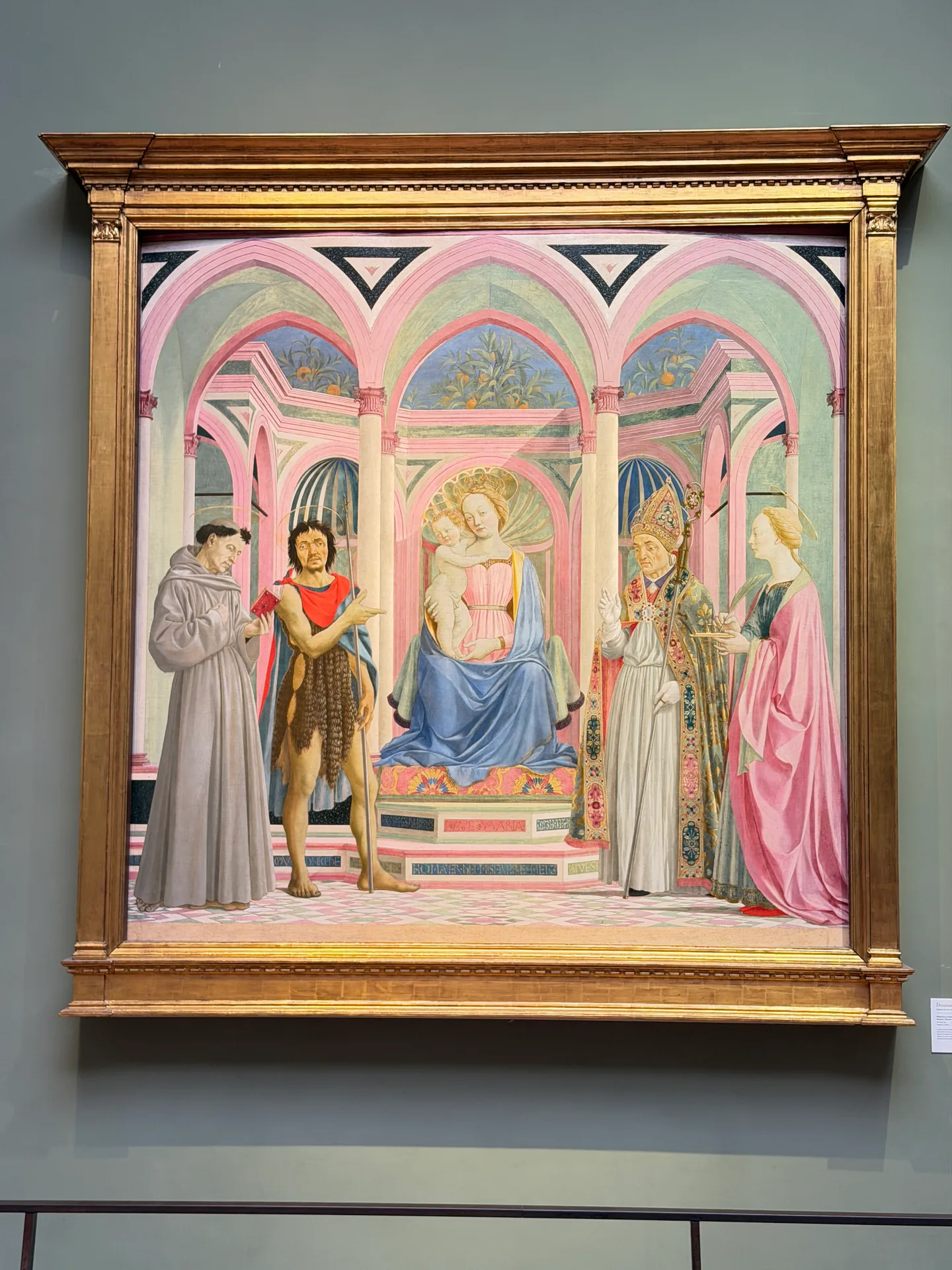
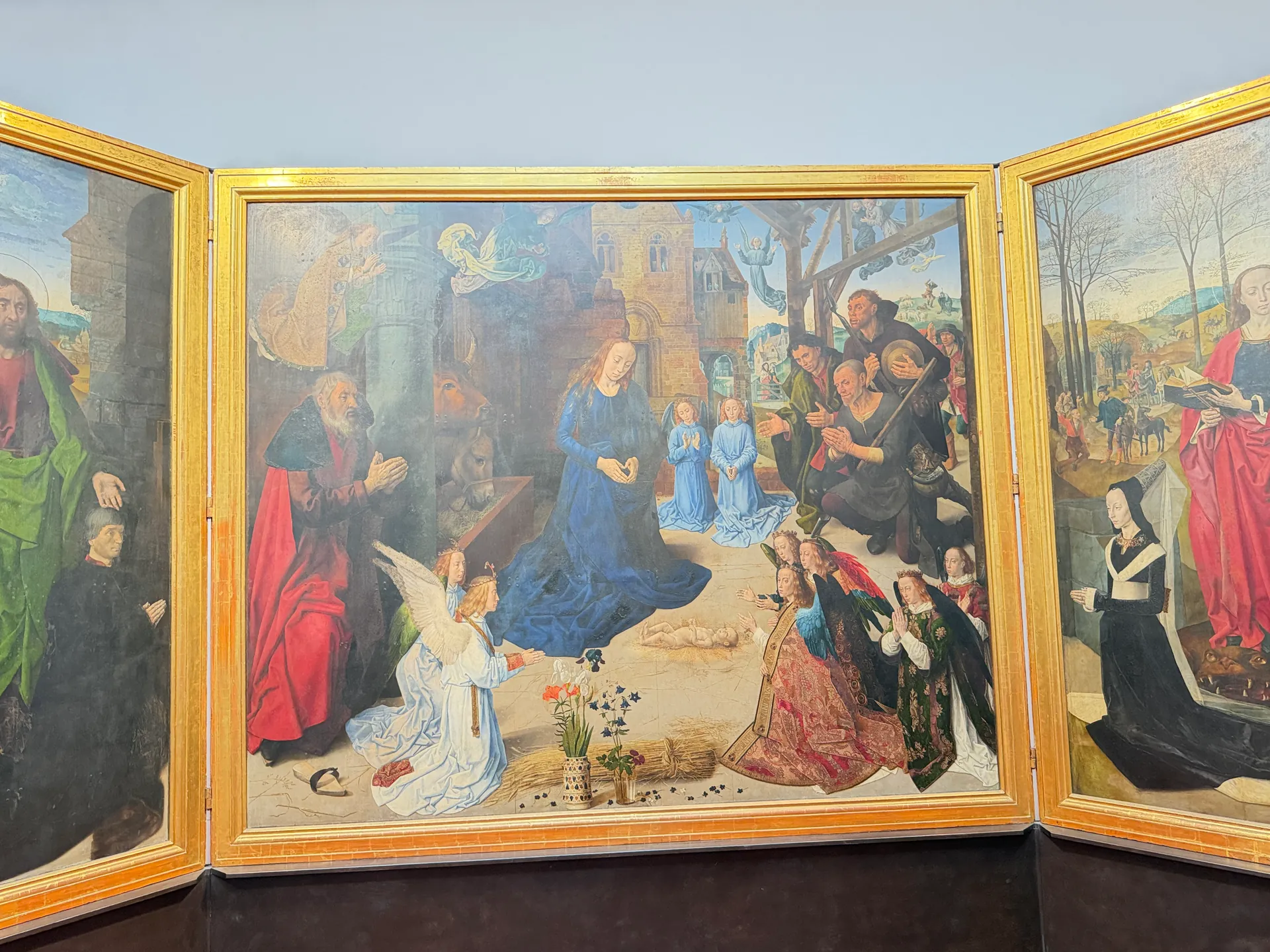
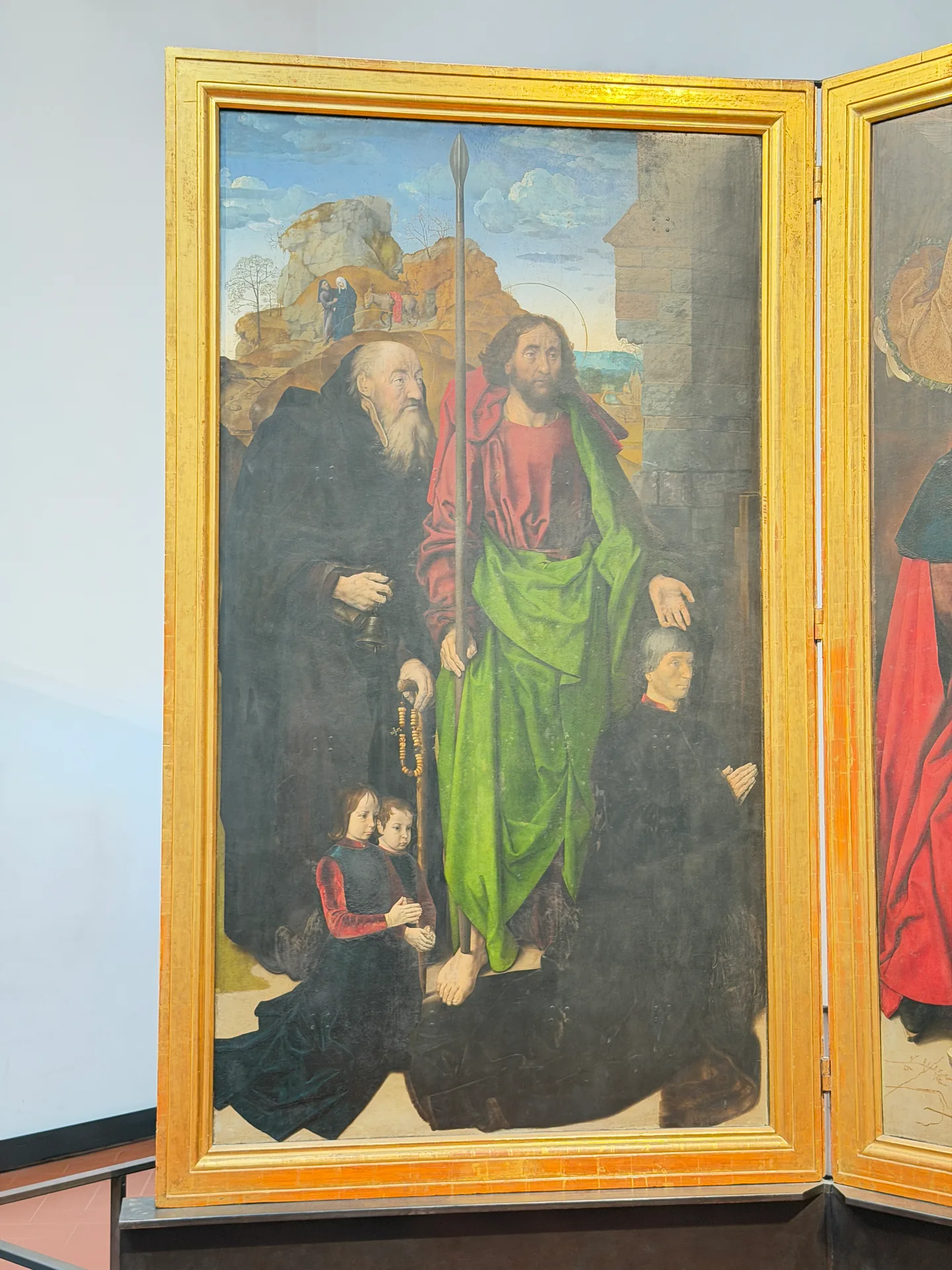
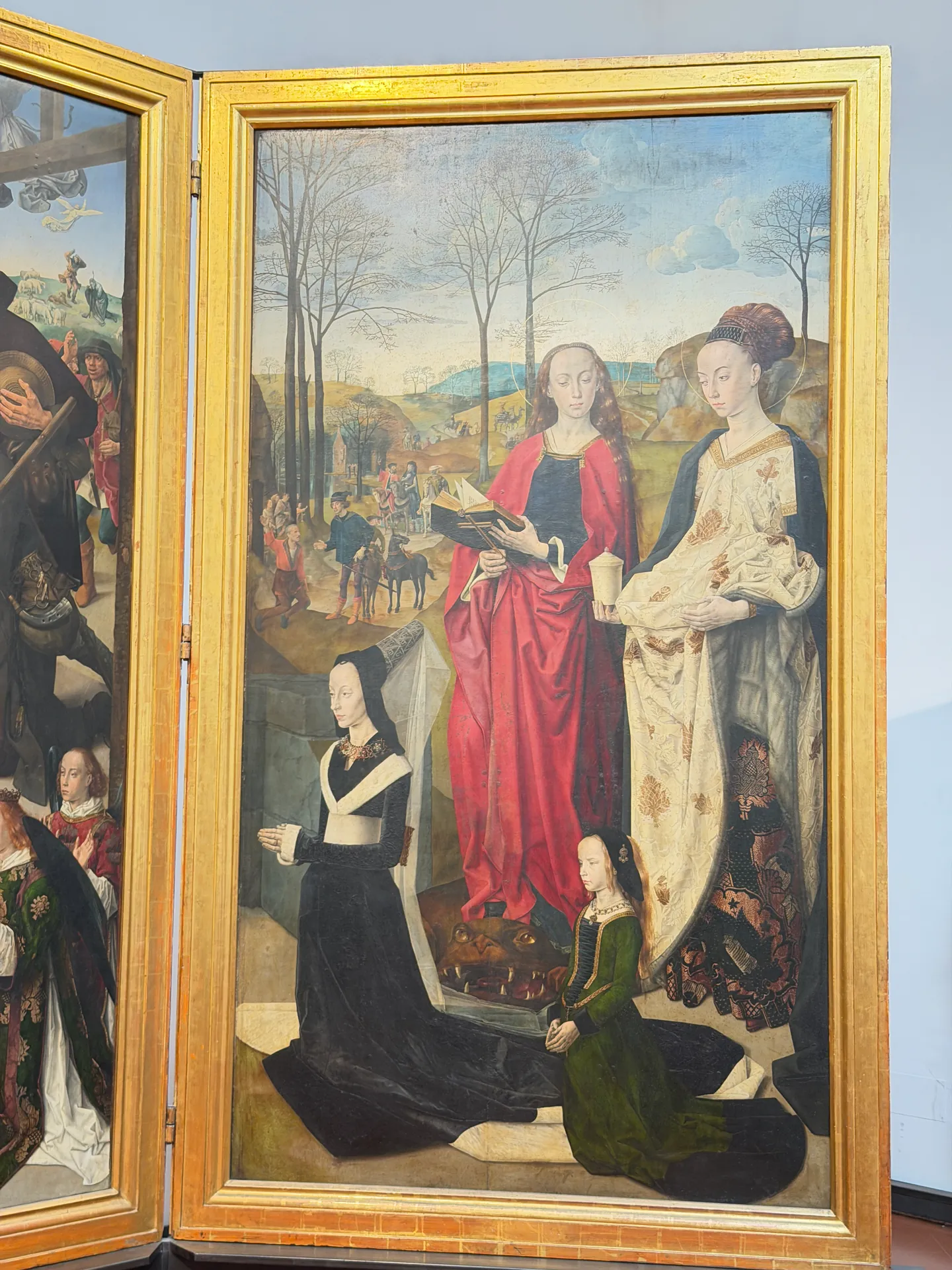
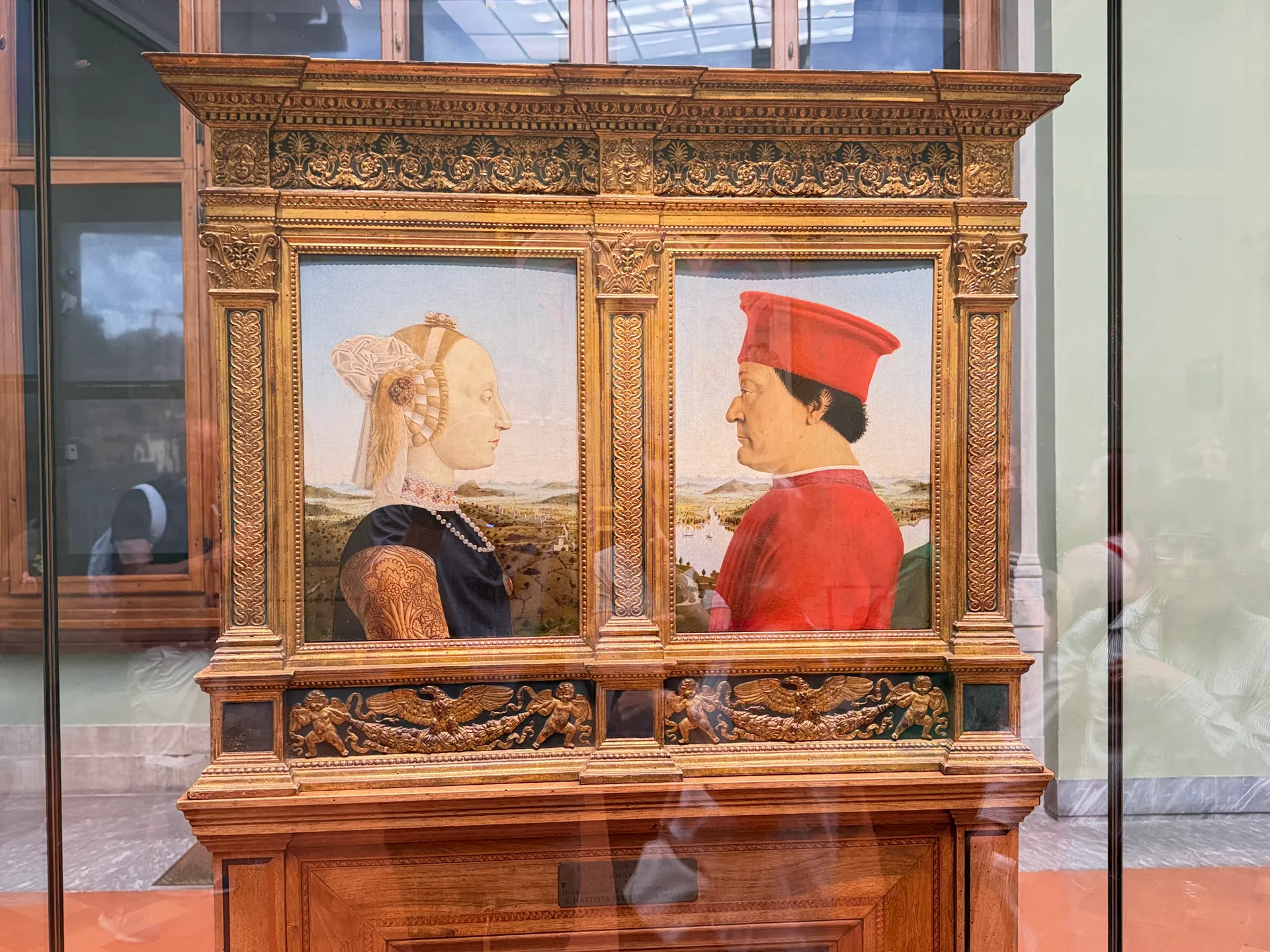
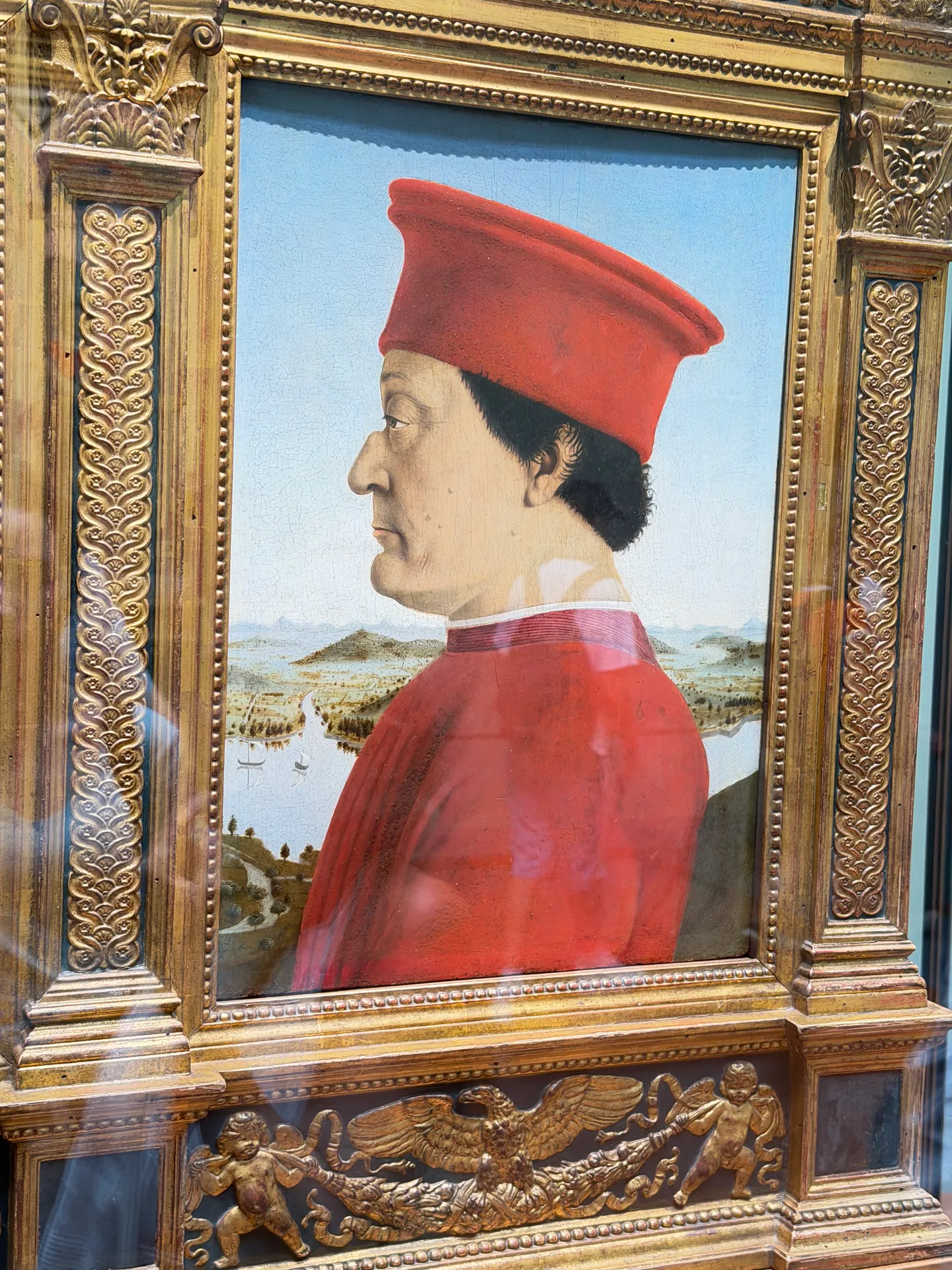
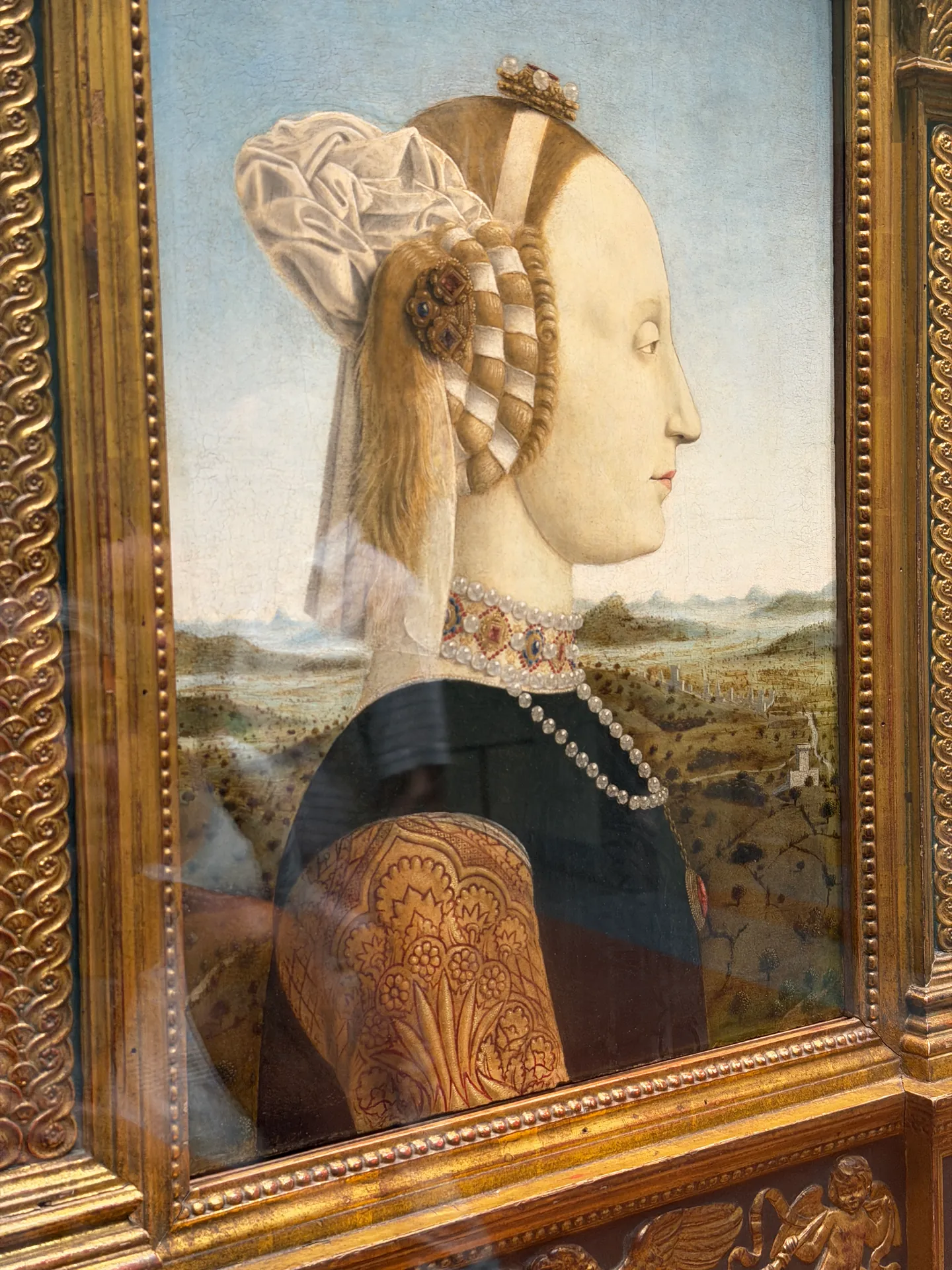
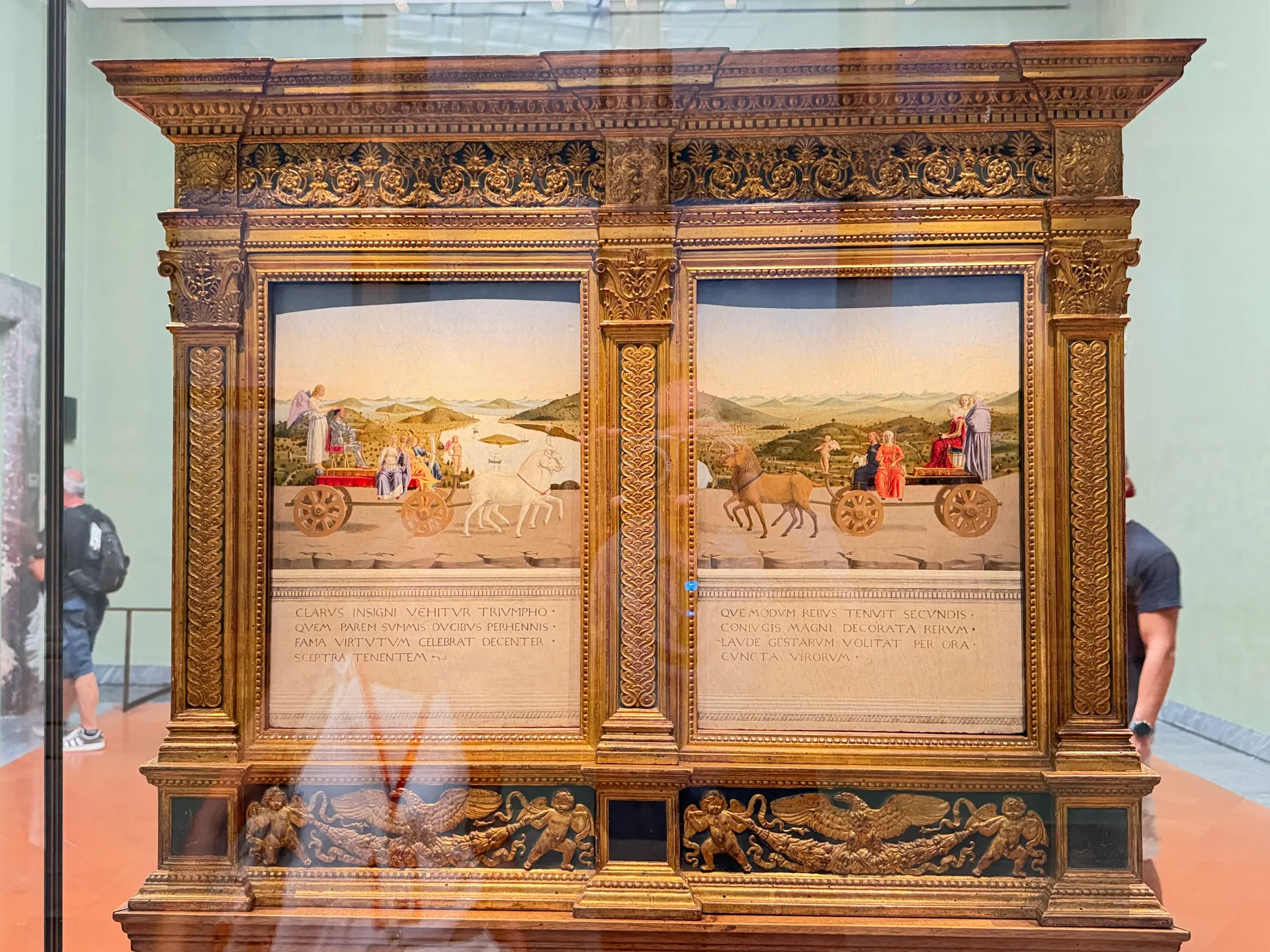
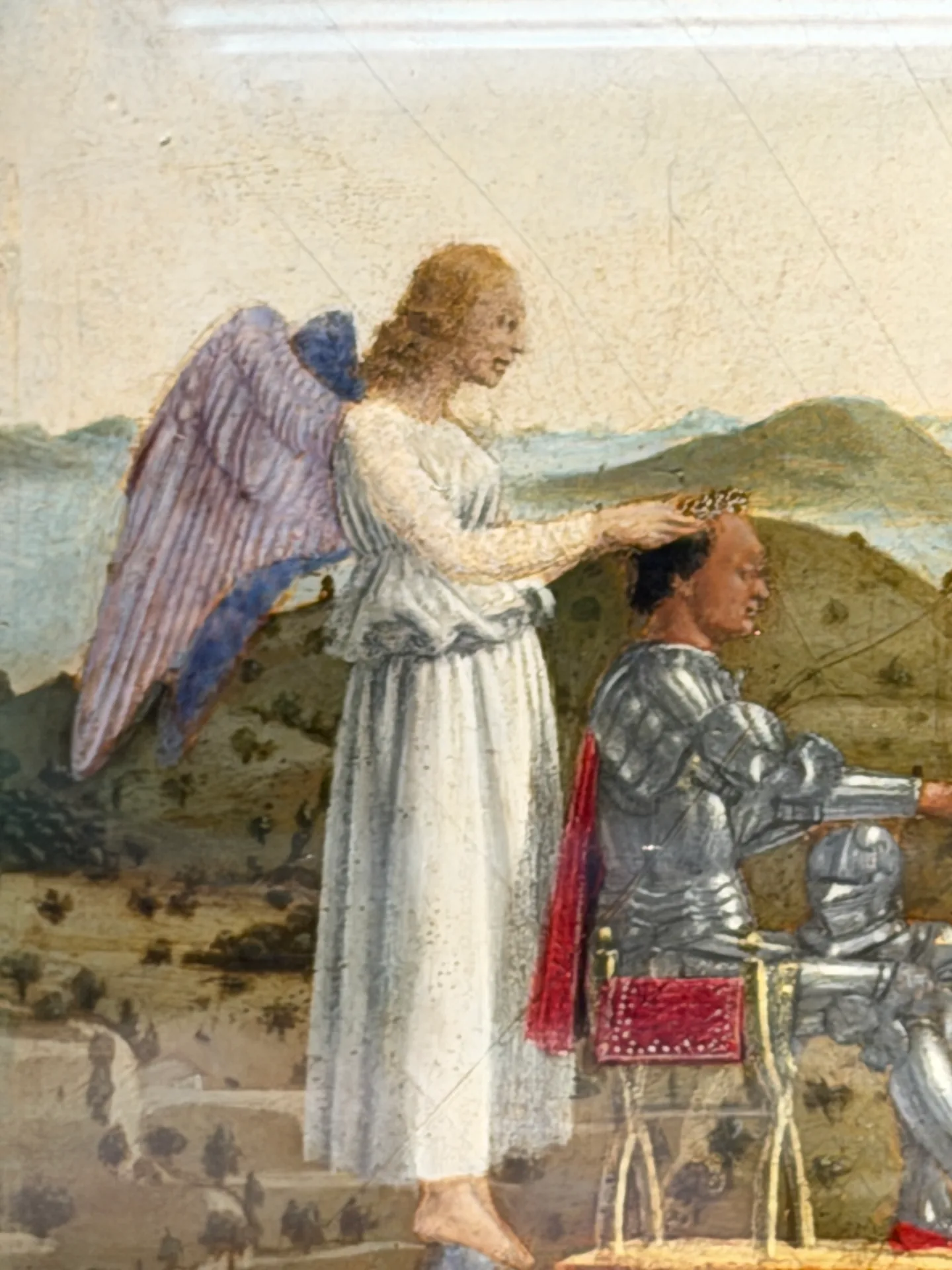
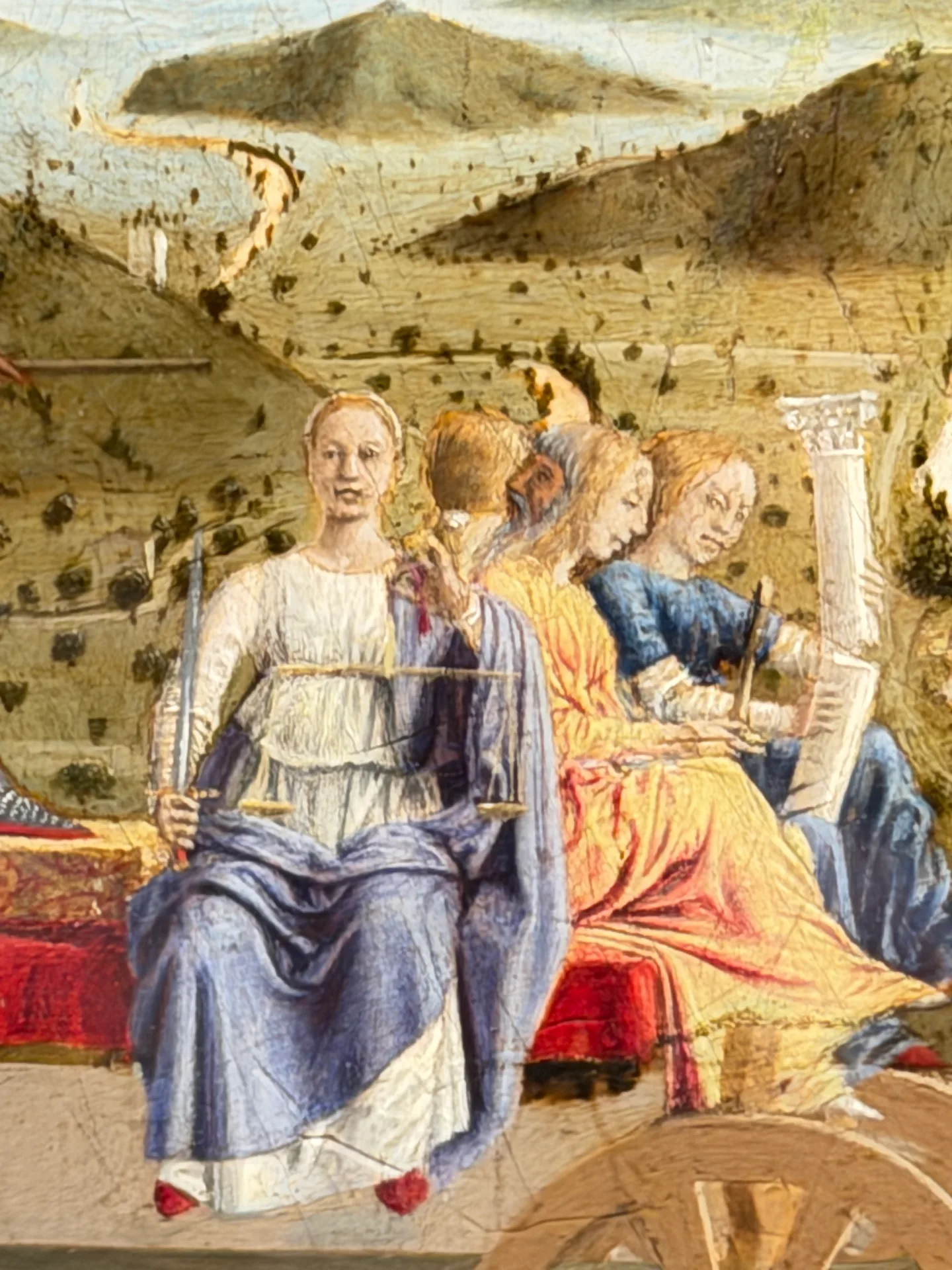
Uccello's battleOne of three panels made for a Florentine bedchamber, now divided between Florence, London and Paris. The broken lances on the ground are laid out on a perspective grid.Masaccio and MasolinoSaint Anne stands behind the Virgin and Child while angels hold a cloth of honour. The Child is modelled in light rather than drawn in line.The Virgin's headClose on the head of the Virgin and the Child beside her, where the modelling is heaviest and the two hands in the panel are easiest to separate.The Santa Lucia altarpieceThe Virgin enthroned in a pink and green arcade with four saints, the whole thing lit as though by real daylight coming from one side.Hugo van der GoesPainted in Bruges for Tommaso Portinari and shipped to Florence in 1483, where its oil technique and its plain realism were studied hard by local painters.The male donorsPortinari and his sons kneel with their patron saints, at the same scale as the saints standing behind them.The female donorsMaria Baroncelli and her daughter kneel on the opposite wing with their own patrons.Both panels togetherPiero della Francesca's paired portraits of the Duke and Duchess of Urbino, in a free standing case so that both sides can be seen.Federico da MontefeltroIn strict profile, which was the coin convention and also the side of his face that survived the tournament that cost him an eye.Battista SforzaHer pearls and jewelled headdress set against the same continuous landscape that runs on behind her husband.The reverseThe backs of both panels carry allegorical Triumphs, which is why the diptych is displayed free standing rather than on a wall.Federico crownedAn angel sets a wreath on the duke as he rides in armour on his chariot.Battista's chariotThe duchess rides with her attendant Virtues. The two Triumphs read as one continuous procession across both panels.
THE ROOM MOST PEOPLE COME FOR
Botticelli
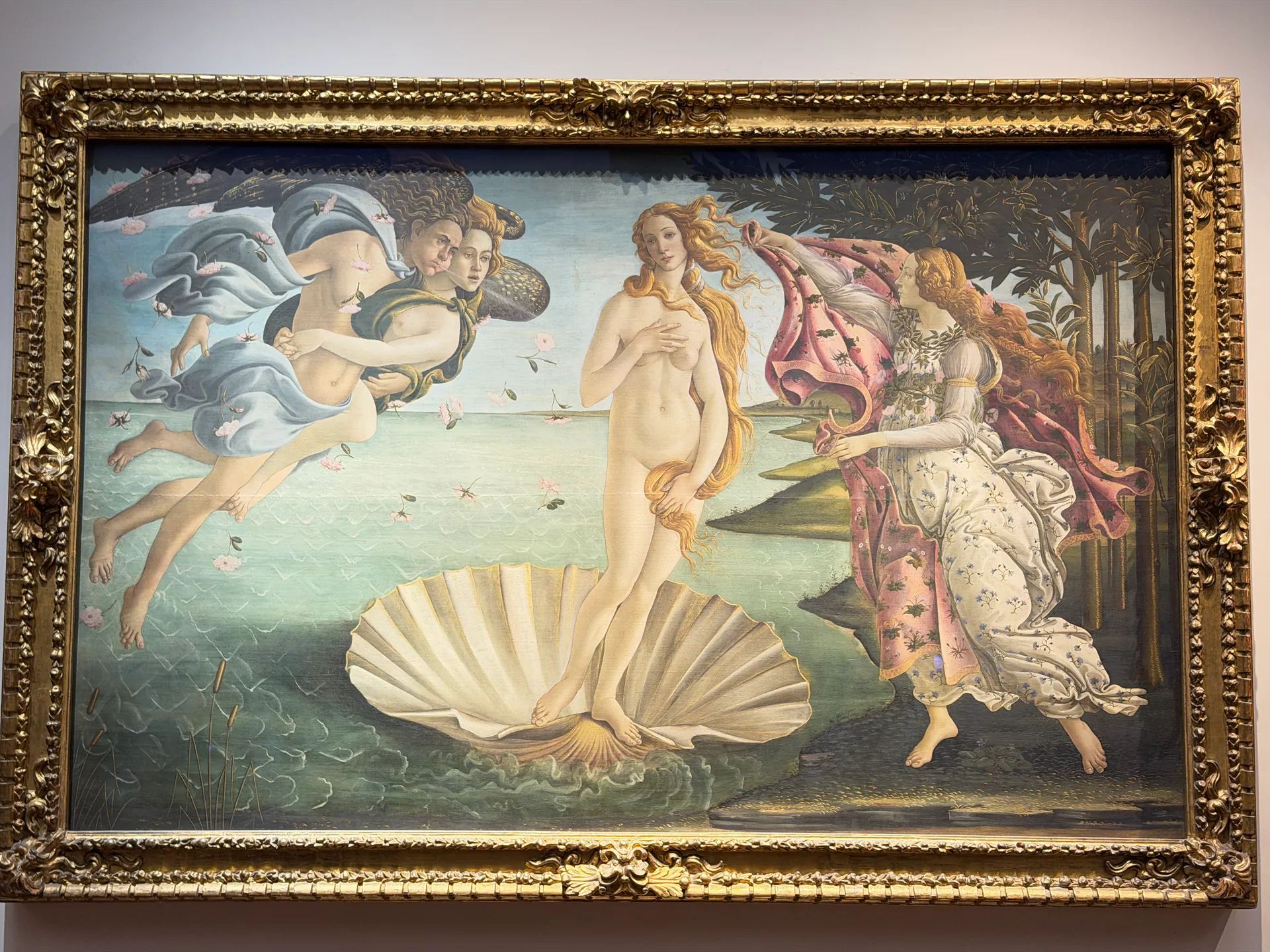
Four large panels and a shelf of smaller ones. The Birth of Venus and the Primavera hang in the same room, which is a fairly recent arrangement and worth standing still for before the room fills.
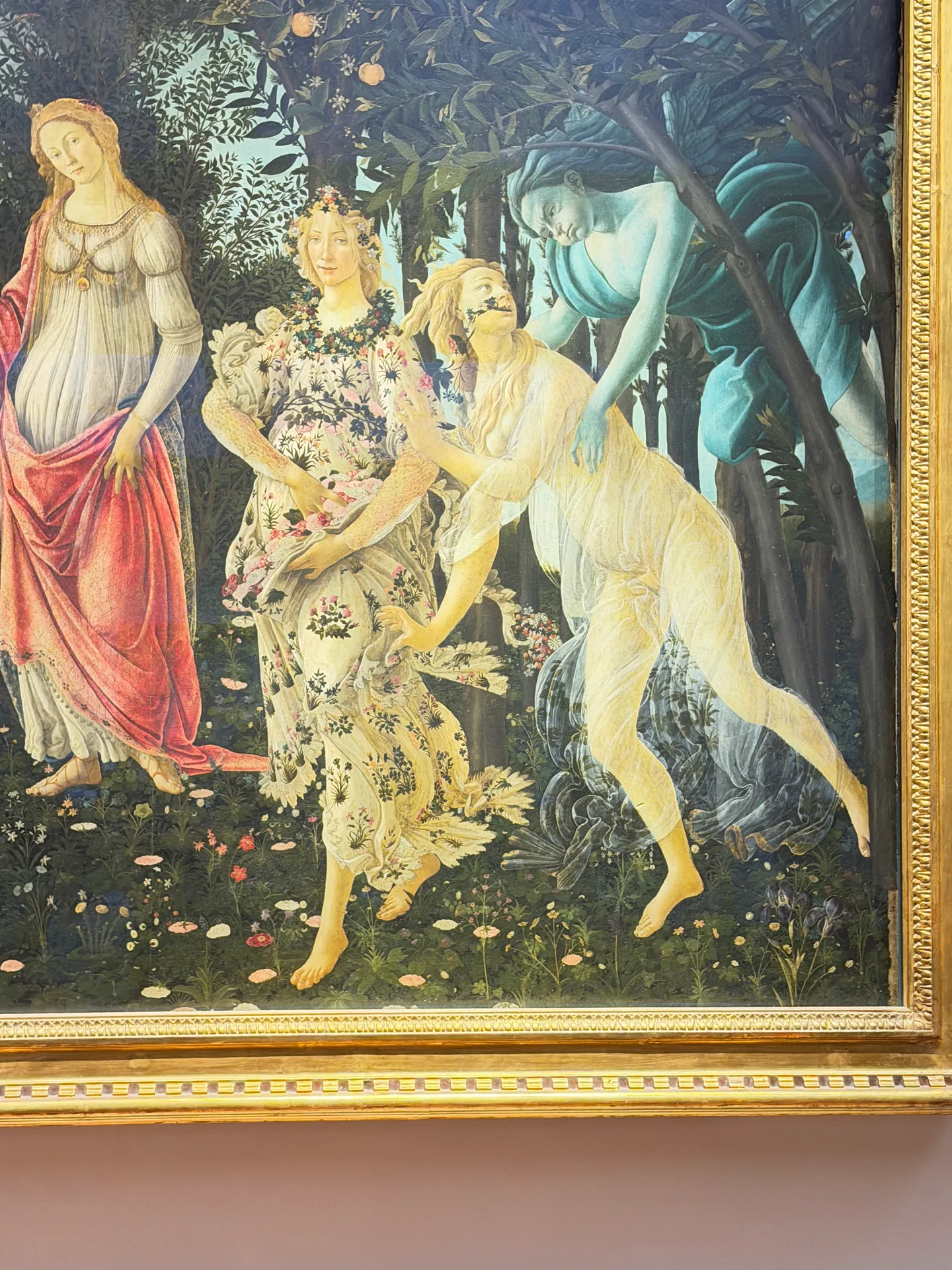
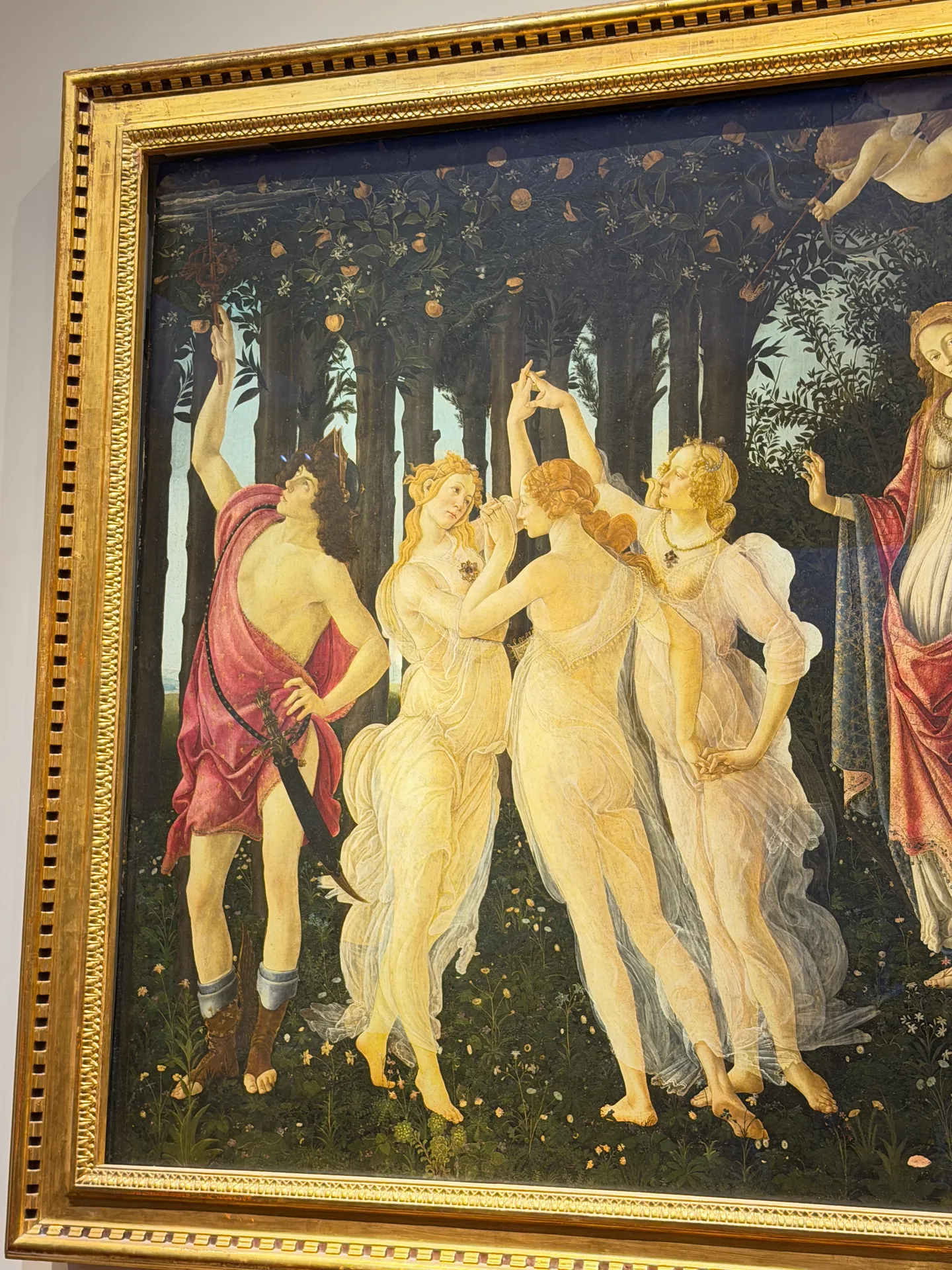
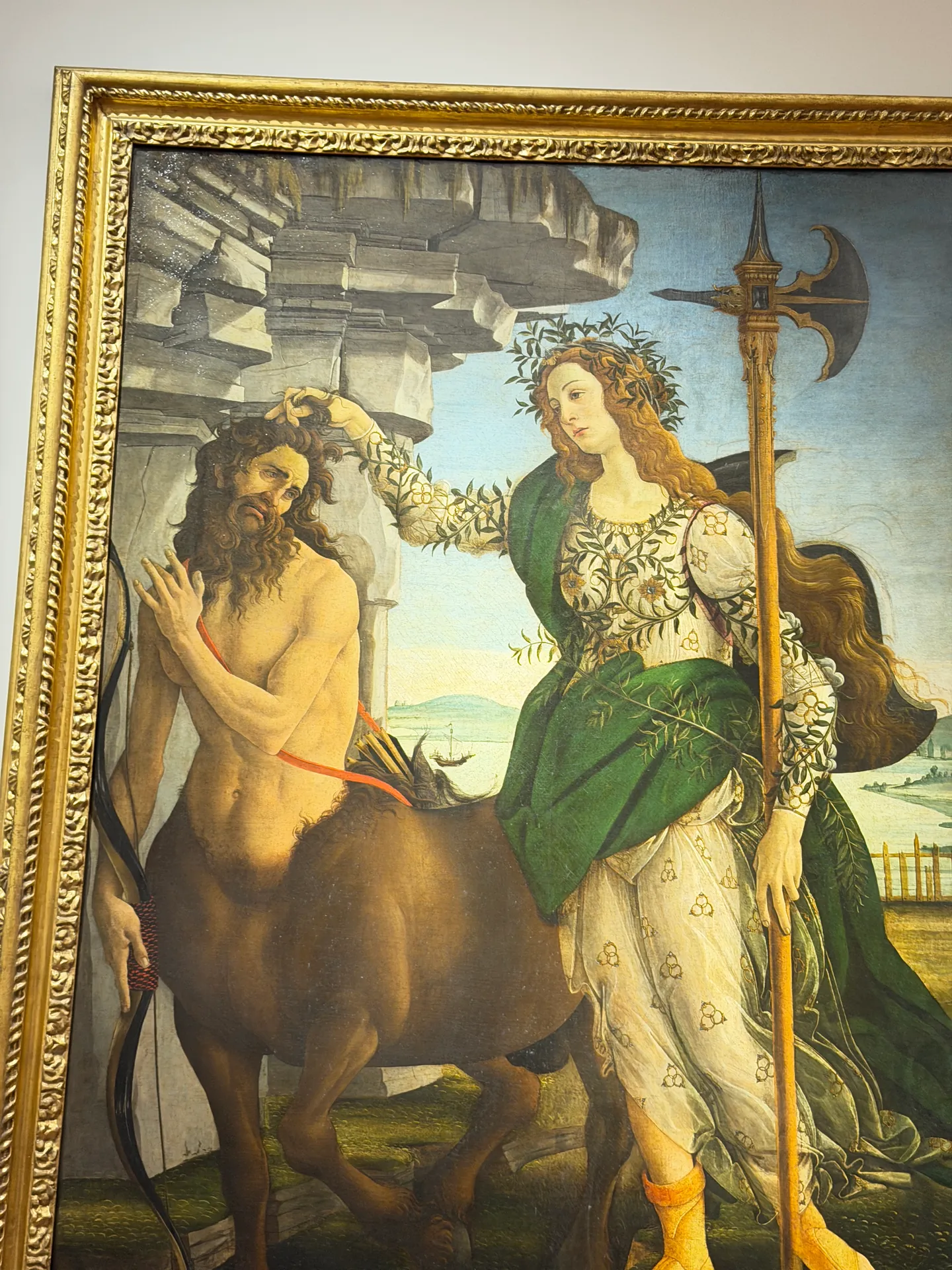
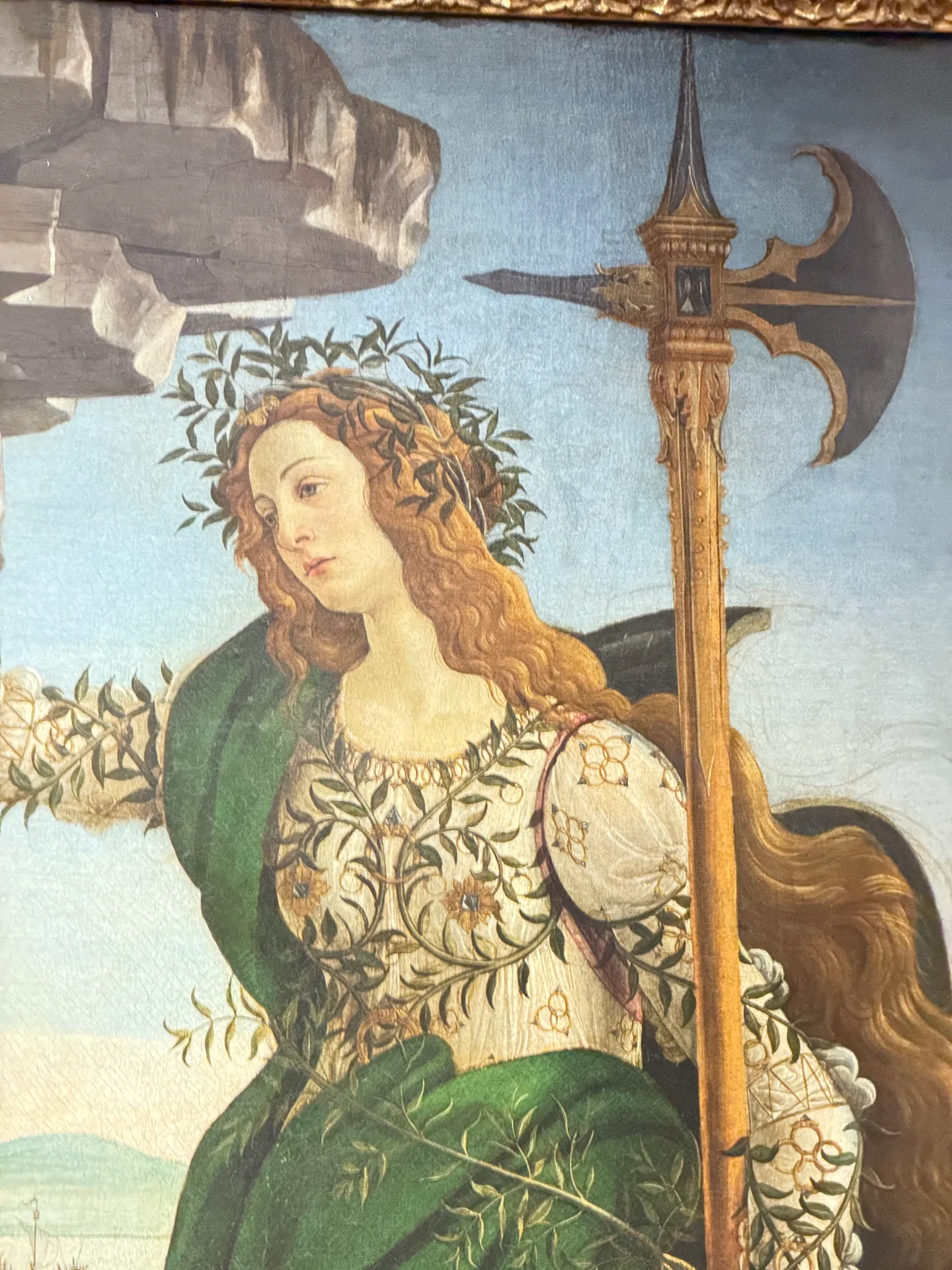
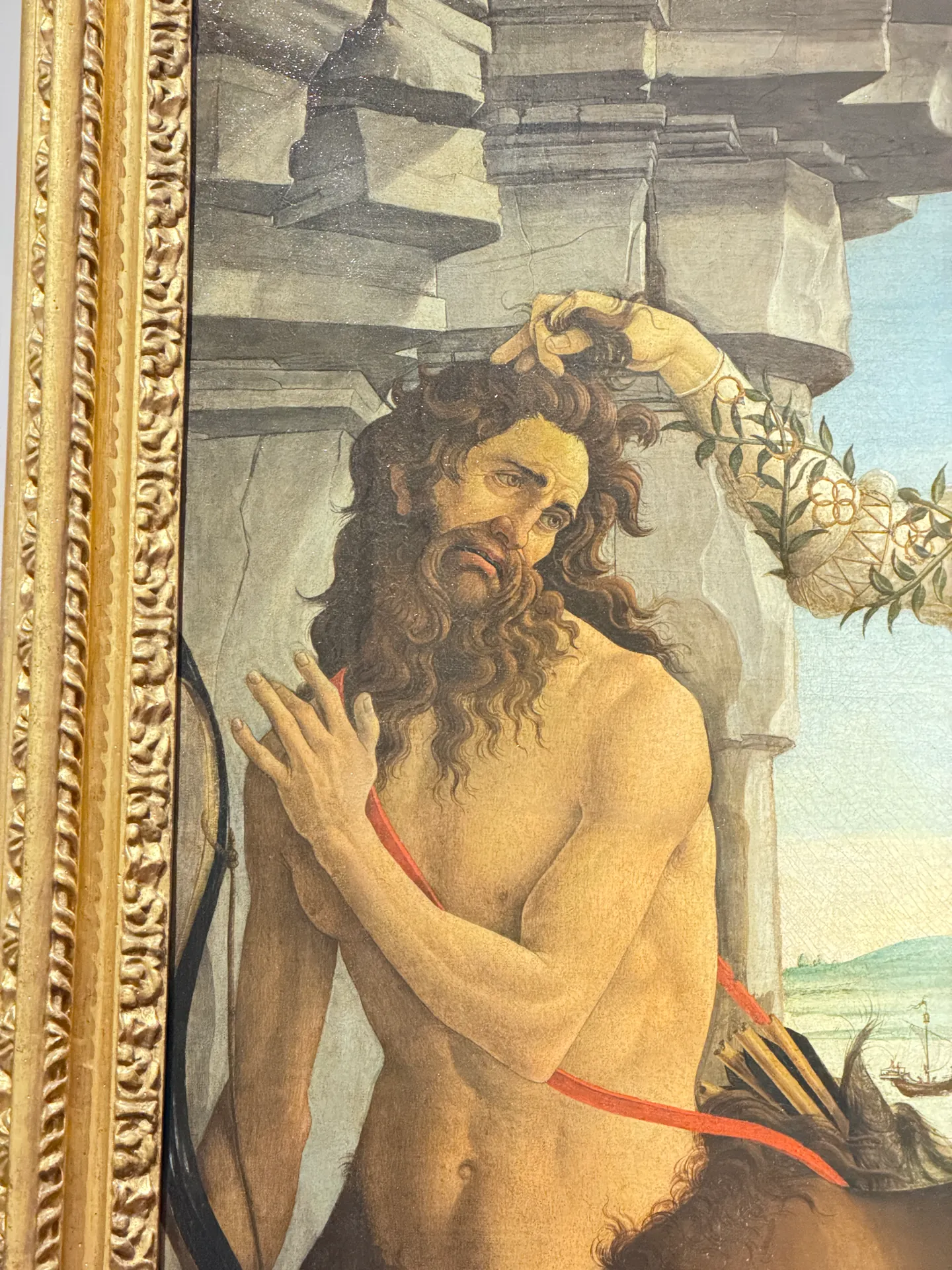
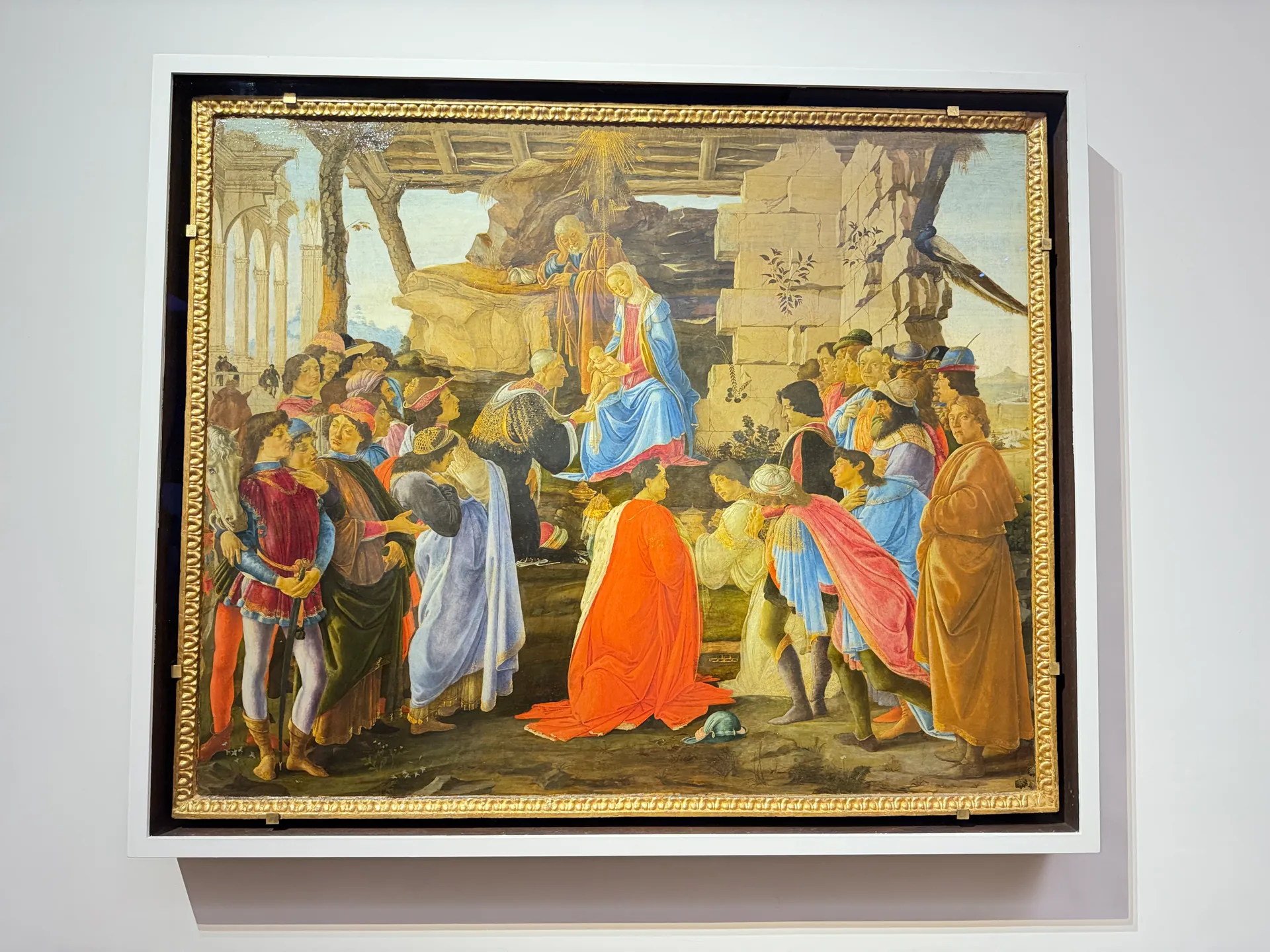
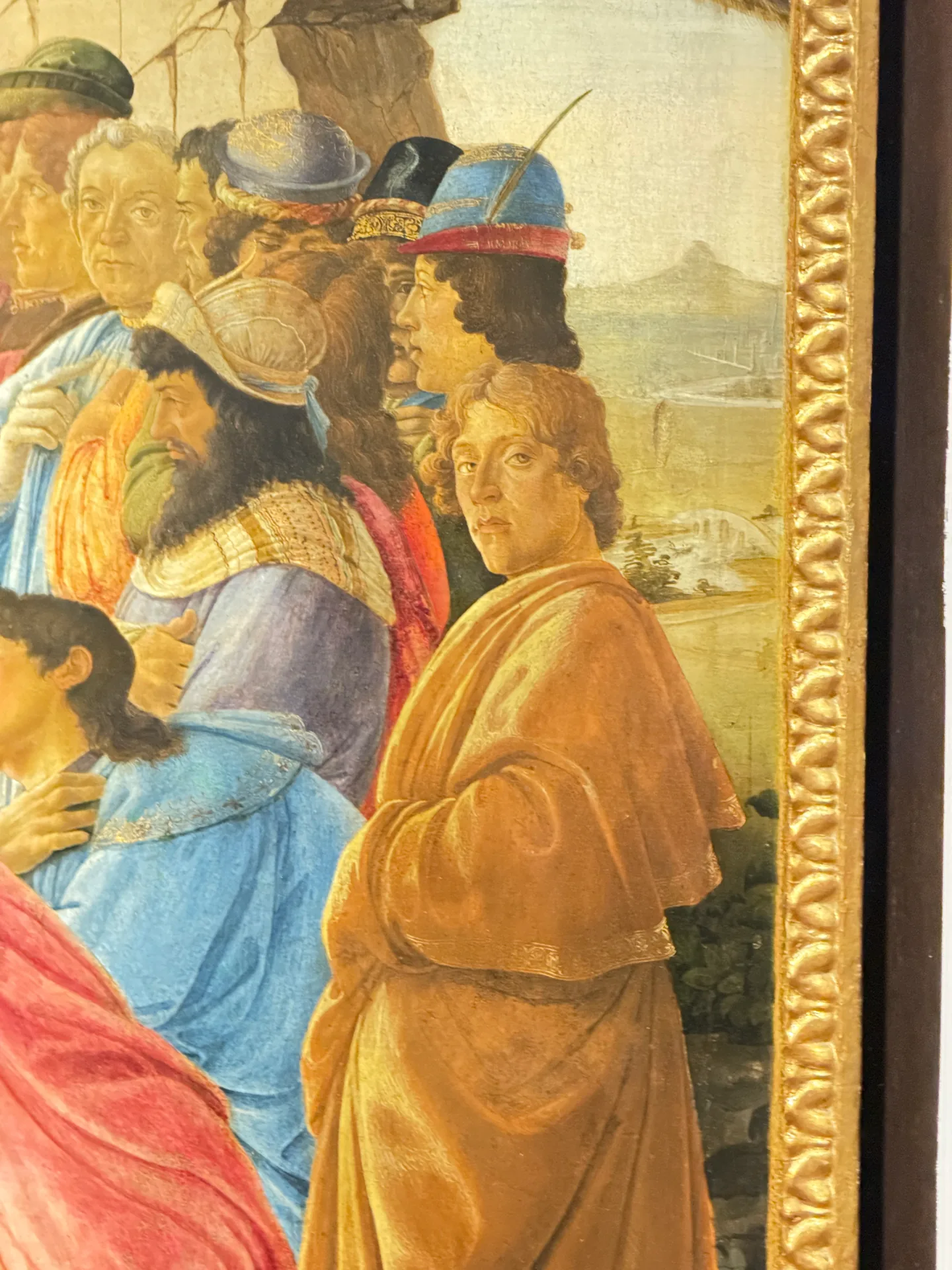
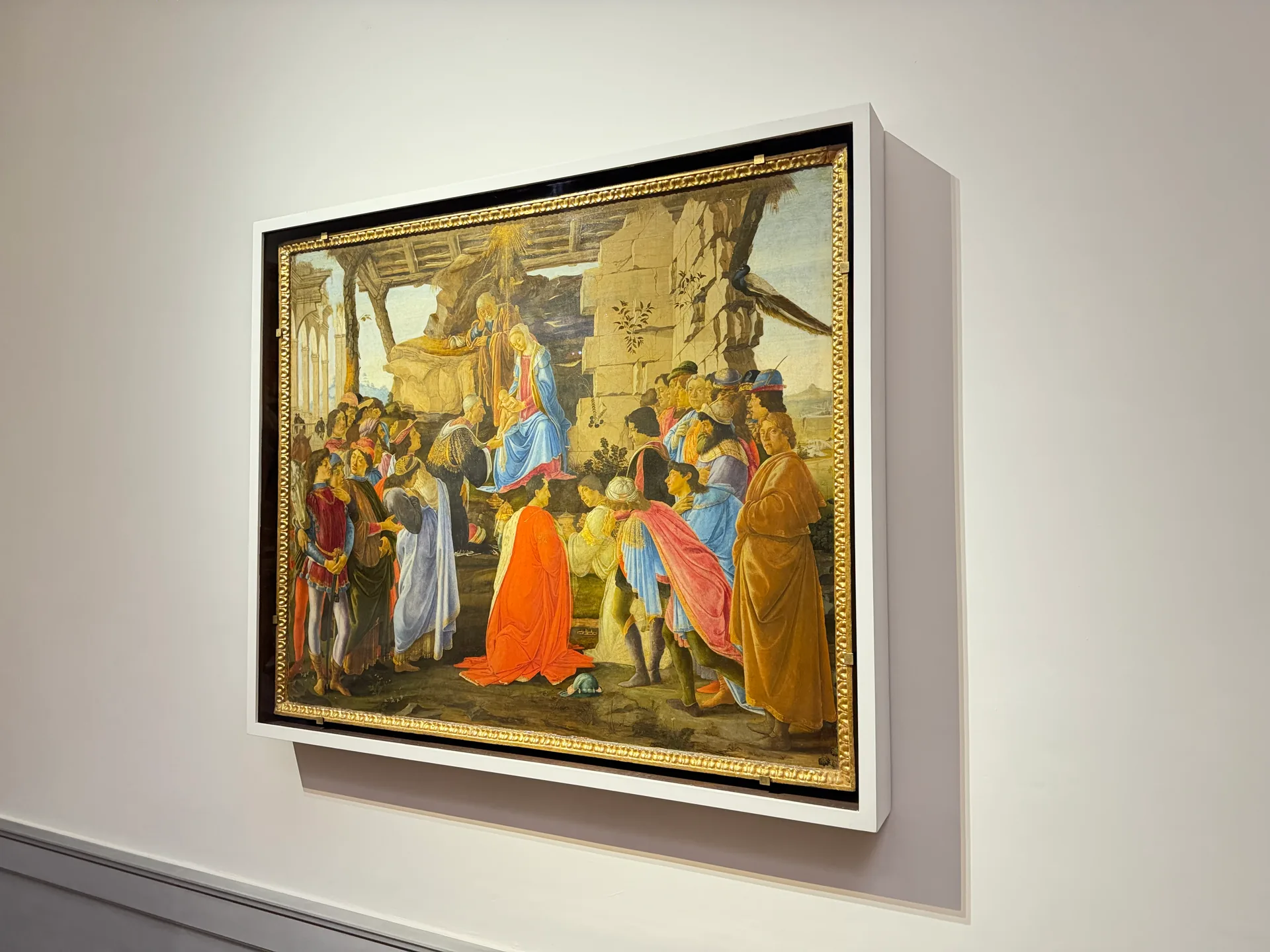
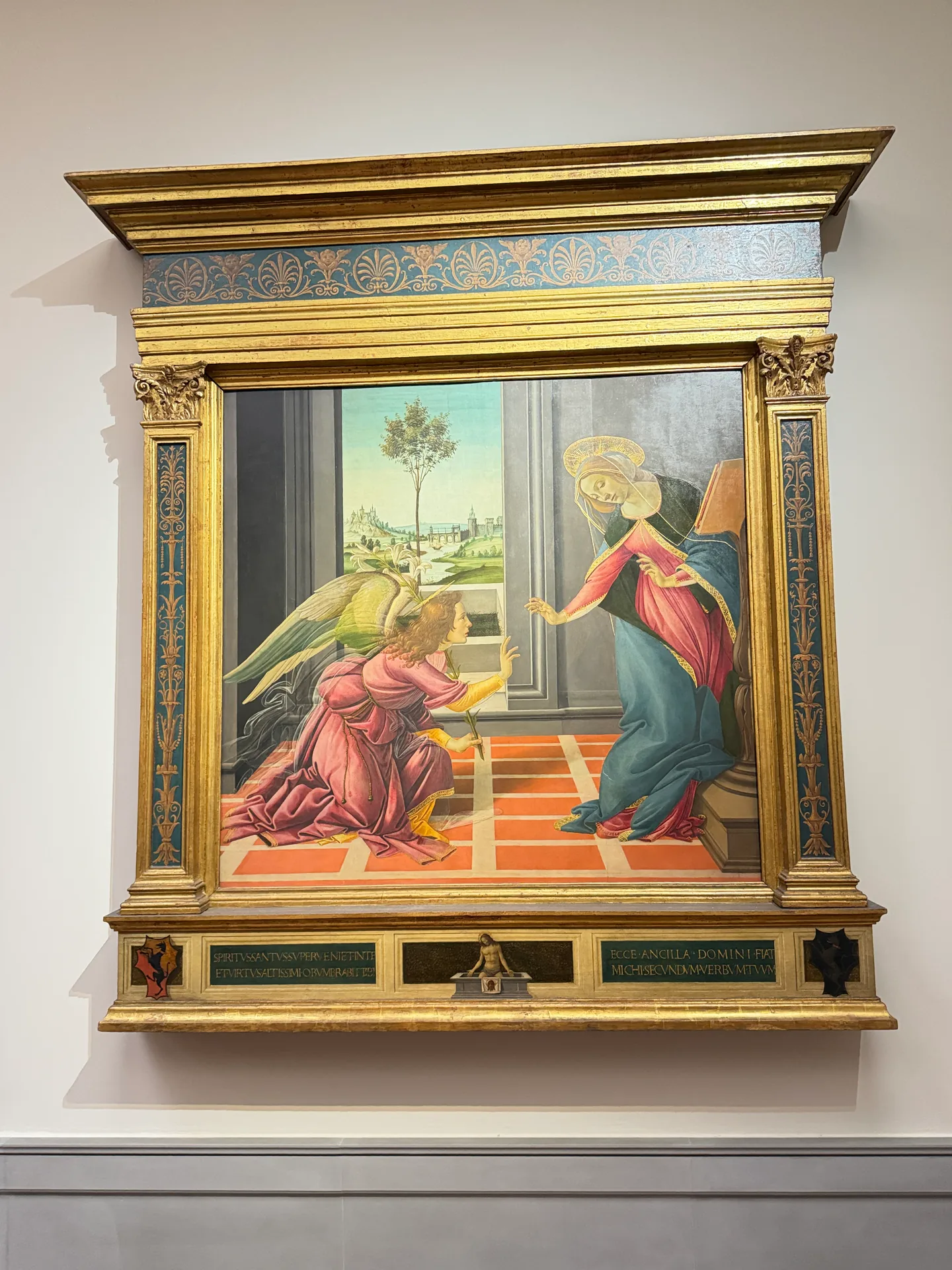
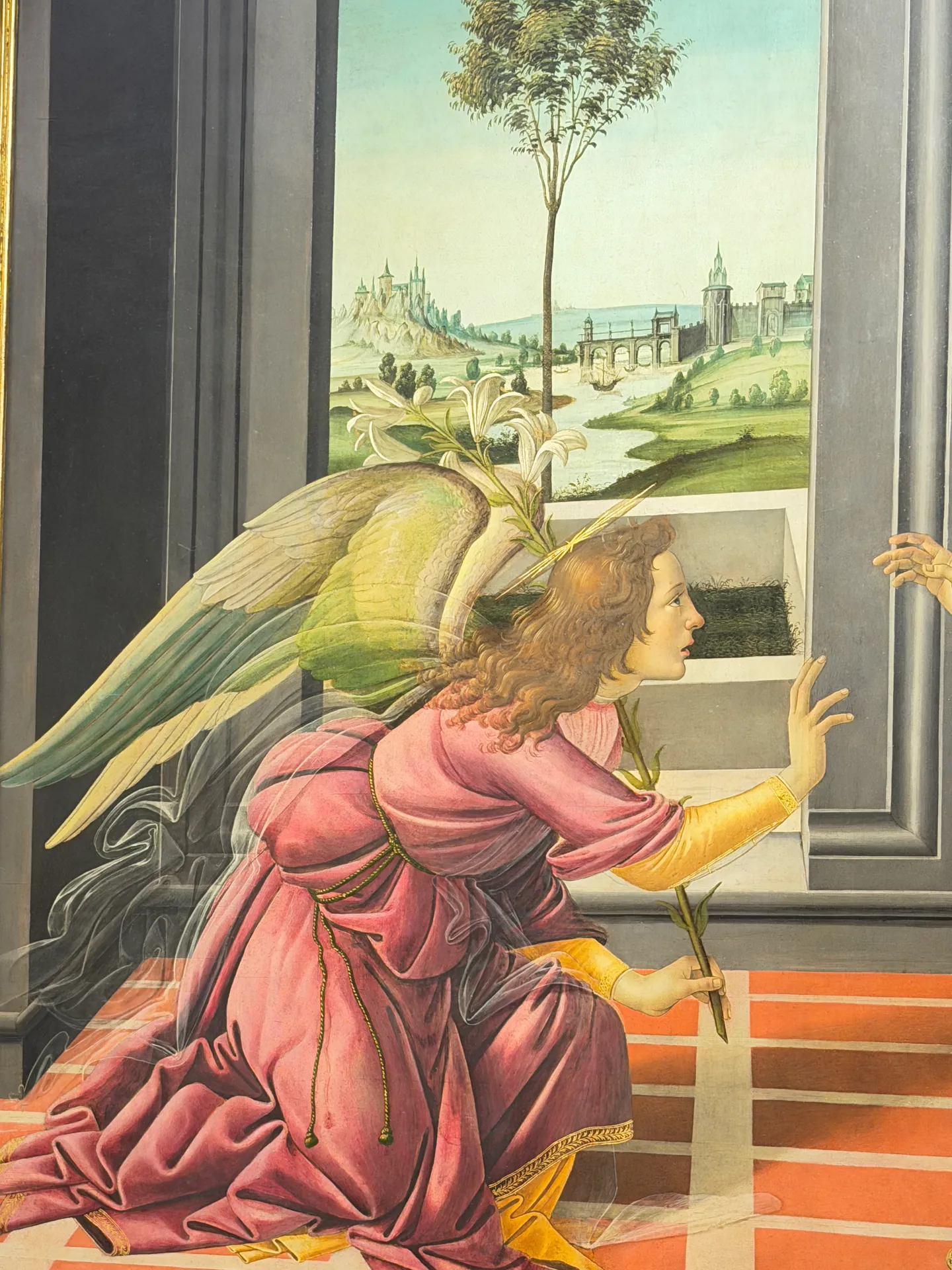
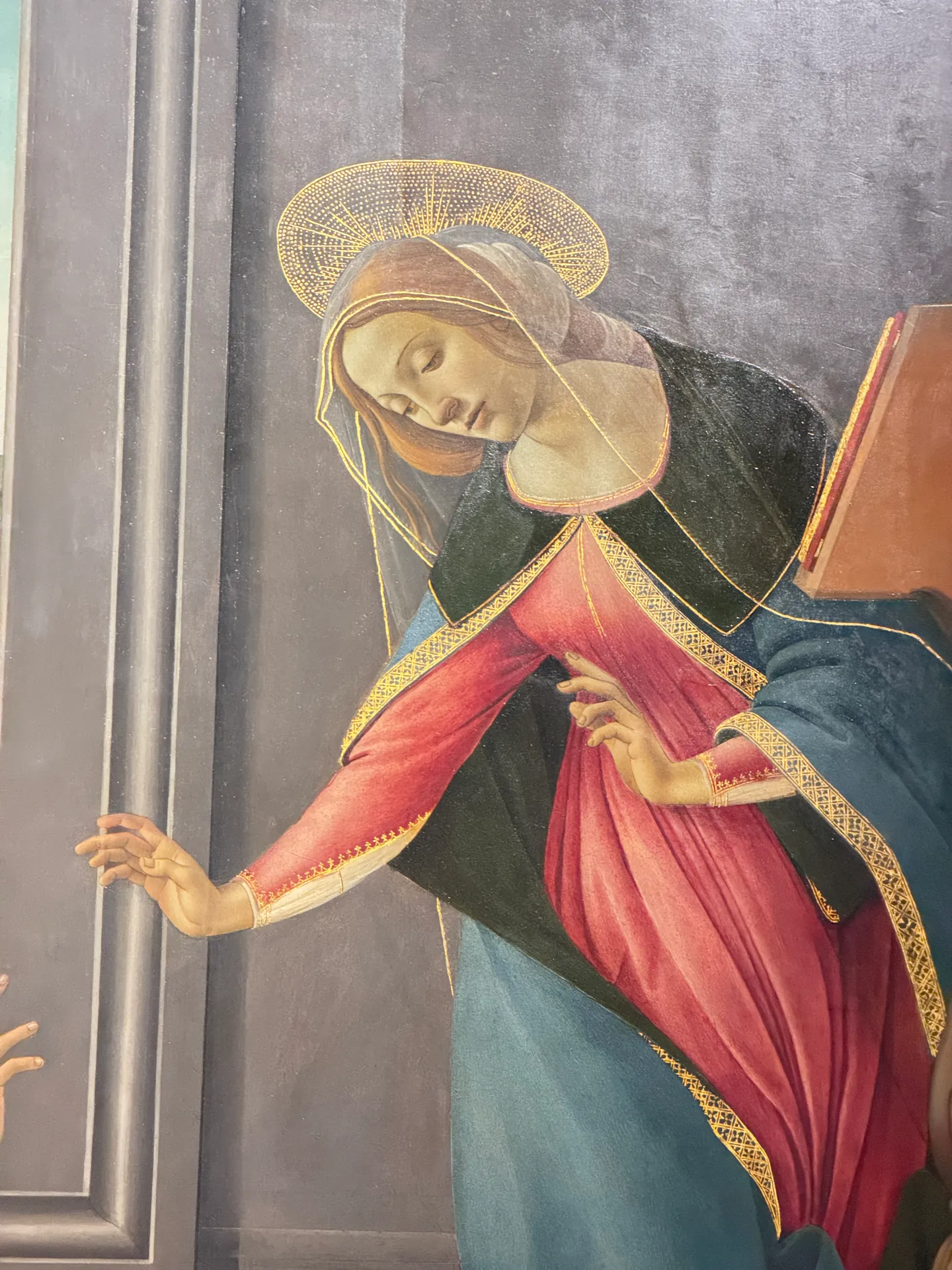
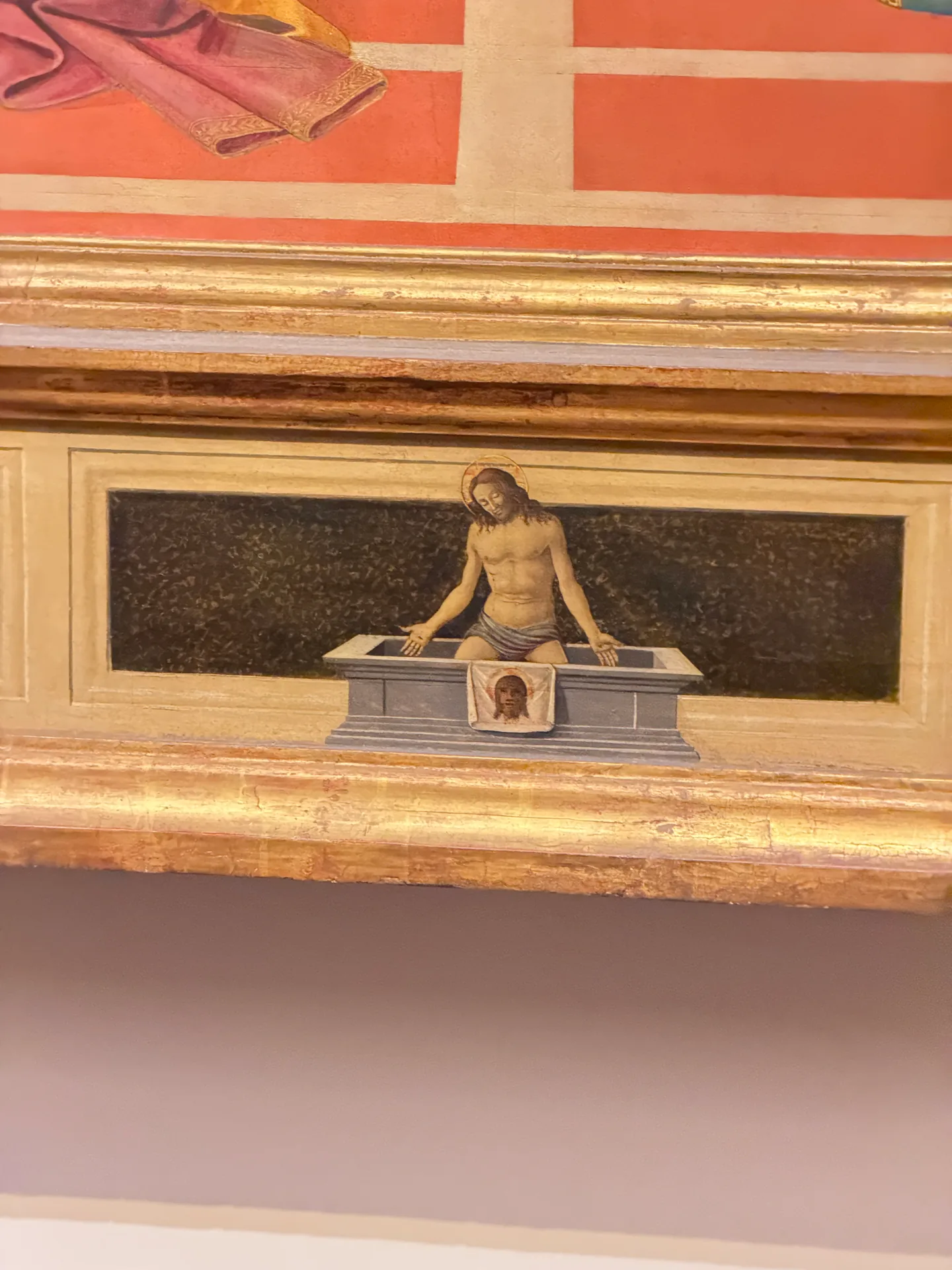
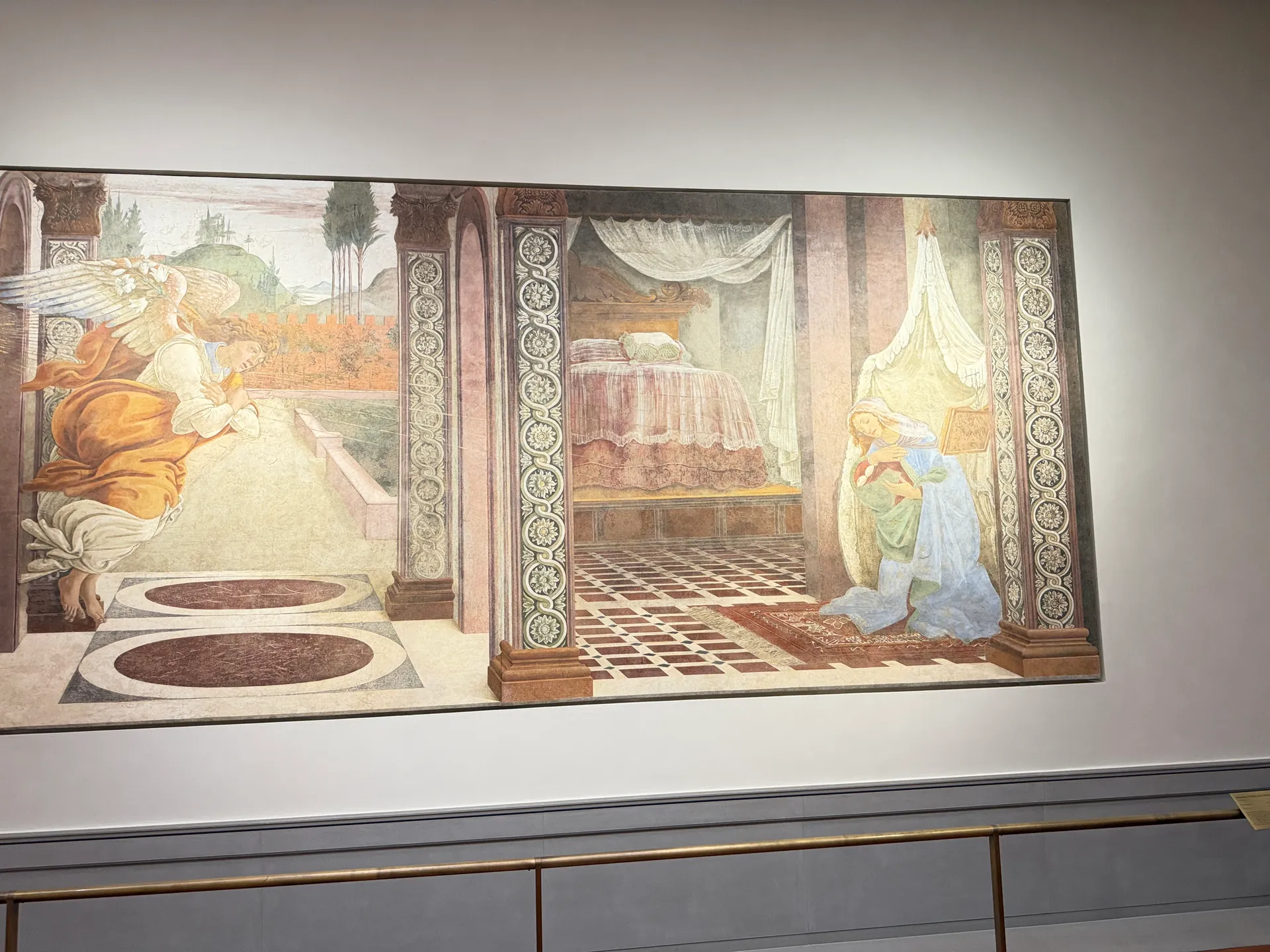
The whole panelVenus arrives on the shell between the blowing winds and the figure waiting with a cloak. It is painted on canvas rather than panel, which was unusual at this scale.On the shellClose on the figure herself. The hair carries gold, and the contour is drawn with a line that does not really belong to any anatomy.The whole panelVenus at the centre under the orange grove, the Three Graces dancing at the left, Flora scattering flowers, and Zephyr taking Chloris at the right edge.FloraHer gown is painted with the flowers she is scattering. Botanists have identified well over a hundred plant species in the panel.The Three GracesDancing in drapery thin enough to be a technical demonstration on its own.Pallas and the CentaurShe has him by the hair with the halberd resting on her shoulder and he has stopped struggling. The usual reading is reason over appetite.Laurel and halberdHer gown is worked with interlaced rings, a Medici device, and laurel is wound round her arms and her head.The centaurHead and torso, the bow still in his hand and the expression already given up.The Medici AdorationA ruined classical arcade behind the Holy Family, with the Medici and their circle standing in as the court of the Magi.The standing groupAt the right edge, where the figure who looks out of the panel is traditionally taken to be Botticelli himself.Across the surfaceA raking view along the panel, which shows how much of the gold is worked into the paint rather than laid behind it.The Cestello AnnunciationPainted in 1489 for the church of Cestello. The tiled floor runs from Gabriel to the Virgin and then out through the opening to a river landscape.GabrielKneeling with the lily, the window and the pale landscape behind him carrying the eye straight out of the room.The VirginShe sways back from the angel with her hand out. The two figures bend toward each other and never touch.On the frameThe dead Christ is painted along the bottom member of the original frame, so the panel carries its own ending underneath it.A detached frescoAn Annunciation in an arcaded loggia, lifted off a wall and now hung as a panel. The surface has washed pale in the move.
THE PUPIL AND THE WORKSHOP
Leonardo and Verrocchio
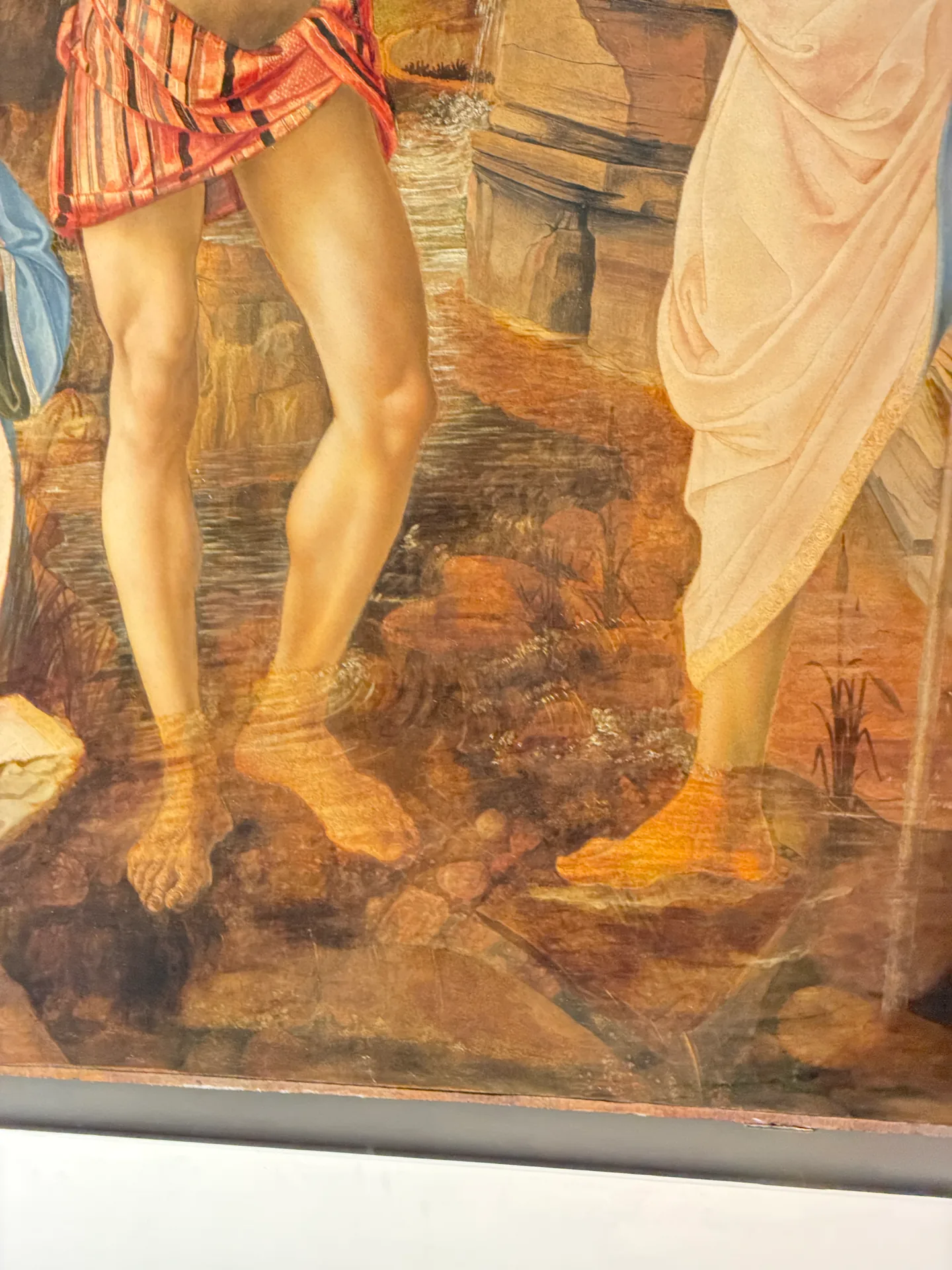
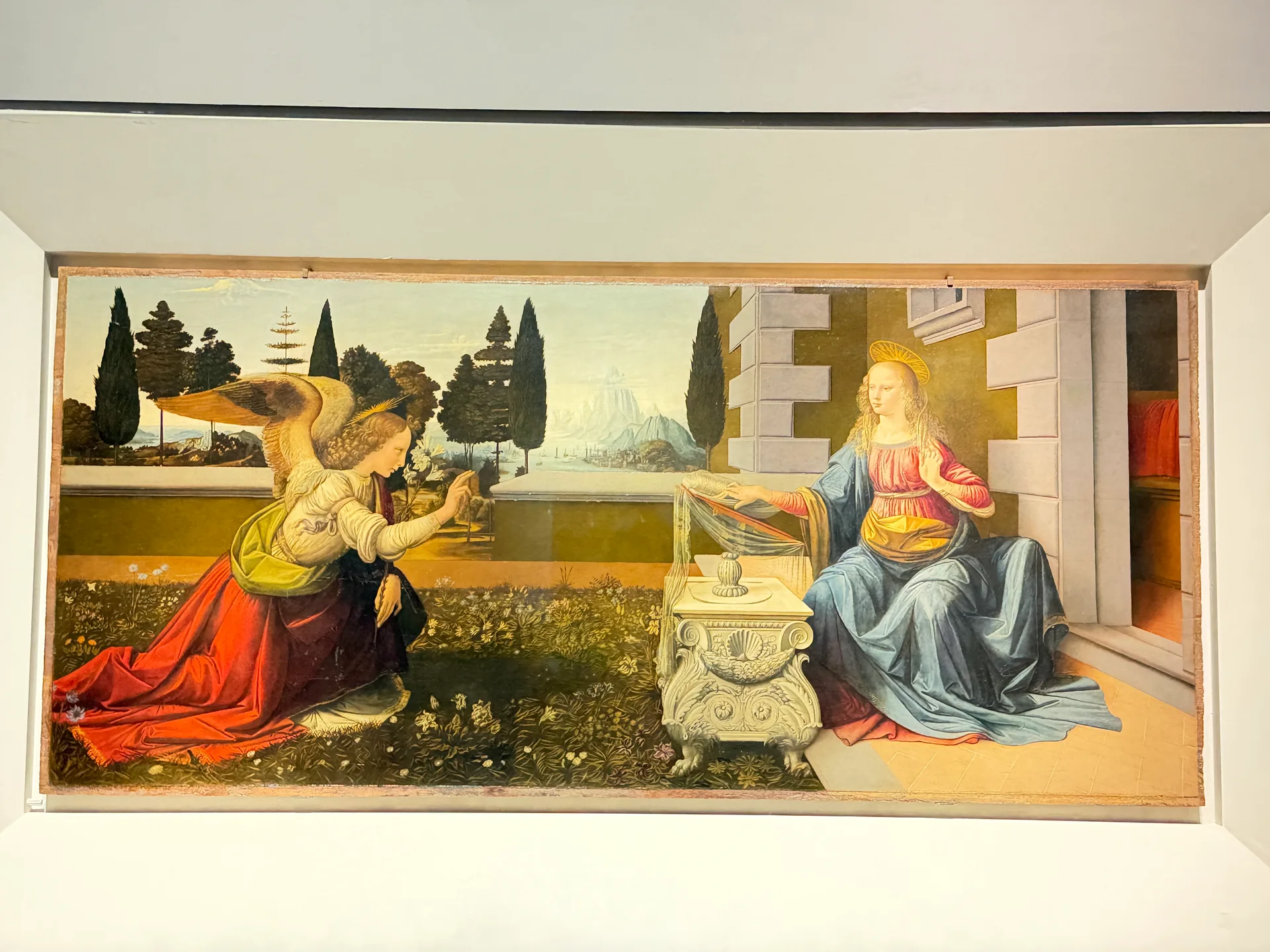
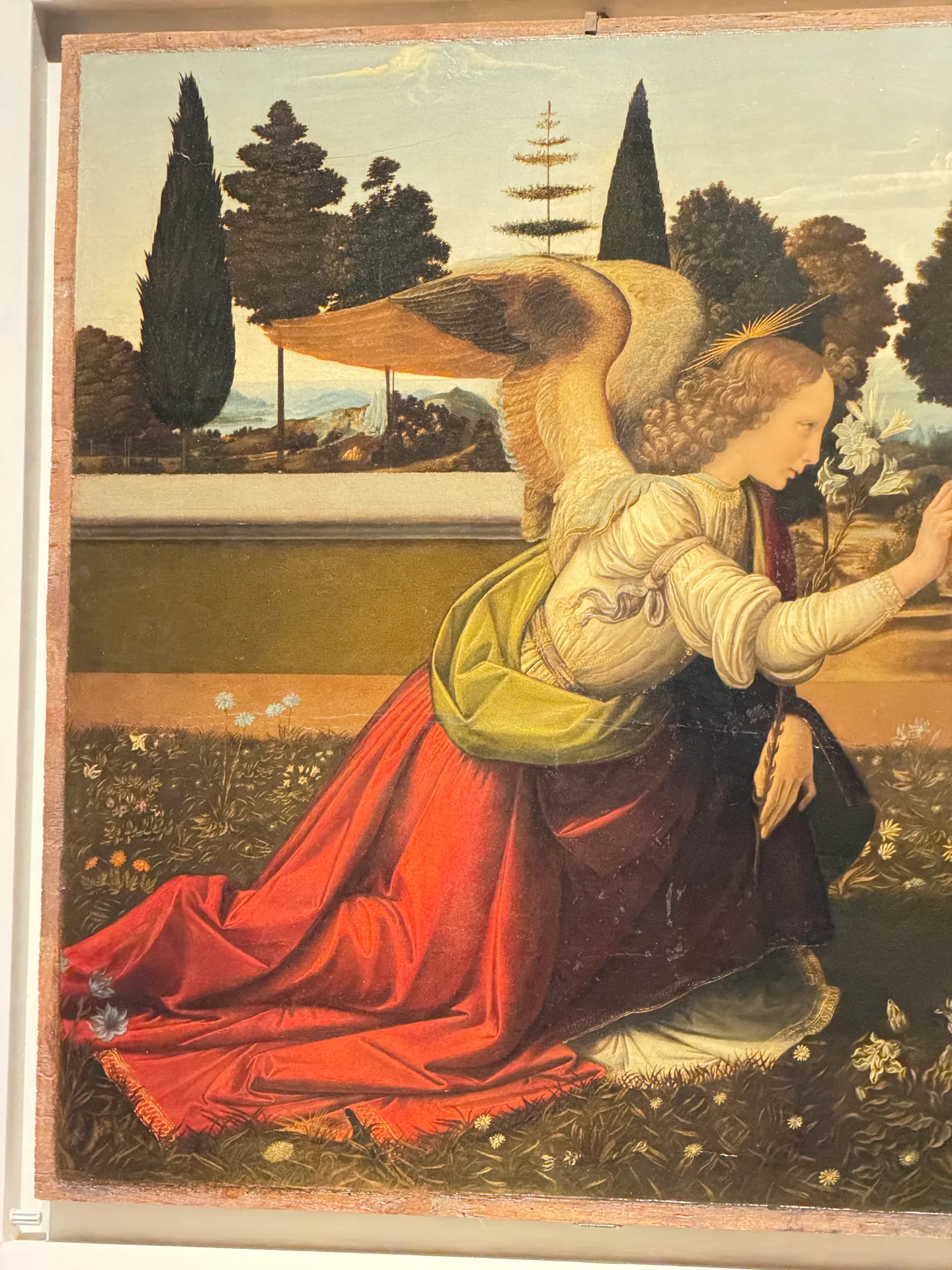
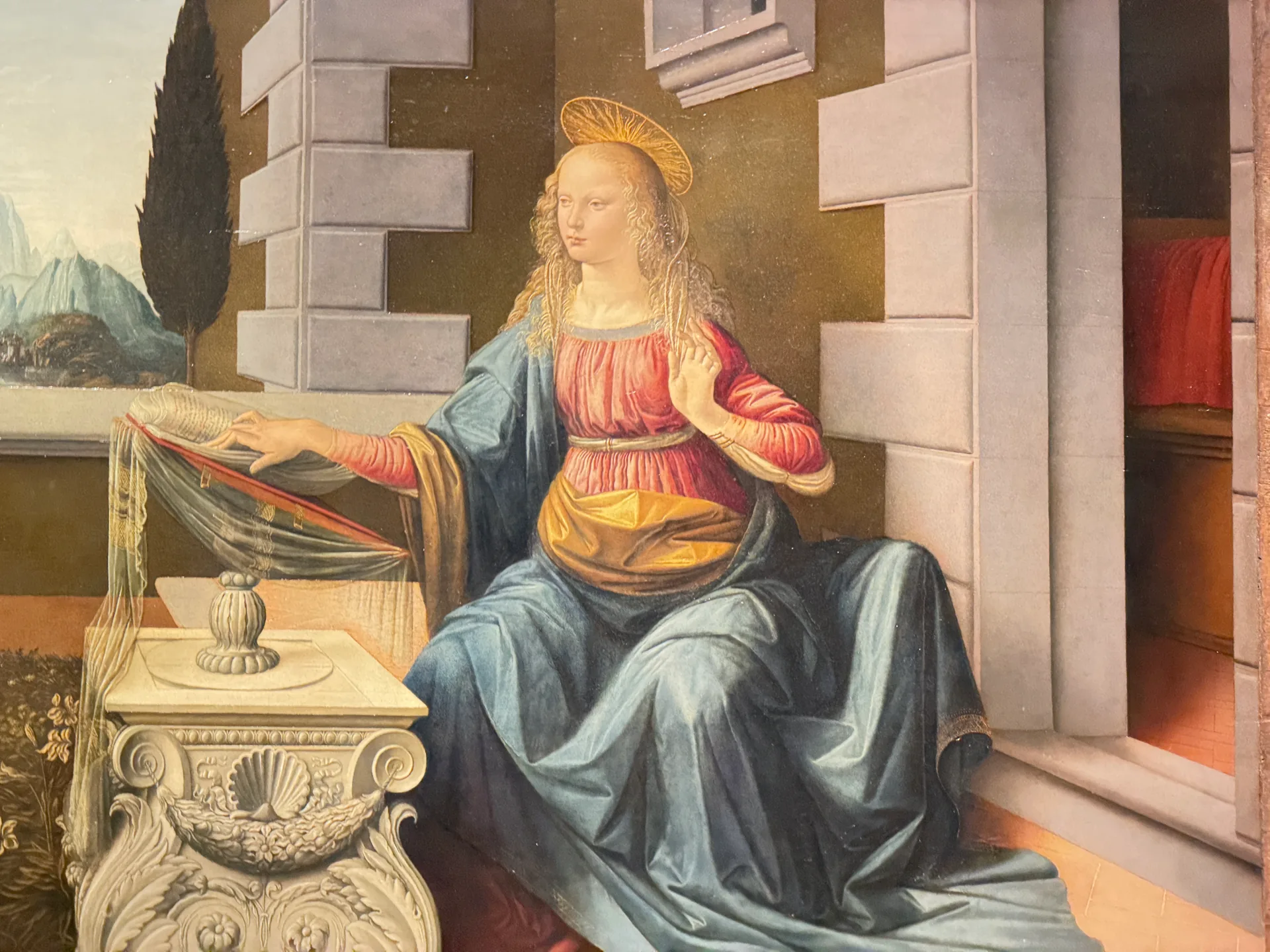
The Baptism where Leonardo painted the kneeling angel, the Annunciation he made in his early twenties, and the Adoration he walked away from unfinished when he left for Milan in 1482.
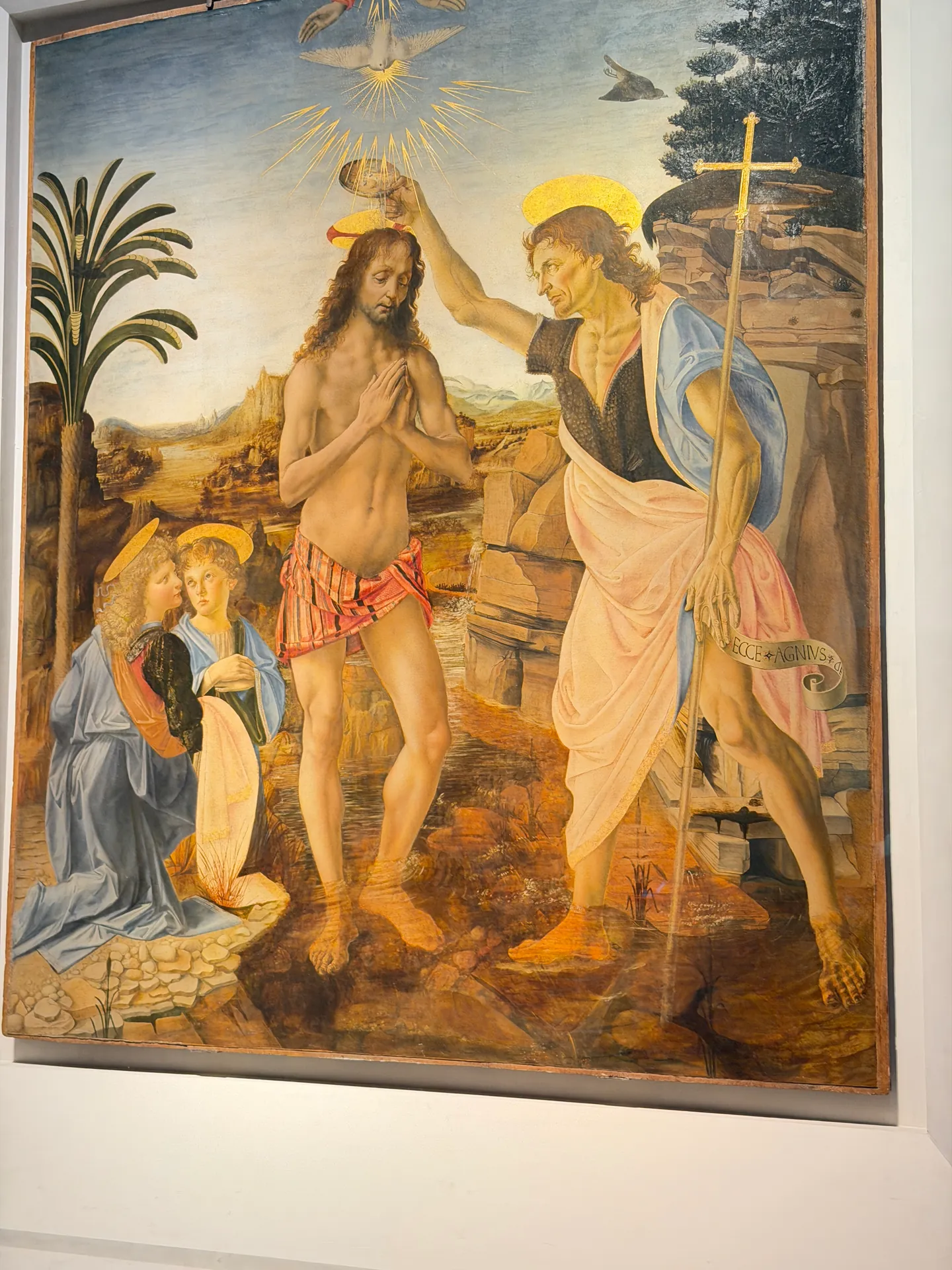
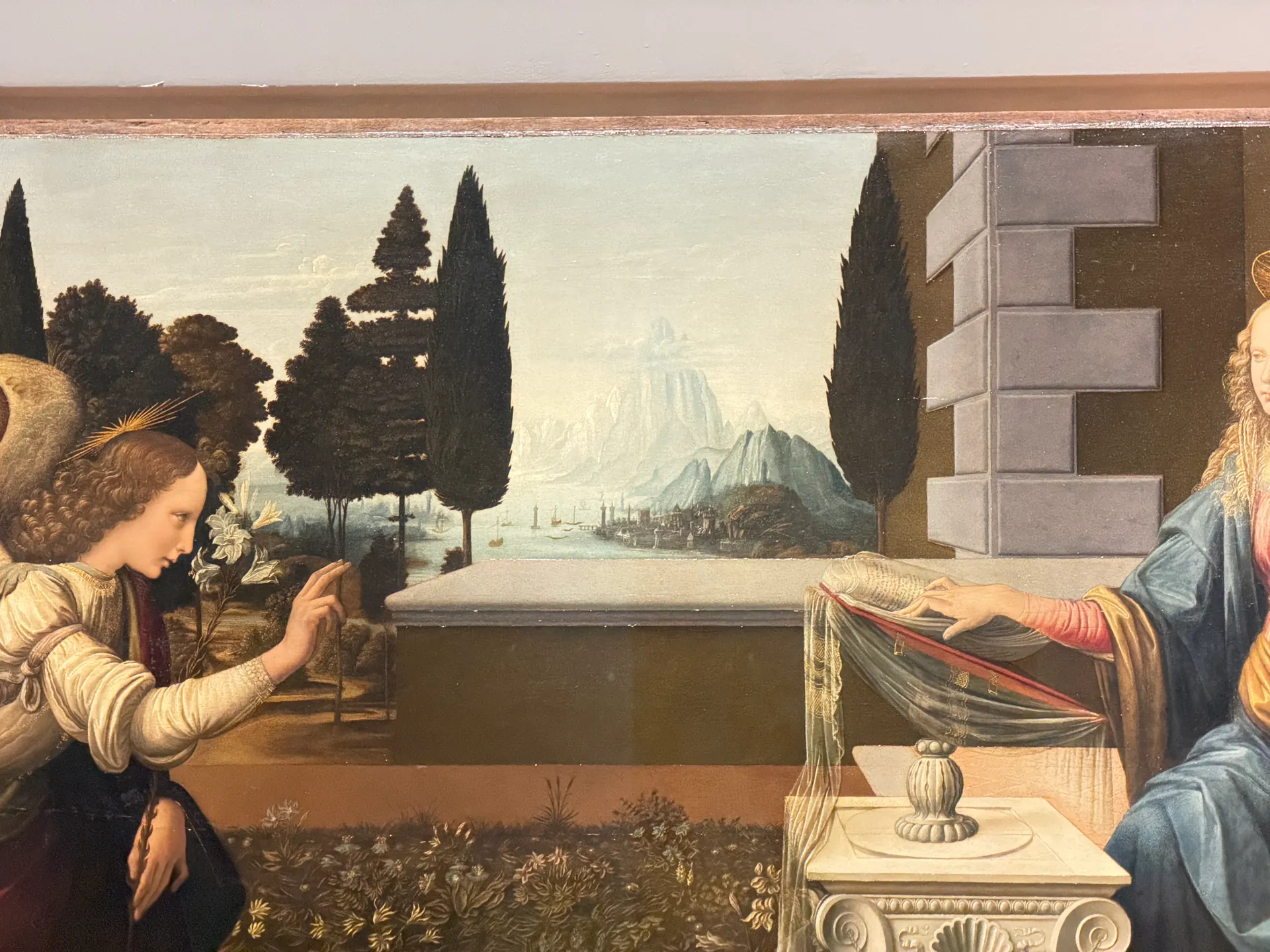
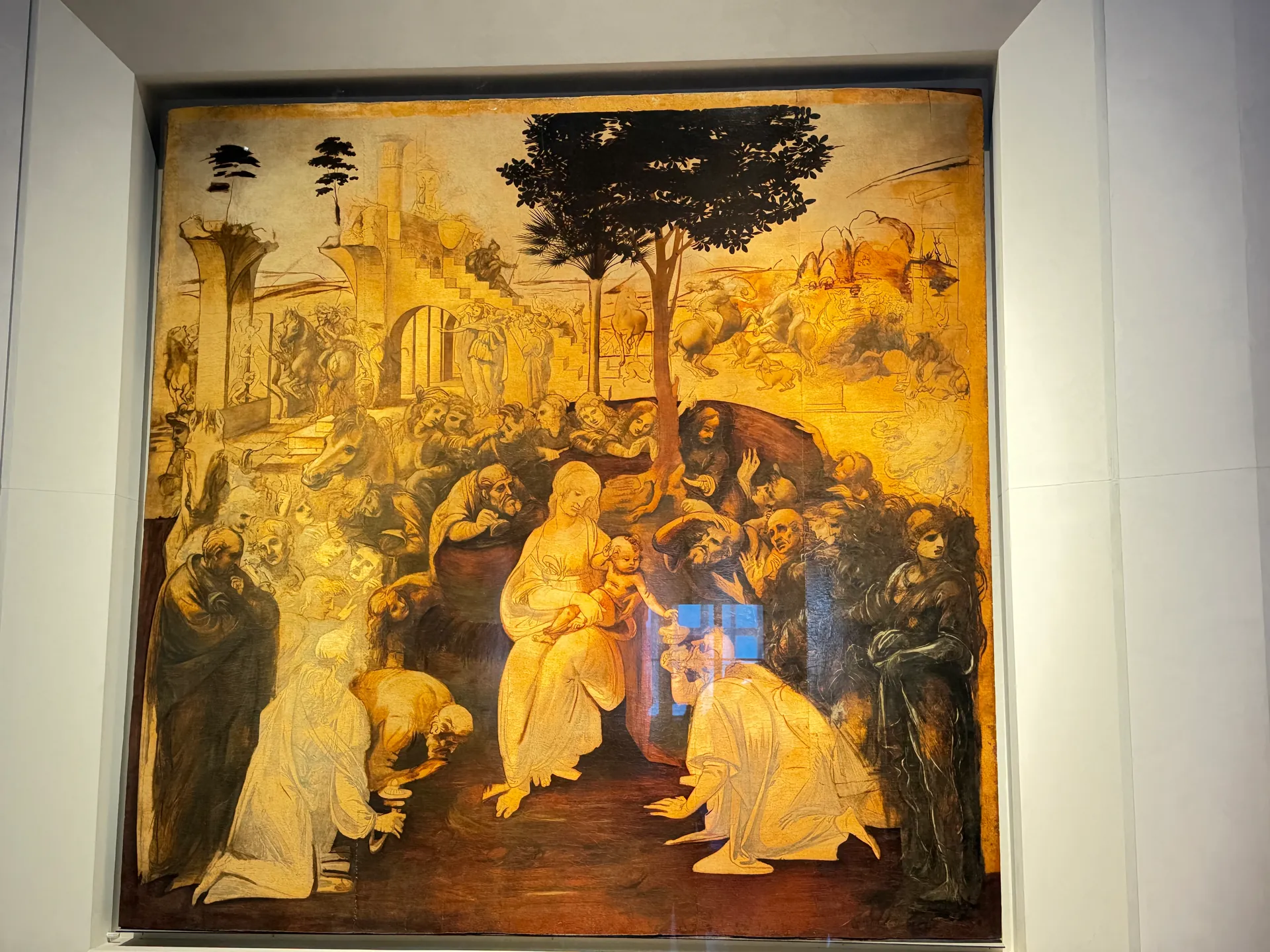
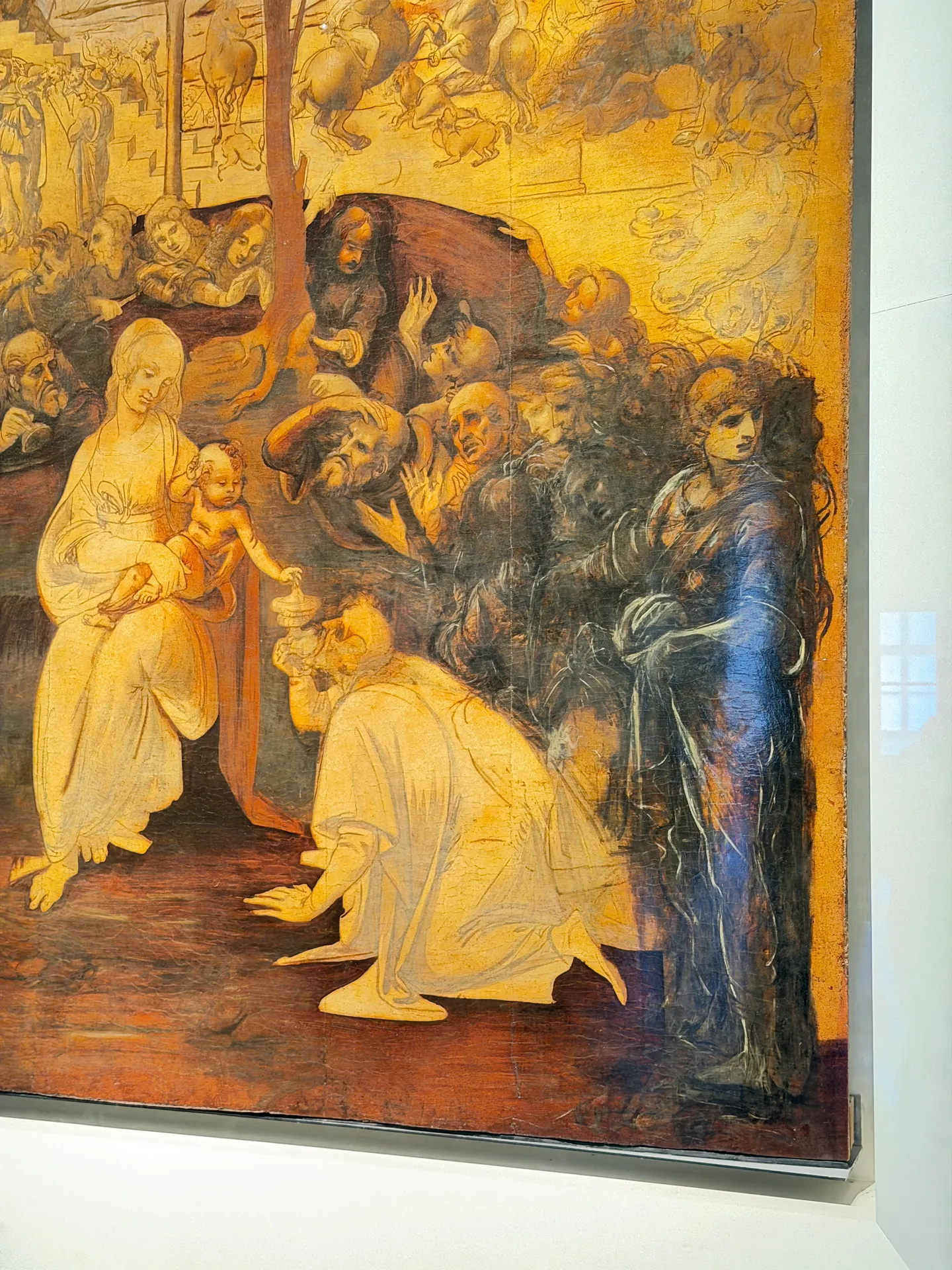
Verrocchio and LeonardoA workshop picture. The kneeling angel at the left and much of the landscape are given to Leonardo, who was Verrocchio's pupil when it was made.Feet in the JordanThe water is worked so the feet read through it, and the drapery beside them is where the two hands in the picture separate most clearly.The whole panelAn early work seen square on. The angel kneels at the left and the Virgin sits at a carved lectern in front of a walled garden.GabrielThe lily in his hand and the wing folded behind him, built from a bird rather than from convention.At the lecternThe lectern is a carved marble piece modelled on a Verrocchio tomb, and the Virgin's arm reaches across it further than an arm should.Out past the wallCypresses along the garden wall, then a pale harbour and mountains dissolving into haze.Left unfinishedBegun in 1481 and abandoned when Leonardo went to Milan. What survives is the ochre underpainting, with rearing horses behind the ruined arcade.The kneeling groupAt the left, where the heads are worked up further than the rest and the composition can be read as it was meant.
TWO PANELS AND A PAPAL PORTRAIT
Michelangelo and Raphael
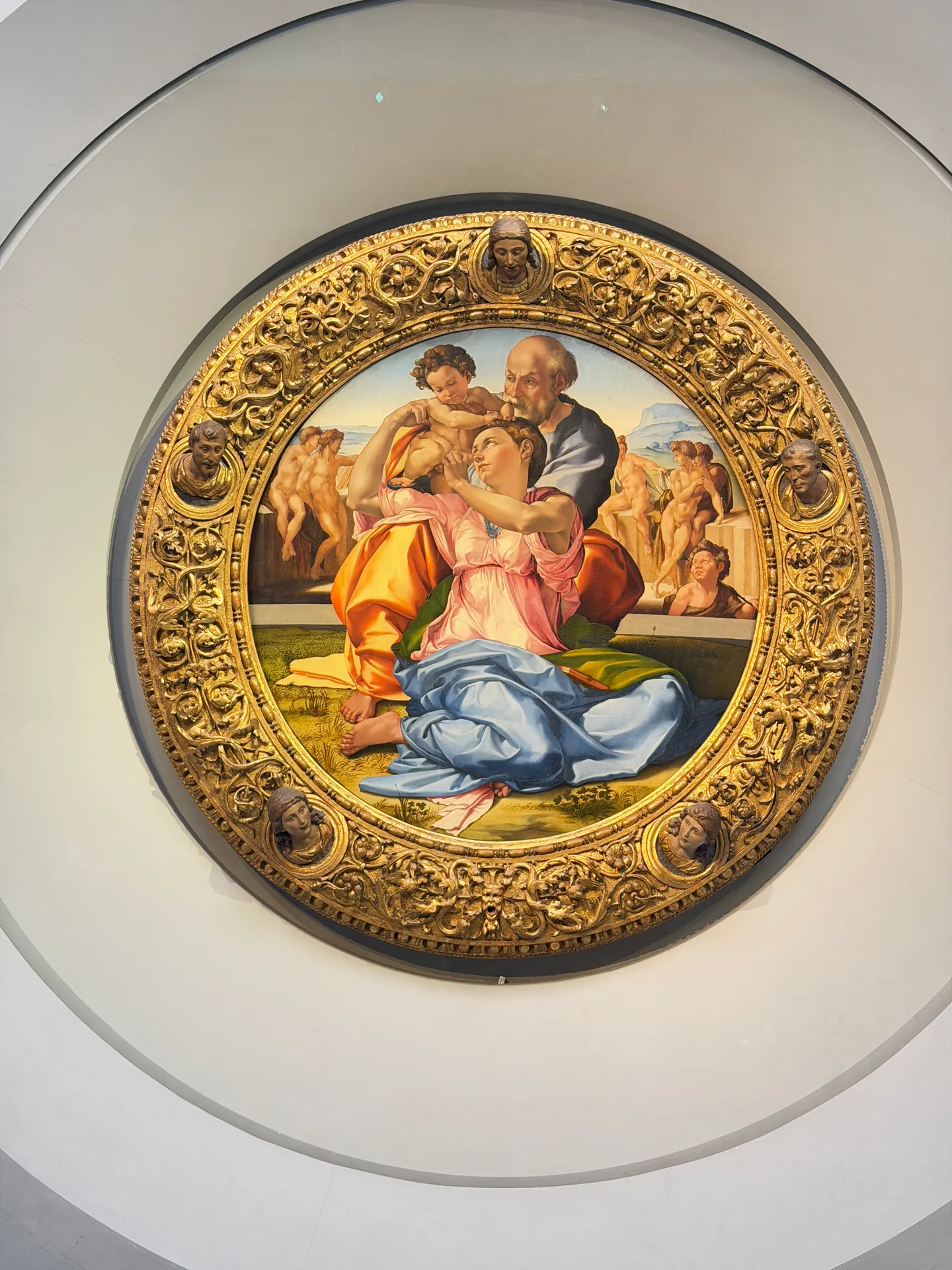
The Doni Tondo is the only finished panel painting anyone gives to Michelangelo, and its carved frame was made for it. Raphael is here as a painter of children and as a painter of power.
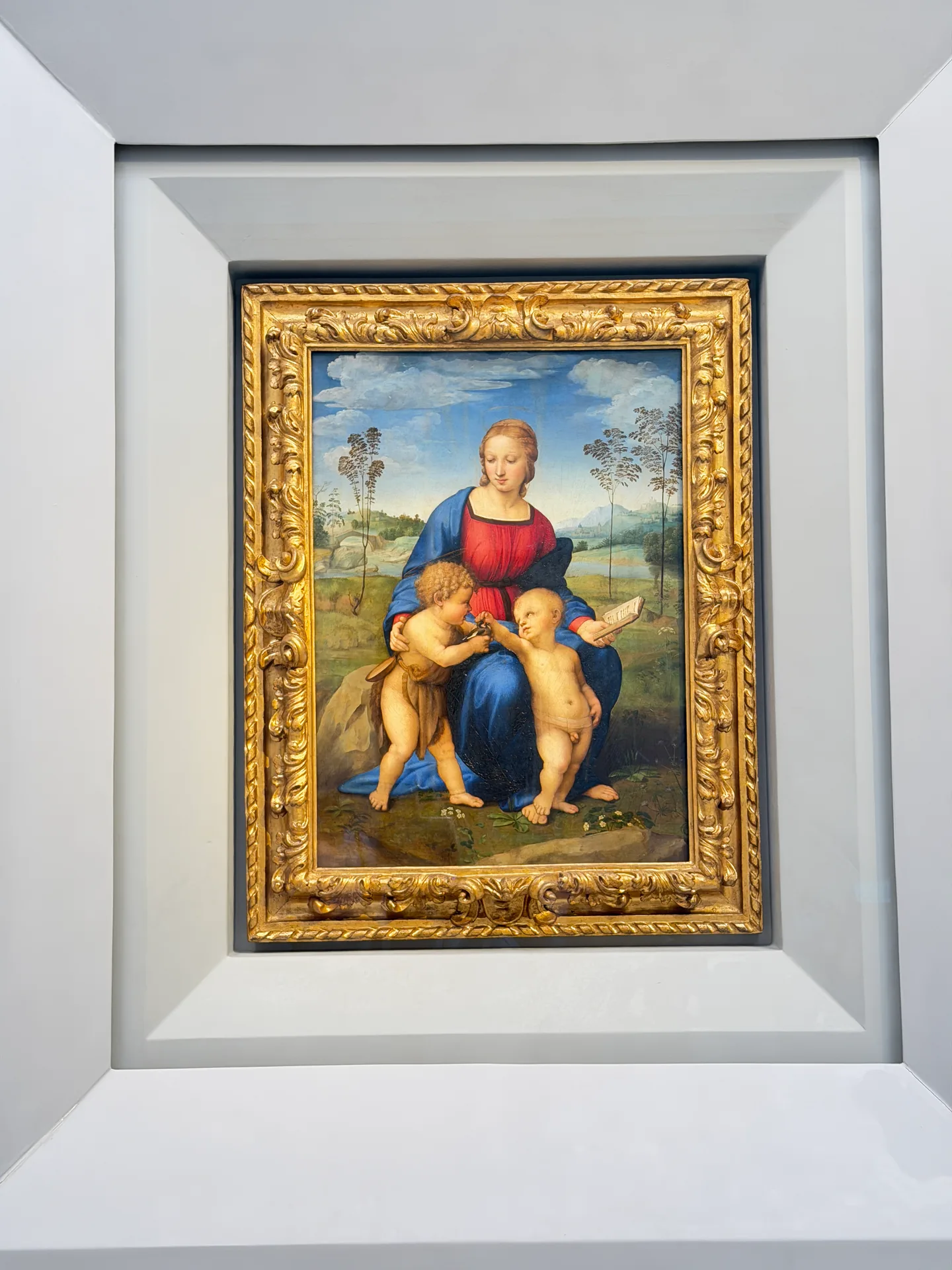
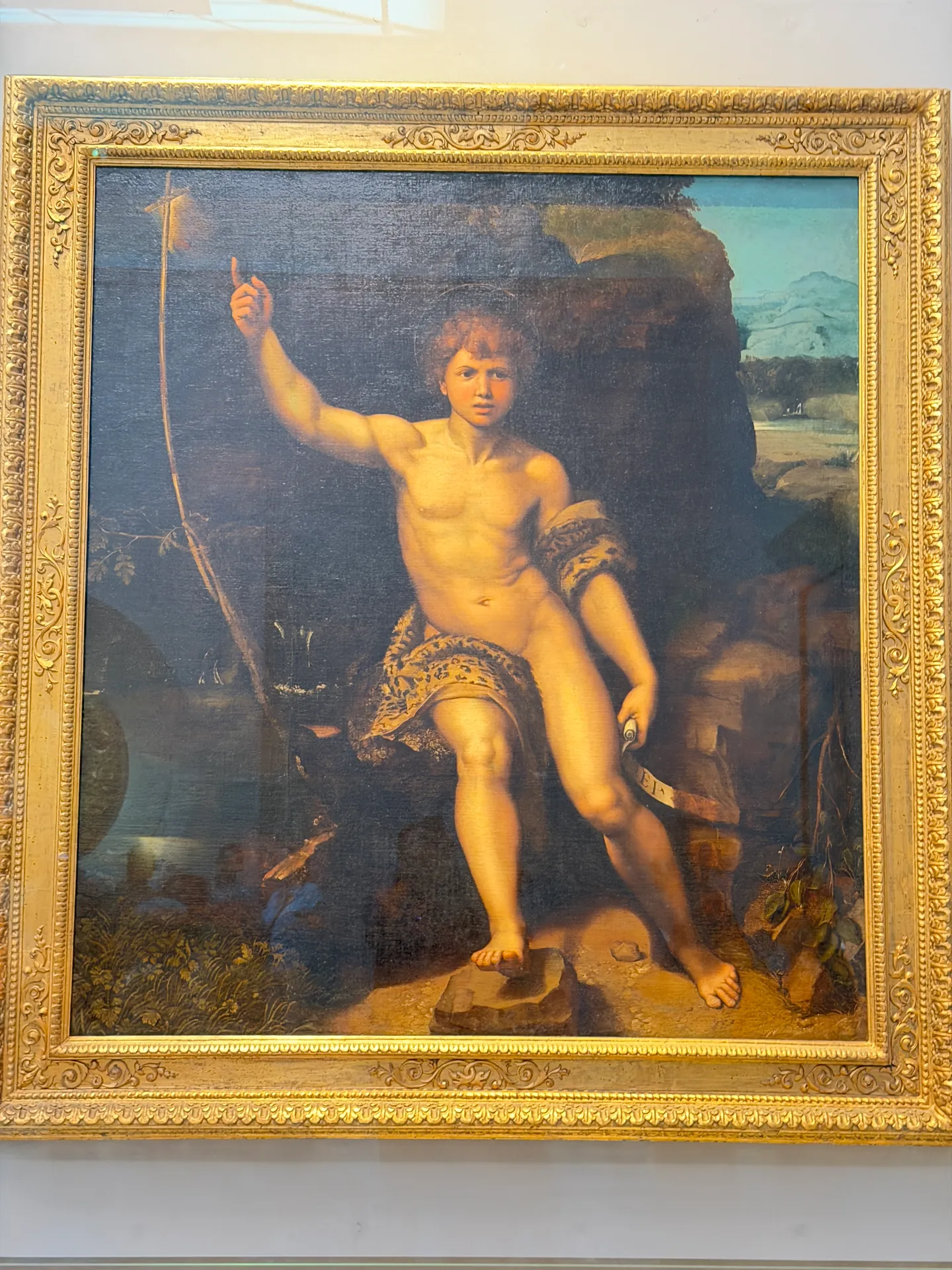
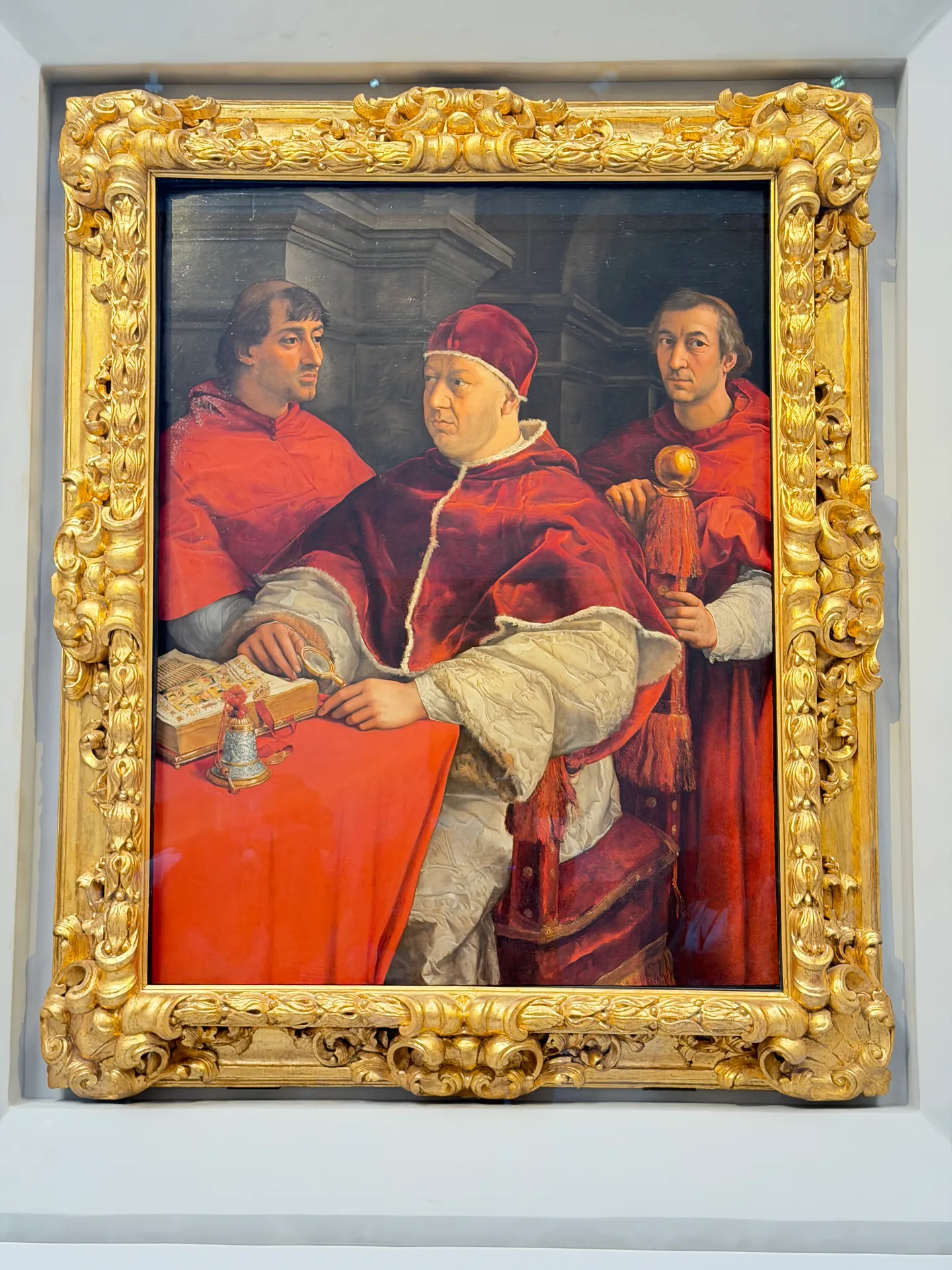
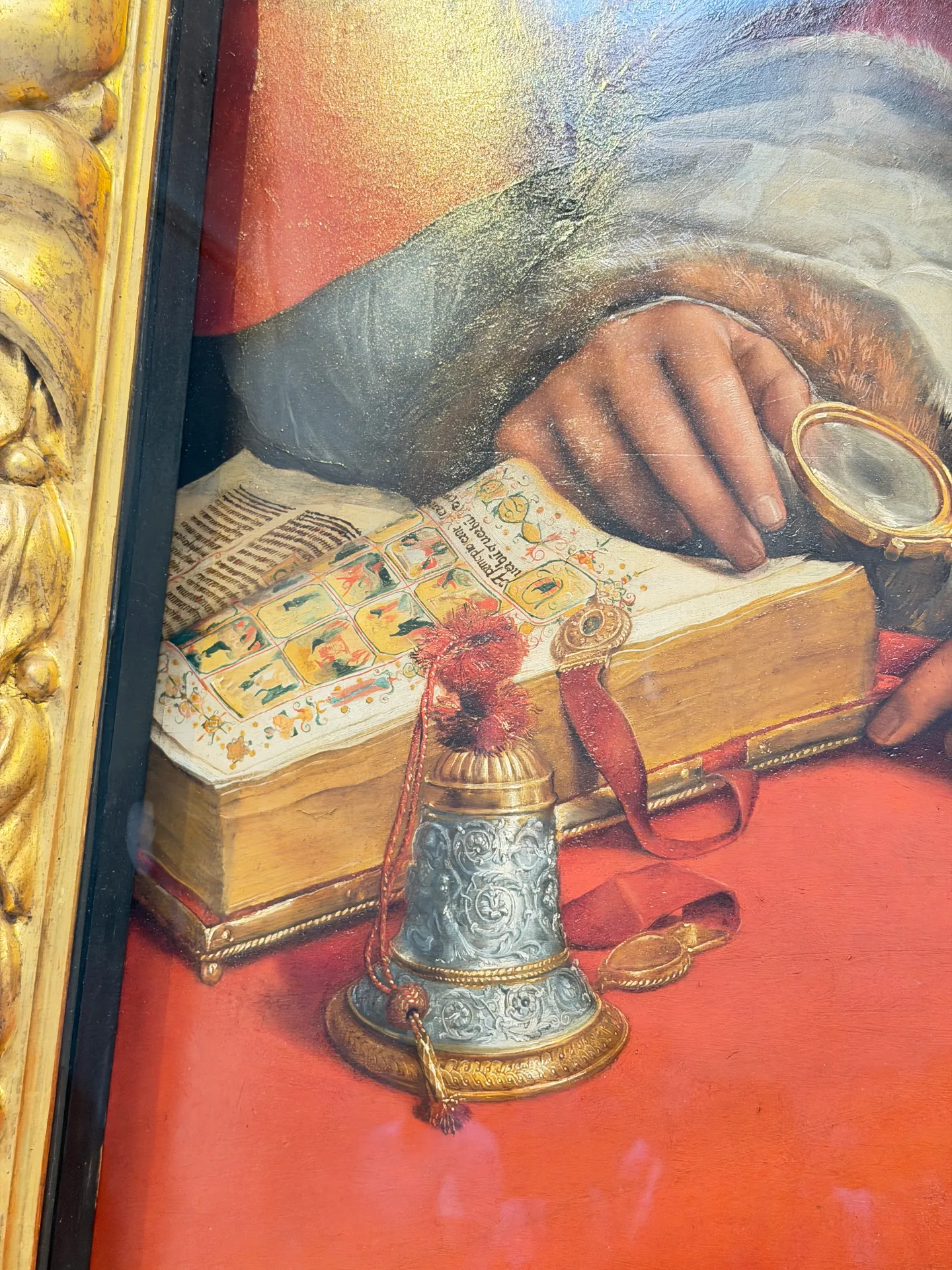
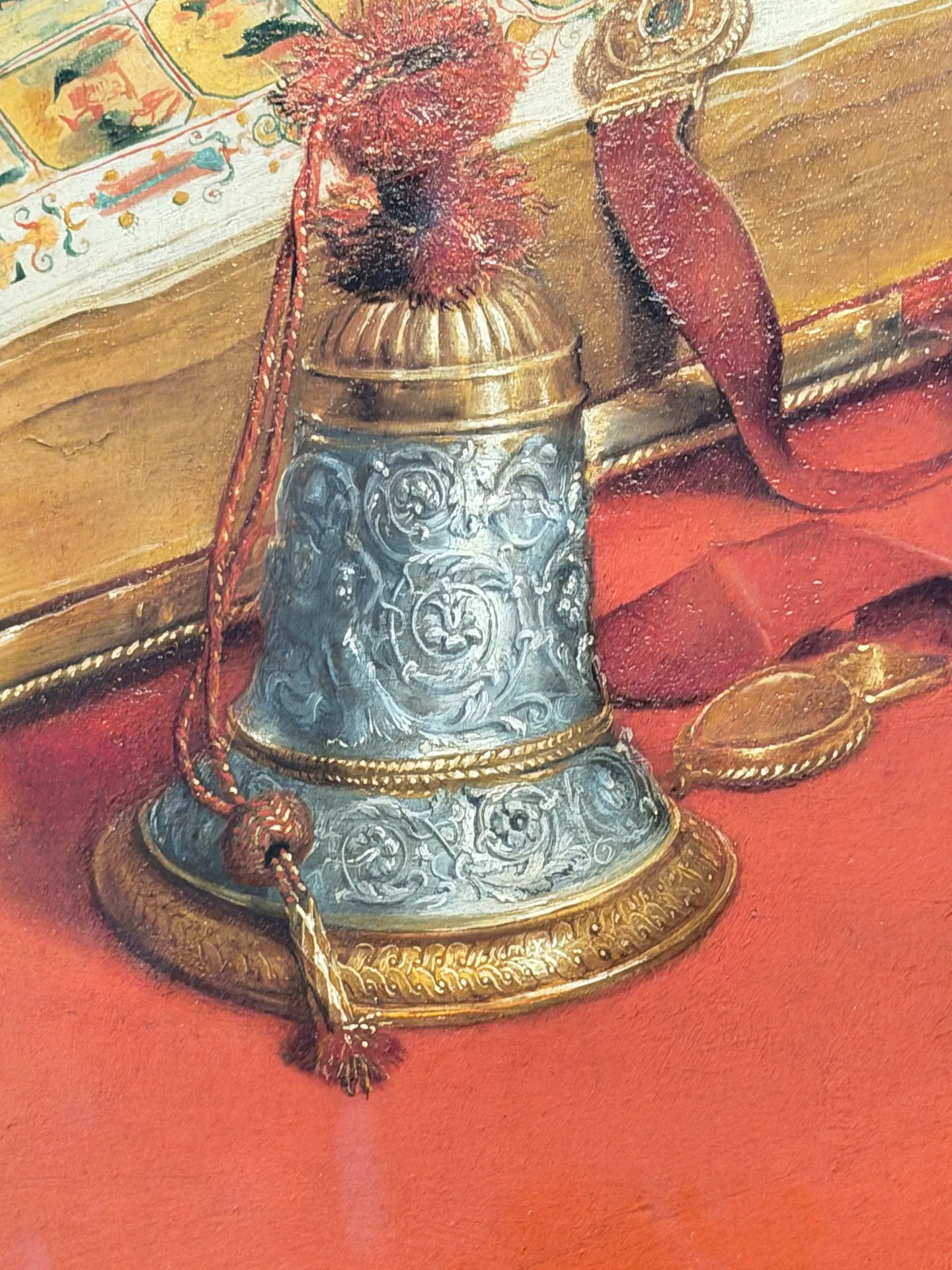
Michelangelo, about 1505The only finished panel painting generally given to him, made for Agnolo Doni. The carved frame with its five heads was made for the picture and is part of the work.Madonna of the GoldfinchRaphael, about 1506. The infant Baptist holds out the bird. The panel was shattered in a building collapse in 1547 and has been repaired more than once since.The Baptist as a boyGiven to Raphael, seated against a dark rocky ground.Leo X with two cardinalsGiovanni de' Medici as pope, with Giulio de' Medici and Luigi de' Rossi behind him. Both were relatives, and the picture is partly a dynastic statement.The illuminated pageThe manuscript is open and legible and the pope's magnifying glass sits on the cloth beside it, painted as a still life inside a portrait.The bellChased metal standing on the red cloth, with the window of the room reflected in the body of it.
AFTER THE HIGH RENAISSANCE
The Sixteenth Century
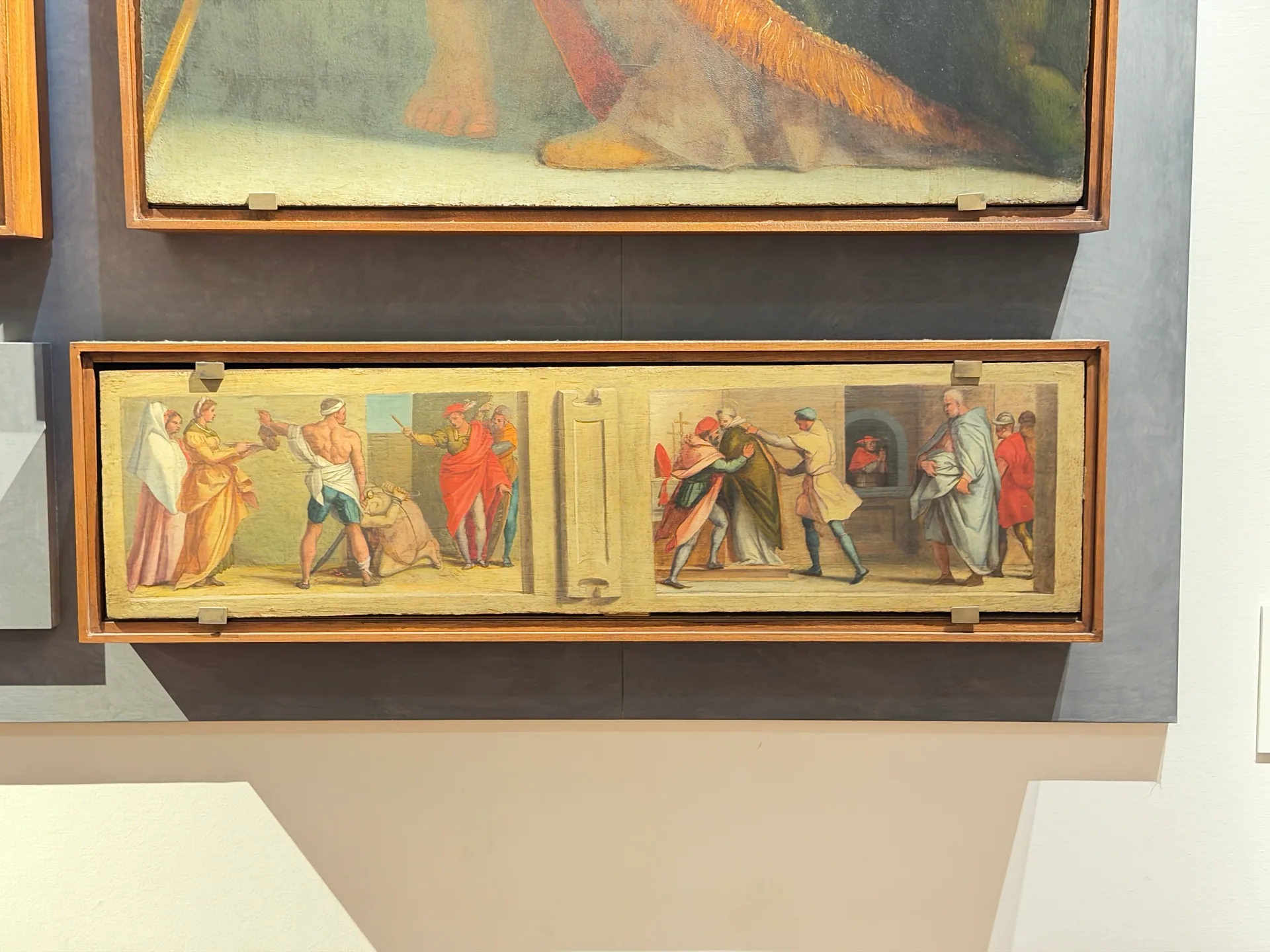
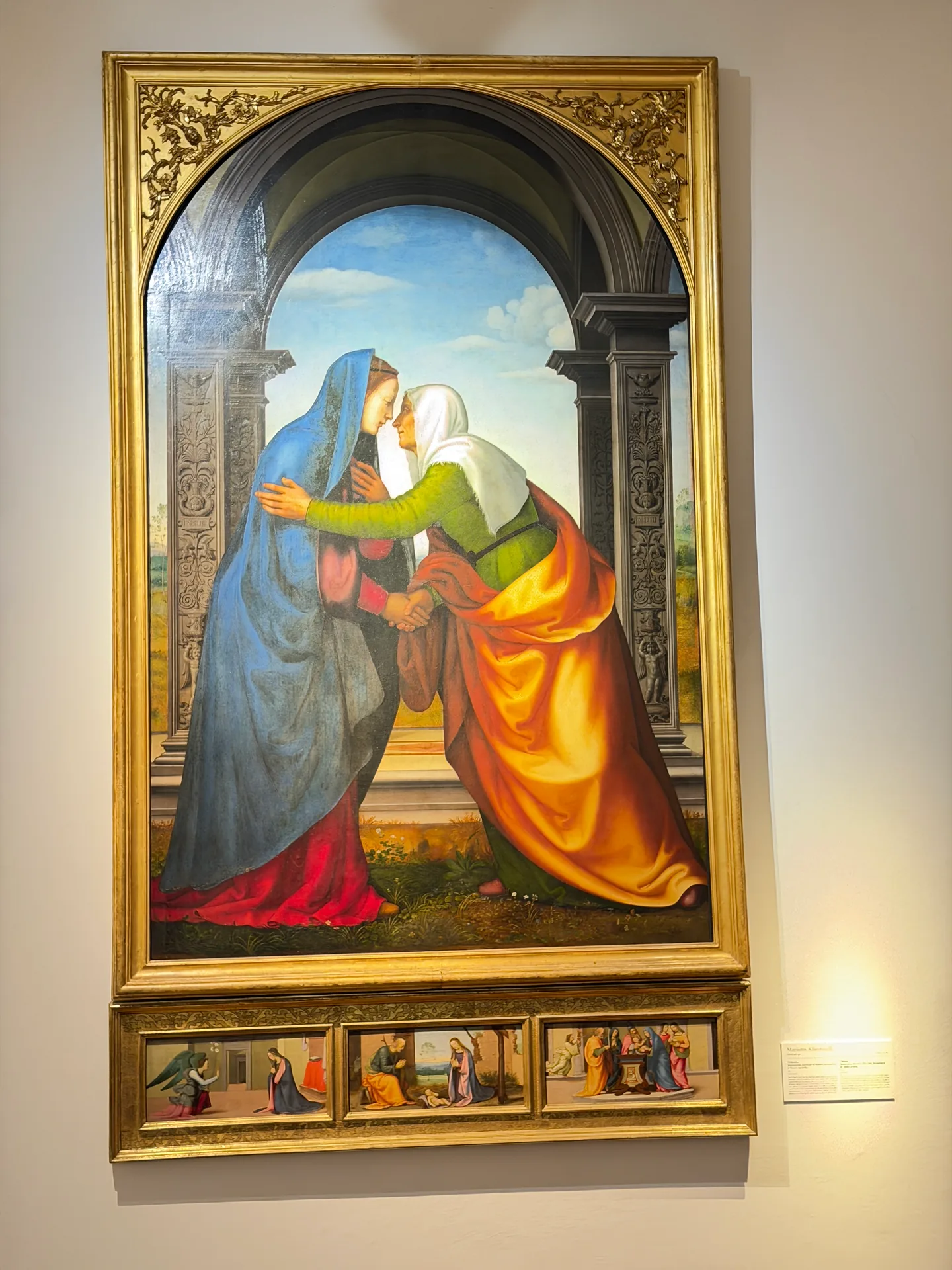
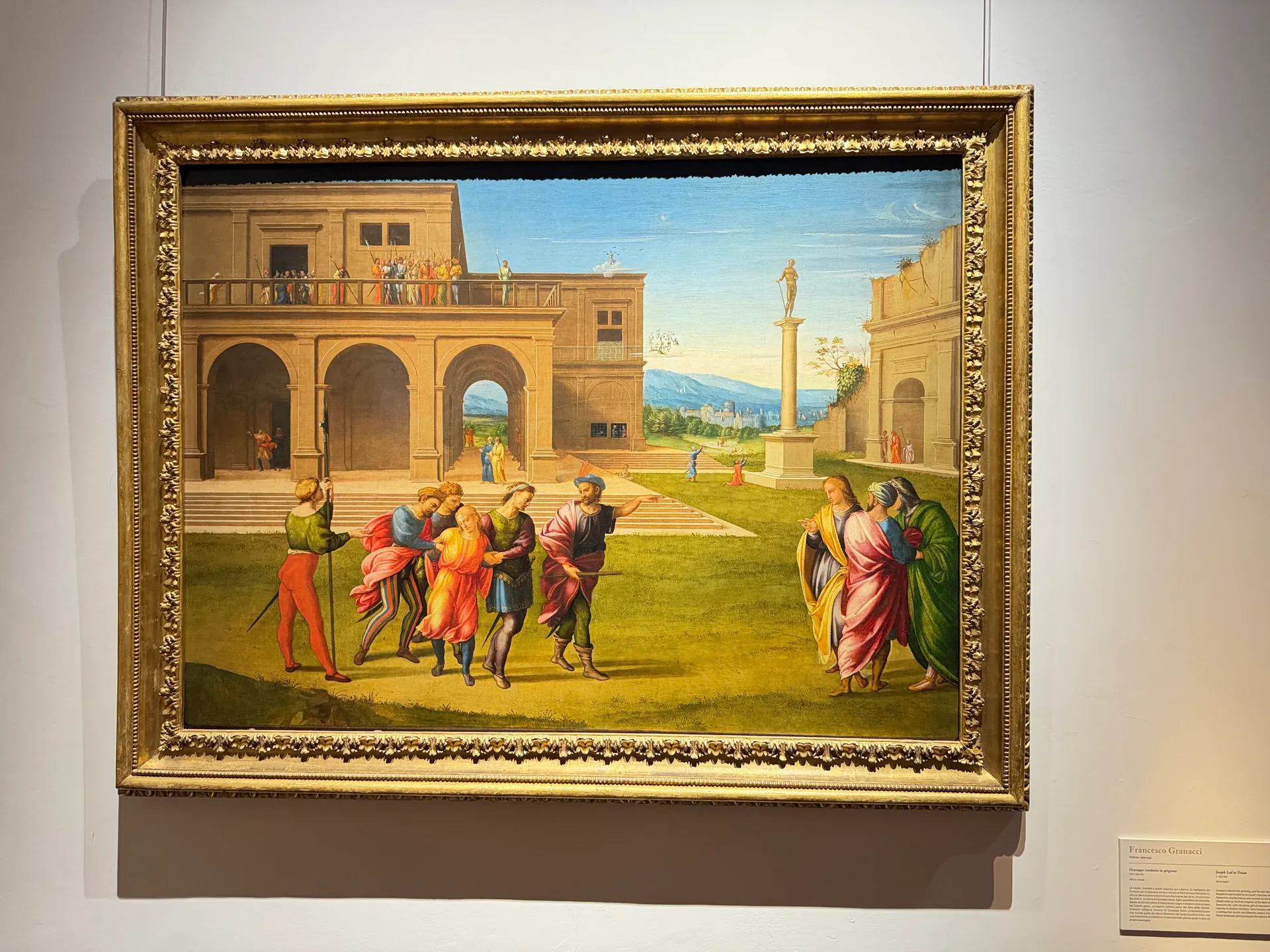
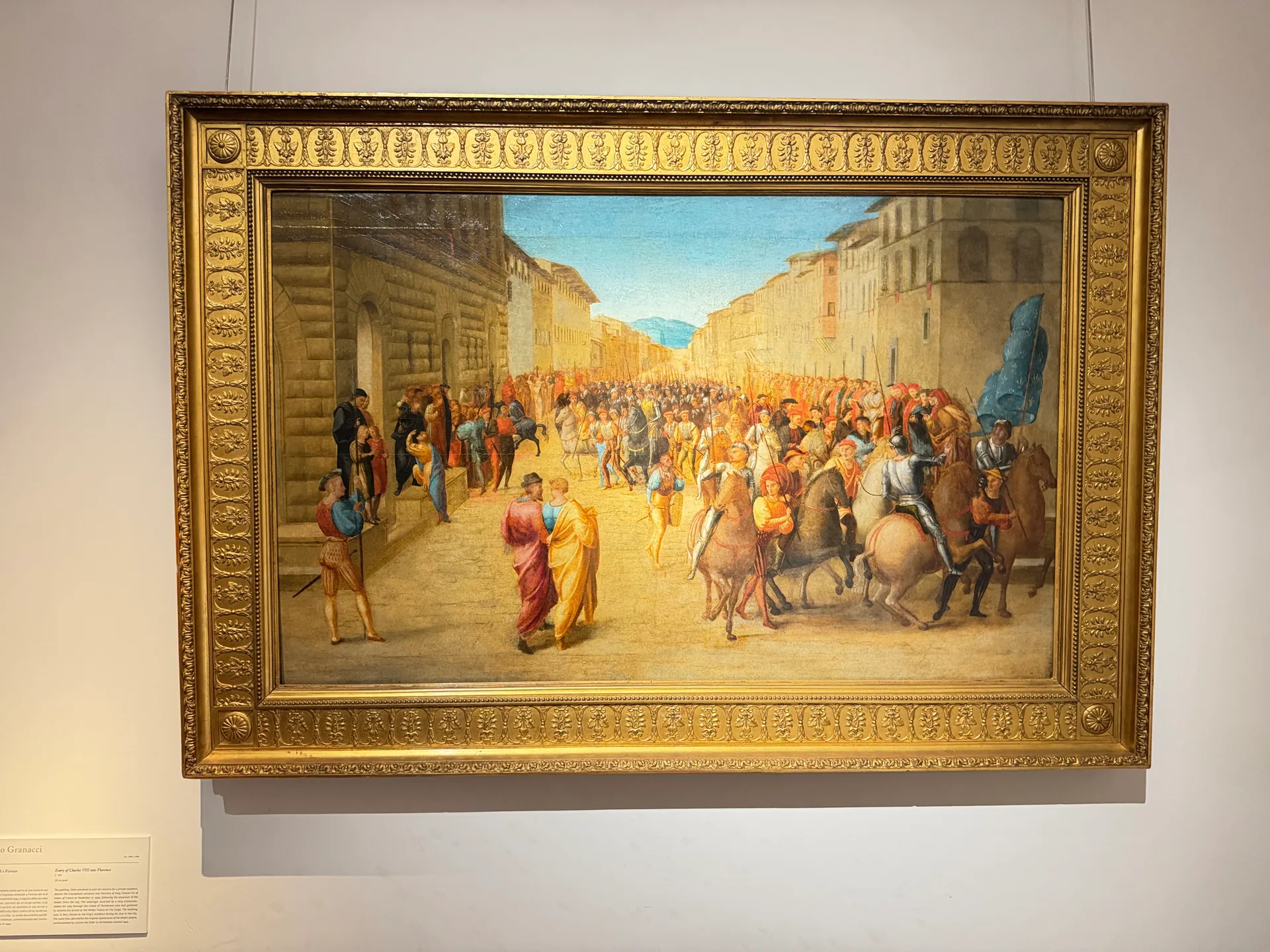
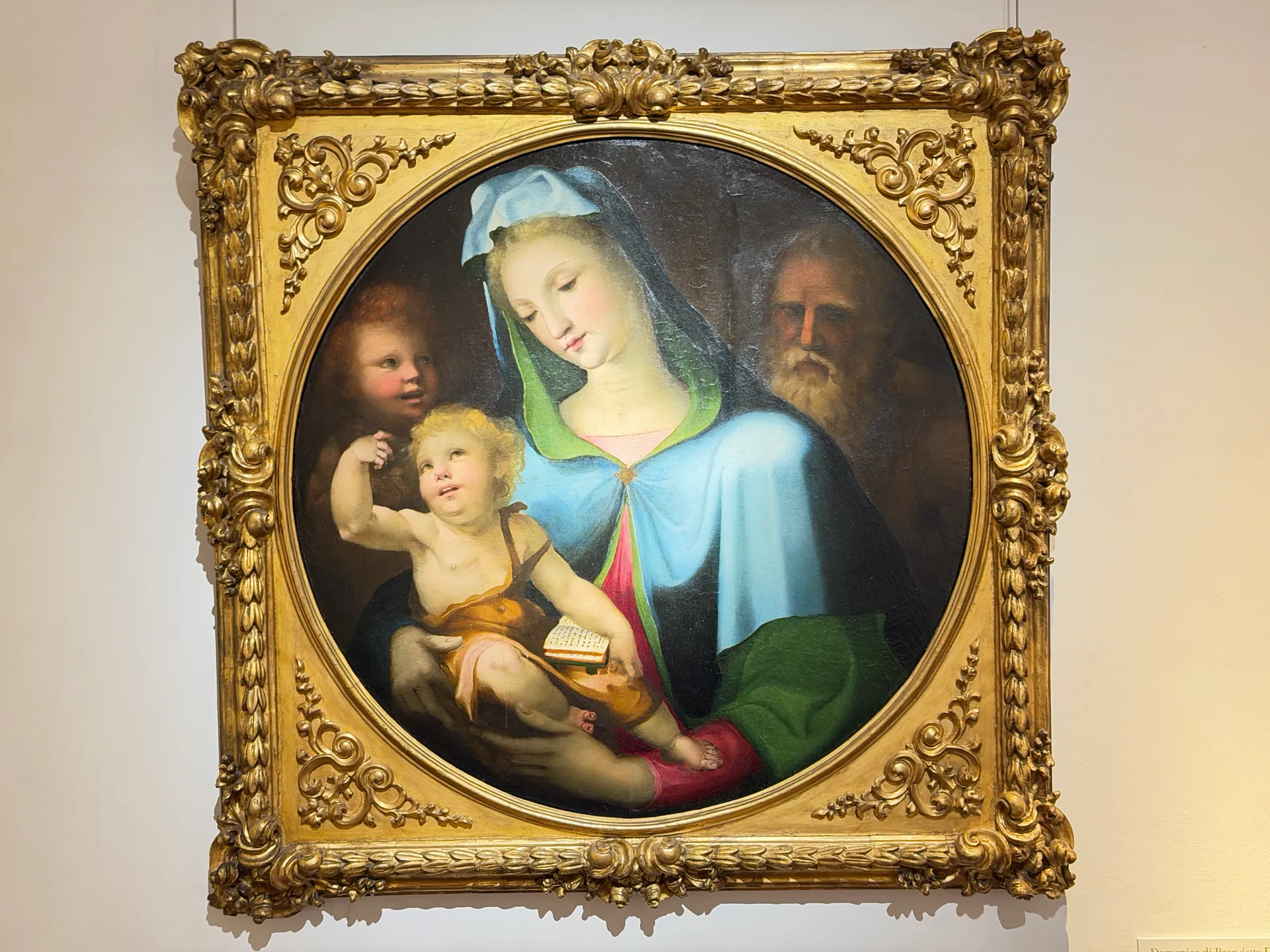
Andrea del Sarto at altarpiece scale and at bedchamber scale, Albertinelli, Granacci, Beccafumi and Bugiardini. Several of these panels were made as sets for one room and are now hung as separate pictures.
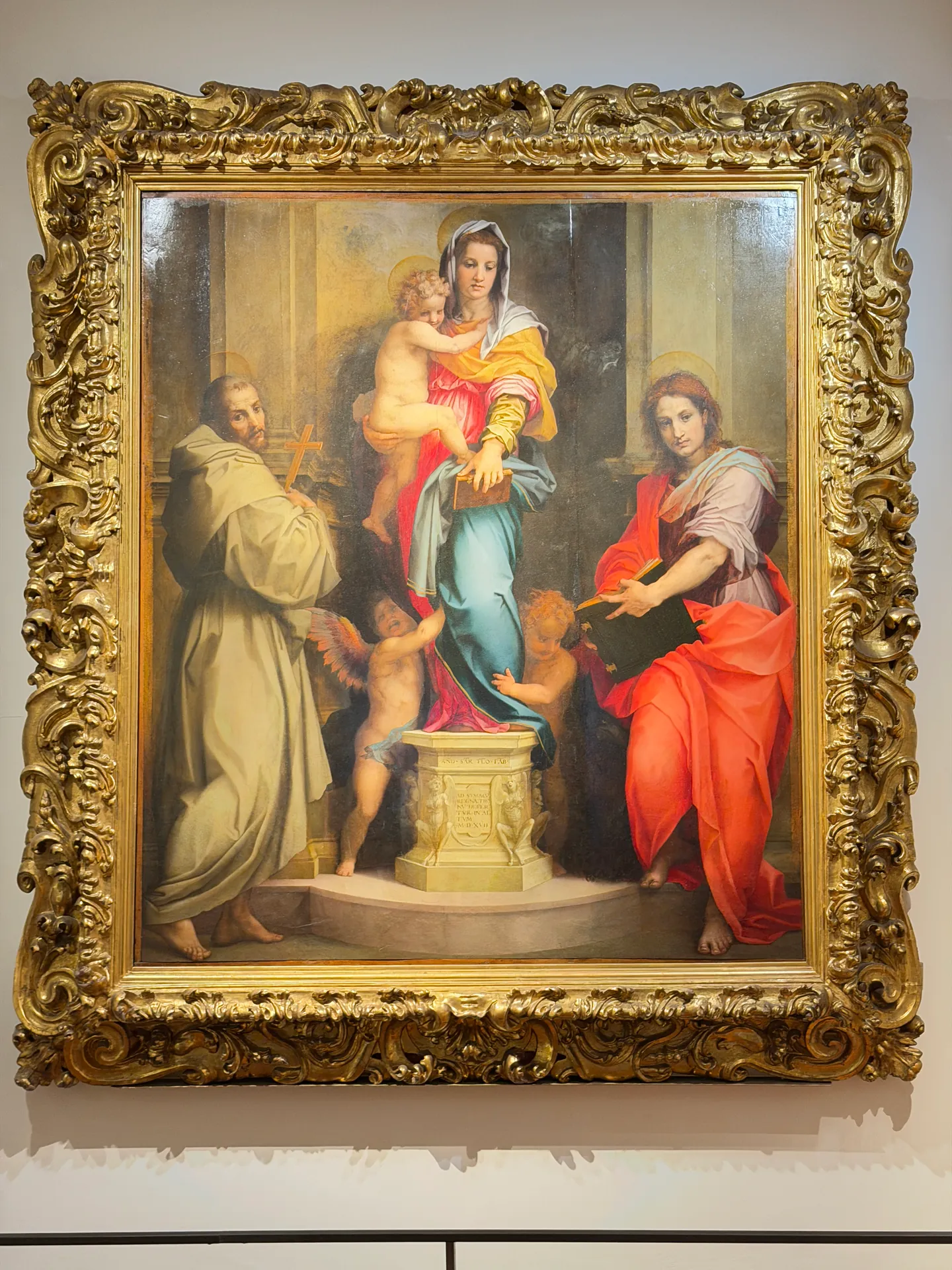
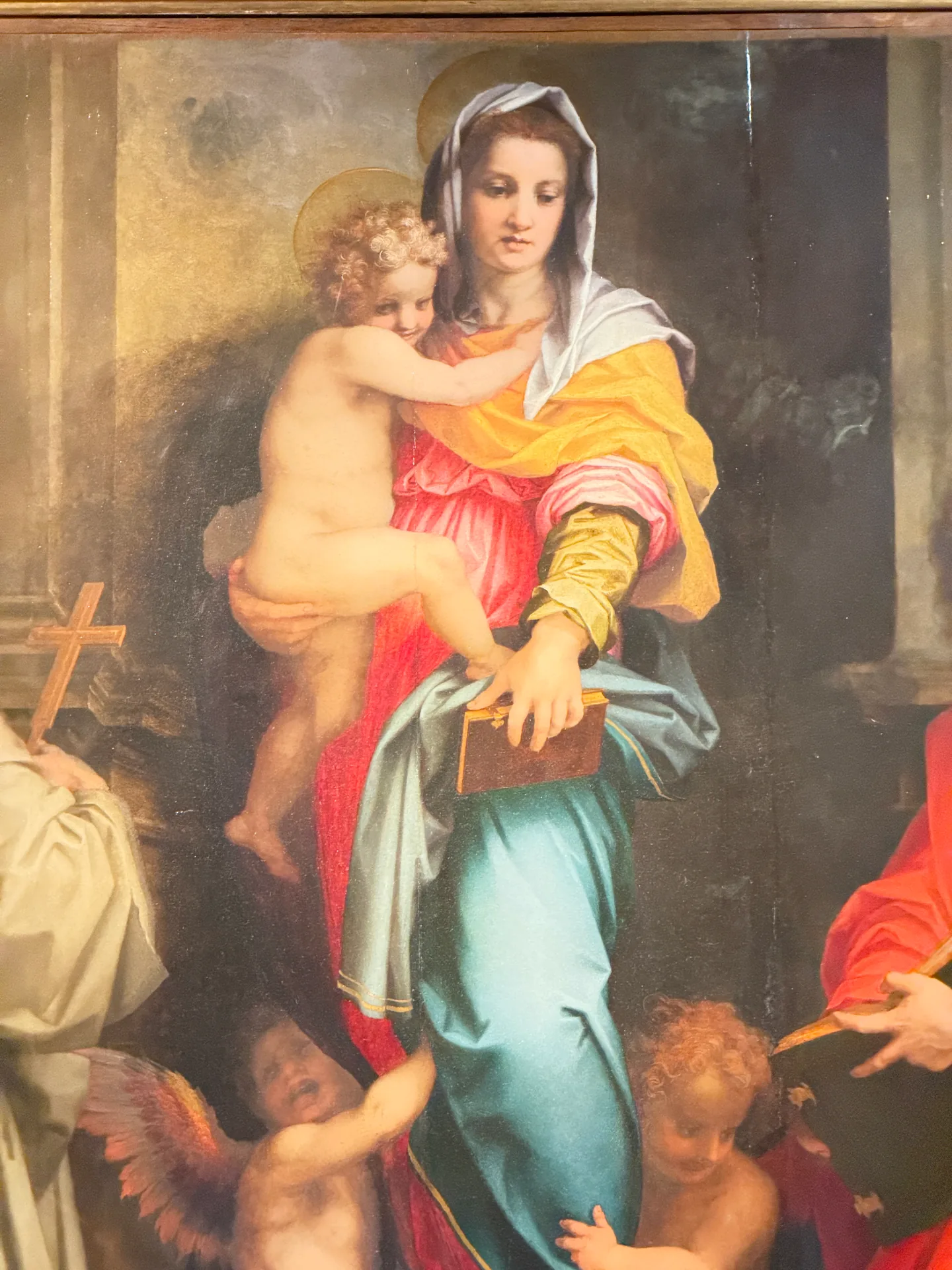
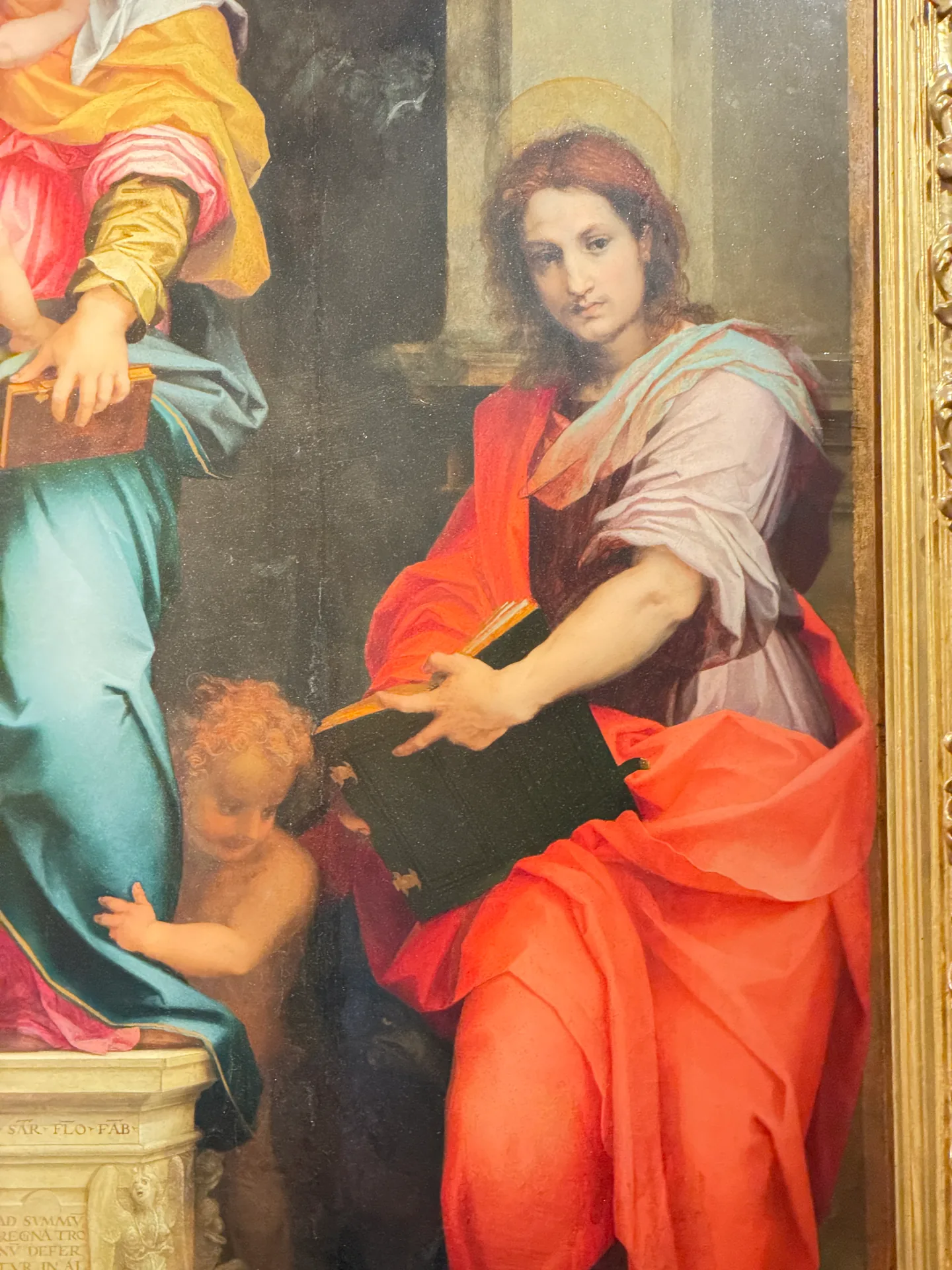
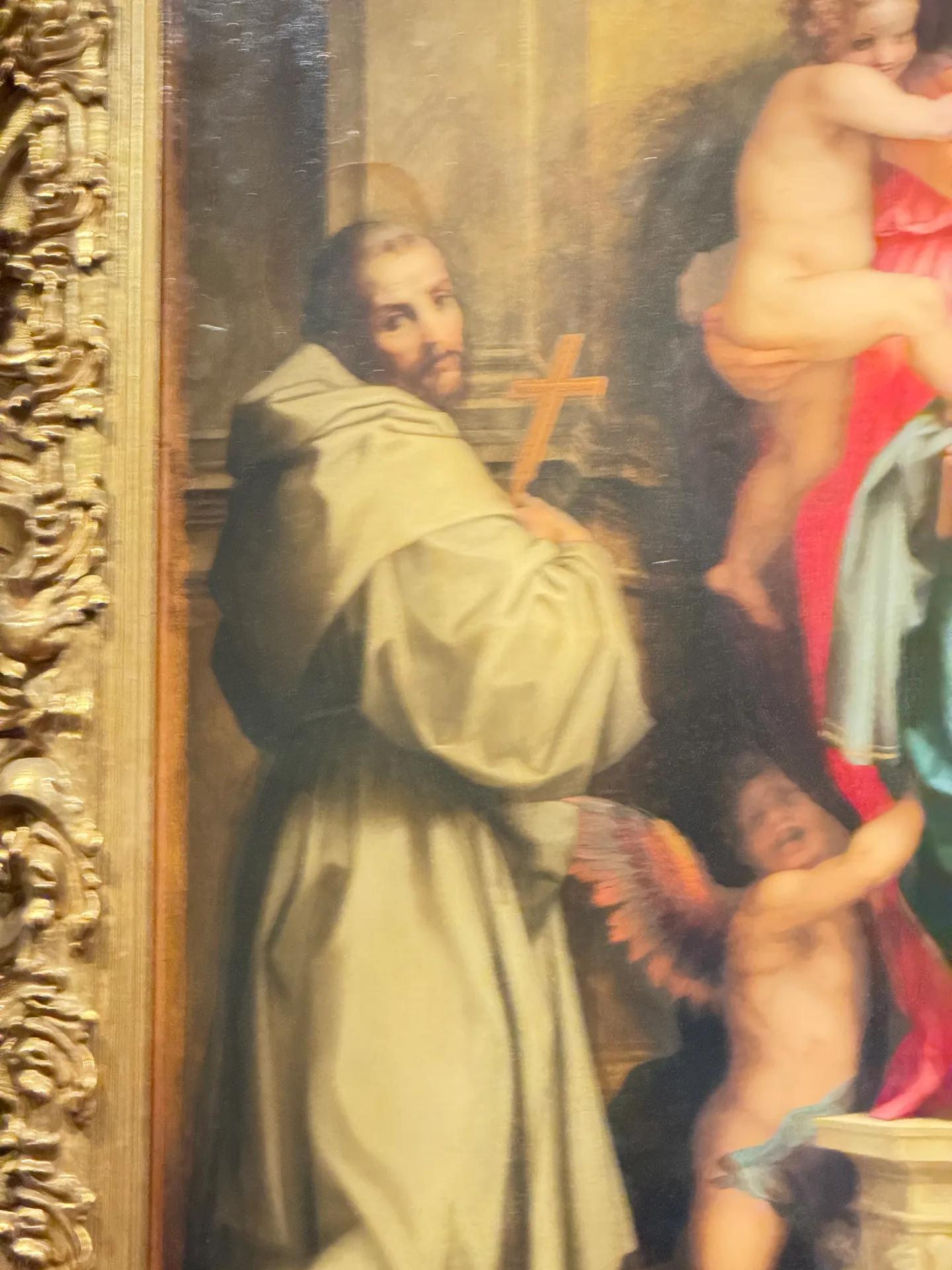
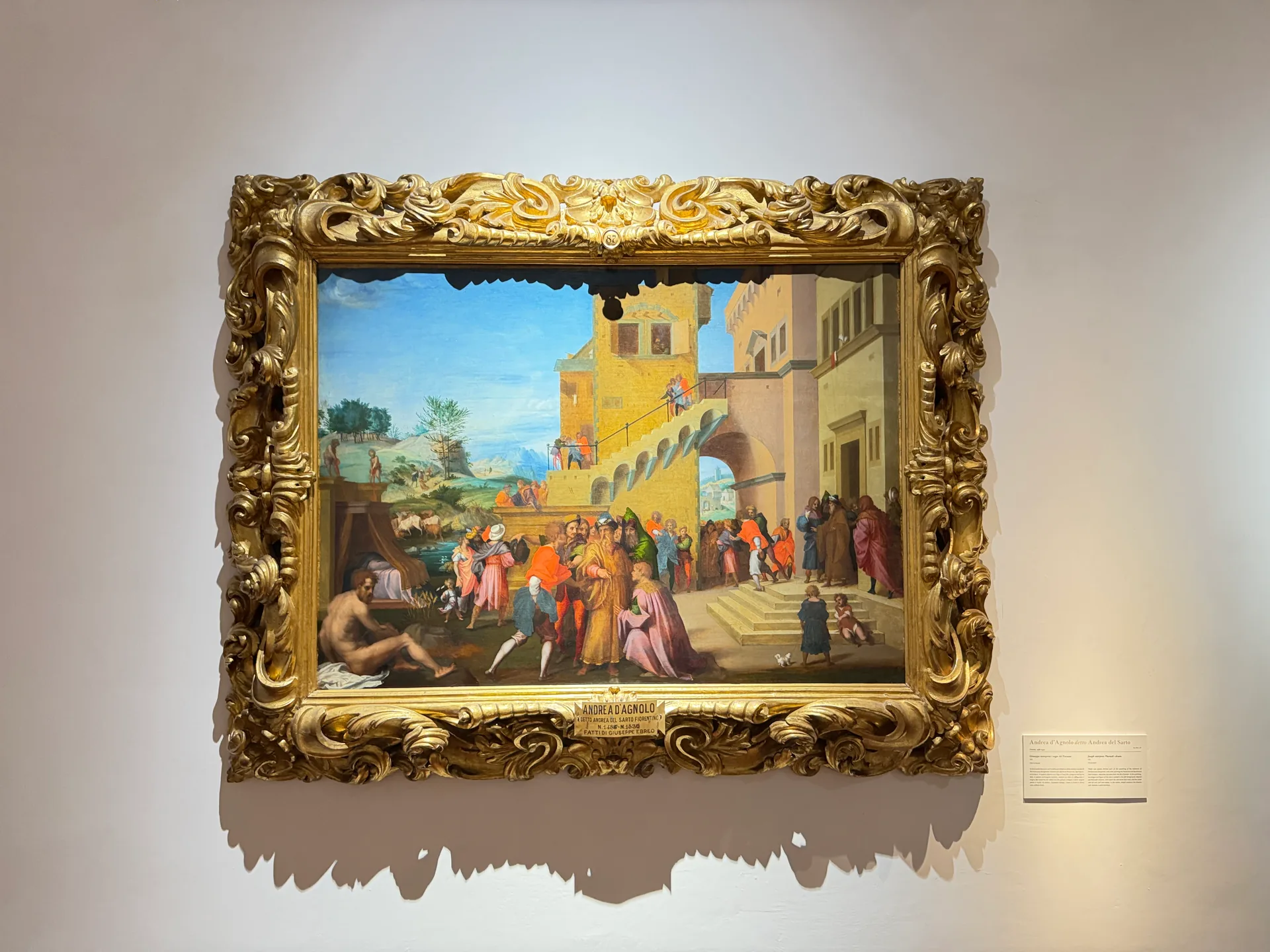
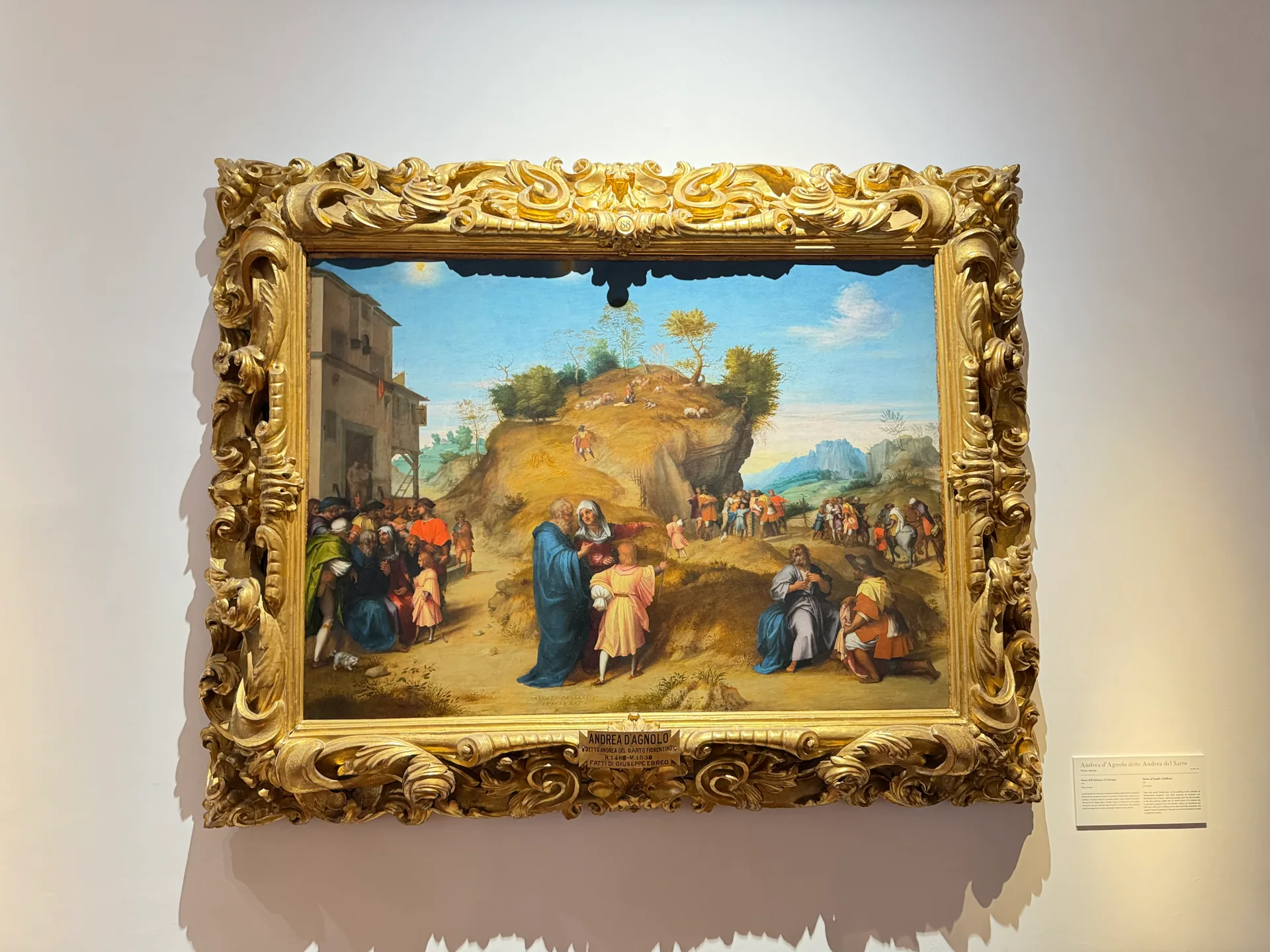
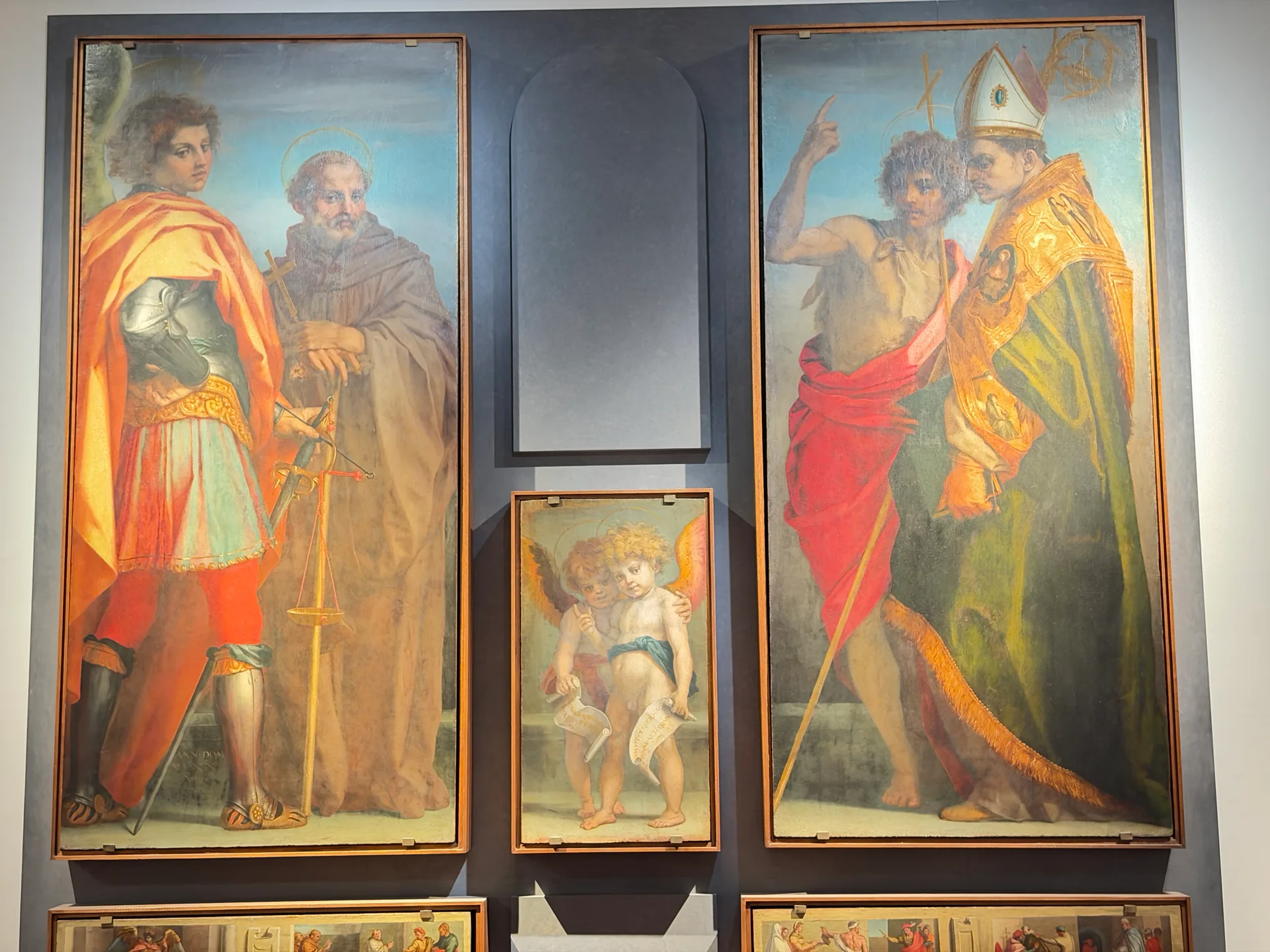
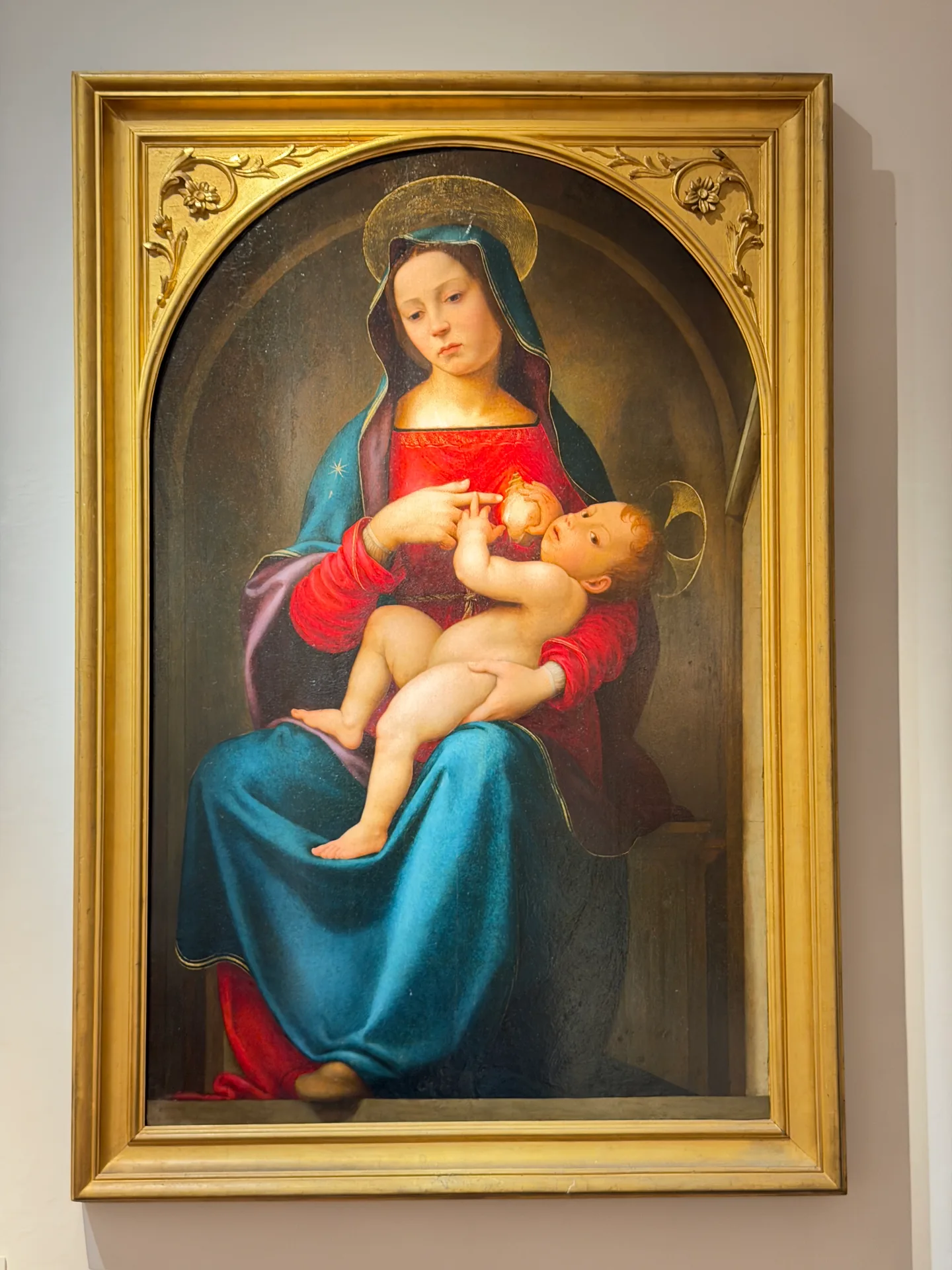
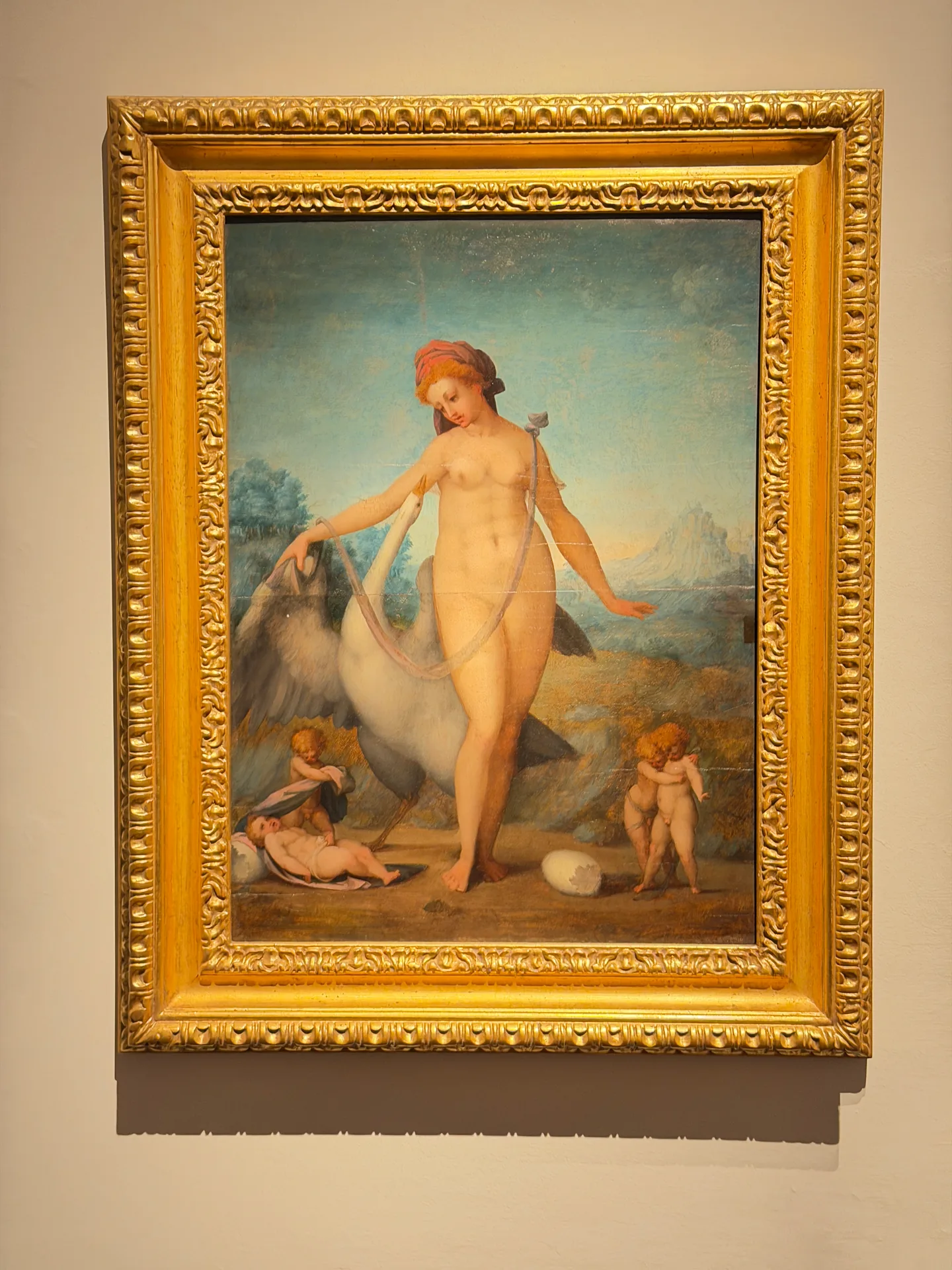
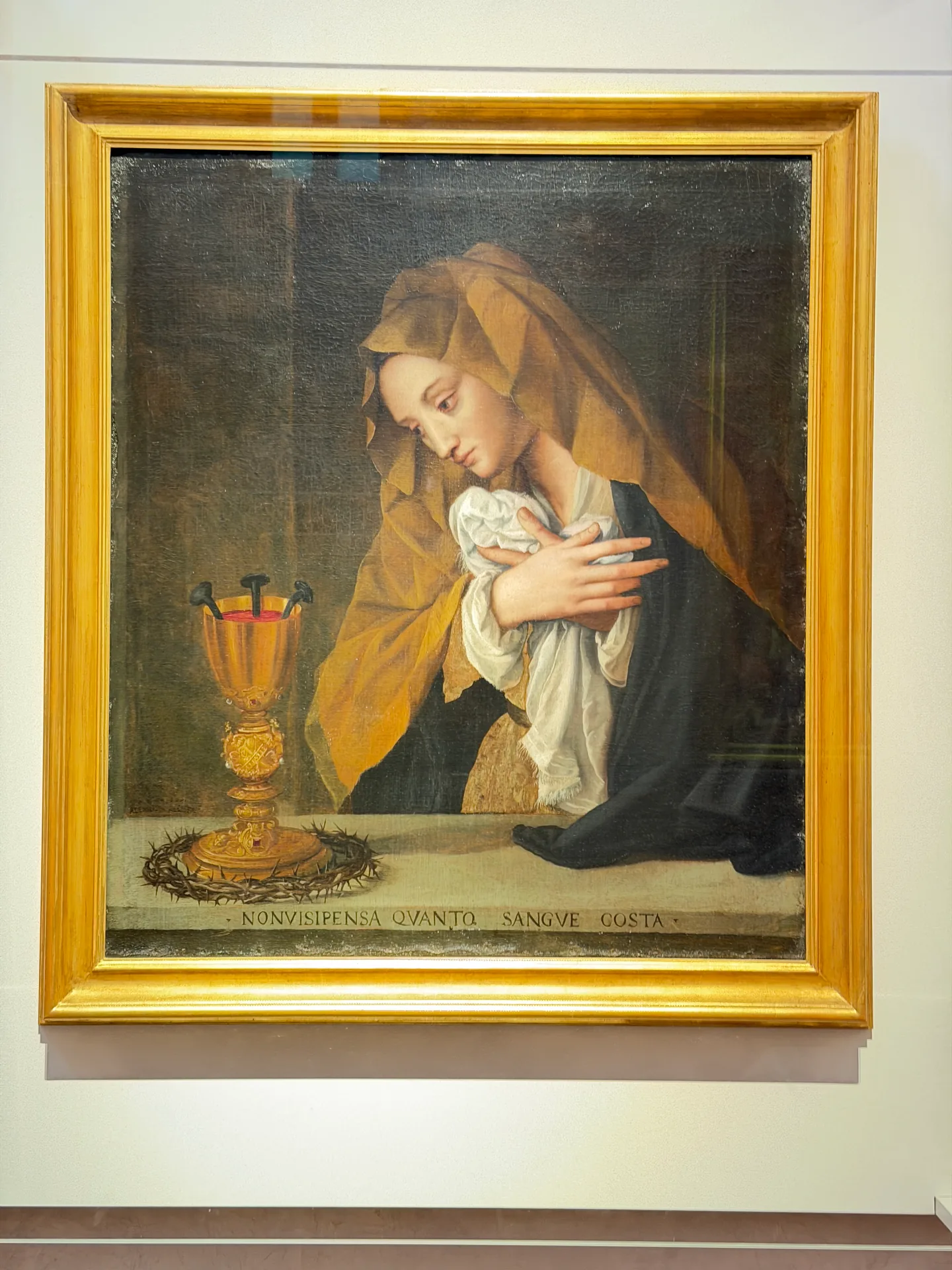
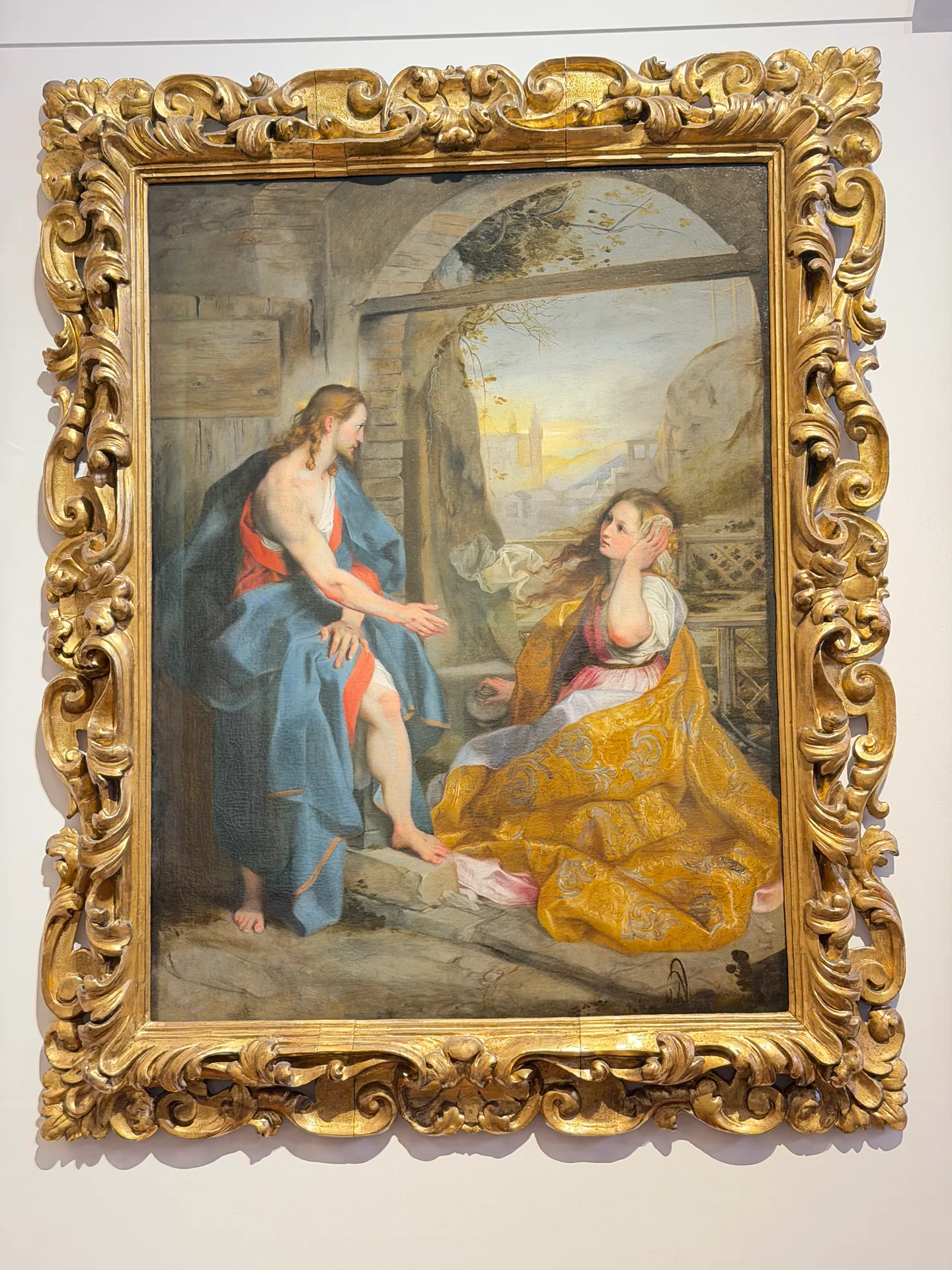
Andrea del Sarto, 1517The Virgin stands on a carved pedestal between Saint Francis and Saint John the Evangelist. The harpies that give the picture its name are carved on the base.Virgin and ChildTwo putti cling to the pedestal beneath her and take the weight of the composition.Saint JohnIn red at the right, where the drapery does most of the work of the figure.Saint FrancisAt the left with his cross and a putto beside him.Joseph and PharaohJoseph interpreting the dream, complete in its carved frame. One of a set made for a Florentine wedding chamber.Joseph's childhoodA companion panel from the same set, several episodes running across one continuous field.The Vallombrosa altarpieceSaints above and the narrative predella below, the parts shown together.The predellaThe narrative base of the same altarpiece, close.Albertinelli's VisitationThe two women meet under an arch. The composition is reduced to two figures and one gesture, and it does not need more.Joseph led to prisonFrancesco Granacci, from the same wedding chamber set as the Andrea del Sarto panels.Charles VIII enters FlorenceGranacci's record of the French entry of 1494, painted for the same room.Beccafumi's tondoThe Holy Family with the young Baptist, in a heavy gilt frame.BugiardiniThe Virgin nursing the Child, a private devotional picture rather than an altarpiece.A standing nudeA female figure in a landscape with putti at her feet. Not identified from the frame, so the attribution is one for the wall label.The Virgin annunciateKneeling in a gold veil with a vase of lilies beside her and an inscription running along the ledge.Noli me tangereChrist and the kneeling Magdalene in front of the tomb arch, in a carved gilt frame.Cigoli, about 1580Painted for the Compagnia della Santa Croce at Figline.
THE MEDICI AS THEY WISHED TO BE SEEN
Portraits of the Court
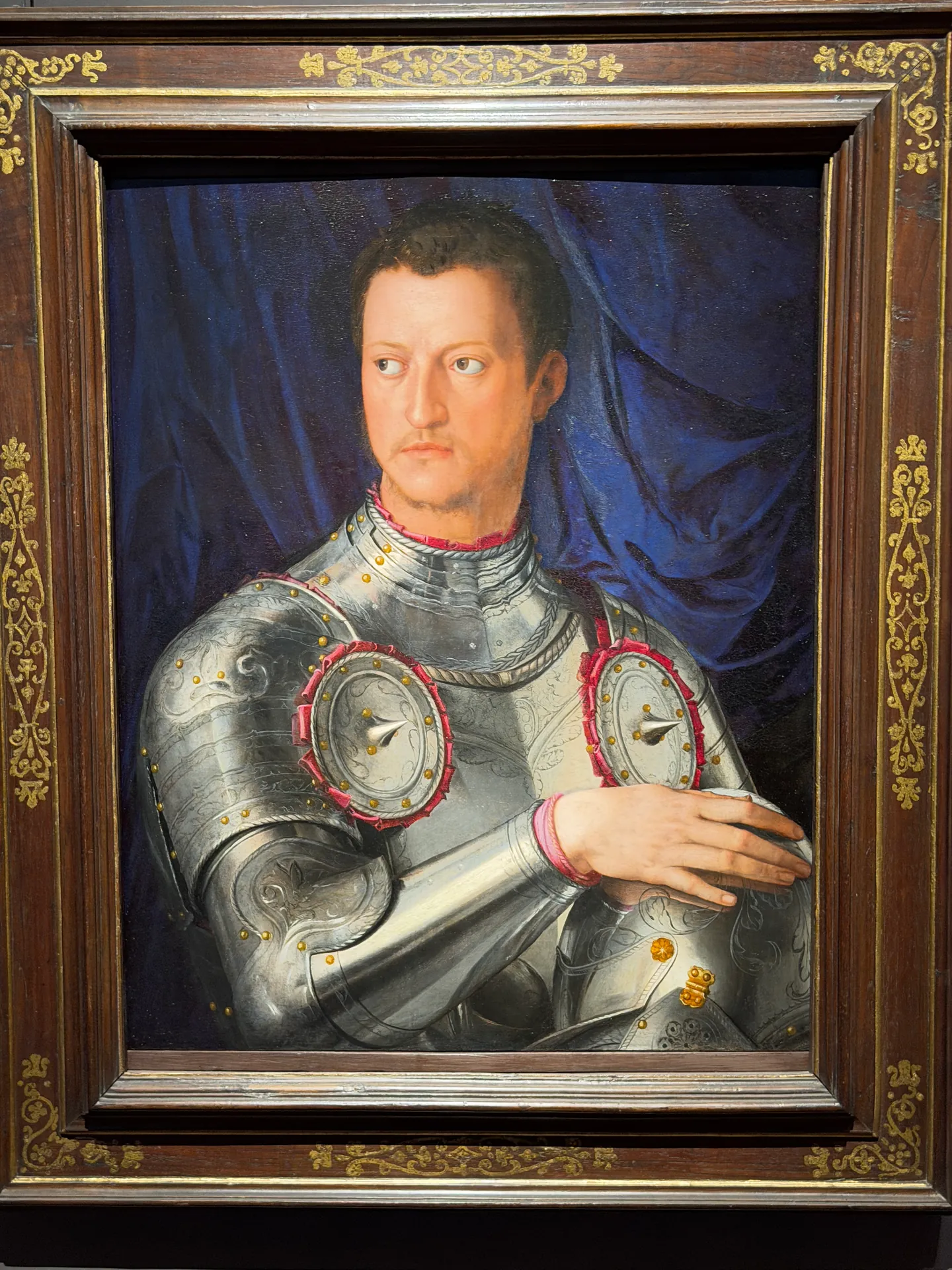
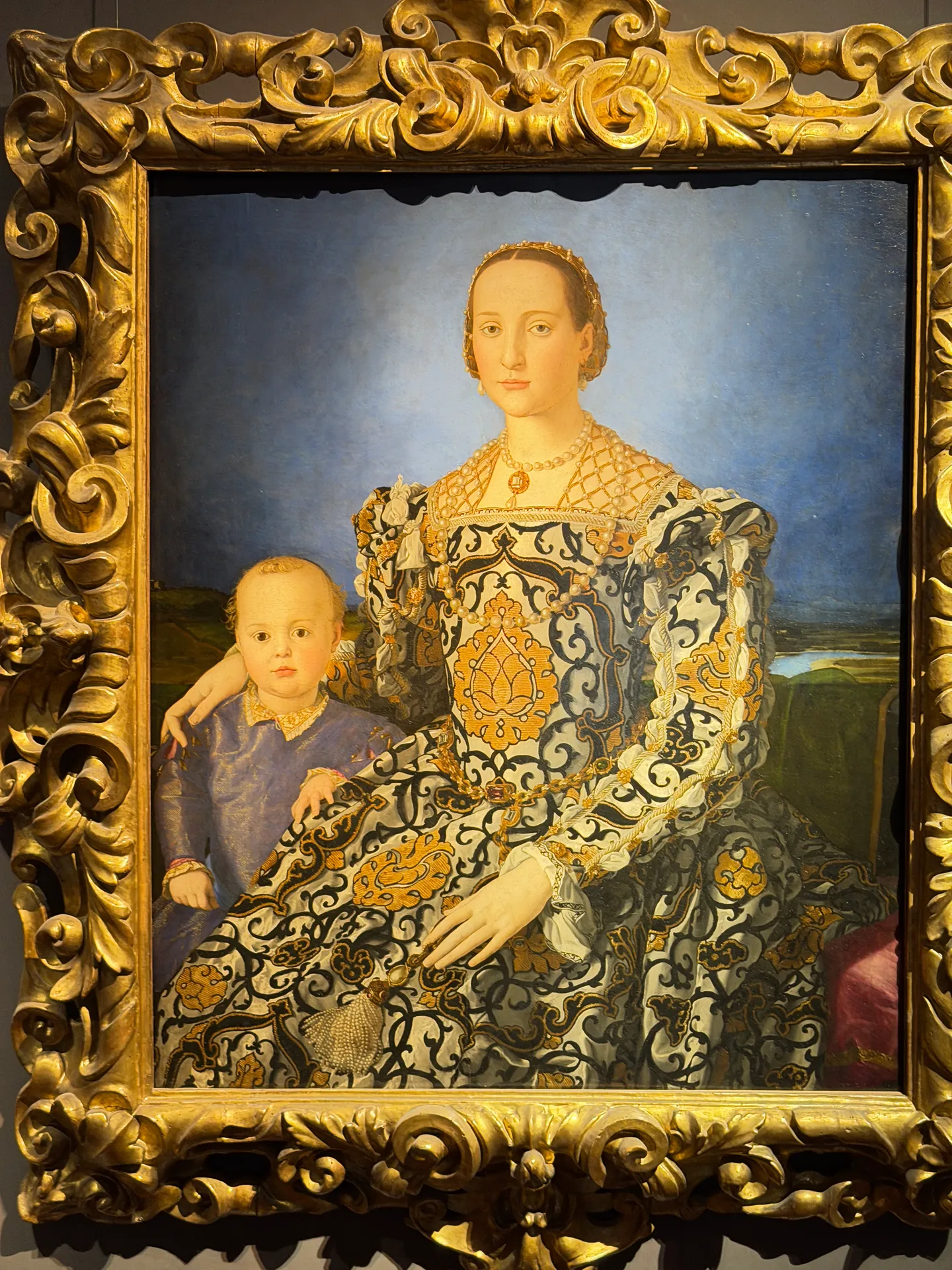
Bronzino built a state image for Cosimo I and repeated it. What the court portraits spend their attention on is armour, brocade and device, and only then on a face.
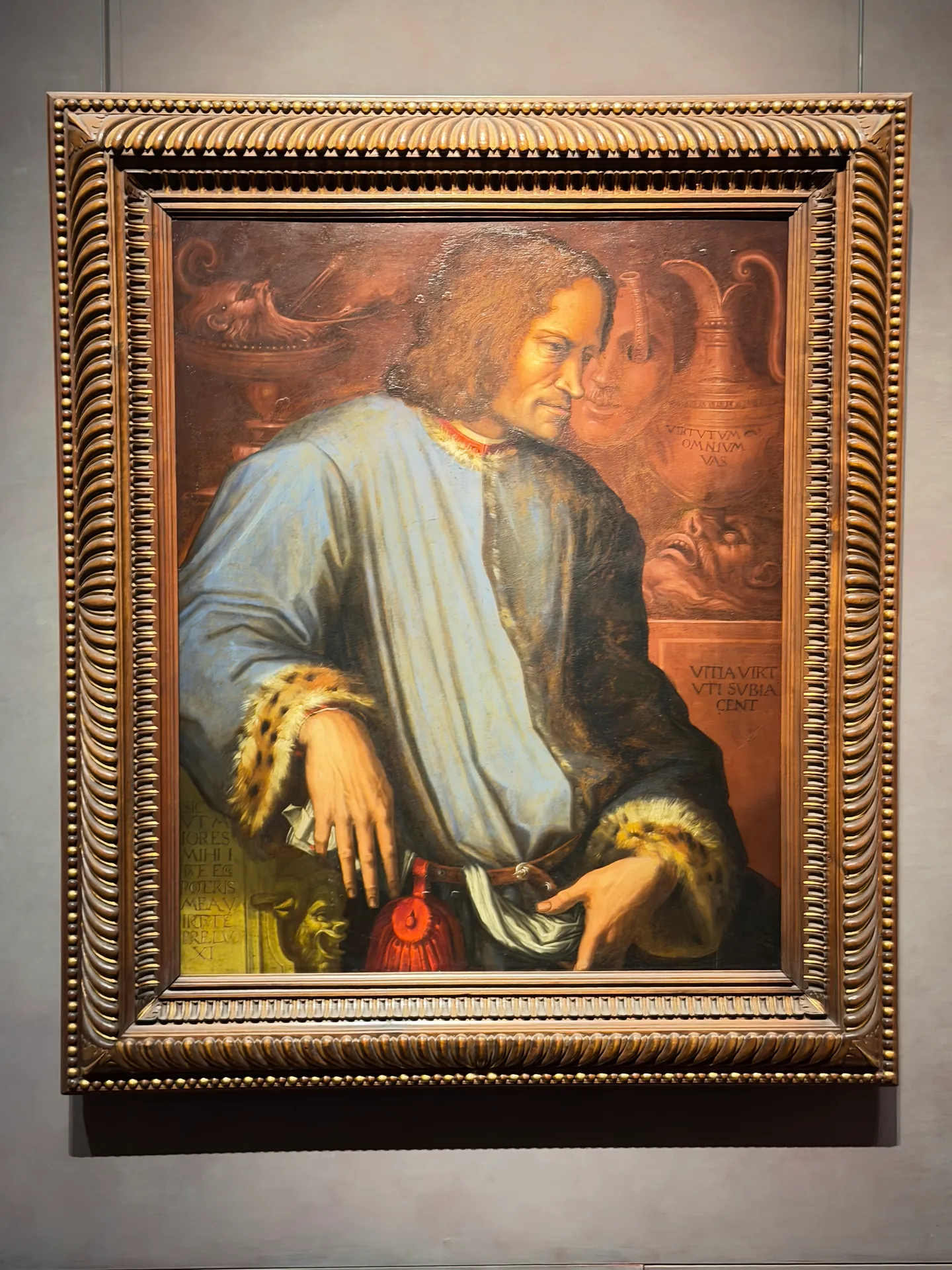
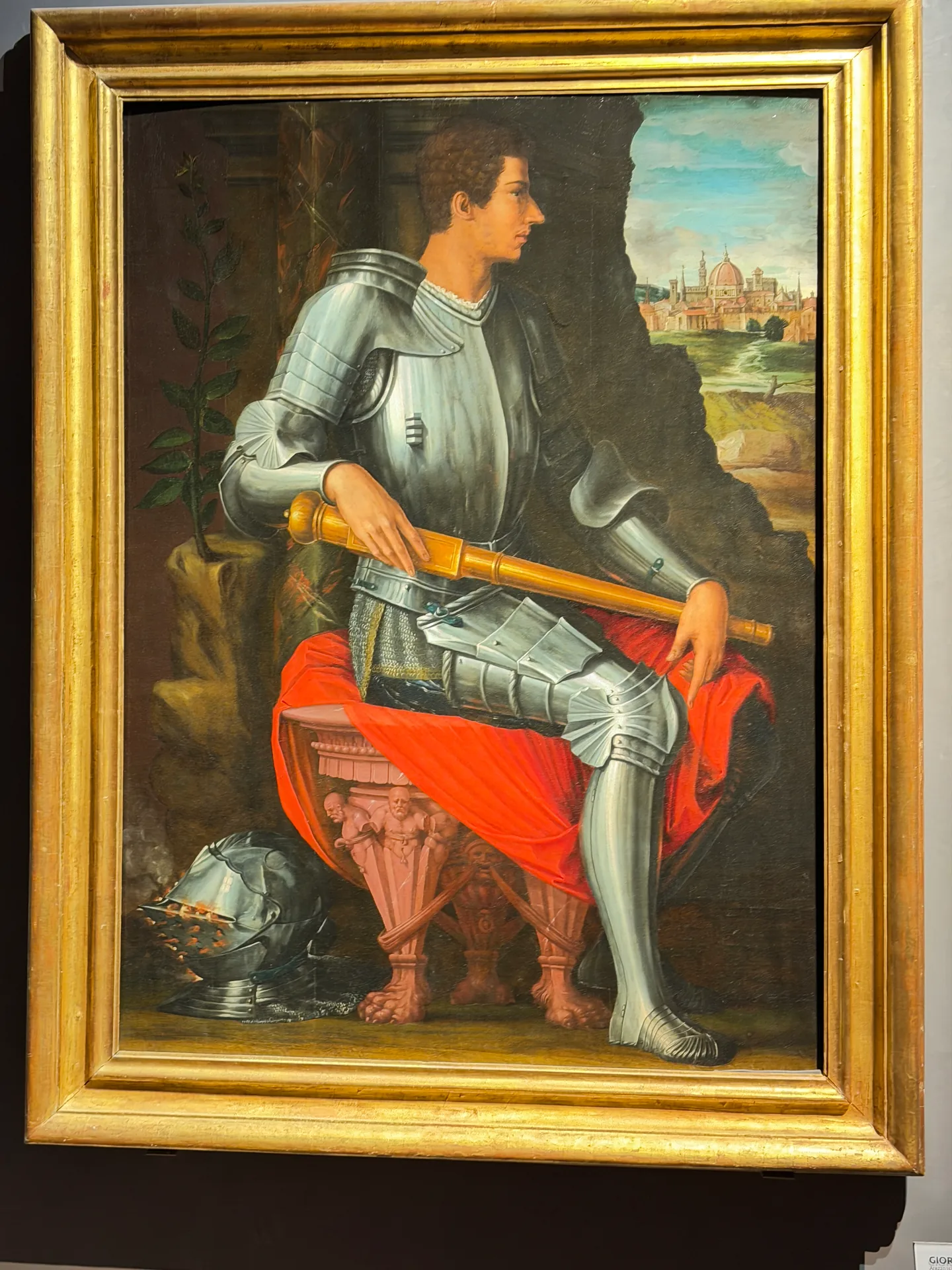
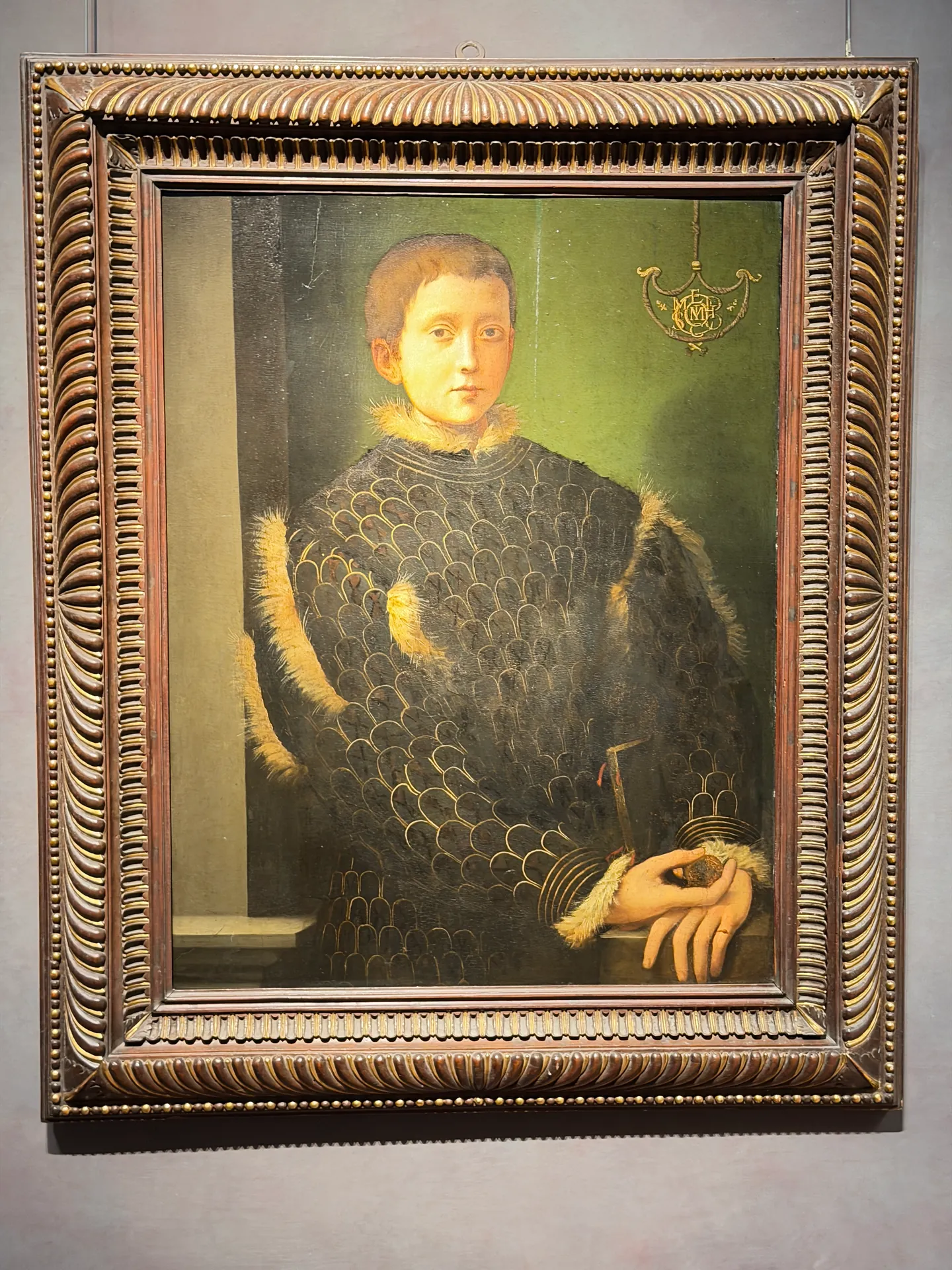
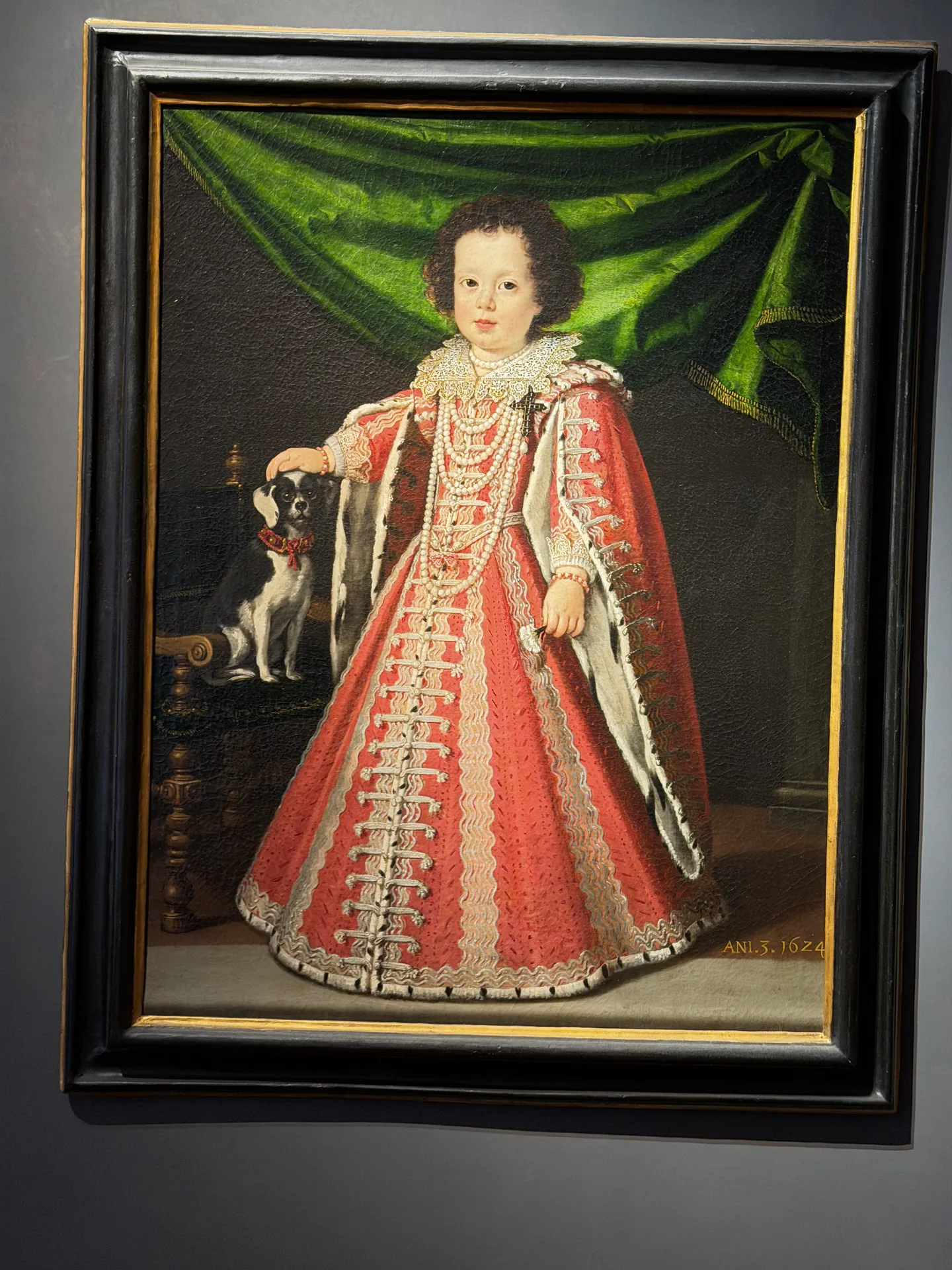
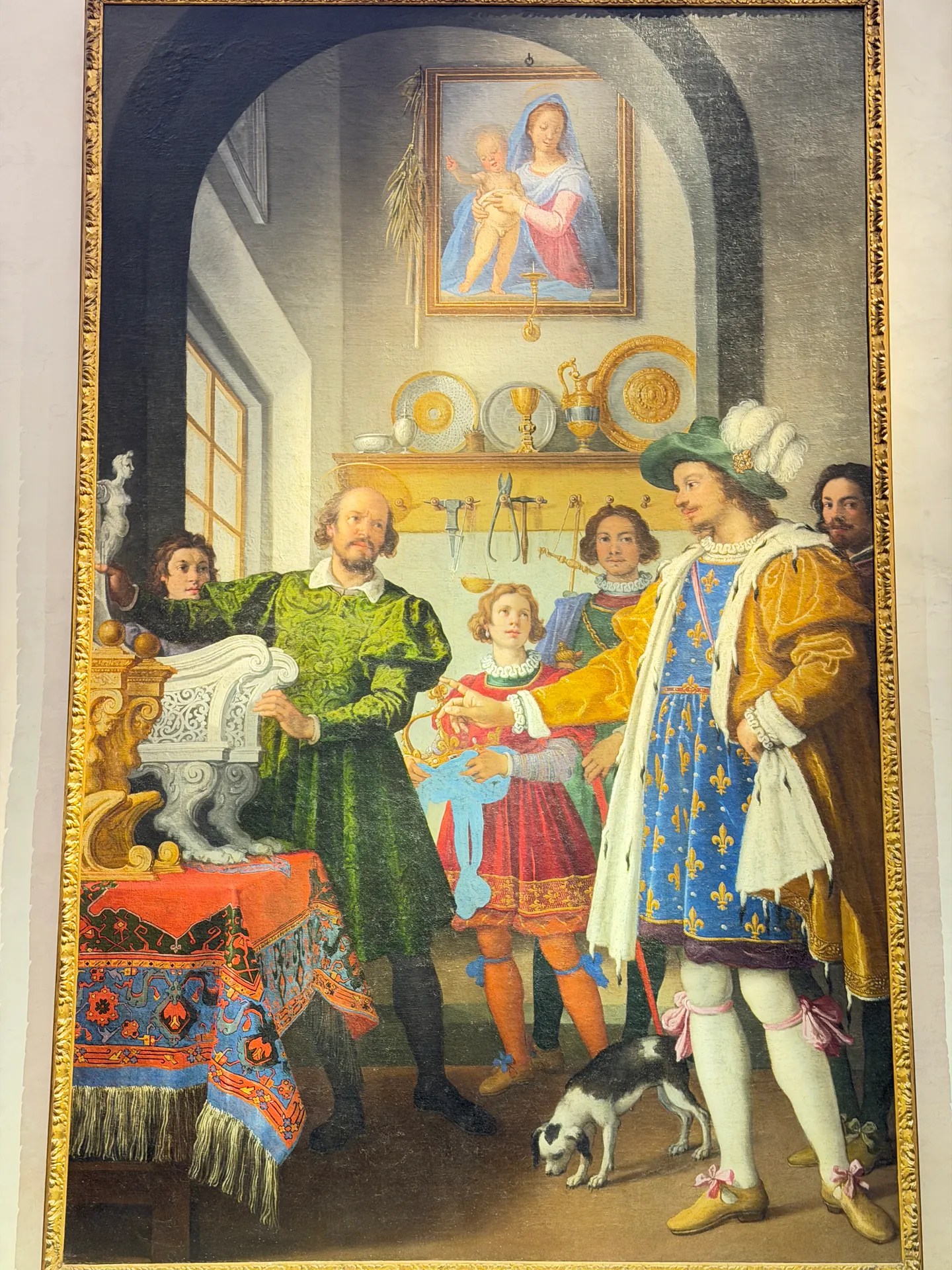
Bronzino's Cosimo IThe duke in polished armour. Bronzino's workshop produced this image again and again as state portraiture, which is exactly what it was for.Eleonora di ToledoThe duchess in brocade with her son Giovanni beside her. The dress is painted with more attention than either face.A commemorative portraitA seated man in a fur lined robe, with an antique vase and a grotesque mask on the plinth behind him. The sitter's name belongs to the wall label rather than to us.A young man in armourSeated with a baton, his helmet on the ground and a city beyond. Not identified from the frame.Against a green groundA dark furred doublet against a green wall painted with a gold device.A child at courtA full length portrait in a rose and white gown with a small dog. Court children were painted as small adults and the clothes carry the rank.A court interiorA boy attended by courtiers, one of them in a blue tabard sewn with gold fleurs de lis.
ONE CANVAS FROM THE OTHER TRADITION
Venice
The Venetian rooms are a change of temperature after the Florentine panels. Titian is the reason most people stop here.
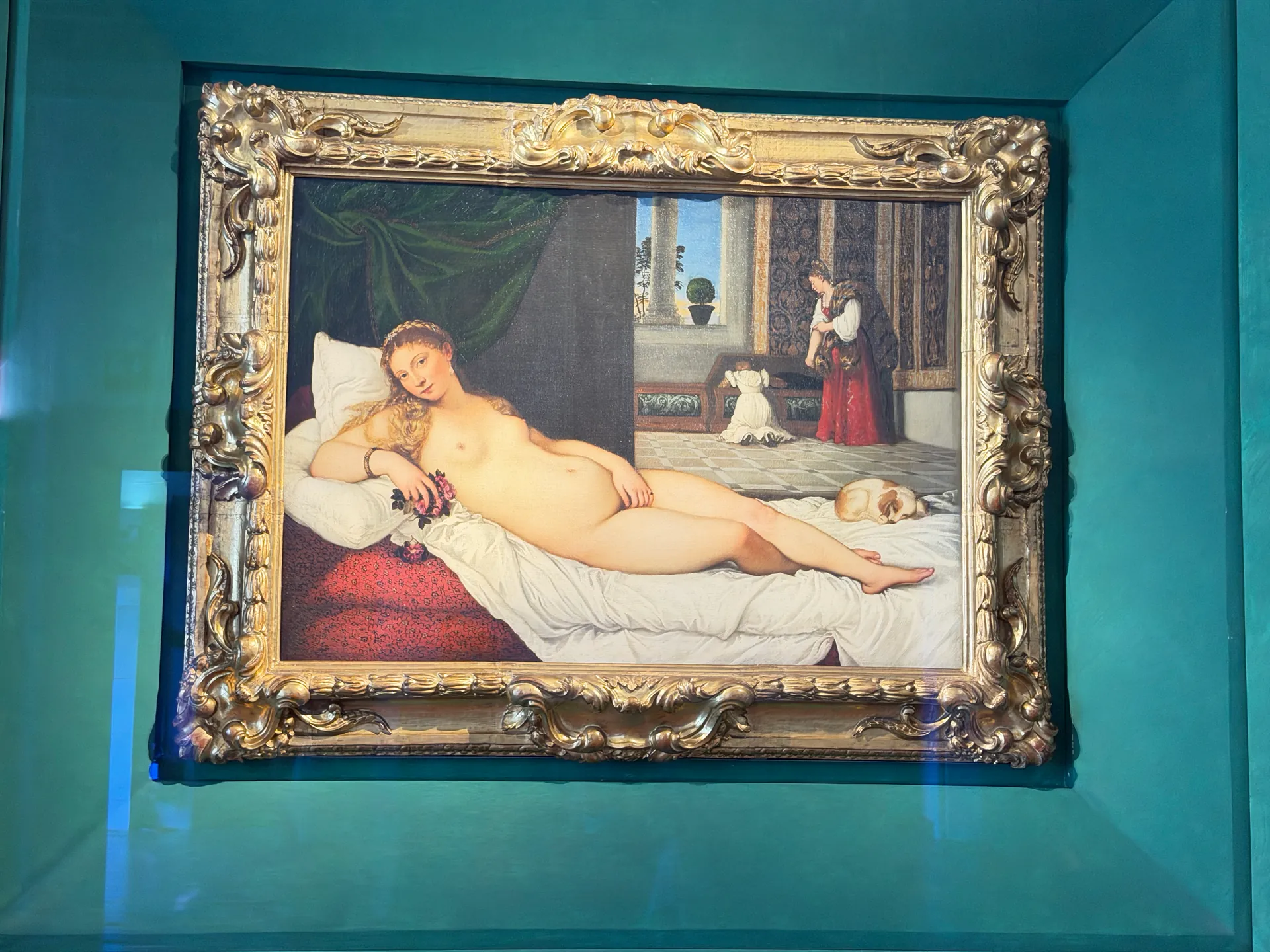
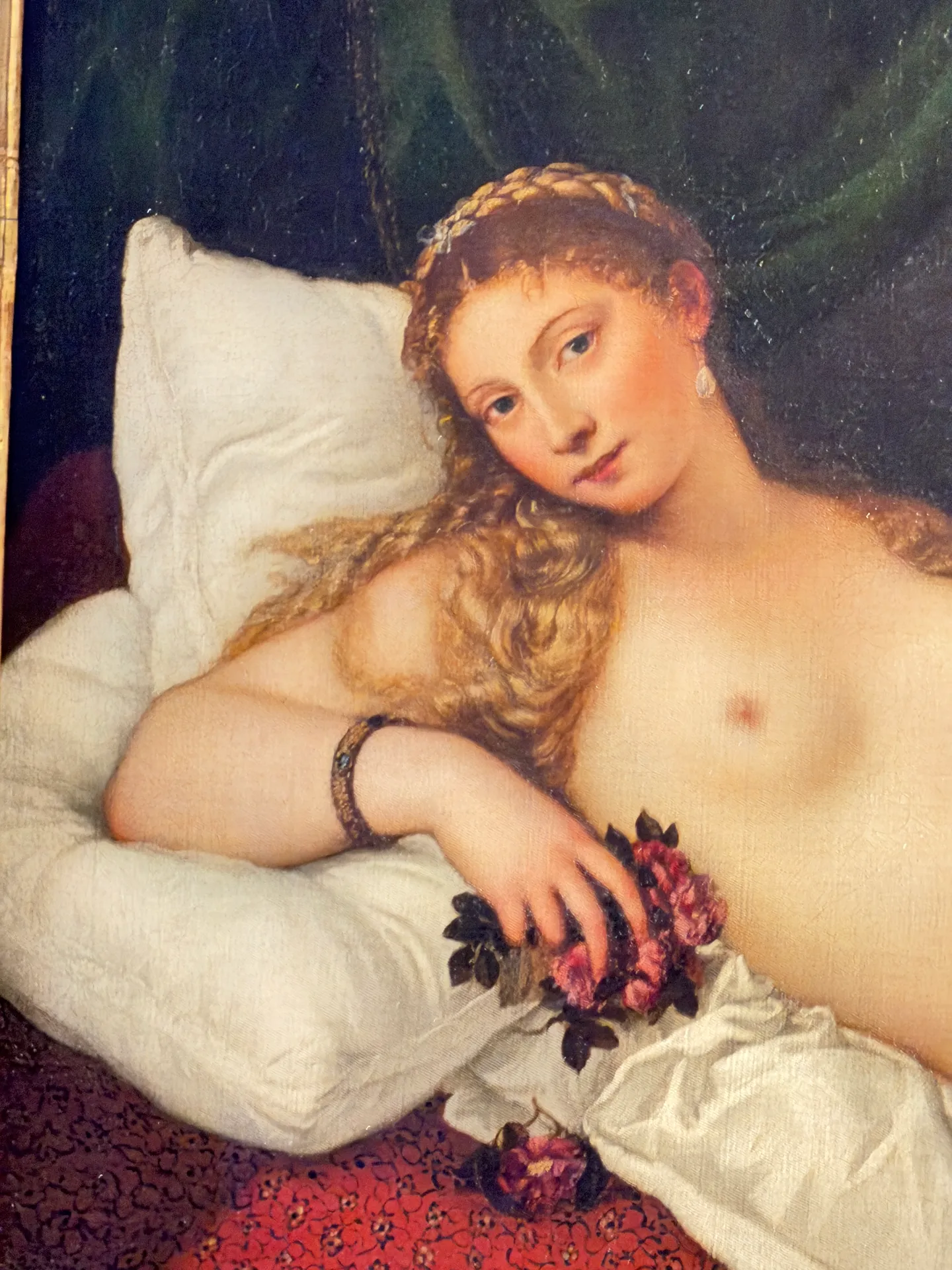
Titian, 1534Painted for Guidobaldo della Rovere and hung now on the teal wall of the Venetian room. Its debt to Giorgione's sleeping Venus is the usual place to start.Head and shouldersClose on the head, where the eyes come out to meet the viewer instead of turning away from it.
THE END OF THE SEQUENCE
Caravaggio and Artemisia
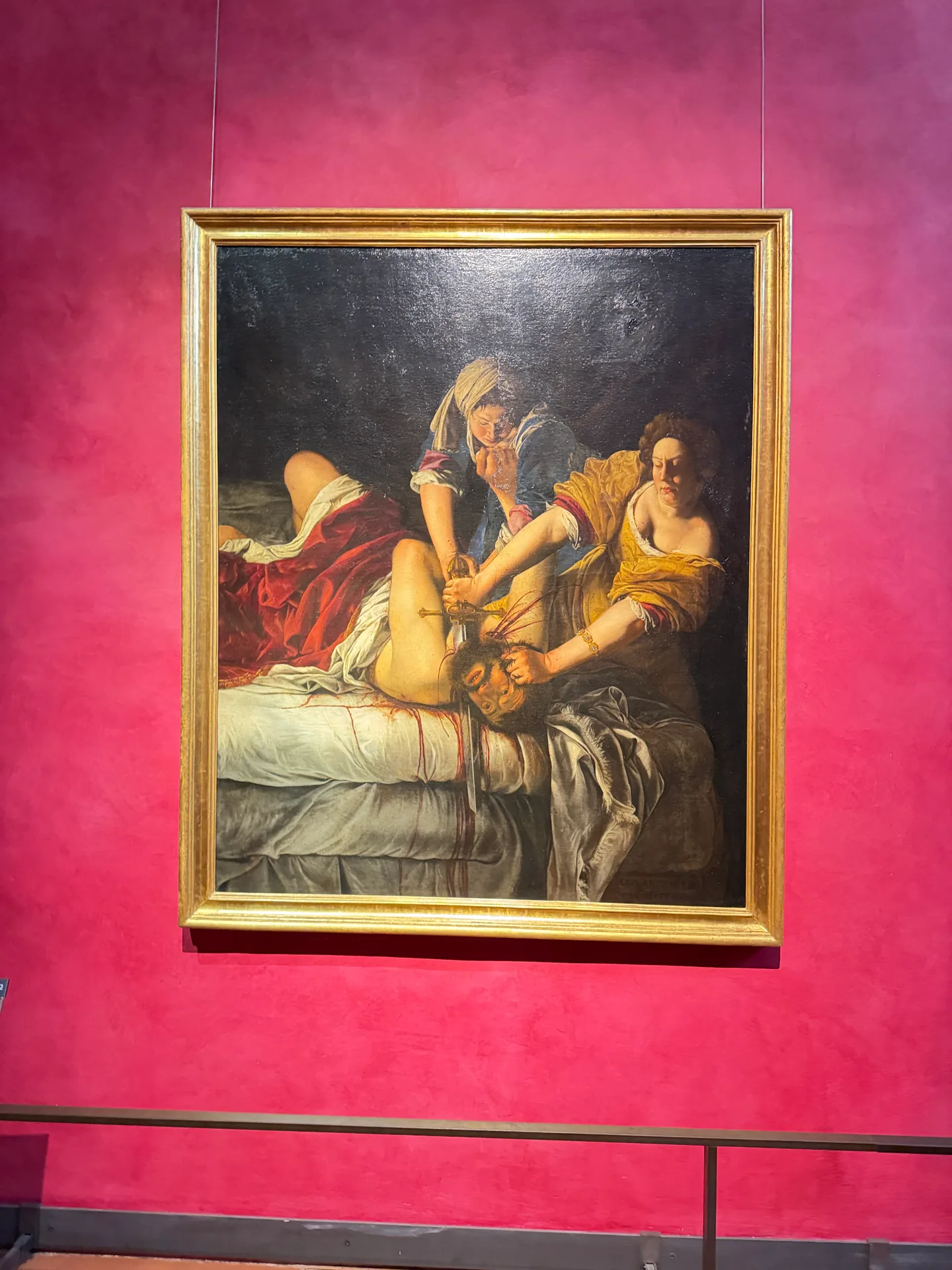
A shield, a knife and two canvases where the light is doing the argument. Artemisia Gentileschi painted her Judith in Florence, working for the Medici, and it hangs a few metres from Caravaggio.
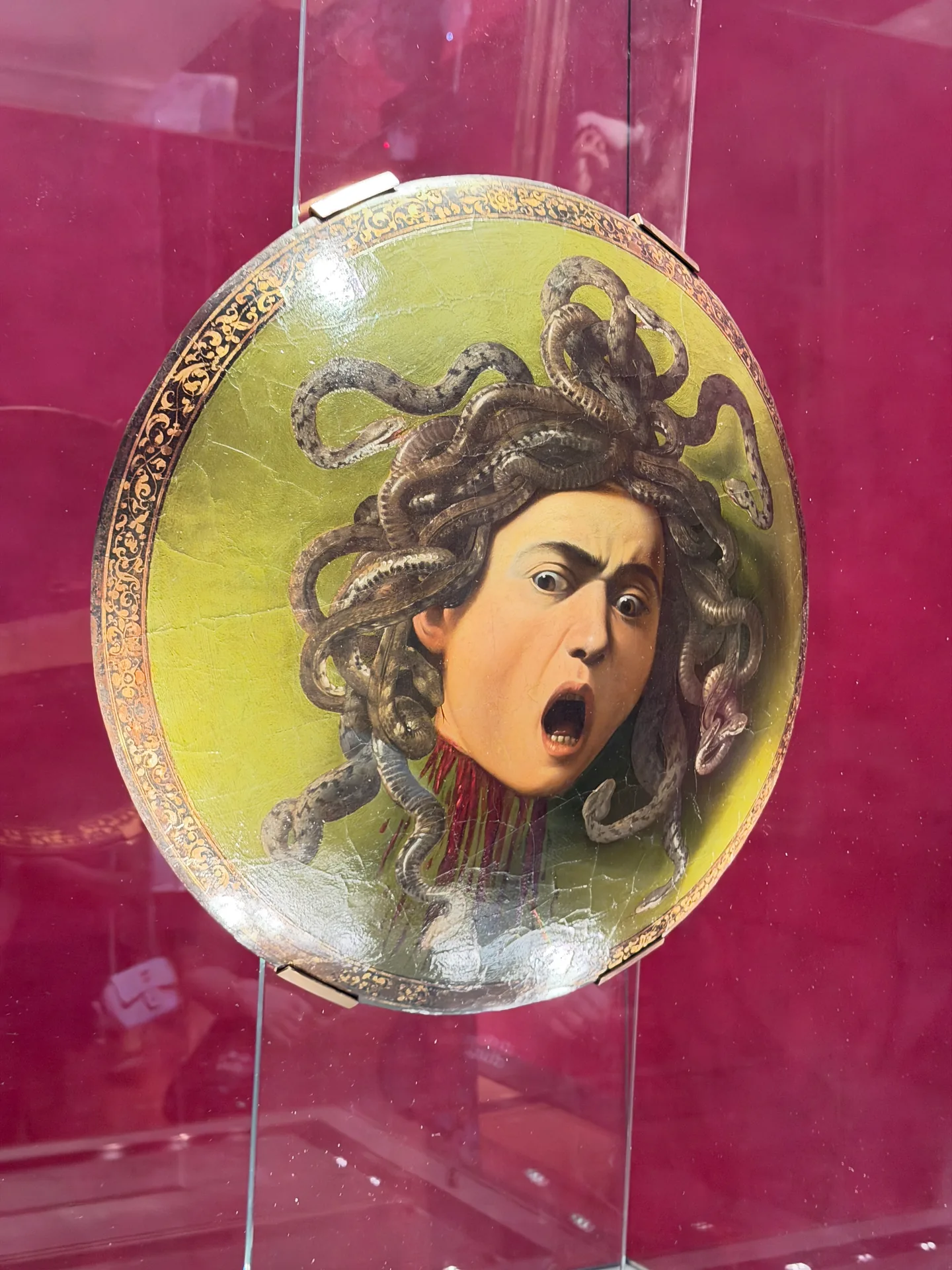
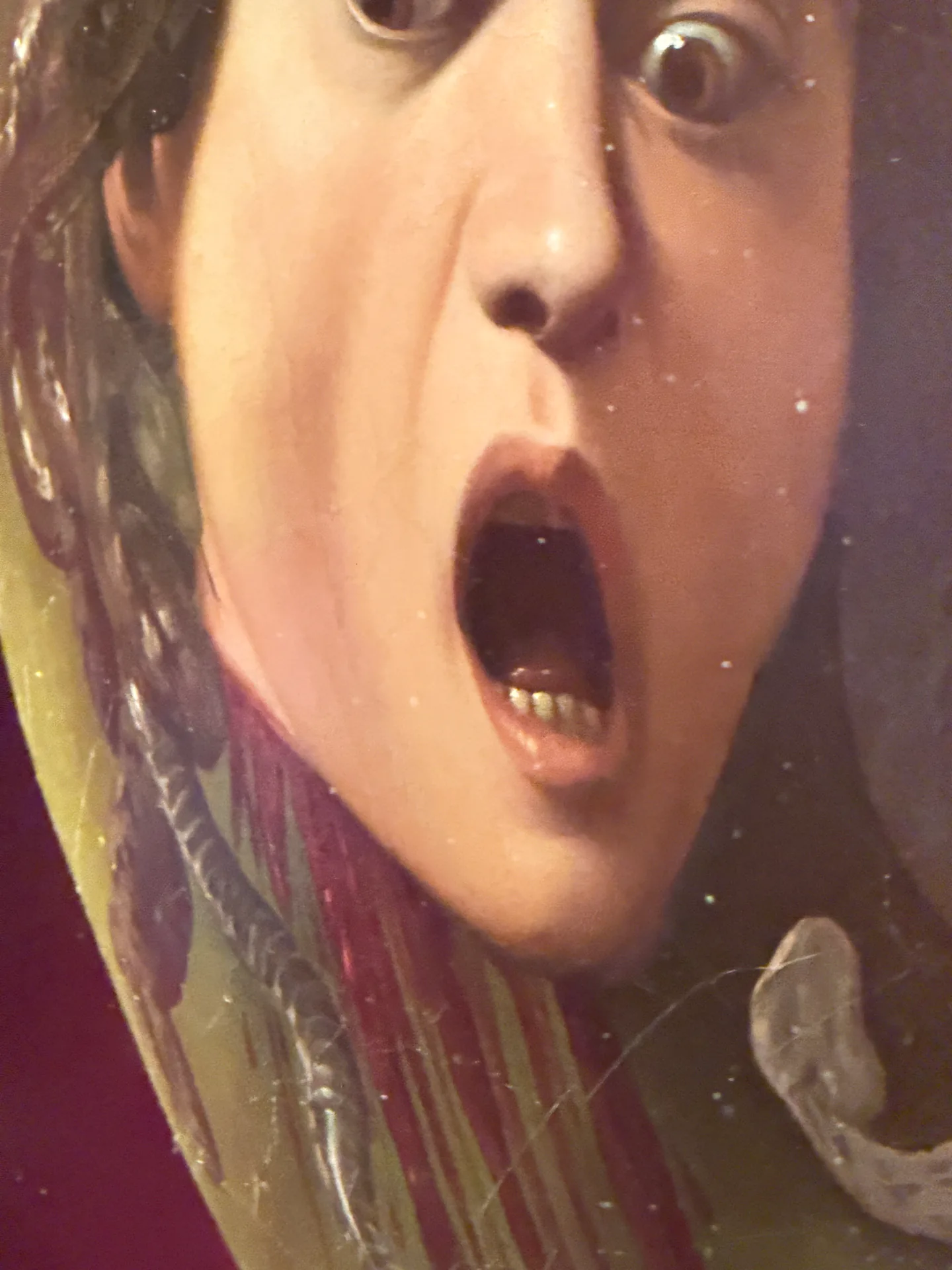
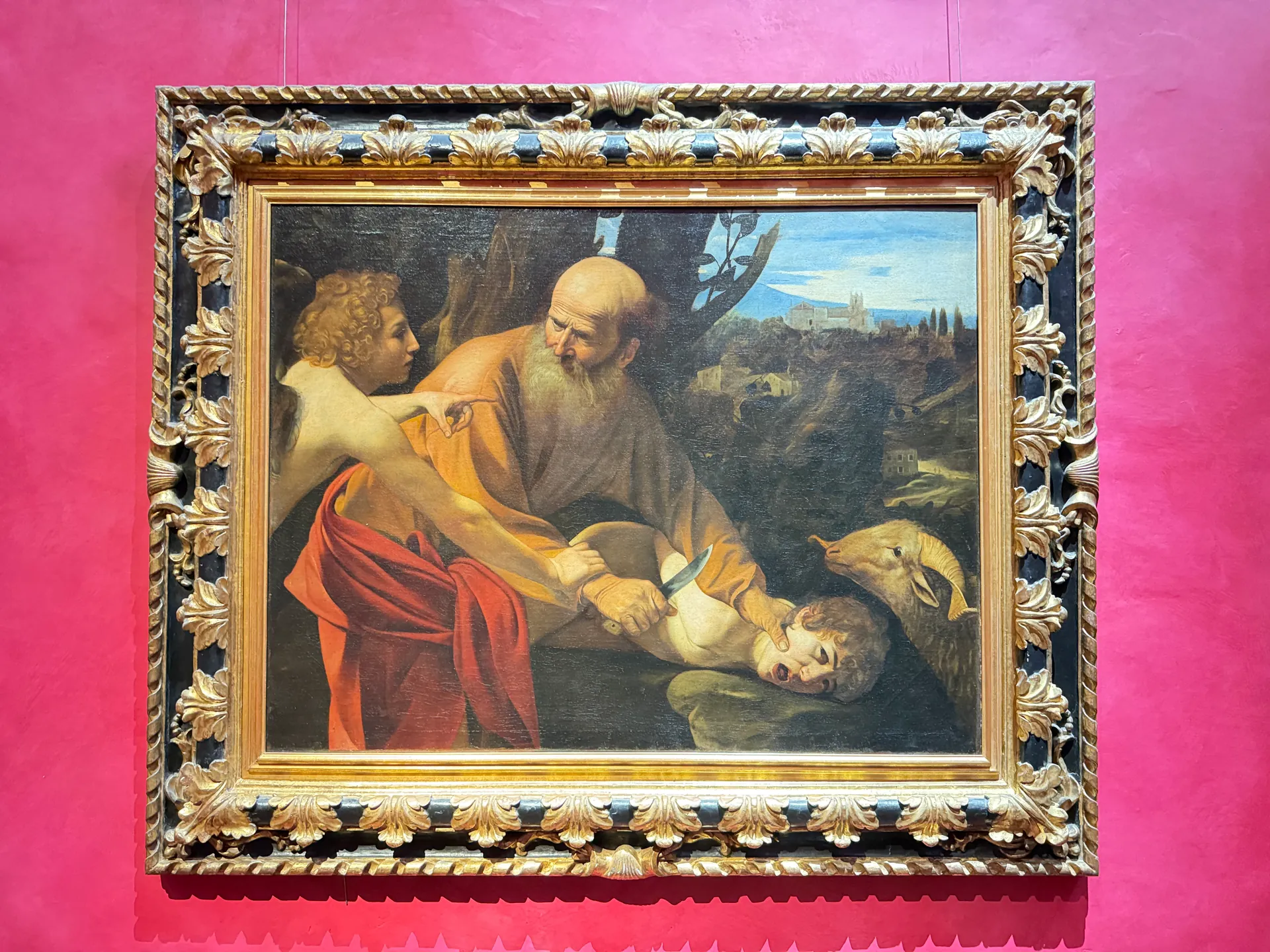
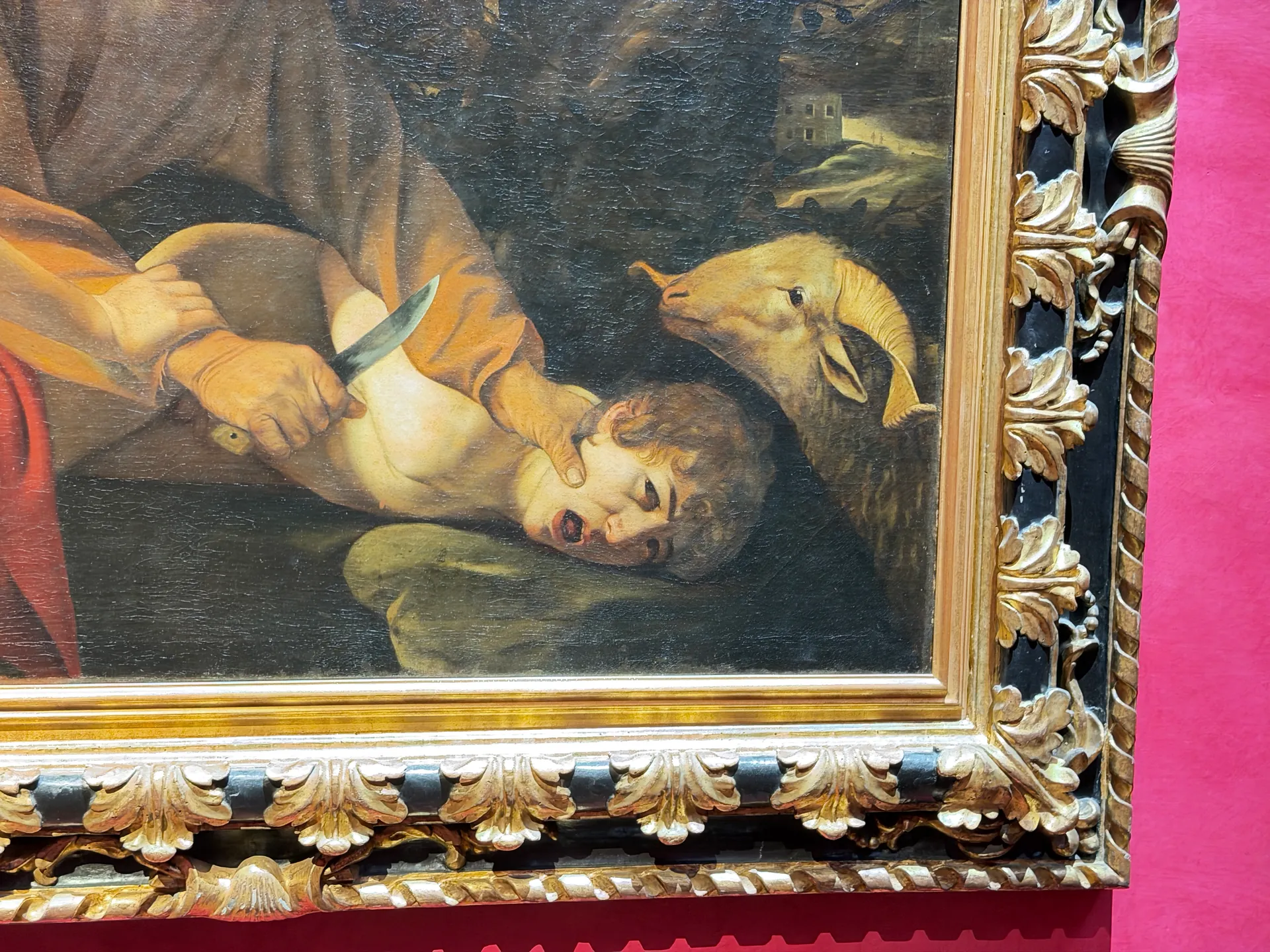
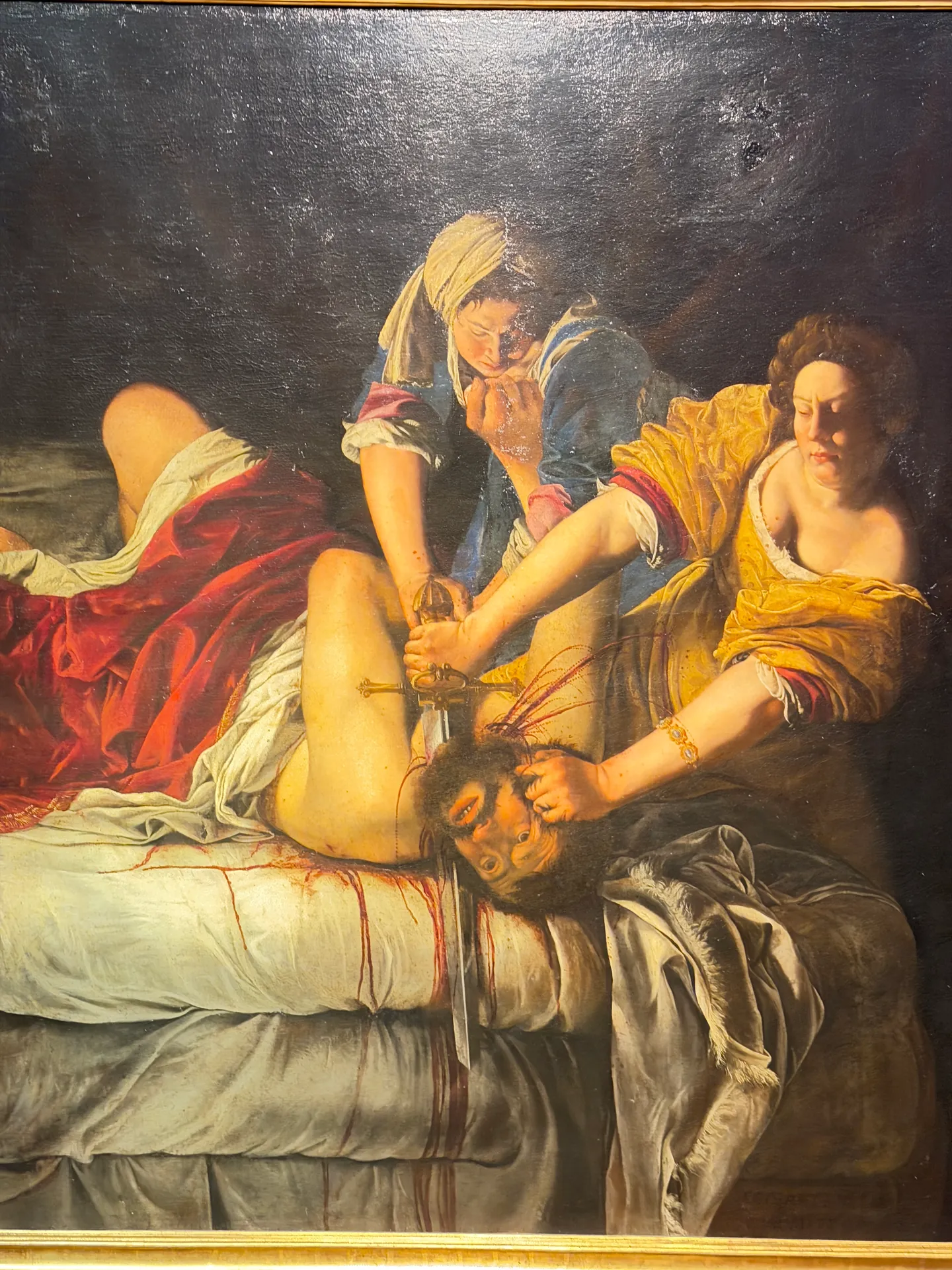
Caravaggio's MedusaPainted on a convex ceremonial shield about 1597 for Cardinal del Monte, who sent it to Ferdinando I de' Medici. The curve of the shield is part of the effect.Mouth and eyesClose on the face in the moment after the blow, still looking.The Sacrifice of IsaacThe angel catches Abraham's arm and the ram waits at the right, the whole event compressed into the front of the canvas.Isaac's headPressed against the altar stone, which is where the picture spends its attention.Artemisia GentileschiJudith beheading Holofernes. She painted the subject more than once, and this is the Florentine version, made while she was working for the Medici court.In the roomThe canvas in its frame on the gallery wall, at the scale it is actually met.
Some links may earn us a commission at no cost to you. We only recommend places we would stay.
Frequently Asked Questions
How far in advance to book?
Book at least 2-3 weeks ahead in high season (April-October). Same-day tickets rarely available.
What are the must-see works?
Birth of Venus and Primavera by Botticelli, the Annunciation by Leonardo, Michelangelo's Doni Tondo, Titian's Venus of Urbino and Caravaggio's Medusa. Room numbers move with each rehang, so follow the current floor plan rather than an old guidebook.
Is the Firenze Card worth it?
Yes if visiting 3+ museums. Includes Uffizi priority entry and 72-hour access to 60+ Florence attractions.
What about the building itself?
The corridors, the Tribuna, the Niobe Room, the antique marbles and the terrace above the Loggia dei Lanzi are all inside the same ticket. They have their own page here.
Some links on this site are affiliate links. If you book through them, we may earn a commission at no additional cost to you. We only recommend tours and stays we would book ourselves.